Welcome to “Upon Closer Inspection,” an exclusive series brought to Daltxrealestate.com readers by the meticulous professionals at Green Scene Home Inspections. Each week, we peel back the layers of your potential home, offering invaluable insights into what experienced home inspectors look for. Our aim is to educate and empower you, transforming you into a more informed homebuyer.
In the vast landscape of homeownership, few spaces hold as much utility, potential, and sometimes, overlooked challenges, as the garage. For many homebuyers, especially here in Texas where vehicles are king and extra storage is gold, the garage isn’t just an afterthought—it’s a critical decision-making factor. Indeed, statistics show that nearly 80 percent of prospective homeowners consider the garage’s condition and features when making their purchase. From a home inspector’s vantage point, our focus extends beyond mere aesthetics. We delve deep into the core elements: ensuring safety, assessing structural integrity, verifying optimal functionality, and meticulously examining any equipment housed within. While often attached, some properties feature detached garages, which are then evaluated as their own separate, essential structures. Through countless inspections, we’ve encountered a myriad of issues. Here, we shed light on some of the most common—and often surprising—problems we uncover during our thorough assessments.
The Perils of a Derailing Garage Door: Safety and Maintenance First
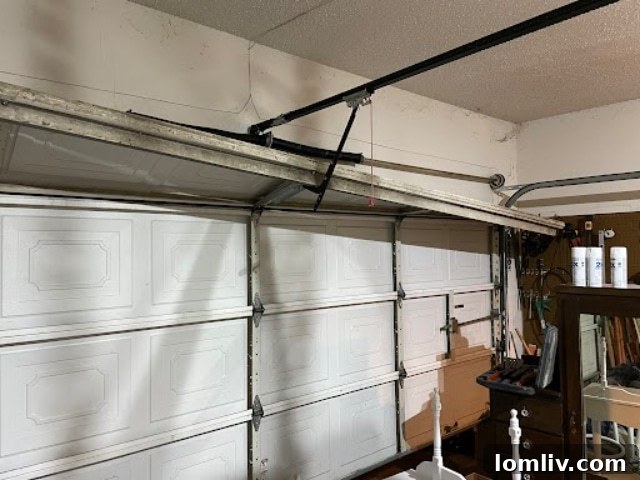
One of the most immediate and visually striking problems we sometimes encounter is a garage door that has literally “come off the rails.” The image above, believe it or not, was captured by one of our very own inspectors at his personal residence, right as he was preparing to leave for the day’s inspections. A moment of unexpected irony, yet a potent reminder that even the experts can face these common household mishaps. A garage door off its track isn’t just an inconvenience; it represents a significant safety hazard. These doors are incredibly heavy, and when they malfunction, they can cause serious injury or damage to property. The underlying causes can vary, from worn-out rollers and misaligned tracks to damaged springs or cables. Often, the early warning signs are subtle: a persistent squeaking, grinding, or unusual noises during operation. Ignoring these auditory cues can lead to a complete derailment. To proactively avoid such situations and ensure the longevity and safe operation of your garage door, consistent maintenance is key. Regular lubrication of moving parts—pulleys, rollers, hinges, and springs—can drastically reduce friction and wear. We recommend annually oiling it and performing visual checks for any signs of rust, bends, or loose components. Additionally, ensure that safety features like auto-reverse mechanisms and photo-eye sensors are functioning correctly, providing vital protection against accidents.
Unpermitted Garage Conversions: Navigating Legal and Structural Minefields
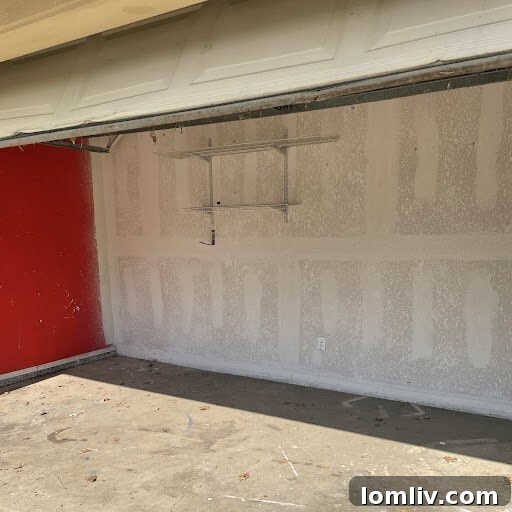
Another fascinating, and often problematic, discovery during a home inspection is the unpermitted garage conversion. The photograph here perfectly illustrates a creative, yet legally questionable, approach to expanding living space. You’ll observe an additional room meticulously constructed within the garage footprint, with the white wall serving as its new outer boundary. Yet, curiously, the original garage door remains intact, along with a significant eight-foot buffer of empty space in front of the newly built wall. Why this unusual configuration? The answer often lies in an attempt to circumvent local regulations and neighborhood association rules. Property owners sometimes undertake these conversions without the necessary permits to avoid the bureaucratic process, associated costs, or because their homeowner’s association (HOA) explicitly prohibits garage modifications that alter the exterior appearance. The rationale given might be that “it’s still a garage!” because the door is there, perhaps even suggesting one could “parallel park” in the remaining space, complete with a convenient shelving unit. However, from an inspector’s perspective, this poses several red flags. Unpermitted work can lead to significant issues for the new homeowner, including potential fines, requirements to revert the changes, difficulties with insurance coverage, and serious problems during resale. Building codes exist for a reason—to ensure structural integrity, electrical safety, proper ventilation, and compliance with fire safety standards. A hastily constructed conversion without professional oversight can compromise these vital aspects, creating hidden dangers. For homebuyers, encountering such a modification necessitates careful consideration and often legal advice, as the responsibility for addressing unpermitted work typically transfers with the property.
Blocked Access: The Critical Importance of an Accessible Electrical Panel
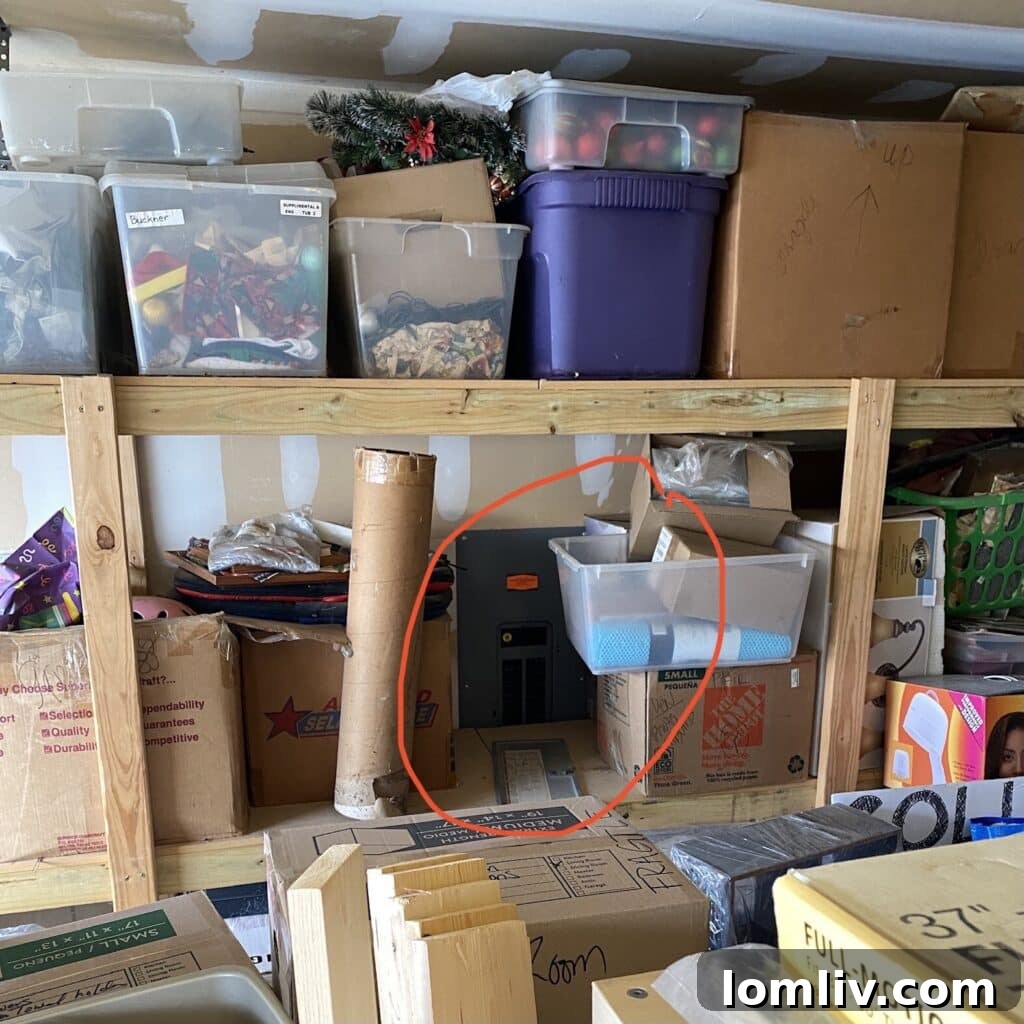
Imagine a scenario: a tripped breaker, a sudden power outage, or an electrical emergency, and you find yourself unable to access your home’s main electrical panel. The image above paints a clear picture of this exact hazard: an electrical panel completely obscured by a mountain of stored items. This is not just an inconvenience; it’s a serious safety violation and a major red flag during a home inspection. Electrical panels are the heart of your home’s power system, distributing electricity and housing crucial circuit breakers designed to prevent overloads and fires. Building codes universally mandate clear and unobstructed access to these panels for several critical reasons. In an emergency, every second counts. If a fire starts due to an electrical malfunction, firefighters need immediate access to shut off the power safely. Similarly, for routine maintenance or when a breaker trips, you need to be able to reset it quickly and without risk. Storing flammable materials near an electrical panel further compounds the danger. From an inspection standpoint, a blocked panel prevents a thorough assessment of the wiring, breaker condition, and overall safety of the electrical system, forcing the inspector to note a significant deficiency. Prior to selling a home, or even for everyday safety, it’s imperative to maintain at least a three-foot clear working space in front of and around the electrical panel. This simple act not only ensures compliance and safety but also streamlines the inspection process. Furthermore, while organizing your garage, remember that clutter often attracts unwanted pests, as we’ll explore next.
Rats in the Cradle: Battling Garage Pests Year-Round
While many homeowners associate rodent infestations primarily with the colder winter months, when mice and rats seek warmth indoors, summer can be just as problematic. During scorching summer temperatures, these resilient vermin are actively seeking refuge from the heat, along with vital sources of water and food. Your garage, with its often-cluttered spaces and potential for easily accessible resources, can quickly transform into a tempting haven for these unwanted guests if not properly managed. Rodents, such as rats and mice, are not just a nuisance; they pose significant health risks, can cause extensive property damage by gnawing through electrical wires (a major fire hazard), insulation, and structural components, and can contaminate food and surfaces with their droppings and urine. Preventing an infestation starts with vigilance and good housekeeping. Always store pet food, birdseed, and any other food items in airtight, rodent-proof containers, preferably inside your main living space rather than the garage. Keep your garage meticulously organized, minimizing clutter that provides ideal hiding spots and nesting materials for pests. Regularly inspect your garage for any potential entry points—even small cracks or gaps around pipes, vents, windows, and doors can be an invitation for rodents. Seal these openings with steel wool, caulk, or mesh. Look for tell-tale signs of their presence: small, pellet-like droppings, gnaw marks on wood or wiring, shredded materials (like paper or fabric) used for nesting, or the distinct musky odor of rodent urine. Hearing scurrying noises in the walls or ceiling, particularly at night, is another strong indicator. If you detect any evidence of rodents, act immediately. These creatures reproduce rapidly, and a small problem can quickly escalate into a full-blown infestation that is exceedingly difficult and costly to eradicate on your own. Contacting professional pest control services at the first sign of trouble is crucial to protect your home and your health.
Beyond the Obvious: Other Critical Garage Inspection Points
While we’ve highlighted some of the most common and impactful issues, a comprehensive garage inspection by Green Scene Home Inspections covers a broader spectrum of potential concerns that every homebuyer should be aware of. The structural integrity of the garage, whether attached or detached, is paramount. We scrutinize foundations for cracks, walls for signs of bowing or water intrusion, and ceilings for any indications of leaks or damage that could compromise the entire structure. Proper ventilation is another crucial element, especially in garages where vehicles idle or where gas-powered tools and equipment are stored. Adequate airflow prevents the buildup of harmful fumes and helps manage humidity, which can lead to mold growth. Fire safety standards are rigorously checked, including the presence of fire-rated walls and doors between the garage and the living space, proper storage of flammable liquids, and accessible smoke detectors. We also assess the insulation and weatherproofing, ensuring the garage is energy-efficient and protected from the elements, which impacts both comfort and utility costs. Beyond these, the general condition of floors, windows, and any additional built-in features are all part of our thorough review. Understanding that your garage is more than just a place to park your car—it’s an integral part of your home’s safety, functionality, and value—is key to a sound investment.
The Value of a Professional Garage Inspection
As this detailed overview demonstrates, the garage, often underestimated, can harbor a multitude of issues ranging from minor annoyances to significant safety hazards and costly structural problems. Whether it’s a garage door that needs attention, an unpermitted conversion hiding compliance issues, a dangerously obstructed electrical panel, or the tell-tale signs of a burgeoning pest problem, these concerns can profoundly impact your homeownership experience and financial well-being. This is precisely why a comprehensive home inspection, conducted by experienced professionals like those at Green Scene Home Inspections, is an indispensable step in the home buying process. Our inspectors possess the expertise to identify these often-hidden problems, providing you with a clear, objective assessment of the garage’s condition. By uncovering potential issues before you finalize your purchase, we empower you to make informed decisions, negotiate effectively, or address concerns proactively. Don’t let an overlooked garage become an unexpected burden. Invest in peace of mind and ensure your new home, from its foundations to its garage door, is safe, functional, and sound for years to come. For a truly “Closer Inspection” of your next property, trust the experts.