Dallas, a rapidly growing metropolitan hub, is at a critical juncture regarding its housing future. The city council recently engaged in an intensive and often contentious discussion surrounding the expansion of housing development options, with a particular focus on reducing minimum lot size requirements. This debate is not merely about zoning technicalities; it touches upon the very fabric of Dallas neighborhoods, addressing issues of affordability, density, and the evolving needs of its diverse population. While the two-hour briefing offered many insights from council members and residents on both sides of the issue, understanding the nuanced undercurrents of this complex policy discussion is essential for all stakeholders.
The impetus for this crucial conversation stemmed from a five-signature memorandum initiated by District 1 Councilman Chad West. Supported by council members Jaime Resendez, Adam Bazaldua, Paula Blackmon, and Jaynie Schultz, the memo prompted a comprehensive staff presentation on January 31. Councilman West articulated the memo’s primary objective: to explore how Dallas could effectively utilize infill properties to encourage the development of two-, three-, and fourplex housing units. Furthermore, it aimed to critically re-evaluate the city’s longstanding minimum lot size of 5,000 square feet for homes, a standard largely established in the 1950s and 1960s.
On the surface, discussing “infill properties” and “reconsidering outdated lot sizes” might appear to be a straightforward urban planning exercise. However, the reality of the situation proved far more intricate and politically charged. The path to even initiating these discussions has been fraught with challenges.
Councilman West openly acknowledged the difficulties, stating, “Due to some fears by council members surrounding even having these conversations, this discussion started off in a rocky way.” This sentiment underscores the deep divisions and anxieties that often accompany proposed changes to established zoning regulations, particularly those affecting residential neighborhoods. The topic had previously been introduced in December at a Housing and Homelessness Solutions Committee meeting, an event that many of the original memo signatories were unable to attend. Councilman Bazaldua, a proponent of the discussion who was present at the December meeting, characterized it as an “ambush riddled with theatrics,” suggesting that the framing of the initial discussion was designed to be confrontational rather than collaborative.
District 2 Councilman Jesse Moreno, who chairs the housing committee, vehemently refuted this characterization. He clarified his role in the process, asserting, “It’s been said that I refused to place this item on the agenda, and I just want to get one thing out there. I actually encouraged this to be placed on our agenda, and a different route was pursued.” This exchange highlights the political maneuvering and differing interpretations that can complicate high-stakes policy debates within municipal governance.
For journalists tasked with covering these intricate discussions, the terrain has been equally challenging. Council members who signed the initial memo have found themselves frequently defending their intentions, emphasizing that their primary goal is simply to “have a conversation about options,” rather than to push a predetermined agenda. Despite these assurances, they have faced accusations of harboring ulterior motives and attempting to railroad sweeping policy changes that could potentially undermine the character of single-family neighborhoods. Conversely, proponents of reducing minimum lot sizes have accused their detractors, often associated with the “Not In My Backyard” (NIMBY) movement, of engaging in fear-mongering tactics. The emotionally charged atmosphere surrounding the debate has made it difficult to foster constructive dialogue.
The intensity of these disagreements was further underscored by District 12 Councilwoman Cara Mendelsohn’s strong critique of a Dallas Morning News report on last week’s meeting. She labeled it “possibly the most inaccurate portrayal of a city hall meeting/discussion of a topic in the 4.5 years I’ve been on city council,” reflecting the deep dissatisfaction some council members felt regarding the media’s representation of the discussion. Given the contentious nature of the debate, interested residents are always encouraged to watch the full briefing and discussion to form their own informed opinions.
Dallas Staff Briefs Council on Minimum Lot Size Reduction Options and the Need for Modernization
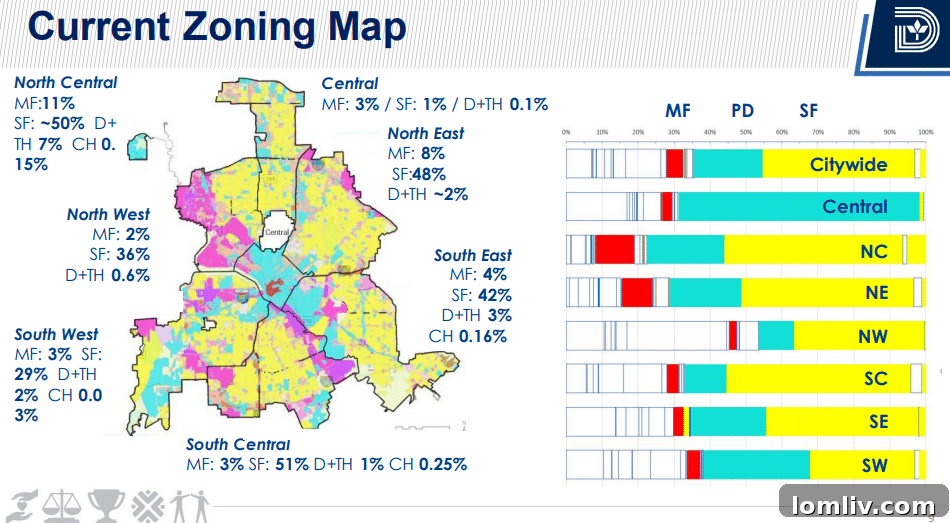
During the pivotal meeting, Assistant Planning Director Andreea Udrea delivered a detailed presentation, shedding light on Dallas’s current zoning framework. She highlighted that eighteen residential districts within the city are still rigidly structured around minimum lot size requirements. Udrea’s analysis revealed a significant imbalance in the city’s housing landscape: less than 5 percent of Dallas’s zoning accommodates multifamily developments, a mere 2 percent is designated for duplexes and townhomes, and approximately 20 percent consists of planned developments. This configuration, she argued, severely limits the diversity of housing types available to residents.
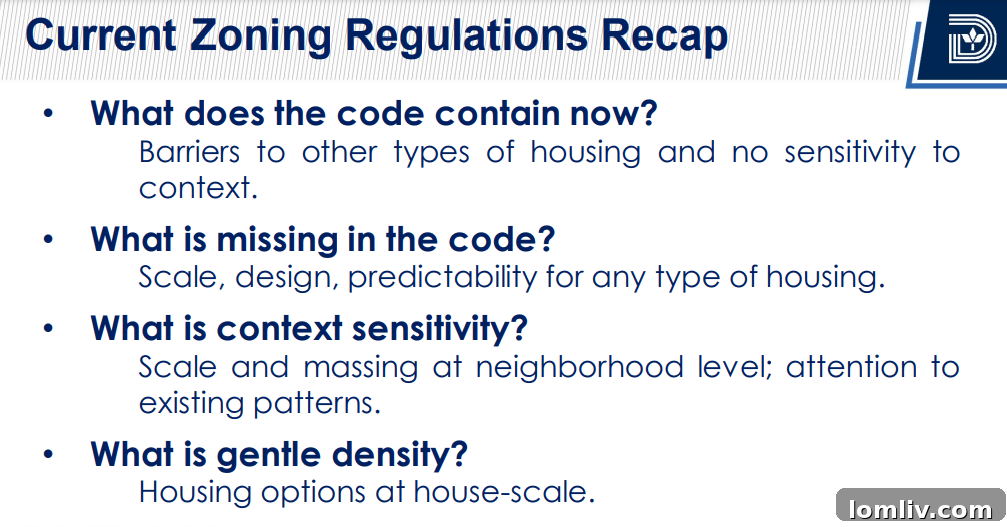
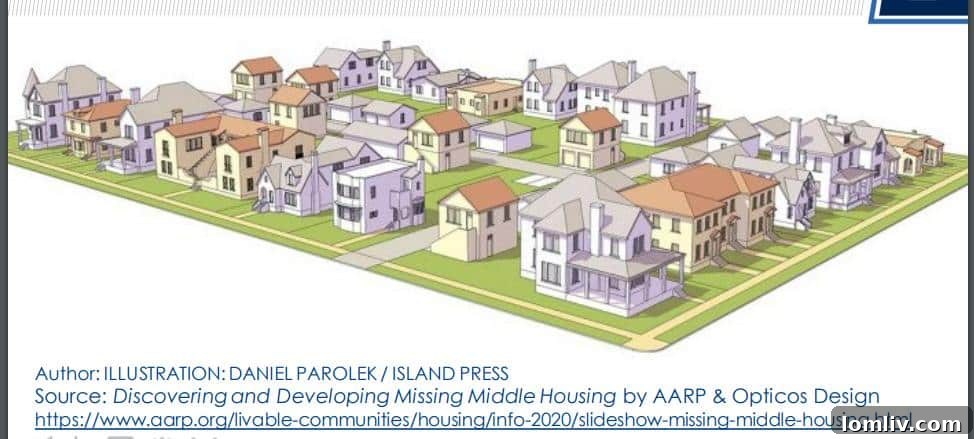
Udrea underscored a critical disconnect between existing regulations and market demand, stating that the market exhibits a “big appetite for a diversity of a platted type of single-family.” She elaborated on how current zoning often forces developers to pursue multifamily rezoning for projects that are, in essence, just duplexes. This regulatory rigidity means, as Udrea succinctly put it, “There is no bucket in the code right now for the type of gentle infill … that the market wants. The code is a little bit broken.” “Gentle infill” refers to integrating housing types like duplexes, triplexes, or small-scale apartment buildings into existing residential areas in a way that is sensitive to the neighborhood’s scale and character, avoiding abrupt changes in density.
The presentation also contextualized Dallas’s efforts within a broader national trend. Udrea explained that numerous other cities across the country are actively exploring minimum lot size reductions as a strategy to foster a wider array of housing options at varied price points. This approach aims to cater to diverse household structures, including multigenerational families, single-parent households, individuals desiring to age in place within their communities, and students requiring more affordable living solutions. By diversifying housing stock, cities can better meet the evolving demographic and economic needs of their populations.
In a point of consensus, city staff and several council members agreed on a strategic sequencing for these transformative changes: it would be prudent to first adopt the comprehensive land use plan update, known as ForwardDallas, before delving into specific zoning modifications. ForwardDallas, which is slated for council adoption this summer, is designed to provide a foundational vision for the city’s future growth and development, making it an appropriate precursor to more granular zoning discussions.
However, even within this consensus, nuances emerged. Councilwoman Mendelsohn expressed her desire for ForwardDallas to clearly define a “single-family placetype” that unequivocally restricts development to single-family homes only. While acknowledging the concepts of “context-sensitive design” and “gentle density” as potentially valid in other contexts, she drew a firm line regarding her district’s character. “When you start talking about context-sensitive design and gentle density … those are not the things I’m objecting to,” she stated. “I don’t care what it looks like, if it matches the size of the house in the neighborhood. That’s not the point. It might be context-sensitive to look that way. It doesn’t matter what it looks like. The difference is I want a single-family neighbor, and the neighbors want single-family neighbors. They don’t want to have multifamily next to them.” Her concern is rooted in the apprehension that efforts are underway to subtly redefine the very notion of “single-family” to encompass duplexes, triplexes, and quadplexes, thereby eroding the established character of existing neighborhoods.
Deputy Mayor Pro Tem Carolyn King Arnold echoed these strong sentiments, noting that city leaders have “terrorized and upset” residents who fear their established single-family neighborhoods will be “infiltrated” by multifamily units. Her stance was clear: “For me, the answer is no for established neighborhoods. Let’s not do this hoodwink, bait-and-switch, gotcha approach to our constituents.” These statements highlight the deep emotional connection many residents have to the stability and perceived integrity of their neighborhoods, and their suspicion of policy changes that could disrupt this.
In response to the accusations and heated rhetoric, Councilman Bazaldua offered an apology to the city planners, whom he felt were unfairly targeted for simply executing their professional duties. He emphasized that the discussion about lot size originated from the five-signature memo, not from any deceptive “bait-and-switch” tactics by staff. Bazaldua expressed disappointment in the divisive nature of the debate, lamenting, “I think it’s a really sad day in our city when policymakers with different perspectives and views can’t have complex policy discussions. That’s what we were elected to do. I don’t think there’s a one-size-fits-all solution, but I also don’t think the conversation should be approached as a dichotomy.” He advocates for a more nuanced and less polarized approach to policy-making, recognizing the multifaceted challenges facing Dallas.
Opposing Viewpoints: The Path Forward for Dallas Housing Density
The core of the debate revolves around fundamentally different perspectives on urban development and the city’s future trajectory. Councilman West passionately articulated the pressing need for housing solutions, referencing a Child Poverty Action Lab study to underscore how homeownership is becoming increasingly unattainable for many Dallas residents, while the demand for diverse rental units continues to soar. “So in my mind any options that we have on the table to consider, we should be considering,” he affirmed, advocating for an open-minded exploration of all potential strategies to address the city’s burgeoning housing crisis. He pointed to successful examples of “gentle density” in areas like Highland Park and Winnetka Heights, suggesting that integrating different housing types can be achieved harmoniously within existing urban fabrics.
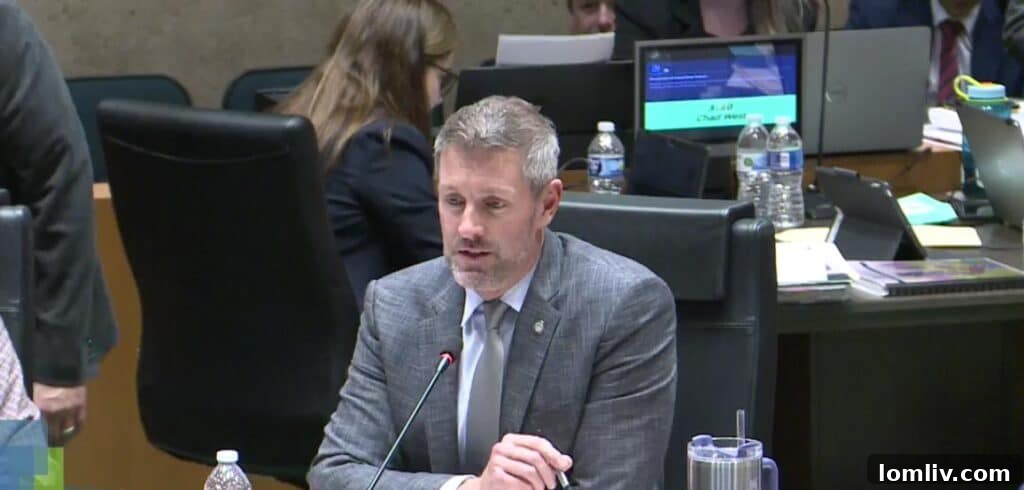
Amidst the robust discussion, Councilman West, moments before the formal briefing, made a suggestion to “punt” the matter to the appointed City Plan Commission (CPC), humorously adding, “before we try to cure cancer with this policy.” This indicated a desire to move the highly politicized discussion into a more technical, expert-driven forum. However, due to the specific way the item was posted on the agenda, the briefing proceeded as planned, concluding without a clear consensus on the immediate next steps. Later in the discussion, District 13 Councilwoman Gay Donnell Willis proposed that the Zoning Ordinance Advisory Committee, a subcommittee of the CPC, could undertake a review, suggesting another potential avenue for further study and deliberation.
Councilwoman Mendelsohn, however, left no room for ambiguity regarding her position. She firmly articulated her opposition, stating, “Thank you for the conversation. Not interested. Would not like to see that go to CPC. Thank you.” Her definitive stance underscores the deep-seated resistance from certain segments of the council and their constituents to any re-evaluation of minimum lot size requirements, particularly in established single-family areas.
Conversely, District 11 Councilwoman Jaynie Schultz expressed strong support for the continuation of the discussion. She emphasized that the current exploration “is not in any way, shape, or form a proposal,” but rather an invaluable opportunity for the city to learn, gather information, and assess if viable options exist to “make Dallas better.” This perspective frames the dialogue as a proactive measure for urban improvement rather than a threat to existing structures.
Councilwoman Willis further addressed the pervasive misinformation surrounding the topic, urging a more responsible approach to public discourse. “I think to characterize this as trying to destroy single-family neighborhoods is just irresponsible,” she declared, imploring her colleagues and the public to cease such polarizing rhetoric. She advocated for a thorough exploration of the issue, acknowledging Dallas’s status as a major city with an evolving demographic, including an aging population, and an aging housing stock. For Willis, this presents a significant “opportunity for great growth” that should not be hindered by unfounded fears. Councilwoman Blackmon echoed this sentiment, emphasizing the imperative to thoughtfully consider how the city should evolve to meet the needs of the next generation. “I think that’s a valid question that we should be asking our constituents,” she concluded, signaling that the debate on Dallas’s housing future is far from over—indeed, it is merely the beginning of “a long, long conversation.”
The Dallas City Council’s ongoing debate about minimum lot size and housing density reflects a national urban challenge: how to balance the preservation of neighborhood character with the urgent need for more diverse and affordable housing options. As Dallas continues its trajectory of growth, these discussions, however contentious, are vital for shaping a sustainable, equitable, and vibrant future for all its residents. The path ahead requires not just political will but also a commitment to data-driven policy, community engagement, and a willingness to transcend simplistic dichotomies in favor of complex, thoughtful solutions.