By Barbara Dewberry
Guest Contributor
Preserving PD-15: A Community’s Stand Against Overdevelopment and Unsuitable Urban Planning in Dallas
Last week, a column on Daltxrealestate.com by Jon Anderson stirred considerable discussion within our community. In his article, referencing the vital community meeting convened by Jennifer Gates on August 7th, Mr. Anderson attributed a statement to me, claiming I asserted, “the neighborhood doesn’t want green space.” This misrepresentation is not only inaccurate but also fundamentally misinterprets the nuanced concerns of the residents of PD-15 regarding the future of our beloved neighborhood.
Setting the Record Straight: Understanding the Community’s Vision for Green Space
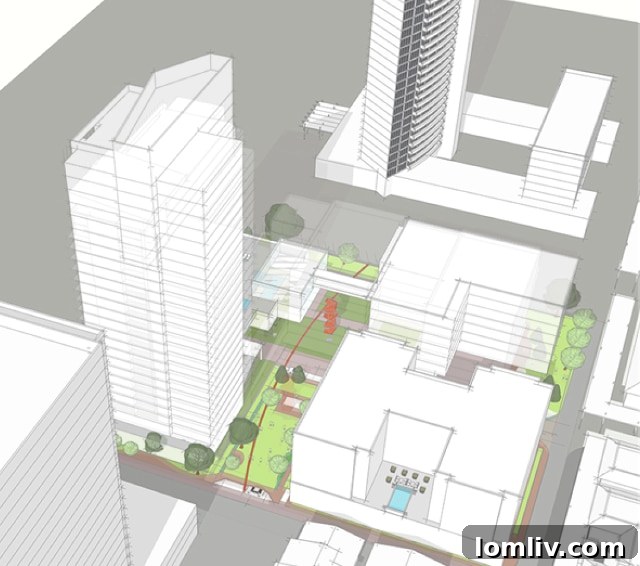
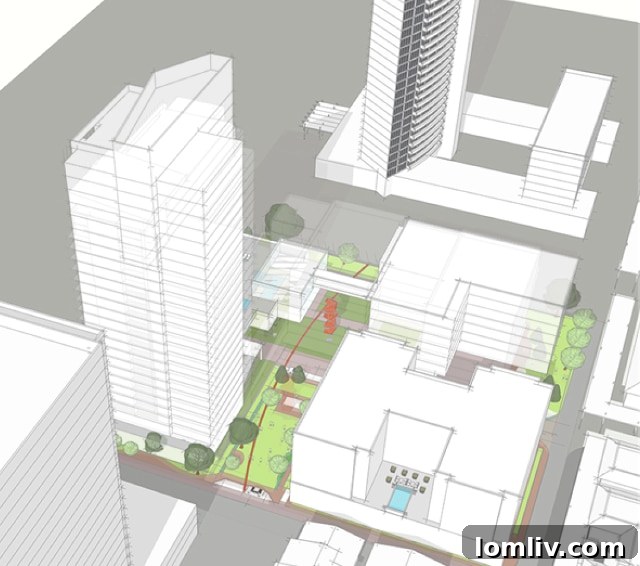
To be clear, what I stated, and what was heard by many attendees at that meeting, was: “We don’t want a public park.” This distinction is crucial and reflects a deep understanding of the practical limitations and potential negative impacts such a feature would impose on our unique four-acre parcel proposed for development. Our community unequivocally values green space, but it must be integrated thoughtfully and sustainably, not merely as a token gesture to justify increased density.
The parcel designated for development is simply too diminutive to accommodate both a significant development and a public park without creating a host of intractable problems. Furthermore, the City of Dallas has explicitly stated its unwillingness to undertake the maintenance of any proposed public park on this site. This refusal is a critical factor. Without proper stewardship, a public park in such a confined area would inevitably become a neglected space, attracting external visitors for activities like picnics, children’s birthday parties, and dog walking, without the necessary infrastructure for waste management or oversight. This would transform our currently tranquil neighborhood into a chaotic and heavily trafficked area, profoundly disrupting the peace and quiet we cherish. The financial burden of maintaining such a park would also be considerable, likely falling back on the very residents who opposed its creation, adding another layer of unfairness to an already flawed proposal.
Advocating for Sustainable, Integrated Green Solutions
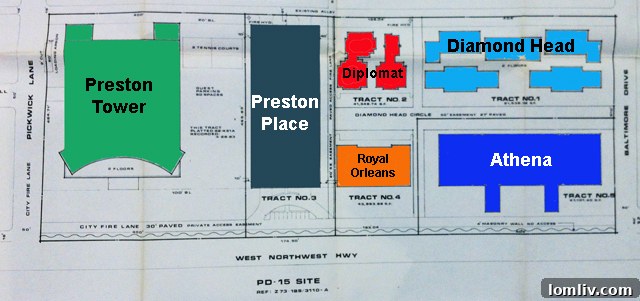
My advocacy, consistently supported by my neighbors, has always been for well-integrated green spaces surrounding the proposed buildings—similar to the successful models seen at the Preston Tower and The Athena. These designs incorporate permeable surfaces, which are not merely aesthetic but serve a vital functional purpose: mitigating the significant runoff flooding that PD-15 already experiences. Addressing these pre-existing flooding issues must be a prerequisite before any new construction commences. To further enhance green infrastructure and preserve the character of our area, we have strongly demanded a substantial 100-foot setback for any new buildings facing South towards Northwest Highway. This generous setback would not only allow for considerably more green space but also provide much-needed guest parking and, critically, protect several vintage Live Oak trees, irreplaceable natural assets to our community. The preservation of these mature trees is not just about aesthetics; they contribute significantly to the local ecosystem, provide shade, and improve air quality.
It bears repeating that our modest four-acre development site is simply not large enough to dedicate a full one-third acre to a public park while also pursuing responsible residential development. Moreover, a charming and well-maintained public park already exists conveniently at the intersection of Hillcrest and West Northwest Highway, readily accessible to the broader community without imposing additional strain or disruption on our dense residential area. Beyond ground-level greening, I have also consistently championed the inclusion of green roofs on any new structures built within PD-15. These innovative solutions offer a multitude of ecological benefits, including improved building insulation, enhanced stormwater management by reducing runoff, contributions to urban biodiversity, and an overall aesthetic improvement to the urban landscape, aligning perfectly with a modern, sustainable development approach.
In addition to these environmental and aesthetic considerations, we have also voiced a critical demand regarding construction logistics. We are insisting on the creation of a designated right-in and right-out opening in the “Pink Wall.” This strategic access point is essential to prevent large construction vehicles from indiscriminately traversing and thereby decimating our existing residential streets—streets that our homeowners collectively own and maintain—and from damaging the mature tree limbs that line them. This is not merely a convenience but a protective measure for our crucial infrastructure, our natural environment, and the safety of our residents during what would inevitably be several years of disruptive construction.
The True Intent Behind the Proposed “Park” and Development Strategy
The community perceives the proposed public park as little more than a tactical maneuver by developers to secure additional building height and density—a strategy that the neighborhood has consistently and vehemently opposed. This approach allows developers to claim a benefit to the community while simultaneously pushing for more expansive and impactful construction, effectively leveraging a symbolic gesture for substantial financial gain at the expense of residential quality of life. This manipulation of urban planning principles undermines genuine community needs for strategic concessions that serve primarily developer interests. We believe the true spirit of urban planning should prioritize harmonious integration and long-term community well-being over short-term profit margins.
The Paradox of “Affordable Housing” and Escalating Density
The PD-15 area, along with its immediate surroundings, is characterized by its wide, tree-lined streets and stands out as one of the most accessible and affordable neighborhoods in Dallas. Our existing condos and garden homes are not only spacious and well-maintained but were acquired at very reasonable purchase prices, all within an undeniably outstanding location offering excellent access to amenities and city life. Yet, the City of Dallas, in partnership with developers like Provident and Spanos, appears intent on dismantling these existing, genuinely affordable homes. In a move that defies common sense and logical urban planning, the city then proposes to offer incentives to these same developers to include “affordable housing apartments” as a justification for constructing outrageously tall buildings, soaring to heights of 310 feet, fundamentally altering the skyline and character of our low-rise community.
This raises a fundamental question that demands an honest answer: Does it truly make sense, from a community welfare perspective, to demolish existing affordable and quality housing stock only to replace it with high-rise structures whose “affordability” often comes with significantly increased density and a diminished quality of life for all residents? This strategy seems counterproductive, potentially displacing current residents who have built their lives here over decades, while simultaneously introducing a level of urban density that is incompatible with the existing fabric of the neighborhood and its infrastructure. The promise of “affordable housing” should not be a Trojan horse for overdevelopment that ultimately detracts from the very community it purports to serve, eroding the very affordability and quality of life that currently define PD-15. This is not progress; it is an unsustainable transformation that benefits few at the expense of many.
The Impending Traffic Nightmare and Over-Densification of PD-15
The ramifications of squeezing potentially four new high-rise buildings into the limited space of PD-15, with perhaps 750 units if Diamond Head proceeds with its plans, are staggering. This could translate into an influx of approximately 1,500 new residents and an equivalent number of 1,500 additional cars onto our already strained local roadways. The resulting chaos is almost unfathomable. Imagine the sheer volume of people and vehicles crammed into such a small footprint once development is complete. Consider the constant flow of trash trucks navigating narrow residential streets, numerous daily deliveries from services like UPS and FedEx creating congestion, a continuous stream of Uber and Lyft vehicles, countless guests vying for limited parking, and a myriad of service and repair vehicles attempting to access the new high-rises. Our current infrastructure simply cannot support this exponential increase in activity without severe repercussions.
It’s no exaggeration to suggest that residents might metaphorically need helicopters just to navigate out of their homes amidst such gridlock. This level of over-densification will not only create untenable traffic conditions, leading to longer commute times and increased frustration, but also strain essential city services, diminish air quality due to increased vehicle emissions, and fundamentally erode the peaceful residential character of our community. The existing roads were not designed for such intensity, and the proposed plans offer no viable solutions to prevent a complete breakdown of local transit and accessibility. The erosion of quality of life for current residents, who value tranquility and ease of movement, would be profound and irreversible.
A Question of Ethics and Community Voice in Development Debates
For those Daltxrealestate.com readers who have been following this contentious issue, it may have become apparent that Jon Anderson, unfortunately, appears to show little compassion for the legitimate concerns of our neighborhood. His commentary often seems to align with the perspectives of Margot Murphy, Jennifer Gates, and the developers, seemingly endorsing their proposals without a deep appreciation for the potential long-term damage to our community. The proposed height and density, which threaten to irrevocably alter and ultimately ruin the tranquil essence of our neighborhood, will no longer personally affect him, as he has relocated from The Athena. Consequently, he will not have to bear the daily consequences of what we view as a gravely flawed and undesirable plan, leaving current residents to face the brunt of his endorsed development.
It is worth noting that Jon’s former unit at The Athena, situated on the west end facing north, was one of only two units in that orientation that have sold recently. Currently, we observe five units facing north within our development that are listed for sale and are experiencing significant difficulty in finding buyers. One must ponder: is the looming specter of this disastrous proposed zoning plan—with its promise of construction upheaval and permanent over-densification—already causing a chilling effect on property values and market interest in our area? This troubling trend suggests that the very battle for appropriate zoning is inadvertently contributing to a situation where properties are becoming harder to sell and prices are being driven down, creating a self-fulfilling prophecy of declining value. The instability created by these development disputes directly impacts the financial security of homeowners.
Thus, a pertinent question arises: Is the City of Dallas, through its pursuit of this problematic zoning, ironically contributing to the creation of even more “affordable housing” by depressing market values within PD-15 and forcing existing homeowners into difficult positions? Jon, it seems, knew precisely “when to fold ’em,” choosing to depart from the inevitable five years of disruptive construction and the subsequent chaos of excessive height and density – a future burdened by too many people, too many cars, and untenable traffic. All of these consequences are direct results of the outrageous zoning plan that Jon, by his public stance, seemingly embraced and advocated for, leaving us, the long-term residents, to endure its protracted and detrimental aftermath. This demonstrates a clear disconnect between those advocating for rapid development and those who will live with its enduring impacts.
The Crucial Moment: A Call to Action for Dallas City Council
Our community has one final, critical opportunity to make our voices heard by the Dallas City Council. This pivotal meeting is scheduled for September 11th. We sincerely hope that the Council Members will exercise judicious foresight, see beyond the developers’ polished, yet potentially disingenuous, “Follywood” presentation, and genuinely consider the long-term well-being of the residents who call PD-15 home. We urge them to help us forge a plan for development that truly complements the existing character and needs of the PD-15 area, not just for today, but for generations to come. We believe in thoughtful, measured growth that enhances, rather than destroys, the essence of our community.
We implore all concerned citizens and residents to take immediate action. Please call or email your respective Council Members without delay. Ask them unequivocally to save our neighborhood and to deny the City Plan Commission and developers’ current plan. This is our moment to demand responsible governance and thoughtful urban planning that prioritizes community welfare over developer profits. Subsequently, we advocate for the homeowners of PD-15 to be given the opportunity to work collaboratively with developers to create a reasonable and appropriate plan for PD-15 – a plan that respects existing residents, preserves neighborhood integrity, ensures sustainable infrastructure, and fosters genuine community prosperity.
Barbara Dewberry is a resident of The Athena, one of two high-rise buildings situated within PD-15. To submit your opinion for consideration, please email [email protected].