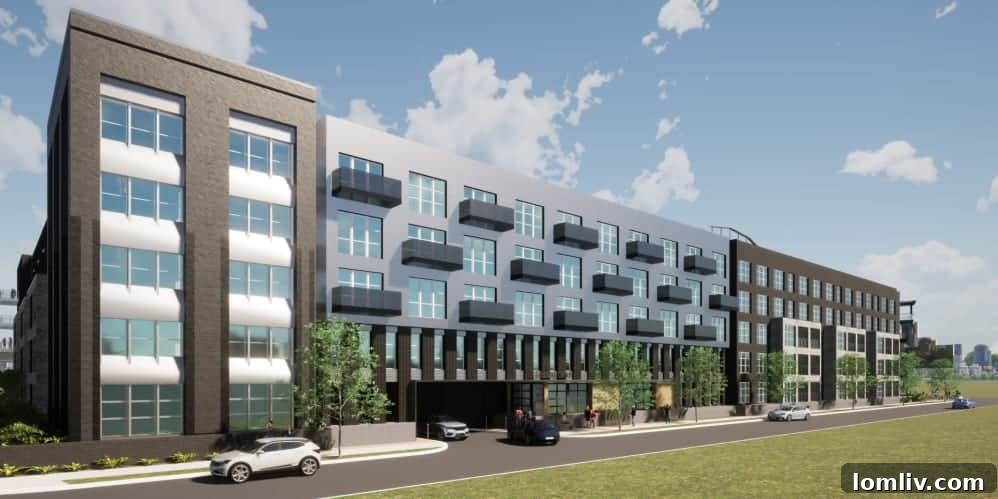
Dallas Champions Affordable Housing: Banyan Flats Project Set to Transform Bishop Arts District
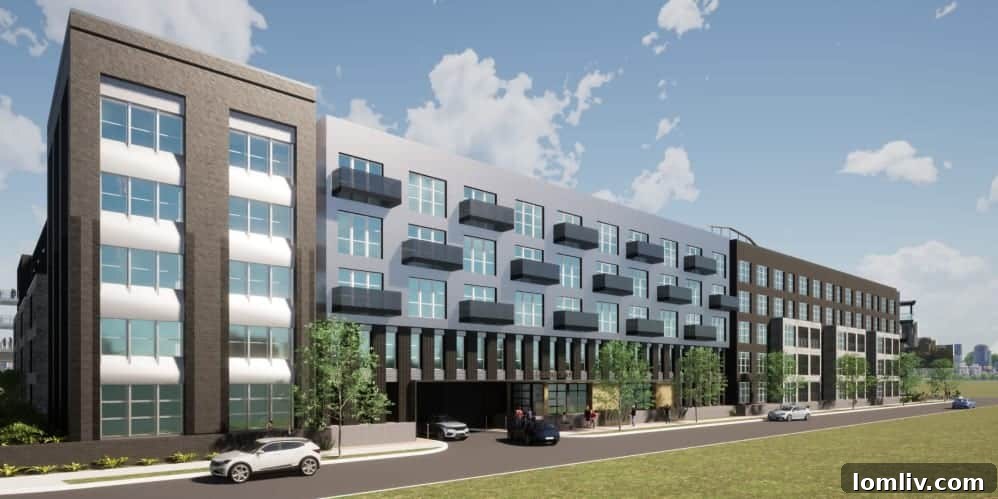
In a significant stride towards addressing Dallas’s persistent housing challenges, the City Council has given its official nod to a transformative development project slated for the vibrant Bishop Arts District. This pivotal decision paves the way for almost 300 new housing units, with a crucial commitment that at least half of these will be designated as affordable housing. The Banyan Flats development, located in a rapidly evolving part of the city, represents a critical investment in mixed-income communities and a strategic effort to provide housing solutions for a diverse range of Dallas residents.
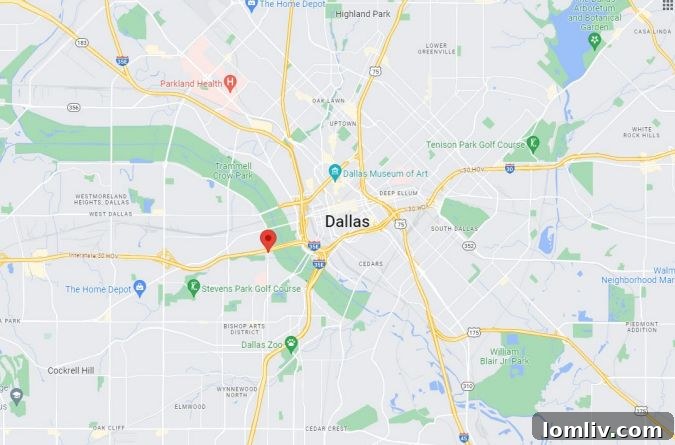
The approval, finalized during the Dallas City Council meeting on October 25, authorizes the city’s Public Facility Corporation (PFC) to acquire the Banyan Flats property situated at 2020 North Beckley Avenue. This acquisition mechanism allows the PFC to enter into a comprehensive 75-year lease agreement with Bishop Arts JV LLC, the developer spearheading the project. Under the terms of this long-term partnership, the developer will receive a substantial tax abatement in exchange for its commitment to provide the stipulated number of affordable housing units. This collaborative approach, leveraging public and private resources, is designed to make economically unfeasible projects viable, thereby expanding the city’s affordable housing inventory. The estimated revenue foregone by the city through this tax abatement over a 15-year period is approximately $2.27 million, a figure deemed a worthwhile investment given the pressing need for accessible housing options in Dallas.
Understanding the Banyan Flats Development: A Closer Look at Unit Allocations
The Banyan Flats project is meticulously designed to foster a genuinely mixed-income community, reflecting Dallas’s commitment to inclusive urban development. Out of the 289 units planned for the development, the allocation is structured to serve various income brackets:
- 144 units will be offered at market rate, catering to residents who can afford prevailing rental costs in the area. These units contribute to the overall economic vitality of the development and help subsidize the affordable units without direct government operating subsidies.
- 116 units are specifically designated for residents earning at or below 80 percent of the Area Median Income (AMI). This segment targets individuals and families who may find market-rate rents prohibitive but are above the threshold for deeper affordability programs.
- 29 units are reserved for residents earning at or below 60 percent of the Area Median Income (AMI). This allocation provides crucial support for lower-income households, ensuring that a significant portion of the development is accessible to those with greater financial constraints.
This tiered approach to affordability is a cornerstone of Dallas’s strategy to create diverse communities where people of various economic backgrounds can live and thrive together. The Area Median Income (AMI) is a key metric used nationwide to determine eligibility for affordable housing programs, reflecting the median income for a given metropolitan statistical area, adjusted for family size. By setting specific percentages of AMI, the city aims to serve a broad spectrum of residents who are otherwise cost-burdened by the city’s increasingly high rental market.
Beyond the income-based allocations, the Banyan Flats project also offers a practical and varied mix of unit types to accommodate different household sizes and needs. Plans for the development include:
- 87 studio units, ideal for single individuals or young professionals seeking compact, efficient living spaces.
- 136 one-bedroom units, suitable for individuals or couples.
- 61 two-bedroom units, designed for small families or roommates.
- Five three-bedroom units, providing much-needed larger accommodations for families.
This thoughtful blend of unit sizes ensures that the Banyan Flats project can serve a wide demographic, from single residents to families, further enhancing the inclusivity and appeal of the development within the Bishop Arts District.
Navigating the Debates: Councilwoman Mendelsohn’s Stance on Affordable Housing Investment
While the Banyan Flats project garnered city council approval, the vote was not without nuanced discussion and dissenting opinions, particularly from District 12 Councilwoman Cara Mendelsohn. Mendelsohn, a vocal critic of Public Facility Corporation (PFC) projects, stated her philosophical opposition to such developments primarily due to the inherent tax abatements they entail. Her concerns stem from the belief that these tax incentives, while stimulating development, divert potential revenue from the city’s general fund and may not always target the most critical housing needs.
In her critique of the Banyan Flats project, Mendelsohn specifically highlighted a significant gap in its affordability structure: the absence of units designated for low-income residents at or below 30 percent of the Area Median Income (AMI). This particular demographic, she emphasized, represents where the greatest and most urgent need for affordable housing exists in Dallas. Housing solutions for individuals and families at this income level often require deeper subsidies and more robust support mechanisms, which PFC projects, with their focus on broader affordability tiers, sometimes struggle to provide.
Despite her reservations regarding the PFC mechanism, Councilwoman Mendelsohn acknowledged and commended the Dallas City Council’s broader commitment to affordable housing initiatives. She noted that the October 25 meeting alone saw the approval of three housing projects, collectively representing a substantial $150 million investment in affordable housing across the city. The other two projects approved during the same meeting, importantly, fell under the Dallas Housing Finance Corporation (DHFC) structure. The DHFC operates under different financial frameworks than PFCs, often allowing for deeper levels of affordability and utilizing various bond financing or tax credit mechanisms without the direct tax abatement concerns associated with PFCs.
Mendelsohn has been an ardent advocate for transparency and accountability in affordable housing expenditures. She revealed that she has formally requested Housing and Homelessness Solutions Committee Chair Jesse Moreno to commission a detailed report for Fiscal Year 2023. This report would meticulously track and showcase the total dollars allocated to affordable housing projects throughout the year, aiming to provide a clear picture of the city’s financial commitment. “I think this city is making an unprecedented investment in affordable housing, and it goes completely unnoticed,” she stated, underscoring her desire for greater public awareness and appreciation of these efforts.
Further elaborating on her position, Mendelsohn clarified that while she consistently opposes PFC projects due to her philosophical objections to tax abatements, she has steadfastly supported every project brought forth by the Dallas Housing Finance Corporation. This distinction highlights her preference for certain financing models that she believes are more equitable or efficient in achieving affordable housing goals. Her comments reflect a shared pride in the city’s overall progress: “We should really be proud of the efforts we are making,” she affirmed, acknowledging the collective commitment to tackling one of Dallas’s most pressing urban challenges.
The Broader Context: Dallas’s Persistent Housing Gap and Future Outlook
The approval of Banyan Flats and the ongoing discourse among city leaders underscore a critical reality in Dallas: the significant and persistent gap in available rental housing, particularly for low and middle-income residents. Councilman Chad West, who represents District 1, encompassing the thriving Bishop Arts District where Banyan Flats will be constructed, highlighted this challenge. He referenced a recent and comprehensive report from the Child Poverty Action Lab, which unequivocally identified a substantial deficit in suitable and affordable rental units across Dallas. This report provides crucial data, illustrating how the scarcity of housing impacts families, exacerbates child poverty, and hinders economic mobility for many residents.
West’s remarks, while acknowledging the monumental efforts being made, also conveyed a sense of the scale of the task ahead. “Even with our efforts, which I agree have been pretty amazing, we still have a long way to go,” he commented, reflecting a pragmatic understanding of the city’s housing predicament. Despite the challenges, he expressed a degree of optimism: “I’m cautiously optimistic that we’re on the right track.” This sentiment suggests that while current initiatives are commendable, the city must maintain its momentum, explore innovative solutions, and perhaps even accelerate its strategies to truly bridge the housing gap. The Bishop Arts District itself, with its rapid gentrification and increasing property values, epitomizes the very challenges Banyan Flats aims to address, making its mixed-income model particularly vital for preserving diversity and accessibility in the area.
Demystifying ‘Missing Middle’ Housing: Bridging the Affordability Chasm
The Banyan Flats project is a direct response to the critical need for what urban planners and housing advocates refer to as “missing middle” housing. This term describes housing types that are more diverse in size and form than typical single-family homes or large apartment complexes, designed to be more affordable, and cater to households whose incomes are too high to qualify for traditional low-income housing subsidies but too low to comfortably afford market-rate rents in desirable urban areas. This segment often includes essential workers like teachers, nurses, first responders, and service industry employees who form the backbone of a city’s economy but face severe cost burdens due to escalating housing prices.
Developers involved in the Dallas housing landscape, including representatives from Ojala Partners, Hunt Realty, and Builders of Hope Community Development Corp., shed light on the formidable barriers to constructing affordable housing during an October webinar hosted by the Dallas Housing Coalition. Their insights underscored a range of challenges, from bureaucratic delays in permitting and approvals to a significant lack of sufficient financial incentives to offset the high costs of land acquisition, construction materials, and labor in a booming real estate market.

Kirk Presley, an associate with Ojala Partners, articulated the fundamental economic paradox of affordable housing development. “When you’re talking about affordable housing, you’re talking about building something and then offering it to people below the cost to build it,” he explained. He further elaborated on the stark reality facing Dallas: “If we wanted everyone to live in market-rate housing, we wouldn’t have a problem, but we have half of our city that can’t afford market-rate housing with what the cost of construction is. It’s only through city government, federal, and local subsidy, that you can create something you’re going to sell below costs.” This statement powerfully illustrates why public-private partnerships, subsidies, and creative financing mechanisms like those involving the PFC are not merely desirable but absolutely essential for creating accessible housing options.
Indeed, a resolution adopted by the Dallas City Council in support of the Banyan Flats development explicitly confirms this economic necessity. The resolution unequivocally states that “the project would not be economically feasible without the PFC’s participation.” This official acknowledgement underscores the critical role that public entities play in de-risking and enabling projects that private developers alone cannot undertake profitably while delivering significant public benefits.
The resolution further clarifies the city’s intent and the specific demographic targets for Banyan Flats: “Whereas … the City desires to authorize … a lease agreement with the Applicant or its affiliate in order to provide mixed-income, workforce housing to the ‘missing middle’ of the market, residents that earn above 60 percent AMI but would be cost-burdened by market rents in the City.” This highlights the specific focus on helping individuals and families who are above the very lowest income thresholds but still struggle with the high cost of living in Dallas. Furthermore, the inclusion of units for “individuals and families earning below 80 percent AMI are included to provide deeper affordability at this property,” demonstrating a commitment to reaching beyond just the “missing middle” to embrace a broader range of affordability needs within the development. This multifaceted approach is vital for fostering equitable growth and ensuring that Dallas remains a city where diverse communities can thrive.