Navigating the Gridlock: Is Dallas Next to Face Austin’s Traffic Nightmare?
Understanding the escalating challenge of urban traffic congestion in Texas and beyond.
Austin’s Alarming Reality: A National Benchmark for Gridlock
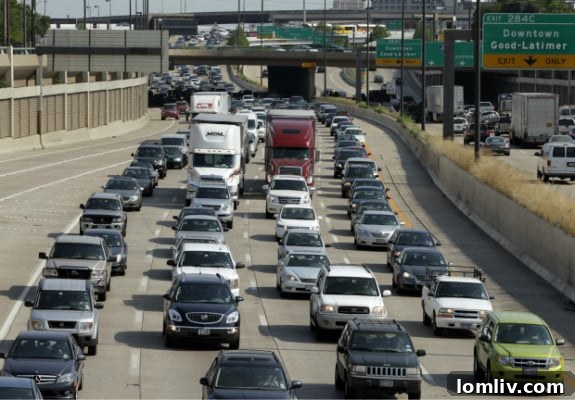
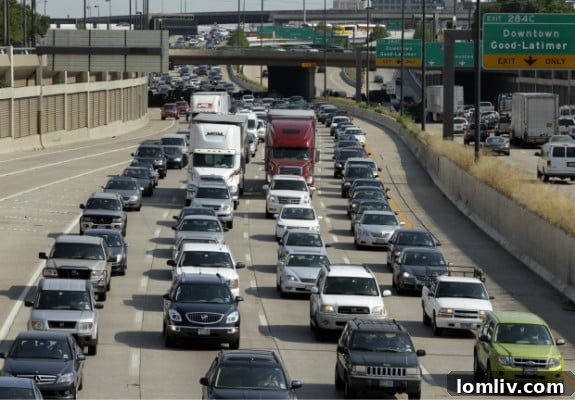
The daily commute for many Texans has become an endurance test, a relentless battle against the clock and an ever-increasing sea of vehicles. Recent data paints a stark picture, particularly for the vibrant capital city. According to a comprehensive study performed by the National Traffic Scorecard by Inrix, Austin, Texas, now ranks as the fourth worst city for traffic wait times in the entire country. This isn’t just a minor inconvenience; it’s a monumental challenge that places Austin’s traffic woes above even those of New York City, which holds the fifth spot on this unenviable list.
For anyone who has navigated the sprawling urban landscape of Austin, the culprit is often singular and notorious: Interstate 35. This arterial highway, a lifeline for commerce and commuters, transforms into an absolute nightmare at virtually any given time of day. During peak rush hour, the situation devolves further, demanding extraordinary patience and often forcing drivers to simply pull over for an hour or three, waiting for the inevitable crawl to subside. The impact extends beyond mere frustration, affecting productivity, contributing to stress, and eating away at precious personal time. The constant stop-and-go conditions also lead to increased fuel consumption and higher vehicle emissions, posing environmental concerns alongside economic ones.
The Economic Pulse and Its Reflection in Traffic Patterns
Interestingly, economic health has a direct, albeit sometimes counterintuitive, relationship with traffic congestion. During periods of economic downturn, such as the global recession, a slight silver lining emerged: traffic volumes tended to diminish. This phenomenon is largely attributable to reduced employment, fewer discretionary trips, and a general tightening of belts that discouraged extensive driving. However, as economies began their slow, arduous recovery, so too did the congestion on our roads.
The Inrix report highlighted this trend vividly, stating: “congestion was up for 7 consecutive months from January through July 2013 indicating after 2012’s rollercoaster, a slowly improving economy.” This resurgence in traffic in 2013 signaled a return to pre-recession activity levels, but also brought with it the growing pains of prosperity. Austin, in particular, saw a significant increase, racking up three extra hours of average traffic time per year from 2012. This placed the city just below the legendary traffic nightmares of Los Angeles, Honolulu, and San Francisco in terms of road wait times.
Having personally experienced the gridlock in these top-tier cities, one can readily vouch for the severity. In San Francisco, for instance, the sheer density of vehicles can be so overwhelming that it almost compels drivers to postpone travel until after 11 p.m. just to navigate the city with any semblance of speed. This anecdote underscores the profound impact severe congestion has on daily life and the desperate measures commuters adopt to circumvent it. It highlights how deeply traffic can dictate personal schedules and routines, eroding work-life balance and overall well-being.
Dallas: On the Brink? Global Trends Point to an Inevitable Rise
While Dallas has, fortunately, not yet ascended to the top five list of the nation’s most congested cities, the writing is on the wall. A critical takeaway from various traffic analyses globally is an undeniable truth: people are driving more everywhere! This isn’t just a localized phenomenon; it’s a worldwide trend with far-reaching implications for urban planning and infrastructure.
The statistics are compelling:
- Traffic is back on the rise in 2013, even in countries showing continued declines. Traffic congestion was up in six of the 15 countries analyzed (the U.S., UK, Ireland, Switzerland, Luxembourg, and Italy) compared to only one country in 2012 (Luxembourg).
- More broadly, traffic congestion increased in 105 of the 194 cities analyzed globally.
This widespread increase in vehicle dependency defies popular calls for more sustainable, car-free lifestyles. Despite advocacy for ditching cars and embracing walking or cycling, the reality on the ground indicates a persistent reliance on personal vehicles. Alarmingly, traffic congestion is increasing at three times the rate of employment, highlighting a widening gap between infrastructure capacity and vehicle demand.
Why the Persistent Reliance on Cars? Demographic Shifts and Urban Challenges
Several factors contribute to this enduring trend. Demographics play a significant role. An aging population, particularly Baby Boomers, may find it increasingly difficult to walk or cycle due to physical limitations like “bad knees.” Similarly, younger generations, such as Millennials, who are often raising families, face challenges related to “schlepping babies” and associated gear, making personal vehicles a practical necessity for daily errands and commutes. These specific needs often make public transportation or active transport less feasible for a significant portion of the population.
These demographic realities are crucial considerations for cities like Dallas, especially in ongoing discussions about major infrastructure projects. For instance, the passionate debate surrounding the potential tearing down of I-345 in Dallas is a prime example of a complex urban planning challenge. While I, like many others, support seriously studying such proposals, a fundamental question must be addressed: will removing a vital highway truly make traffic disappear, or will it merely force more vehicles onto already strained alternative routes, especially when the overall trend indicates a continuous increase in the number of drivers?
The concept of induced demand is particularly relevant here. This theory suggests that expanding road capacity can paradoxically lead to more traffic, as new roads encourage more people to drive, or existing drivers to make more trips, thus negating the initial relief. Conversely, removing capacity without viable alternatives could exacerbate congestion elsewhere. These complexities necessitate a holistic approach to urban planning that considers not just the immediate impact but also long-term behavioral changes and demographic shifts, always keeping the future growth projections in mind, as highlighted by the ongoing discussions about I-345.
The Global Perspective: Urbanization, Vehicle Growth, and Future Gridlock
The traffic challenges faced by American cities are not isolated incidents but rather microcosms of a much larger global phenomenon. As the world approaches the five-year mark since the onset of the global recession, there’s a clear pattern of population migration towards urban centers where job opportunities are concentrated. This rapid urbanization is a defining trend of the 21st century.
The United Nations predicts that by 2050, a staggering seven out of every ten people will be living in an urban center, a significant jump from just over half of the world’s population residing in cities today. This demographic shift has profound implications for urban infrastructure and transportation. Adding to this challenge, Executive Chairman of the Ford Motor Company, Bill Ford Jr., ominously stated that the number of vehicles on the world’s roads is projected to grow from 1 billion today to a staggering 4 billion in the same period of time.
Coupled with the fact that traffic congestion is increasing at three times the rate of employment, this trajectory paints a concerning picture for the future of urban mobility. We’ve already witnessed extreme examples of this challenge: the infamous 10-day long traffic jams in China, or the two-to-three-hour daily commutes that are an unfortunate reality for residents in megacities like Sao Paulo, Brazil. These are not distant, exotic scenarios; they represent a potential future for drivers in Europe and North America, including cities like Dallas, in the not-so-distant future if proactive measures are not taken.
Innovative Solutions for a Congested Future
Addressing this looming crisis requires a multi-faceted approach, moving beyond simply building more roads or tearing down existing ones. Cities worldwide are exploring innovative solutions:
- Investing in Robust Public Transportation: Expanding and modernizing subway, bus, and light rail systems can offer viable alternatives to personal vehicles, reducing the number of cars on the road and providing equitable access to jobs and services.
- Promoting Mixed-Use Developments: Designing communities where residential, commercial, and recreational spaces are integrated reduces the need for long commutes, encouraging walking, cycling, and shorter car trips. This fosters more vibrant and pedestrian-friendly neighborhoods.
- Embracing Smart City Technologies: Utilizing data analytics, AI-powered traffic management systems, and smart sensors can optimize traffic flow, dynamically adjust signal timing, and provide real-time navigation information to drivers, reducing bottlenecks.
- Encouraging Alternative Commuting: Supporting carpooling, ride-sharing services, flexible work schedules, and telecommuting can significantly reduce peak-hour traffic volumes by dispersing travel demand throughout the day.
- Developing Sustainable Infrastructure: Prioritizing infrastructure projects that improve efficiency, incorporate green technologies, and are resilient to future growth and climate change, ensuring longevity and environmental responsibility.
- Enhancing Active Transportation: Creating safer and more extensive networks of bike lanes and pedestrian walkways can encourage active modes of transport for short-to-medium distances, improving public health and reducing reliance on cars.
For Dallas, learning from Austin’s experience and anticipating the challenges of rapid growth are paramount. The debate over I-345, for instance, should be framed within this broader context of global urbanization and vehicle growth, demanding solutions that are forward-thinking and sustainable rather than merely reactive. It’s about designing a city for the future, not just managing the present.