Texas has long been a beacon for growth, drawing in residents and businesses with its vibrant economy, diverse culture, and appealing lifestyle. Recent analyses from prominent publications further solidify the Lone Star State’s reputation as a prime destination. From top rankings in livability to being a magnet for the Millennial generation and boasting some of the nation’s most diverse urban centers, Texas metros are consistently making headlines. This comprehensive roundup delves into the latest real estate and demographic insights, highlighting why cities like Dallas-Fort Worth, Austin, Houston, and San Antonio are not just growing, but thriving as hubs of opportunity and community.
Understanding these trends is crucial for anyone considering a move, investors eyeing new markets, or current residents looking to appreciate their city’s standing. We’ll explore the detailed findings from U.S. News and World Report, WalletHub, and Meyers Research/Builder Magazine, offering a nuanced perspective on what makes Texas metros so compelling. Prepare to discover the factors that contribute to their high rankings, their unique characteristics, and their undeniable appeal to a broad spectrum of individuals and families seeking a dynamic place to call home.
Dallas-Fort Worth Secures Spot Among Nation’s Top 25 Best Places to Live
In a comprehensive evaluation of 125 major metropolitan areas across the United States, Dallas-Fort Worth has proudly earned its place as the 21st best place to live, according to the esteemed U.S. News and World Report. This ranking underscores the region’s strong performance across critical metrics that determine quality of life, economic opportunity, and overall desirability. The assessment considers factors such as job market strength, housing affordability, quality of life, desirability, and net migration, painting a holistic picture of urban living.
While Dallas-Fort Worth shines brightly, other Texas giants also made a significant impact on the list. Austin, the state capital, captured the top spot nationally, cementing its status as the premier destination for many Americans. Following closely, Houston ranked 30th, and San Antonio secured the 34th position, collectively demonstrating Texas’s formidable presence in the national landscape of desirable places to live.
The report lauded Dallas-Fort Worth for its unique blend of urban sophistication and small-town charm. “The small-town feel of Friday night football games and backyard parties exists in the suburbs of Dallas-Fort Worth. In those areas, residents can bump into their friends at the local Tex-Mex restaurant, children ride their bikes and joggers hit the pavement for evening runs,” the report noted. This description perfectly encapsulates the suburban lifestyle that offers a sense of community and familiarity. Even within the bustling core of DFW, the famed “Texas friendliness” persists, with residents often extending a warm wave or a “hello” to strangers, fostering an inviting atmosphere that many find appealing.
Beyond its welcoming culture, Dallas-Fort Worth boasts a robust and diverse economy. The region is a powerhouse in sectors such as corporate headquarters, finance, technology, healthcare, and logistics, offering a wealth of employment opportunities. This strong job market is a significant draw, attracting professionals and families seeking career growth and stability. Coupled with a relatively lower cost of living compared to major coastal cities, DFW presents an attractive proposition for those looking to maximize their earning potential while enjoying a comfortable lifestyle.
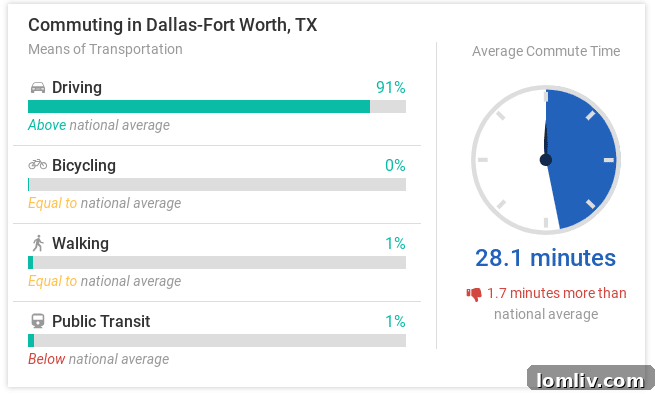
However, like any large metropolitan area, DFW faces its share of challenges. The report highlighted that the area’s commute time averages approximately 1.7 minutes longer than the national average, a common characteristic of rapidly expanding cities. Furthermore, the public transit infrastructure, specifically the Dallas Area Rapid Transit (DART) rail system, received a critical mention. “The rail system’s coverage is limited, however, with only about 60 stations spread out over the area,” the report stated. While DART’s utility is acknowledged for city events and concerts, providing a convenient way for riders from Plano and Irving to reach downtown Dallas, its broader daily utility for commuting across the sprawling metroplex still has room for improvement. Despite this, ongoing investments in infrastructure and potential future expansions aim to enhance connectivity and alleviate traffic congestion, reflecting a commitment to sustainable urban development.
The strong performance of Texas cities in these national rankings is a testament to the state’s economic dynamism and the appealing quality of life it offers. For Dallas-Fort Worth, its blend of economic might, community spirit, and an evolving urban landscape positions it as a consistently desirable place to live for a diverse population.
Source: U.S. News and World Report
Dallas and Arlington Shine in Top 10 for Urban Diversity
Diversity is increasingly recognized as a cornerstone of thriving urban environments, contributing to economic resilience, cultural richness, and social cohesion. In a comprehensive study by WalletHub, comparing 501 of the largest U.S. cities, Dallas has emerged as a leader, securing the fifth spot on the list of the nation’s most diverse cities. Not far behind, its neighbor, Arlington, proudly ranked ninth, solidifying North Texas’s reputation as a melting pot of cultures and backgrounds.
The WalletHub report employed a robust methodology, evaluating cities across five key dimensions of diversity: socioeconomic, cultural, economic, household, and religious diversity. These metrics provide a nuanced understanding of how varied a city’s population is, extending beyond simple racial or ethnic composition to encompass income levels, industries, household types, and belief systems. Such broad criteria highlight cities that offer a wide array of perspectives and experiences, fostering innovation and a dynamic community spirit.
Houston, another jewel in the Texas crown, was recognized as the most diverse city in the entire U.S., a remarkable achievement that speaks volumes about its inclusive nature and global connections. This top ranking for Houston, coupled with Dallas and Arlington’s strong performance, underscores Texas’s overall commitment to welcoming and integrating diverse populations. Other significant Texas cities also featured prominently, with Fort Worth ranking 25th and Plano 57th. These rankings demonstrate that diversity is not just concentrated in one or two areas but is a widespread characteristic across many of the state’s major metropolitan areas.
At the other end of the spectrum, Laredo was identified as the least diverse city among the Texas entries, placing 463rd nationally. This contrast illustrates the varied demographic landscapes within the state, where some cities maintain a more homogeneous population while others actively embrace and benefit from a broad range of backgrounds.
The high diversity rankings for Dallas and Arlington are a direct reflection of their dynamic economies, global appeal, and welcoming communities. Both cities have experienced significant influxes of international populations, drawn by job opportunities in sectors such as technology, healthcare, trade, and education. This immigration, combined with migration from other U.S. states, has created vibrant cultural tapestries, evident in the diverse culinary scenes, community festivals, and multilingual environments found throughout these cities. Living in a diverse city offers numerous advantages, from exposure to different ideas and traditions to the economic benefits of varied skill sets and entrepreneurial ventures. It enriches the daily lives of residents and strengthens the overall fabric of the community.
These findings from WalletHub not only celebrate the current state of diversity in Texas metros but also point to a future where these cities continue to be models of integration and multicultural coexistence. For residents and prospective movers, this means access to richer cultural experiences, a broader range of perspectives, and a stronger sense of belonging within a truly global community.
Source: WalletHub
Dallas Leads as the Premier Destination for Millennial Movers
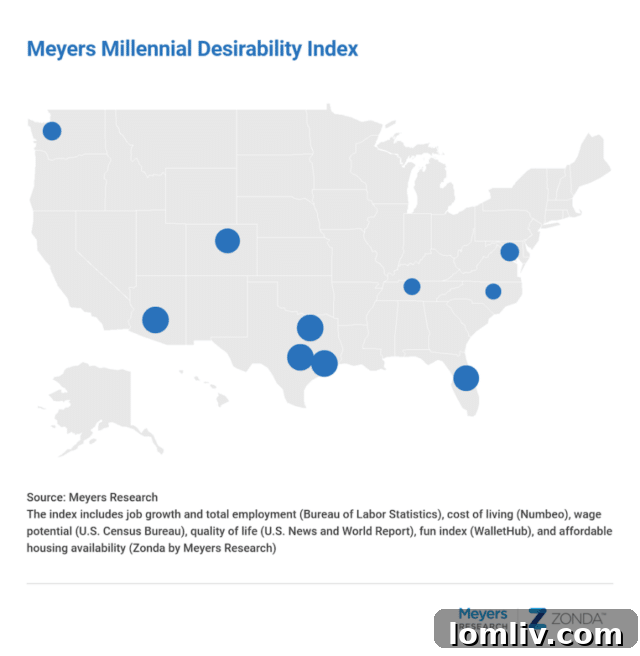
The Millennial generation, encompassing individuals born roughly between 1981 and 1996, represents a significant force in the national housing and job markets. Their preferences for living environments profoundly influence urban development and economic trends. A compelling annual survey conducted by Meyers Research, a sibling unit of Builder Magazine, has revealed that Dallas tops the list of metropolitan areas where Millennials are seriously considering relocating. This finding highlights the magnetic appeal of the Big D for a demographic keen on career growth, quality of life, and affordability.
The survey introduced a crucial new question: “Have you seriously considered moving out of your current city? If yes, to where and why?” The responses were striking, with nearly 60 percent of all respondents affirming their consideration of a move. Delving deeper, the survey found that a substantial 70 percent of younger Millennials, aged 19-24, have actively contemplated relocating, indicating a strong migratory impulse within this age group. Notably, renters exhibited a greater openness to moving, with 60 percent expressing this sentiment, compared to homeowners who tend to be more rooted.
This widespread willingness to move among Millennials underscores their pursuit of specific criteria in a new city: robust job markets, reasonable costs of living, vibrant social scenes, and opportunities for personal and professional growth. The data also provides valuable context by noting that Millennials already constitute a large share of closed loan applications in several key U.S. cities, including Baltimore, Houston, Chicago, Minneapolis, and Nashville, according to Ellie Mae, further emphasizing their active role in shaping urban demographics and housing markets.
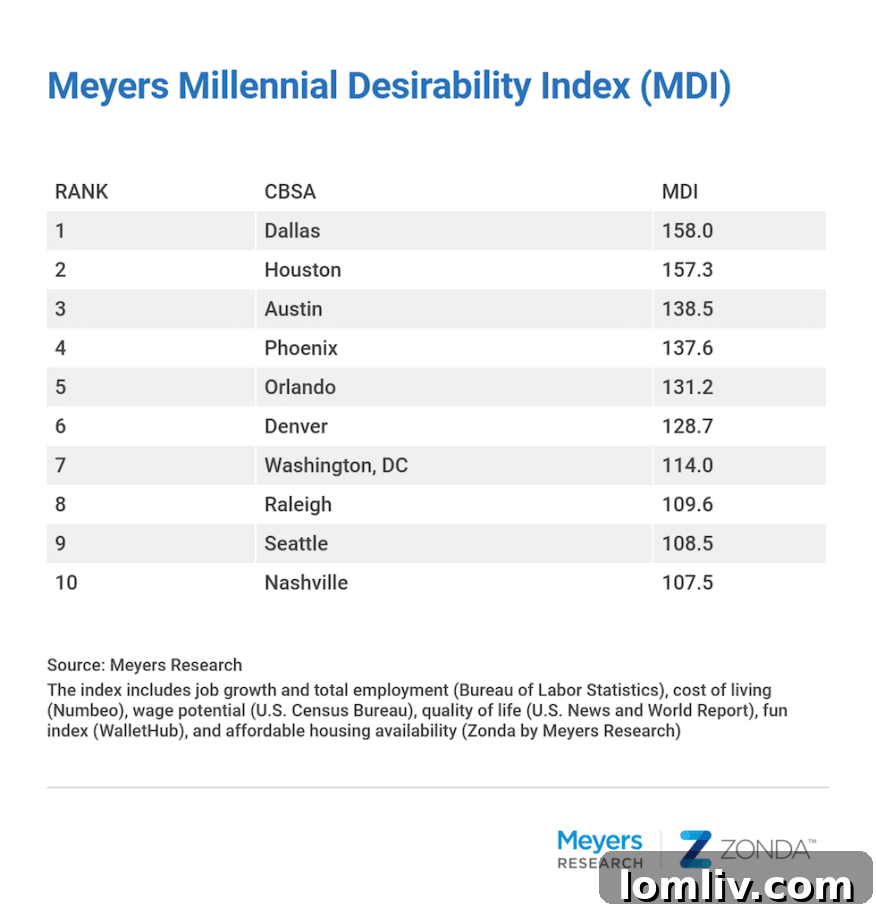
Texas metros, by and large, dominated the list of desired destinations for Millennials. Dallas claimed the coveted No. 1 spot, asserting its status as the most attractive city for this demographic. Houston followed closely at second place, demonstrating its broad appeal, while Austin rounded out the top three. This strong showing by Texas cities suggests a powerful combination of factors drawing in young professionals and families from across the nation.
The article detailed the specific reasons behind this Texan dominance: “Dallas and Houston ranked extremely well for quality of life, cost of living, and overall employment opportunities, propelling the markets to #1 and #2, respectively.” Dallas, with its sprawling economy encompassing diverse industries like technology, finance, healthcare, and corporate services, offers ample career pathways. Its relatively affordable housing market, particularly when compared to coastal tech hubs, allows Millennials to achieve homeownership or enjoy a higher quality of life without prohibitive costs. Houston similarly attracts with its massive job market, especially in the energy, medical, and aerospace sectors, combined with a highly competitive cost of living.
Austin, while a smaller metropolitan area compared to Dallas and Houston, secures its third-place ranking with a slightly different but equally compelling value proposition. The article explained, “Austin, a far smaller metro, rounds out the top three, with a heavier focus on relative housing affordability and the fun factor.” Austin’s vibrant tech scene, liberal culture, live music, and outdoor activities create a unique “fun factor” that resonates deeply with many Millennials. While its housing costs have risen, it still offers more affordability than many other tech-centric cities, making it an appealing option for those prioritizing lifestyle and a dynamic cultural environment.
The implications of this Millennial migration to Texas are profound. It fuels the state’s continued economic expansion, boosts housing demand, and enriches the cultural landscape of its major cities. For policymakers, urban planners, and businesses, understanding these trends is vital for adapting to the needs and preferences of this influential generation and ensuring sustainable growth.
Source: Builder