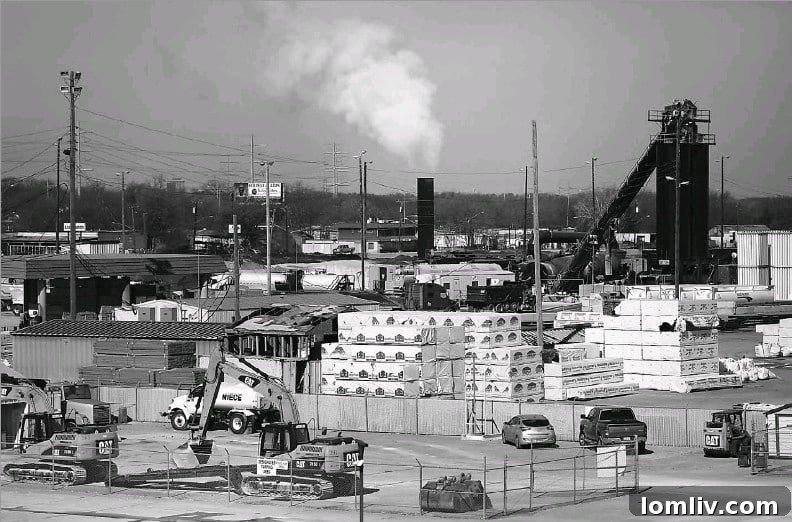
In a significant victory for environmental justice and community advocacy, a controversial asphalt plant that has been a source of long-standing pollution complaints in the historic Joppa neighborhood of Dallas is set to cease operations. Austin Bridge and Road, a division of Dallas-based Austin Industries, announced its decision to shut down its batch plant by June 26, effectively removing equipment from the contentious site located southeast of downtown Dallas in City Council District 7. This landmark closure marks the culmination of years of relentless effort by Joppa residents and environmental activists, bringing a hopeful end to a persistent struggle against industrial pollution and its adverse health impacts on a vulnerable community.
For decades, the residents of Joppa, a predominantly Black community with deep historical roots, have voiced profound concerns regarding the harmful emissions from the asphalt plant. The plant’s operations, characterized by constant noise, odors, and visible smoke, were often described as an unyielding presence that permeated daily life and compromised the health and well-being of the neighborhood. The fight to close the plant became a central issue, embodying the broader challenges faced by communities disproportionately affected by industrial contamination. This resolution is not merely a corporate decision; it represents a hard-won triumph for the collective voice of a community that refused to be silenced, highlighting the critical importance of local activism and responsive governance in achieving environmental equity.

The issue has simmered as a contentious topic among Joppa residents for years, casting a shadow over local politics. Its resolution came into sharp focus during the recent municipal elections, potentially influencing votes for Councilmember Adam Bazaldua. Despite the political complexities, it was ultimately Bazaldua who played a pivotal role in securing the agreement with Austin Industries to close the facility. The incumbent councilmember successfully retained his seat in the May 6 election, securing 51.57 percent of the vote against three opponents, underscoring the community’s trust in his commitment to their cause. Following the announcement, Bazaldua released a press statement expressing his satisfaction with the outcome, emphasizing that “despite misinformation being prevalent… we were successful on our ultimate goal in keeping our community safe.”
Councilmember Bazaldua elaborated on the extensive efforts leading to this resolution. “We have continued to work diligently with Austin Industries for the past 14 months to find the most effective path forward while putting the health and safety of our community first,” he stated. He expressed pleasure that Austin Industries had agreed to expedite its timeline for the project, acknowledging that in his discussions, the company demonstrated a desire to be a “good neighbor.” Crucially, Austin Industries also acknowledged a clear consensus within the Joppa community for heavy industry to no longer operate adjacent to their residential neighborhood. Bazaldua reiterated that the residents of Joppa remained a top priority throughout these discussions, stressing the importance of maintaining strict scrutiny to ensure businesses in the district can flourish without compromising community safety and quality of life. This proactive stance reflects a growing understanding among city leaders of the need to balance economic development with the imperative of environmental protection and public health, especially in historically disadvantaged areas.
A Win for Environmental Justice and Responsible Development
The closure of the Joppa asphalt plant is more than just a local incident; it resonates deeply with the principles of environmental justice and Dallas’s broader commitment to sustainable urban development. In 2020, the City of Dallas adopted its Comprehensive Environmental & Climate Action Plan (CECAP), a forward-thinking document designed to mitigate climate change risks and serve as a guiding framework for approving new developments and considering new policies. CECAP aims to foster a healthier, more resilient city by promoting sustainable practices and addressing environmental inequities.
Councilmember Bazaldua has been a steadfast champion of CECAP, consistently advocating for its principles in city policy discussions. His commitment was evident in April when he was the sole council member to support a building code change that would mandate electric vehicle wiring in all new homes – a move aligned with CECAP’s goals for reducing carbon emissions and promoting green infrastructure. The closure of the Joppa plant stands as a tangible outcome of these policies and advocacy efforts, demonstrating how high-level plans can translate into direct, positive impacts on community health and environmental quality. This development sets a precedent for how Dallas approaches industrial operations within or near residential zones, signaling a shift towards prioritizing community well-being over unchecked industrial expansion.
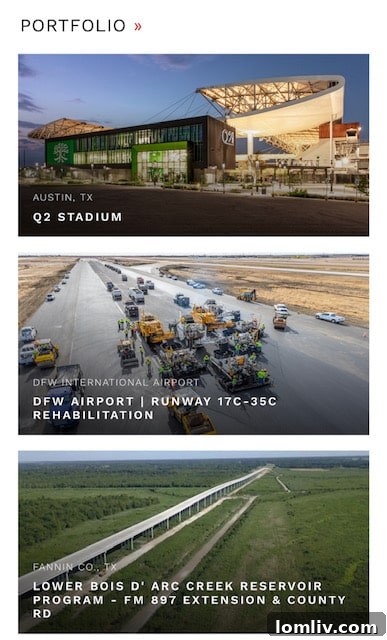
Local media outlets reported earlier this month that Austin Industries, a significant provider of construction materials for both the city and county, will explore new sites for its operations and will source products from elsewhere to ensure that its work is not disrupted. This commitment highlights the company’s efforts to maintain operational continuity while responding to community concerns. The proactive decision to relocate rather than face prolonged legal battles or public contention demonstrates a growing awareness within the corporate sector of the importance of community relations and environmental responsibility. This outcome suggests a potential model for industrial companies seeking to balance their business needs with their social license to operate, particularly in sensitive urban environments. The transition period will undoubtedly require careful management to ensure minimal impact on both the company’s projects and the Joppa community.
At the forefront of the long and arduous battle against the asphalt plant has been the tenacious activist group Downwinders at Risk. This organization has been a consistent voice for environmental justice, not only challenging the plant’s operations but also, at times, critiquing the city council’s approach to the issue. Downwinders at Risk’s work illuminates the systemic injustices faced by communities like Joppa. Their website starkly details Joppa’s history: “Founded as a Freedman’s town and surrounded on three sides by industrial polluters, and intentionally isolated from the rest of Dallas, the Joppa neighborhood is one of the most extreme examples of the racist zoning that still drives current land use in [Dallas].”
The organization further elaborates on the historical context of industrial placement in Dallas, explaining how “From the late 1800s forward, industries and people deemed ‘undesirable’ by Dallas Power Brokers were redlined to the Trinity River floodplains that split the city in two — North and South. Black and Brown residents were forced to live side-by-side with slaughterhouses, lead smelters, tanneries, and cement plants.” This historical narrative underscores the profound and enduring legacy of environmental racism that has shaped Joppa’s landscape, making the asphalt plant closure not just an isolated event, but a significant step towards rectifying decades of systemic inequity and industrial encroachment on marginalized communities.
“I want [my kids] to understand that, even if you were given the worst, there’s still some things you can make out of it that is extremely beautiful. And that’s just the history of our people.”https://t.co/mBzUdmNEG2
— Downwinders at Risk (@cleanerair) June 3, 2023
In a public statement released shortly after Austin Industries announced its decision to cease operations in Joppa, Downwinders at Risk amplified the community’s voice by sharing a link to an NBCDFW report on the asphalt plant’s departure. The organization specifically highlighted a powerful quote from Alicia Kendrick, chair of the Joppa Environmental Health Project, encapsulating the residents’ lived experience and enduring spirit. Kendrick articulated the profound impact of living amidst heavy industry: “We live right next to and are surrounded by industry at all times. It’s clanking and banging and smoking at all hours of the night and at all hours of the day. There’s no stop to it.” Her statement movingly conveys the relentless nature of the pollution and its pervasive effect on daily life in Joppa. Kendrick further added, with an inspiring message of resilience for future generations, “I want [my kids] to understand that, even if you were given the worst, there’s still some things you can make out of it that is extremely beautiful. And that’s just the history of our people.” This quote not only underscores the hardships faced but also celebrates the unyielding strength and rich heritage of the Joppa community, positioning the plant closure as a testament to their enduring fight for a healthier, more dignified future.
The victory in Joppa serves as a powerful testament to the impact of sustained community activism and collaborative efforts between residents, advocacy groups, and responsive local government. It underscores that environmental justice is not just an abstract concept but a tangible goal achievable through perseverance and strategic engagement. The closure of the Austin Industries asphalt plant marks a new chapter for Joppa, one where the air will be cleaner, the nights quieter, and the health of its residents prioritized. This moment offers hope and a blueprint for other communities battling similar industrial encroachments, reinforcing the idea that collective action can indeed lead to meaningful change and a more equitable distribution of environmental benefits and burdens in urban landscapes.