Dallas’s Gas Crisis: Unpacking the Atmos Energy Shutdown and Community Outcry
A profound sense of grief and alarm has gripped two Dallas neighborhoods, irrevocably divided by Marsh Lane, following a devastating home explosion last Friday. The catastrophe claimed the life of a sixth-grader and sent four of her family members to the hospital, plunging the community into an agonizing period of uncertainty and fear. In the days that followed, the unfolding crisis has delivered one distressing piece of news after another, sometimes through late-night knocks on doors, instructing residents to evacuate their homes.
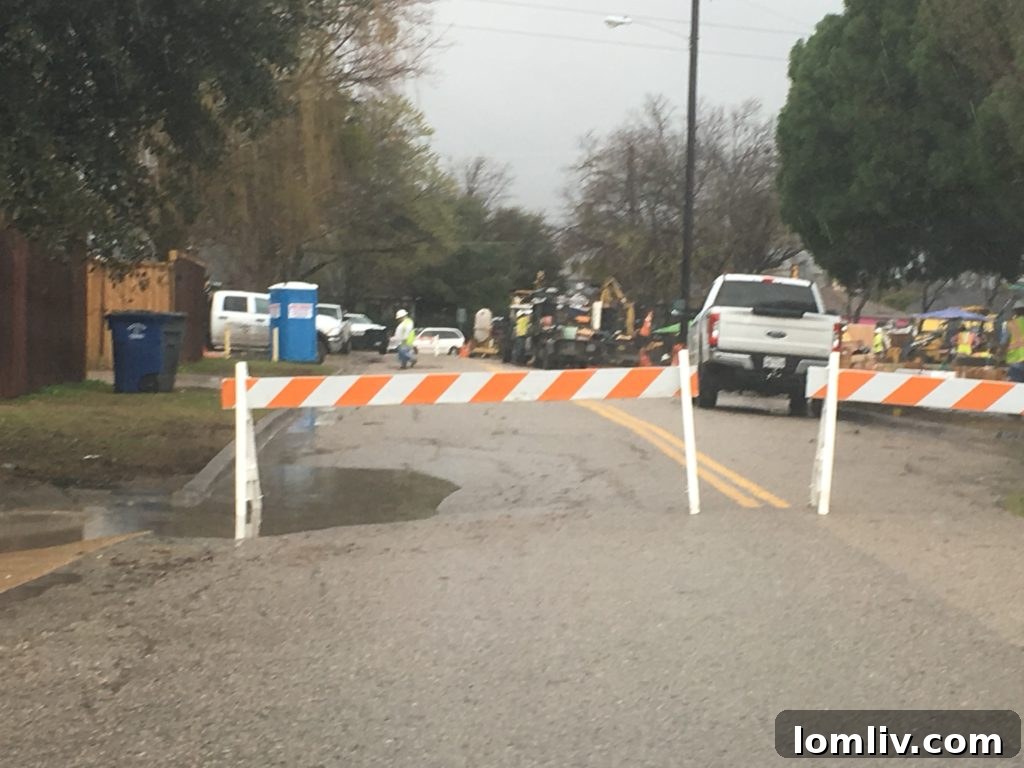
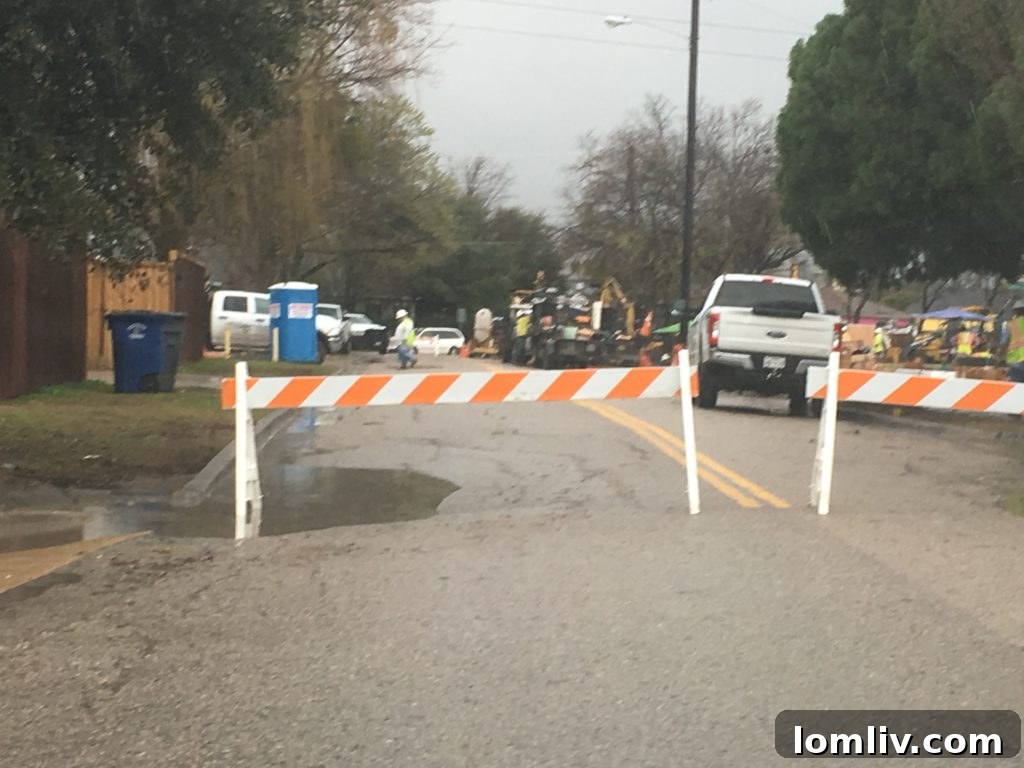
The situation escalated significantly when, this morning, residents awoke to learn that even those still able to occupy their homes would likely endure life without hot water or heat. In an extraordinary and unprecedented move, Atmos Energy announced in a 5 a.m. press conference its decision to shut down gas service to approximately 2,800 homes. This massive shutdown encompasses streets on both sides of Marsh Lane, extending between Midway Drive and Webb Chapel Drive from east to west, and Walnut Hill and Northwest Highway from north to south. This drastic measure has compounded the angst in already heartbroken and fearful communities, leaving thousands scrambling for answers and resources.
The Immediate Aftermath: A Community in Turmoil
For residents like Staci Reznik of Midway Hollow, the past few days have been an emotional rollercoaster. Initially relieved to learn her home wasn’t within Atmos’s immediate safety survey zone, her relief quickly turned to frustration and a sense of inclusion when she discovered she was among the 2,800 households facing a gas service interruption for at least three weeks. “Last night I was angry,” Reznik shared, “This morning I am included, so I have mixed emotions.”
Despite the inconvenience and stress, Reznik expressed gratitude for family nearby, offering a haven for her daughter while she prepares for a temporary relocation to a hotel. Her primary frustration, however, stems from the perceived abysmal communication from Atmos Energy. “I think this has been a PR nightmare,” she stated. “And the funneling of information has been beyond abysmal. I am home this morning waiting for someone to communicate to me what my resources are, what I need to do.” She critically noted the irony: “Atmos sure knows how to contact us when we’re delayed on a bill, but they are not good at communicating to everyone about this.”
While Reznik’s home was not subject to mandatory evacuation, the prospect of living without hot water and heat, especially with a toddler, was untenable. She voiced skepticism regarding Atmos’s projected three-week timeline for restoration, foreseeing a more protracted and complex resolution. “I don’t think this will be just three weeks,” she predicted. “I don’t think it’s going to be as fluid as they say it’s going to be. There are so many other things related to this that we don’t know about. How will trash be picked up if we can’t use the alleys? How are we securing the neighborhood?”
The confusion extended to the process of seeking reimbursement for temporary accommodation. Reznik recounted visiting two designated locations after receiving information from fire marshals, only to encounter further confusion. “They don’t know how they’re going to compensate people,” she explained, speculating, “They’re thinking maybe a per diem.” However, Dallas City Councilman Omar Narvaez later offered some clarity, announcing that hotel vouchers and gift cards would be distributed at the Walnut Hill Recreation Center and Bachman Lake Recreation Center, providing a glimmer of hope amidst the disarray.
Security Concerns Amidst Evacuations
Beyond the immediate inconveniences, residents raised serious concerns about neighborhood security. Staci Reznik was particularly incensed to witness Dallas police conducting radar enforcement on Northwest Highway amidst the crisis. “They’re running radar on Northwest Highway today,” she fumed. “That’s what the Dallas police are doing right now for our neighborhood.” This sentiment was echoed by Meg Fahrenbrook, who worried about the vulnerability of potentially empty homes. “Another worry I have is now that all of Dallas knows there is a gas shutdown with residents potentially not in their homes, what will the Dallas Police Department be doing to ensure our homes and properties are safe from potential break ins?” she questioned.
Alex Irving, president of the Midway Hollow Crime Watch, confirmed he had contacted Atmos Energy to explore their willingness to contribute to additional Extended Neighborhood Patrol hours. He also expressed confidence in the local law enforcement’s efforts, stating that his contact within the department assured him that resources, including those from the Dallas County Sheriff’s office, Dallas marshals, and Dallas ISD police, were being pooled to secure the affected area.
Decades of Neglect: Residents Point to Long-Standing Issues
The current crisis has brought to the forefront a deeply entrenched frustration among residents regarding Atmos Energy’s maintenance practices. Many voiced anger that it took a fatal incident for the company to address issues that have reportedly persisted for years, if not decades. Kenneth Knight articulated the sentiment, stating, “Been displaced since Tuesday paying out of pocket for a hotel with the promise of quick reimbursement has me filled with uncertainty and frustration.”
Jessica Ramirez expressed relief that repairs were finally underway but questioned the timing. “I’m glad they are fixing it, but why did it take so long for this to happen?” she asked, hoping the energy company would learn from the tragedy. “I believe we could have gotten this fixed in a smarter and more efficient way. Not just have everyone scramble at the last minute and feel like they were being ripped away from their home.”
Greg Sharry was more direct in his criticism, asserting that the core issue wasn’t the current repair efforts, but Atmos Energy’s prolonged failure to maintain its lines and meters. “The issue isn’t what Atmos is doing to repair the problem, the issue is that they have not been maintaining their lines or meters for such a significant period of time,” Sharry contended. “Now, in a last-ditch effort to gain some semblance of neighborhood support, they are attempting to fix their equipment that has fallen into disrepair.” Susan Magee’s poignant question summed up the community’s collective outrage: “The gas line situation has been of concern since 2006. Did it take the death of a young child to initiate action?”
For some, the frustration with Atmos Energy dates back even further. Longtime Midway Hollow resident Greg Stubbs recalled an incident from 1995. “I am disgusted by Atmos,” he said. “When I moved into my house in 1995 I was told that I could not place my trash in the alleyway for pick up because the alley had been condemned by Atmos Energy due to a gas leak. That was 1995!”
The Challenges of Aging Infrastructure
Amidst the anger, some residents acknowledged the inherent challenges of living in an established neighborhood with aging infrastructure. Logan Caldwell offered a pragmatic perspective: “I think it’s good that Atmos is fixing these lines now. We have to remember that we live in an old neighborhood with old gas lines, water, and sewage. Some houses around here have galvanized water lines which are starting to leak; we have old gas lines running to our houses that have been rusting for 70 plus years.”
Anne Harding, despite the profound inconvenience, welcomed the proactive approach. “I would rather they shut it all down and replace it than have to live with the constant uncertainty of whether my line is stable or volatile, of whether I will have to evacuate at any moment,” she stated. “This is an inconvenience, for sure, and no heat or hot water for a month will be no fun. But at least it’s proactive.” Ted Gangi concurred, emphasizing safety: “Yes, it’s inconvenient — and rare. But, I’d rather be safe. Certainly hard on families with kids and/or limited resources, but I’ll bet they finish sooner than they say.”
Broader Implications: Dallas’s Aging Infrastructure Under Scrutiny
The shutdown has ignited a broader conversation across Dallas about the integrity of the city’s aging gas infrastructure. Many residents residing just outside the immediate shutdown zone expressed significant concern. Lynette Friedrich questioned the arbitrary nature of the established borders, arguing that the parameters should extend further. “I want to know the criteria of Lakemont as the Eastern border,” she said. “It should extend to Midway. What was criteria for establishing the borders? Appears arbitrary without given the rationale.” She highlighted that the neighborhood’s infrastructure is uniformly old, built approximately 65-plus years ago. Sahar Haji and Audrey Schmeltz echoed this sentiment, asking, “My concern is for folks like us who live just outside the announced parameter, should we be worried about our lines?” and “It concerns me we will not be getting updated lines.”
The concerns quickly transcended the immediate area, spreading to homeowners across Dallas, particularly after Atmos officials linked recent rains to shifts and breaks in older steel pipes. A Twitter user posed a crucial question to the company: “If this is the case in this neighborhood, then seems logical same situation in my far north Dallas neighborhood, correct? Same city, same rain, same soil. Same geological makeup.” Another user queried, “Does anyone know if *any* other neighborhoods of Dallas are being checked for gas leaks? Did geotechnical engineer only look at formations under evacuated area, or elsewhere? We all got rain.”
The anxieties are palpable. Chantel Bright, living a couple of miles away in Park Forest, took drastic action. “I’ve decided to go the extreme and replace my gas range with an electric convection oven and do away with gas altogether. Don’t have to scare me twice!” she revealed. Her morning routine was now tinged with fear: “Just this morning as I lit the burner to make breakfast I thought to myself ‘Is this it? Is this how they are going to find me, in my house robe with raccoon eyes and messy bun?'”
Amanda Cobra, a former resident of Beckley Club Estates in Oak Cliff, drew parallels to her old neighborhood, which she described as neglected for years with crumbling utility infrastructure. She noted ongoing repair work there due to a new deck park development, causing frequent gas line shutdowns for repairs. David Burrows agreed, recognizing this as potentially “the tip of the infrastructure iceberg” for older neighborhoods across Dallas.
Kirsten Tye, whose meter was recently replaced, still harbored questions about the lines themselves. “What’s the age range of the lines causing problems? Was the usable lifespan of the lines known at the time of installation? What is the usable lifespan of the new lines and will Atmos take care of replacing those in a timely fashion (before the usable lifespan has been exceeded)? How many of the leaks are caused by the lines maintained by Atmos and how many are the responsibility of the home or property owner?” she asked, highlighting the need for greater transparency.
Renee Strickland, a Hollywood Heights homeowner, echoed the call for more accessible information: “Where can we access information on when the lines in each neighborhood were last replaced/overhauled? I’d like to know where my neighborhood is in terms of the lifespan of these lines.” Karen Eubank, living in a 1920s-era neighborhood, expressed extreme concern, recounting how recent home repairs unveiled the delicate and poorly maintained state of the city’s infrastructure. “I think these pipes are laid and never thought about again,” she commented, concerned about gas lines often laid close to equally old water lines. “I have a gas lantern that has not been lit in years and I wonder where the heck that gas is going? Just into the wind? If I light a match will it blow?” Her fear was clear: “Yes, I’m extremely worried about this issue living in an older neighborhood.”
Andrea Perkins from East Dallas, whose house was built in 1956, demanded answers regarding the gas delivery infrastructure in her area and any assessment or action plans. This sentiment was not new to Lakewood-area residents. Shari North of University Terrace recounted a gas explosion in her neighborhood over a year ago, which led to extensive, prolonged line replacements. Kendal Cook shared a similar incident in her East Dallas/Lakewood area, a kitchen explosion about a year ago. She noted recurring gas smells in their community Facebook group and questioned, “My question would be, what can we as a consumer do to check our own gas lines, what can we do to feel safe in our own homes?”
Calls for Action and a Safer Future
The tragic events and subsequent crisis have galvanized local state legislators into action, amplifying the call for urgent attention to Dallas County’s aging infrastructure. State Sen. Rafael Anchia emphatically stated, “It’s time for us to seriously examine the aging infrastructure of the homes in Dallas County. The replacement schedule of gas pipes, many of which are corroding cast iron, needs to be accelerated.” Congressman Marc Veasey confirmed his close monitoring of the situation and ongoing communication with Atmos Energy and the National Transportation Safety Board (NTSB).
Further underscoring the gravity of the situation, the Texas Railroad Commission, the state agency overseeing pipeline operators, dispatched inspectors to Dallas to assist in the investigation. NTSB inspectors were already on site, joining local authorities in their comprehensive efforts to uncover the root causes of the explosion and the subsequent infrastructure failures.
This crisis serves as a stark reminder of the critical importance of maintaining vital public utilities. While the immediate focus remains on restoring gas service and supporting the affected communities, the broader implications demand a city-wide commitment to upgrading and safeguarding Dallas’s underground infrastructure. The voices of concerned residents, from Midway Hollow to Hollywood Heights, underscore a collective demand for transparency, accountability, and a proactive approach to prevent future tragedies and ensure the safety of all Dallas neighborhoods.