When prospective buyers step across the threshold of a home, their gaze naturally falls downward, often before they take in any other features. Flooring is undeniably one of the very first elements that capture attention, instantaneously shaping their perception of the entire property. A home boasting beautiful, well-maintained hardwood floors immediately conveys a sense of care and quality. Conversely, if the hardwood floors are marred by scratches, appear dull, or show signs of fading, the house can feel neglected, even if every other aspect of the property is immaculate. This initial impression is incredibly powerful and can either invite buyers to imagine themselves living there or create immediate reservations.
As the owner of a dedicated flooring business, I’ve spent more than a decade meticulously refinishing hardwood floors across the vibrant Atlanta metropolitan area. My expertise, however, isn’t limited to just the technical aspects of flooring. Being a licensed real estate agent has granted me a unique, firsthand perspective on precisely how the condition of a home’s flooring directly influences what buyers are willing to pay. I’ve frequently received urgent calls from real estate agents in a state of panic, just two weeks before a crucial listing is set to go live. The scenario is remarkably consistent: “The floors look terrible,” they exclaim, often followed by, “and the photographer arrives this Friday!” This recurring urgency underscores a fundamental truth about home sales: overlooked flooring can be a deal-breaker.
Through these experiences, bridging the gap between flooring craftsmanship and real estate market dynamics, I’ve gathered invaluable insights into the profound impact flooring condition has on home sales. This article aims to distill that knowledge, offering sellers a clear guide on what they should absolutely do to optimize their property’s appeal and maximize its market value.
Buyers Notice Floors More Than You Think

According to the esteemed National Association of Realtors (NAR), hardwood flooring consistently ranks as one of the most desired features buyers actively seek in a new home. This strong preference isn’t merely a fleeting trend; it profoundly shapes how potential buyers perceive a property’s inherent value from the very moment they step inside. Hardwood floors offer a timeless elegance and durability that carpet or other materials simply cannot replicate, appealing to a broad demographic looking for quality and longevity.
A home that showcases pristine, well-maintained hardwood floors sends an immediate, powerful message to buyers: this property has been cherished and meticulously cared for by its owners. Such an impression fosters trust and confidence, leading buyers to believe that other essential components of the home have also received similar attention. Conversely, discovering worn, scratched, or visibly damaged floors creates the exact opposite impression. It instills a sense of unease, causing buyers to wonder what other hidden issues or deferred maintenance might be lurking beneath the surface. Once buyers begin the mental exercise of calculating potential repair costs – and they almost always overestimate these figures – your negotiating power as a seller diminishes significantly. This psychological effect can instantly devalue your property in a buyer’s mind, making it harder to justify your asking price.
How Flooring Condition Impacts Your Sale Price
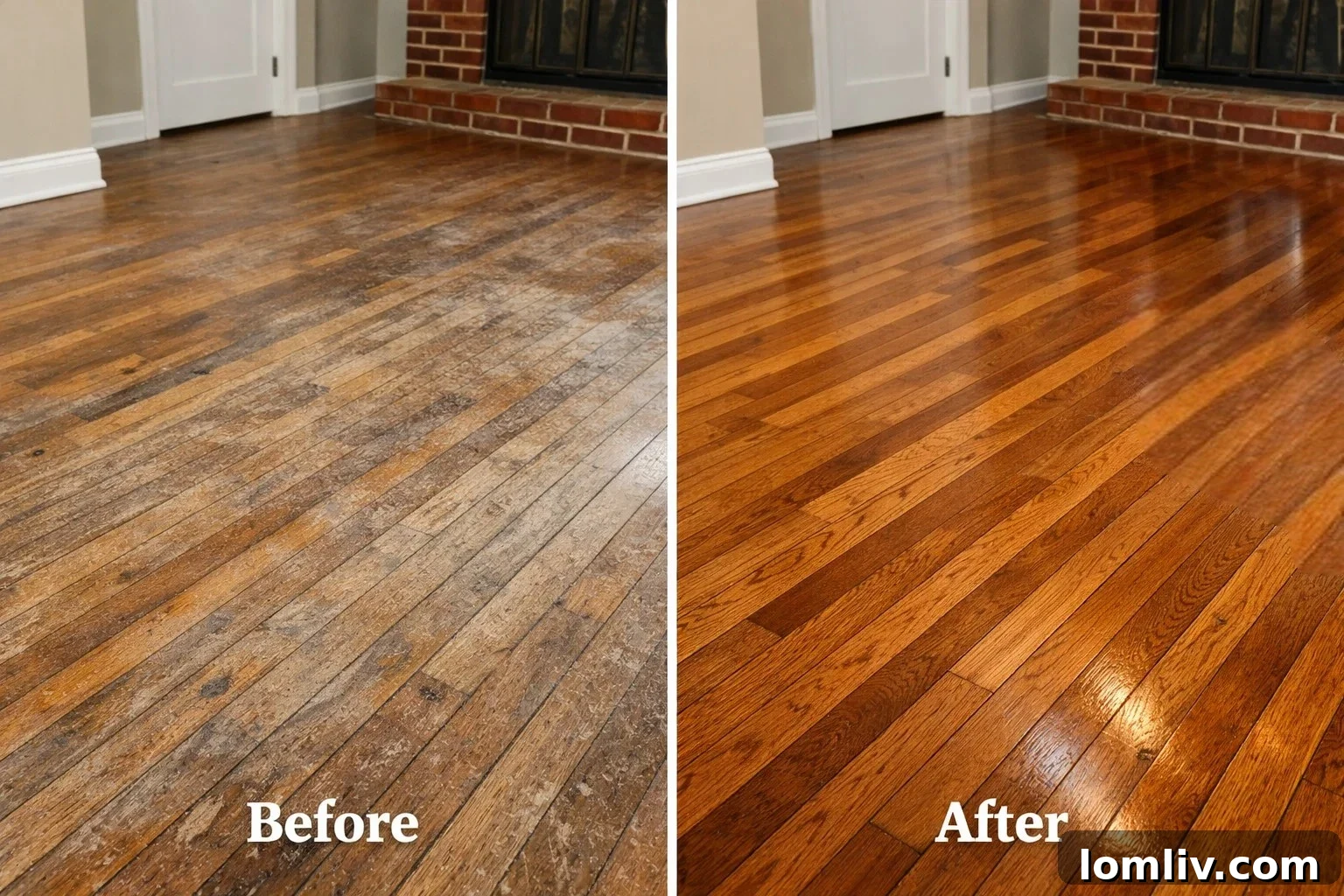
My extensive experience working hand-in-hand with numerous real estate agents across the Atlanta market has repeatedly demonstrated a clear correlation: homes featuring beautifully refinished hardwood floors not only tend to sell much faster but also consistently achieve sale prices closer to, or even above, their initial asking price. The visual appeal and perceived value added by pristine flooring are simply undeniable, translating directly into tangible financial benefits for sellers. This isn’t just an anecdotal observation; it’s a pattern seen time and again in competitive markets.
Based on my observations and direct involvement in countless transactions within the dynamic Atlanta real estate landscape, here’s a general breakdown of how hardwood flooring condition typically influences a home’s sale price and market performance:
- Well-maintained hardwood floors: Properties that boast immaculate, well-preserved hardwood floors almost invariably sell at or even above their asking price. Buyers perceive these homes as truly move-in ready, eliminating any mental deductions for renovation expenses. This condition signals immediate gratification and less hassle, which is a significant selling point in today’s market.
- Visibly worn but structurally sound floors: When floors exhibit noticeable wear and tear—scratches, scuffs, or a dull finish—buyers immediately begin “doing the math.” Even if the actual, professional cost to restore these floors to their former glory might be a manageable $3,000, a buyer unfamiliar with such projects might wildly overestimate the expense, perhaps envisioning a cost two or three times higher. This inflated perceived cost inevitably surfaces during negotiations, empowering buyers to push for significant price reductions.
- Damaged or outdated floors: This is where sellers stand to lose the most substantial amount of money and market traction. Floors with significant damage (e.g., deep gouges, water damage, widespread fading) or those with an extremely outdated aesthetic often deter potential buyers entirely. They either walk away from the property without making an offer, or they submit exceptionally lowball bids, factoring in extensive and costly remediation. I have personally witnessed homes languish on the market for months, generating minimal interest, solely because of the poor condition of their flooring.
The reality often overlooked by sellers is that buyers frequently overestimate the true cost of floor repairs and refinishing by a factor of two to three times. A professional refinishing job, which might realistically cost between $3 to $5 per square foot for most projects, can feel like an $8 to $12 per square foot problem to a buyer who has never obtained an actual quote. This significant perception gap directly translates into a lower offer price, cutting deeply into the seller’s potential profit. Bridging this gap with a proactive refinishing project can yield substantial returns.
Refinishing vs. Replacing Before You Sell
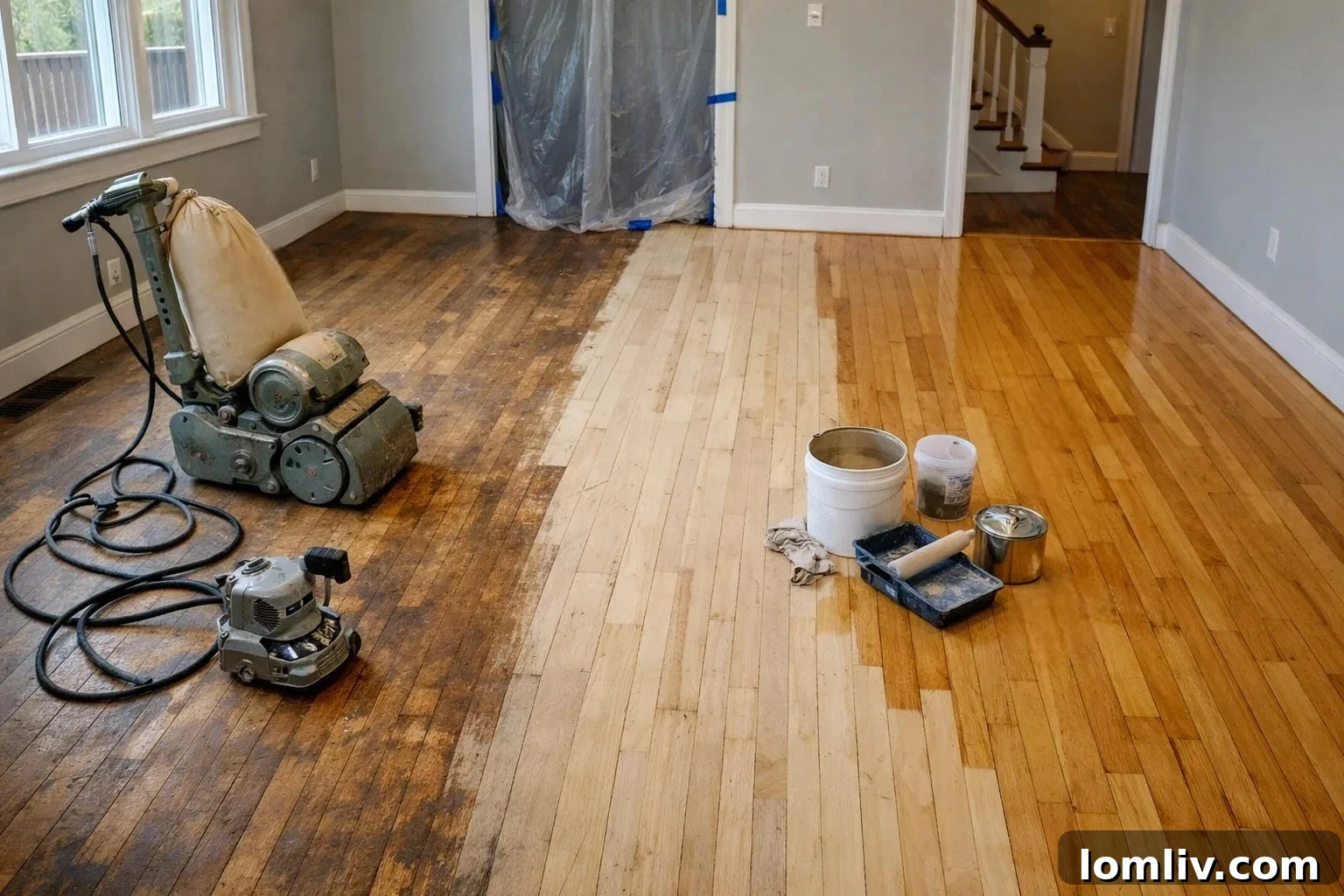
This critical question is one I assist homeowners in answering almost daily. In the vast majority of pre-sale situations, when the goal is to enhance marketability and maximize return on investment, refinishing the existing hardwood floors proves to be the smartest and most cost-effective strategic move. It offers a fresh look without the major upheaval and expense of a full replacement.
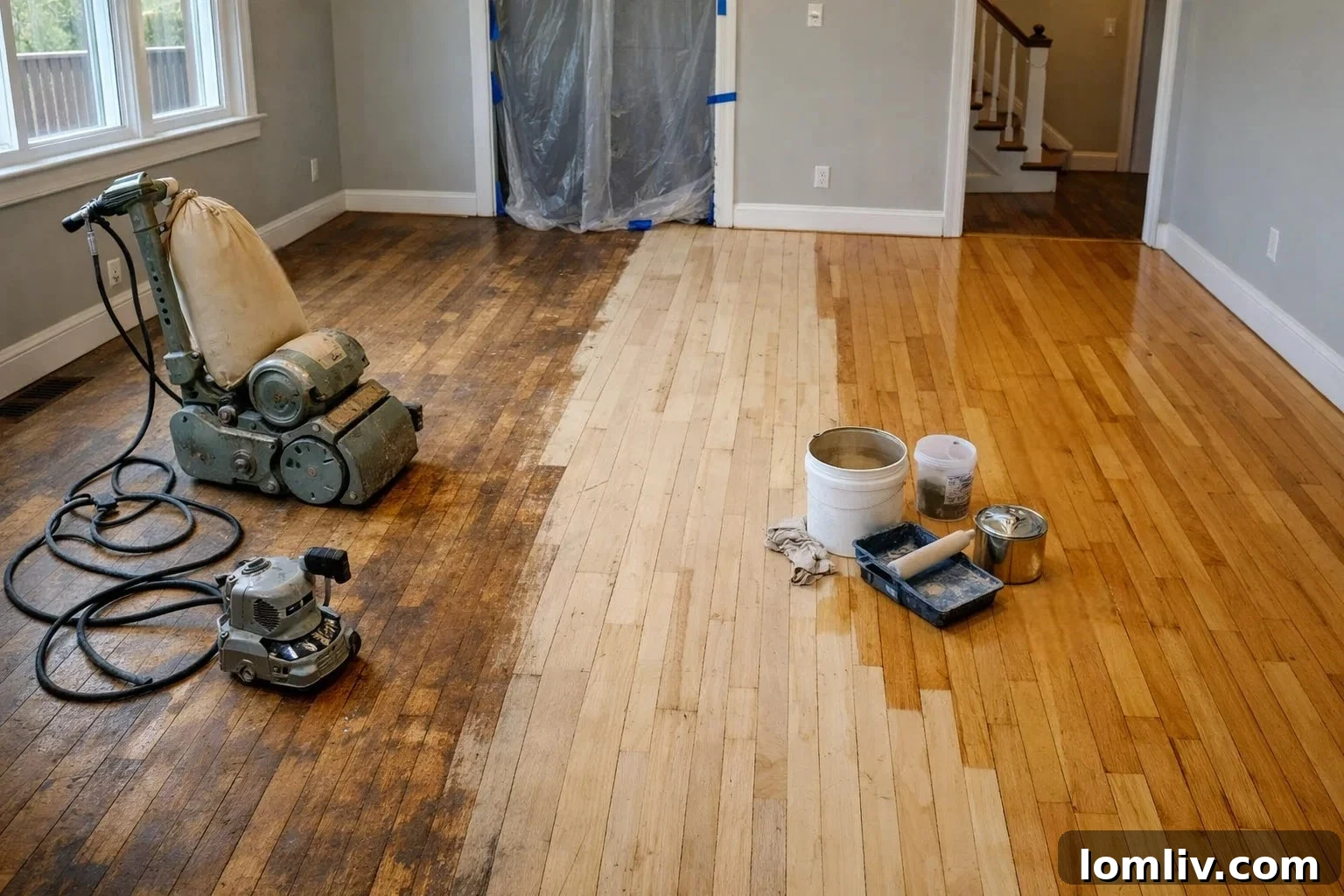
The refinishing process involves meticulously sanding the existing hardwood down to its bare, natural wood. Once the surface is smooth and clean, a stain can be applied if desired to achieve a specific color or tone, followed by the application of a protective sealant, typically polyurethane. In most professional refinishing jobs, three robust coats of polyurethane are standard to ensure maximum durability and a lasting finish. The costs associated with refinishing generally range from $3 to $8 per square foot. This price can fluctuate based on several factors, including the initial condition of the floor, the type of stain chosen, the extent of any necessary repairs (e.g., filling gouges, replacing individual boards), the amount of furniture that needs to be relocated, and whether challenging areas like stairs are included in the scope of work. For a typical 1,000-square-foot main level, this investment would typically fall between $3,000 and $8,000. When executed by skilled professionals, the transformation is often remarkable, making the floor look almost brand new, dramatically enhancing the home’s aesthetic appeal.
Conversely, replacing hardwood flooring involves the much more intensive and invasive process of tearing out the old flooring entirely before installing completely new hardwood. This comprehensive project typically ranges from $8 to $15 per square foot, which is roughly two to three times the cost of a standard refinishing job. For most sellers, the extensive labor, material costs, and increased disruption associated with a full replacement represent a far greater investment than is genuinely necessary to achieve a marketable and attractive floor for listing purposes.
My general rule of thumb for homeowners is quite simple and effective: If the existing wood is structurally sound, meaning it’s not suffering from widespread rot or severe warping, and if it possesses sufficient thickness to withstand another round of sanding without compromising its integrity, then refinishing is almost always the more judicious choice over replacing it. You will incur significantly less expense, and the visual outcome will be so impressive that many prospective buyers won’t even perceive a difference between a expertly refinished floor and a brand-new installation. Replacement typically becomes the advisable option only in specific, severe circumstances where refinishing is simply not viable. This includes floors that have suffered extensive water damage, are compromised by active termite infestations, or have already been sanded so many times throughout their lifespan that there is very little usable wood left to work with for another sanding cycle.
Common Mistakes Sellers Make With Flooring
In my dual role as a flooring professional and real estate agent, the most prevalent and costly mistake I observe sellers making is a complete lack of action regarding their floors. They often assume that prospective buyers will simply overlook the imperfections or that the floors “aren’t really that bad.” This passive approach invariably leads to disappointment and significant financial loss when offers start coming in $10,000 to $15,000 below their asking price—a sum far greater than the cost of a professional refinishing job. This oversight costs sellers valuable equity.
Another common misstep is the selection of a floor finish or stain that reflects a highly personal or idiosyncratic taste. While personal preferences are paramount for homeowners living in their space, trends and broad appeal become critical when preparing a home for sale. Currently, natural wood tones and versatile medium brown stains are overwhelmingly popular; they photograph exceptionally well and resonate with the widest possible spectrum of buyers. In contrast, very dark stains can absorb light, making rooms appear smaller and heavier in listing photos, potentially alienating some buyers. Similarly, heavily whitewashed or gray-toned floors tend to be divisive, appealing strongly to some while being a significant turn-off for others. If your primary objective is to maximize buyer interest and achieve the best possible sale price, opting for a simple, neutral, and universally appealing finish is always the safer and more strategic choice.
The third, and often critical, mistake sellers make is procrastination. Flooring refinishing is not a last-minute task that can be squeezed in haphazardly. A proper refinishing project typically requires three to five full days to complete, and crucially, it necessitates that the home be completely empty or, at a minimum, that the specific work areas are entirely cleared of furniture and personal belongings. If you are aiming to list your property within two weeks and your floors are in need of attention, you are already behind schedule. Effective home preparation demands foresight; therefore, prioritize and plan for your flooring improvements well in advance of any staging or photography appointments.
The ROI Math: Unlocking Value Through Flooring
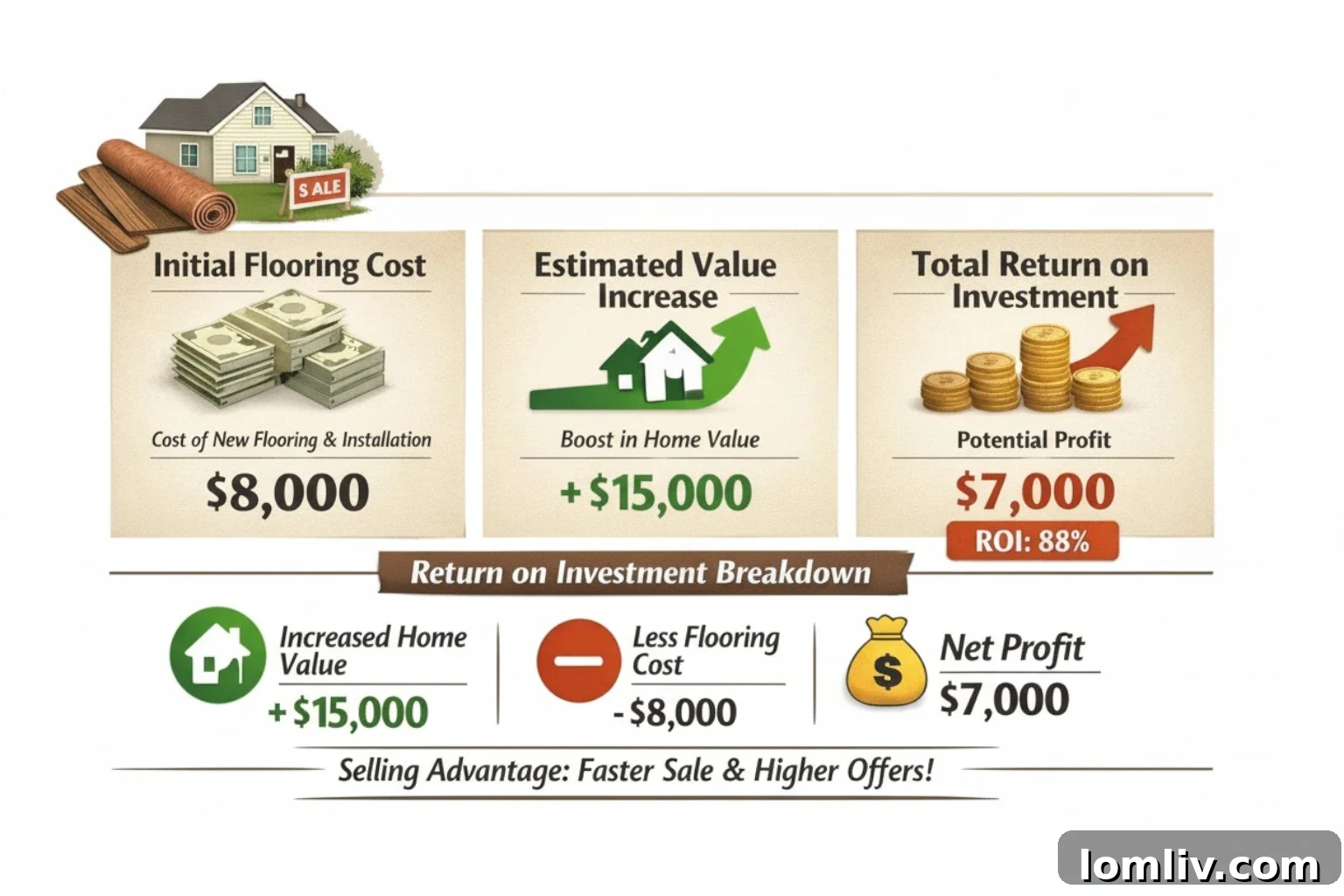
Understanding the return on investment (ROI) for pre-sale home improvements is paramount for any savvy seller. Let me walk you through a typical calculation I present to homeowners, illustrating the clear financial advantage of addressing floor conditions:
Consider a 1,500-square-foot home featuring noticeably worn hardwood floors, which is listed on the market at an asking price of $425,000. For a professional refinishing job covering this area, the approximate investment would be around $5,500.
Without the benefit of refinished floors, and with buyers inevitably factoring in the perceived cost of floor repair, this home would likely sell for $410,000 to $415,000 after negotiations. This translates to a reduction of $10,000 to $15,000 from the original asking price, directly impacting the seller’s bottom line.
However, if the floors are professionally refinished, the home transforms. It showcases beautifully in person and in photographs, projecting an image of meticulous care and move-in readiness. In this scenario, the property is far more likely to sell at or very near its full asking price, avoiding the costly deductions buyers typically demand for worn flooring.
By investing approximately $5,500 in refinishing, the net return for the seller is a recovered sale price of roughly $5,000 to $10,000. This represents an impressive 2x to 3x return on investment, making hardwood floor refinishing one of the highest ROI pre-sale improvements a homeowner can undertake. It stands right alongside other high-impact upgrades such as installing solid wood doors and applying a fresh coat of neutral paint.
This empirical evidence is robustly supported by national data. The National Association of Realtors (NAR) consistently publishes research indicating that hardwood floor refinishing consistently ranks among the top home improvements for overall cost recovery at the point of resale, affirming its status as a wise and profitable investment for sellers.
What to Do Before You List
If you’re meticulously preparing your home with hardwood floors for sale, proactive planning is crucial to maximizing its appeal and value. Beyond general listing preparation (for more extensive advice, explore these strategies to make your listing stand out), here is my specific, actionable advice regarding your floors:
- Get the floors assessed early. Do not guess or postpone this crucial step. Engage a reputable flooring professional as soon as you decide to sell. A seasoned expert can typically evaluate your floors within 10-15 minutes, determining whether they require a full refinishing, a simpler and less costly screen and recoat (often referred to as a “buff and re-seal”), or perhaps nothing at all. Early assessment allows for ample time to plan and budget.
- Budget $3 to $8 per square foot for refinishing, depending on your market and floor condition. This range accounts for various factors, including regional labor costs, the specific type of wood, the current state of the floors, and desired finishes. Always obtain at least two detailed quotes from different contractors. Ensure each quote clearly specifies the number of sanding passes included, the type of finish that will be applied (e.g., oil-based, water-based polyurethane), and whether staining is part of the package. Transparency in quoting prevents surprises.
- Choose a neutral stain color. Remember, when selling, you are not decorating for your personal taste but staging for the broadest possible market appeal. Consult with both your real estate agent and your flooring contractor about the most popular and appealing stain colors in your specific area. Natural, light, or medium brown tones are typically safe, timeless choices that resonate with a wide demographic and enhance natural light within a space.
- Time it right within your renovation schedule. The optimal sequence for pre-sale renovations is critical. Always complete any interior painting before you refinish your floors. Paint drips or splatters on floors that are about to be sanded and refinished are irrelevant. Once the floor refinishing is complete and fully cured, then proceed with staging and professional photography. The floors should ideally be the very last renovation step before staging, as absolutely nothing else should be placed on or touch them after they are finished to avoid damage or scuffs before potential buyers see them.
- Don’t skip the primary living areas. While it might be tempting to save money by omitting less-trafficked areas, focus your investment where it counts most. Bedrooms, for instance, can sometimes be overlooked if their floors are in decent condition. However, the main living area, the kitchen, and the entryway are the absolute “money shots” of your home. These are the spaces that will be prominently featured in every listing photograph and virtual tour, forming the core of a buyer’s first impression. Investing here yields the highest visual and financial returns.
The Bottom Line: Your Floors, Your Investment
Hardwood floors are far more than just a surface to walk on; they are one of the most visible, emotionally impactful, and financially significant features of any home. Prospective buyers form rapid, often subconscious, judgments based predominantly on the condition of the flooring. These snap judgments are not inconsequential; they have a direct and tangible impact on what buyers are ultimately willing to offer, costing sellers real money if ignored. A relatively modest and strategic investment in professional hardwood floor refinishing, typically ranging from $3,000 to $8,000 for the average home, consistently yields an impressive 2x to 3x return at the closing table. This makes it an incredibly powerful tool in a seller’s arsenal.
Therefore, if you are contemplating selling your property, I urge you to literally “look down.” Your floors are not a neutral element in the selling equation. They are either diligently working for you, enhancing your home’s appeal and value, or they are actively working against you, detracting from its perceived worth and inviting lower offers. There is no middle ground when it comes to the impact of flooring on a home sale.
For those located within the vibrant Atlanta metro area, we invite you to give us a call for a complimentary, no-obligation assessment of your hardwood floors. If you reside outside of our service area, I strongly recommend seeking out a reputable and experienced flooring professional in your local market. Get your floors evaluated thoroughly well before you list your property. By taking this proactive step, you ensure you don’t leave valuable equity, or significant money, on the table.
About the Author:
Alex Veit is the dedicated owner of Oakerds Hardwood Floor Refinishing, a leading company based in Atlanta, Georgia. His journey into the hardwood flooring industry began in 2013, under the direct mentorship of a venerable craftsman boasting over 35 years of invaluable experience. What commenced as a rigorous apprenticeship swiftly evolved into a profound calling and passion. Through this immersive experience, Alex developed a deep and comprehensive understanding of the trade, not only from the intricate technical side but also from the crucial business perspective. He built strong, lasting relationships with key vendors and skilled installers, all while meticulously honing his exceptional ability to accurately assess diverse floor conditions, recommend the most appropriate and effective solutions, and expertly manage projects from the initial estimate through to the final walkthrough.
Driven by a vision to serve homeowners with unparalleled quality and integrity on his own terms, Alex proudly launched Oakerds LLC. Under his leadership, the company has flourished, establishing itself as one of the most highly reviewed flooring companies throughout the expansive Atlanta metropolitan area. This success is evidenced by hundreds of glowing 5-star Google reviews and an impeccable A+ rating from the Better Business Bureau. Oakerds specializes comprehensively in hardwood floor refinishing, meticulous sanding, custom staining, new installations, and precise repairs across greater Atlanta, including prominent communities such as Marietta, Roswell, Buckhead, Sandy Springs, Alpharetta, and many surrounding areas.
Alex is a distinguished member of the Floor Covering Installation Contractors Association (FCICA) and the highly respected National Wood Flooring Association (NWFA), underscoring his commitment to industry best practices and ongoing professional development. Furthermore, his unique qualification as a licensed real estate agent provides him with an invaluable and distinctive perspective on precisely how flooring decisions profoundly impact both a home’s overall market value and its crucial marketability to prospective buyers.
When he is not actively running estimates, meticulously overseeing projects, and meeting with valued homeowners, Alex cherishes spending quality time with his beloved wife Carmen and their energetic twin boys.
Discover more about Oakerds’ services and commitment to excellence at oakerds.com.