The highly anticipated “Town Hall” meeting, orchestrated by the two prominent high-rise buildings anchoring the PD-15 district, unfolded last night, ostensibly to discuss the proposed rezoning efforts impacting their lower-density neighbors. What quickly became apparent, however, was a striking irony. While the term “neighbors” was uttered frequently throughout the evening, its true meaning seemed to diverge sharply from inclusivity. The meeting concluded with a show of hands, overwhelmingly favoring a continuation of “towers-only” discussions, subtly redefining “neighbors” to mean “us,” excluding those directly affected by the very changes being debated. This insular approach highlights a deep-seated tension in the Preston Center area concerning future development and the vital role of transparent, community-wide dialogue.
The gathering was presided over by a panel primarily composed of high-rise representatives, signaling from the outset a skewed perspective. Key individuals guiding the discussion included:
- John Pritchett, a resident of Preston Tower, an active member of the PD-15 working group, and the former and recent president of the Preston Hollow South Neighborhood Association.
- Carla Young, president of the Athena Homeowners Association (HOA) and a fellow member of the PD-15 working group.
- Susan Conard, another prominent figure from Preston Tower.
- Roger Albright, an attorney specifically retained to advise the Athena and Preston Tower HOAs on critical PD-15 matters.
Preemptively Poisoning the Well: A Critical Look at the Meeting’s Agenda
From a discerning viewpoint, the primary objective of this town hall appeared not to foster open discussion but rather to preemptively discredit and derail the potential redevelopment of the area’s low-rise properties, specifically Preston Place, Diplomat, Royal Orleans, and Diamond Head Condos. This assertion is supported by two critical observations. Firstly, there was a complete absence of a “wait and see” attitude regarding future developer proposals. Instead, the narrative was framed around a predetermined negative outcome. Secondly, the meeting was permeated with inaccuracies, half-truths, and inconsistencies, steadfastly clinging to outdated and economically unviable development options previously outlined in the Preston Center plan—a plan I have thoroughly debunked on multiple occasions as financially unsound (read more here and here). These tactics underscore a concerted effort to manipulate public opinion rather than engage in constructive, fact-based deliberation.
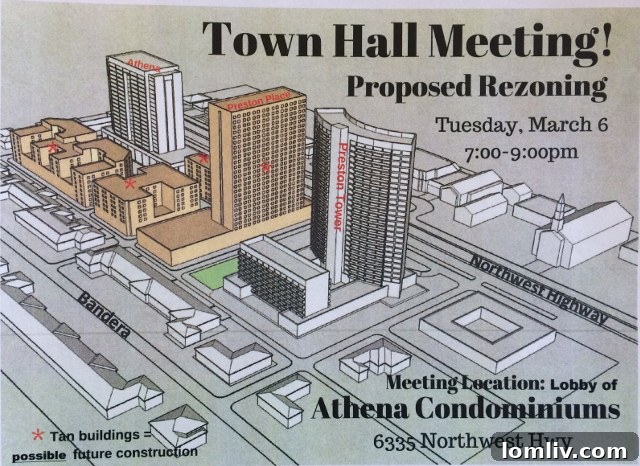
Misleading Visuals: The Inflammatory Invitation Graphic
A prime example of this manipulative approach was the graphic used for the meeting’s invitation, prominently displayed above. This image, sourced from a presentation to the PD-15 working group, was originally conceived by urban planner Scott Polikov as a speculative “what if” massing study. Its conceptual basis was largely drawn from the A.G. Spanos proposal for Diplomat, simply because it was the only active deal at the time, not because it represented a definitive or even probable outcome. It was intended as a visual aid to stimulate discussion, not as a blueprint for reality. Disturbingly, the meeting organizers, fully aware of its speculative nature, utilized this graphic during their presentation specifically to incite opposition and stoke fears among attendees. The reality is far less sensational: no one has yet seen Spanos’s most recent proposal, nor has Provident’s plan for Preston Place been unveiled. In fact, Spanos has actively sought to present their plans to the tower residents but has been repeatedly denied. A representative from Provident, currently under contract with Preston Place and seeking to gauge neighborhood sentiment, was even turned away from this very meeting. Such actions demonstrate a clear lack of transparency and a deliberate suppression of information that could offer a more balanced perspective.
Clarifying Zoning Nuances: Beyond Simple “Rezoning”
The invitation also falsely advertised its purpose as addressing “Proposed Rezoning.” This is a critical misrepresentation. The area within PD-15 is presently zoned as MF-3 (Multi-Family 3), which notably allows for unlimited building height. The true limitations within this zoning classification pertain to lot coverage and Floor Area Ratio (FAR). In MF-3, the FAR is set at 4:1, meaning that for every square foot of land, four square feet of building area can be constructed. While developers may seek a larger FAR to maximize their investment and create higher-quality projects, such an adjustment constitutes a change to the Planned Development (PD) district’s specifics, not a fundamental rezoning of the MF-3 classification. Another crucial aspect within PD-15 is the overall cap on the total number of residential units allowed in the area. With approximately 65 units currently in surplus, any significant redevelopment will necessitate an increase in this limit—again, a modification to the PD, not a blanket zoning change.
During the question-and-answer segment, a resident raised a concern about Preston Place potentially incorporating commercial space alongside residential units. This specific alteration, shifting from MF-3 to an O-2 (Office) designation, would indeed constitute an actual zoning change. However, gaining approval for such a change would be an exceedingly difficult and protracted process. Furthermore, meeting the stringent parking requirements for a mixed-use commercial structure in this location would present monumental logistical challenges, making such a scenario highly improbable. Despite this, attorney Roger Albright, instead of providing a clear and comprehensive explanation, chose to plant a seed of doubt by stating that while he hadn’t heard of commercial interest, “you never know, anything could happen.” This subtle equivocation further fueled unfounded anxieties among the audience.
Debunking “Downzoning” and Questionable Architectural Examples
John Pritchett introduced the alarming concept of “downzoning,” describing it as the city essentially “stealing” a landowner’s existing development rights. Let’s be unequivocally clear: That. Will. Not. Happen. Downzoning is an extremely rare and legally complex action, almost impossible to implement without significant compensation or overwhelming public safety justification, which is not present here. Pritchett then shifted to discussing “quality for the neighborhood,” oddly holding up The Laurel as an example of how lower density *could* work. Yet, one would be hard-pressed to describe The Laurel (or The Bandera, for that matter) as a paragon of architectural excellence. There’s an almost direct correlation between a project’s profitability and the quality of its construction and design. Had the neighborhood not intensely pressured The Laurel to reduce its scale, it might have achieved a more attractive and aesthetically pleasing outcome. This suggests that the pursuit of lower density without considering economic viability often leads to compromises in architectural quality, not improvements.
The Unanimity Paradox and Flawed Representation Arguments
A contentious point raised was the assertion that unanimous agreement from the six buildings within PD-15 would be required to approve any plan modifying PD requirements. Each building, in essence, is granted one vote, representing the majority will of its residents. Later, the topic of representation on the PD-15 working group emerged, with organizers expressing dissatisfaction that the towers, despite housing 76 percent of the units in PD-15, only received the same two representatives as a smaller building like Diplomat, with its mere 15 units. This argument presents a striking logical flaw: if unanimous agreement among the six buildings is truly required, how does simply increasing representation on the committee change the fundamental requirement for unanimity? Shifting representation does not alter the “unanimous” rule. In fact, a larger, more disparate working group is far more likely to promote internal dissent and gridlock than facilitate consensus, further complicating any progress in development discussions.
Unfair Attacks on Developers: Provident’s Projects and Material Misconceptions
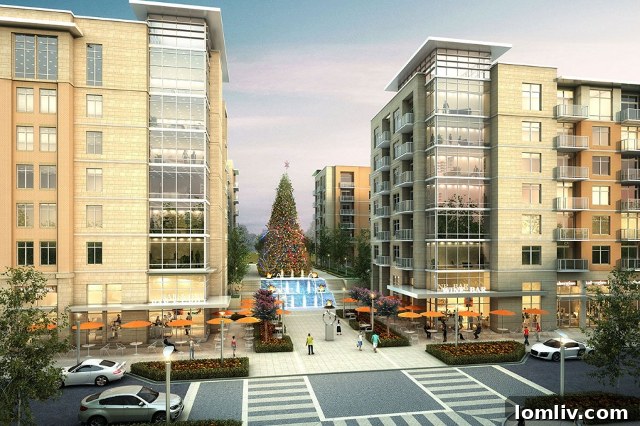
Adding more mud to the waters, the contract holder for Preston Place, Provident, was unfairly and preemptively attacked. Their mid-rise buildings at Preston Hollow Village were showcased as an example of their work, eliciting audible gasps and questions of “is that stucco?” This line of critique is deeply flawed for several reasons. Firstly, reputable developers are not confined to a single architectural “cookie-cutter” style across all their projects (as illustrated below). Their designs adapt to location, market demand, and, crucially, budget. Secondly, and as I’ve repeatedly emphasized, a direct correlation exists between the profitability of a development deal and the quality of construction materials used (see Prescott’s project presented to the Oak Lawn Committee). If residents desire a neighbor constructed with premium, non-stucco exteriors, they must be willing to engage with the developer to create a financially viable project that supports such upgrades. Furthermore, without open communication channels, residents have no constructive input. Developers are not mind readers; they need dialogue to understand community aspirations and constraints.
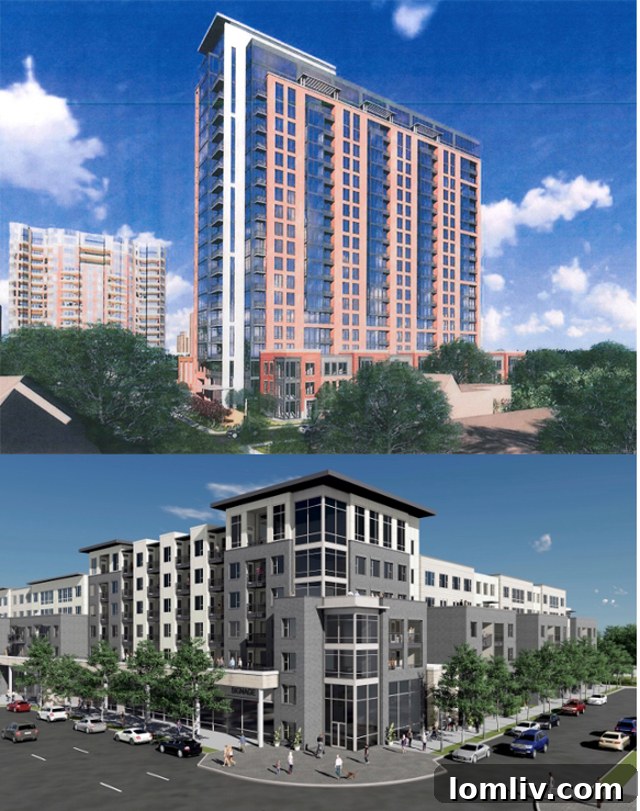
An Athena resident vocalized concerns about the potential impact of an apartment building—the implied “eww” hanging in the air—on existing condo values. The core issue isn’t apartments themselves, but rather the fear of poorly designed, low-quality, or “ugly” apartments. It is crucial to note that there is no legal mechanism to mandate condo-only construction; such a requirement is unlawful. This is a point on which the community must accept legal reality and pivot its focus toward demanding high-quality, thoughtfully designed residential structures, whether they are condominiums or apartments.
The Authorized Hearing: A Beacon of Public Process, Not Government Overreach
An “authorized hearing” serves as a formal process where the city, informed by public input and comprehensive urban planning calculations, determines appropriate zoning or other necessary changes for a specific area. Susan Conard falsely claimed that PD-15 could not be removed from the authorized hearing list, a list initiated by Council Member Jennifer Gates and Plan Commissioner Margot Murphy. This statement directly contradicted later discussions by the presenters about drafting a letter to Gates demanding PD-15’s removal. This inconsistency begs the question: can PD-15 be removed, or can it not? The conflicting messages sowed further confusion.
The authorized hearing was also erroneously portrayed as an act of government overreach. In reality, the authorized hearing is precisely the opposite: it is a democratic mechanism designed to bring together all stakeholders for public meetings to openly discuss their desires and concerns. This stands in stark contrast to the recent “towers-only” town hall, which essentially functioned as a semi-secret gathering of a select few, pushing a specific agenda without the presence or input of all affected parties. It was also rightly pointed out that previous PD-15 meetings have largely lacked substantive progress. I completely concur with this assessment. However, a significant portion of the blame for this stagnation rests squarely on the shoulders of the tower representatives who have consistently refused to engage in constructive negotiation for better neighborhood projects. It appears the towers may be apprehensive that their narrow interests will be exposed during a transparent authorized hearing process.
Traffic and Infrastructure: Exaggerated Fears vs. Data
The specter of “hundreds of apartments” and the resulting traffic nightmare was a recurring theme. Even if the total number of units were to double, what would be the actual impact? Instead of zero to three cars waiting at the Pickwick and Northwest Highway intersection, perhaps it might become zero to four or five. Crucially, this intersection serves a much broader area than just PD-15, meaning any increase would not simply double the existing traffic. One audience member passionately lamented the “terrible” traffic conditions on Northwest Highway and Preston Road. Yet, comprehensive data presented during the Preston Center task force meetings definitively demonstrated that traffic volumes on both these major arteries are, in fact, considerably lower than they have been in almost two decades. Such anecdotal complaints, unsupported by data, serve only to inflame fear rather than foster informed discussion.
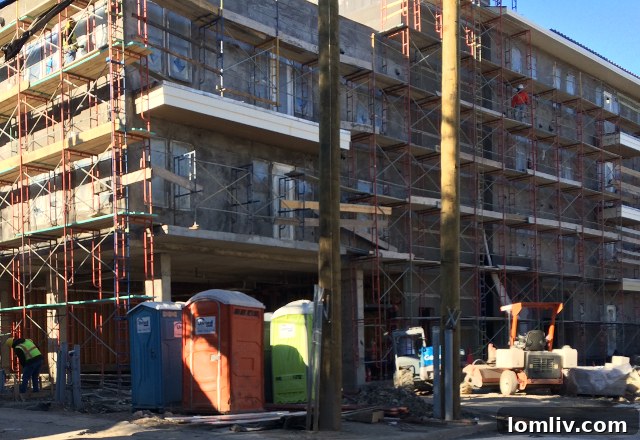
Architect Carla Young spoke extensively about the temporary, yet often disruptive, effects of construction on inner roads. She presented images of the ongoing construction of The Laurel on Preston and Northwest Highway, complete with porta-potties, workers’ vehicles parked on side streets, and the general disarray characteristic of a construction site. The audience’s reaction suggested a naive belief that construction could somehow be avoided altogether. This is an impossible fantasy. Construction zones are inherently messy, and some form of redevelopment is inevitable in this area. Young herself acknowledged the impact, stating, “I’m probably scaring you,” which appeared to be an intentional outcome. Furthermore, if The Laurel is indeed violating its promises regarding street parking and other neighborhood agreements, isn’t it the specific responsibility of the Preston Hollow South liaison (a role formerly held by John Pritchett) to address and police such situations?

Young then informed the audience that within PD-15, the internal roads are privately owned by the bordering buildings, with each building responsible for their maintenance. She questioned the potential impact of construction traffic on these roads, as if they were currently in pristine condition. This prompted many residents to ask if these roads could simply be blocked to prevent construction traffic—a suggestion that is neither practical nor particularly “neighborly.” The photograph above clearly illustrates a jarring pothole, marked by a traffic cone, located in the middle of a road bordering the Athena, the very HOA Young presides over. This particular pothole has been present for over a year, underscoring the irony of current road conditions. The surrounding buildings can only effectively negotiate for road repairs due to construction damage if they actively engage in dialogue with developers, a dialogue they are currently resisting.
Flooding Concerns: Misinformation on Runoff
The issue of flooding was also raised, with presenters asserting that new construction would exacerbate the problem. This claim lacks fundamental logic. Unless a new building covers a significantly larger portion of the lot with impermeable surfaces (like concrete), how could this be possible? The volume of rain falling on the roof of a two-story building is essentially the same as that falling on a 10-story building of the same footprint. Therefore, the resulting stormwater runoff from the roof itself would be largely identical. While new construction may potentially strain existing sanitary sewage lines, it will not, by itself, generate more floodwater. It is also pertinent to note that Spanos’s plan for the Diplomat site actually includes robust stormwater mitigation measures—information conspicuously withheld from the town hall attendees.
Unwarranted Accusations and Legal Threats
Finally, I must report on the disturbing prevalence of personal attacks and character assassinations emanating from the audience. While it is no secret that I am a critic of certain aspects of city government, I steadfastly avoid baseless accusations. Many attendees questioned whether Council Member Gates had a personal financial stake in the redevelopment or if she was being compensated by developers—insinuations made without any evidence. Discussions veered into calls for impeachment, calls for term limits, and even talk of suing the city, not with any expectation of winning, but merely “because they could,” believing it would generate negative publicity for PD-15. Attorney Albright prudently cautioned against such actions, confirming that such lawsuits would almost certainly be unsuccessful and incur substantial legal costs for the HOAs involved. This willingness to engage in speculative, unfounded accusations and legally unsound threats further illustrates the prevailing frustration and lack of constructive engagement.
The Inevitable Future: Development is Coming
In the final analysis, the town hall meeting achieved its narrow goal: successfully galvanizing opposition to development plans that, ironically, no one has actually seen. However, herein lies the critical paradox. The longer the PD-15 community chooses to remain insular, resisting dialogue and actively blocking developer presentations, the less influence it will ultimately wield over the development process and its eventual outcome. Mark my words: Development is coming to this area. A strategy of simply saying “no” will not be successful; it will only lead to a loss of control over the character and quality of what ultimately gets built.
It is particularly concerning that two board members of the Preston Hollow South Neighborhood Association are actively participating in these “towers-only” initiatives. How can they credibly claim to represent the interests of the entire neighborhood when they are demonstrably aligned with a faction focused on exclusion?
On a personal note, my resignation from this group continues to feel more justified with each passing day.

About the Author and My Focus Areas
My passion and professional focus revolve around high-rises, Homeowners Associations (HOAs), and property renovation. I also deeply appreciate modern and historical architecture, always striving for a balance with the dynamic YIMBY (Yes In My Backyard) movement, which advocates for more housing development to address urban challenges. If you’re interested in hosting a Candysdirt.com Staff Meeting event, please don’t hesitate to reach out. My writing has been recognized by the National Association of Real Estate Editors, earning two Bronze awards in 2016 and 2017, along with two Silver awards in 2016 and 2017, for my contributions to real estate journalism. Do you have a compelling story to share, a perspective on Dallas real estate, or even a marriage proposal? Feel free to email me directly at [email protected].