In the competitive world of apartment rentals, a strong credit score is often your most valuable asset. However, for many renters across the United States, especially in certain metropolitan areas, achieving that coveted “good” score can be a significant challenge. For the city of Arlington, Texas, this challenge is particularly pronounced, casting a spotlight on the financial realities faced by its resident renters.
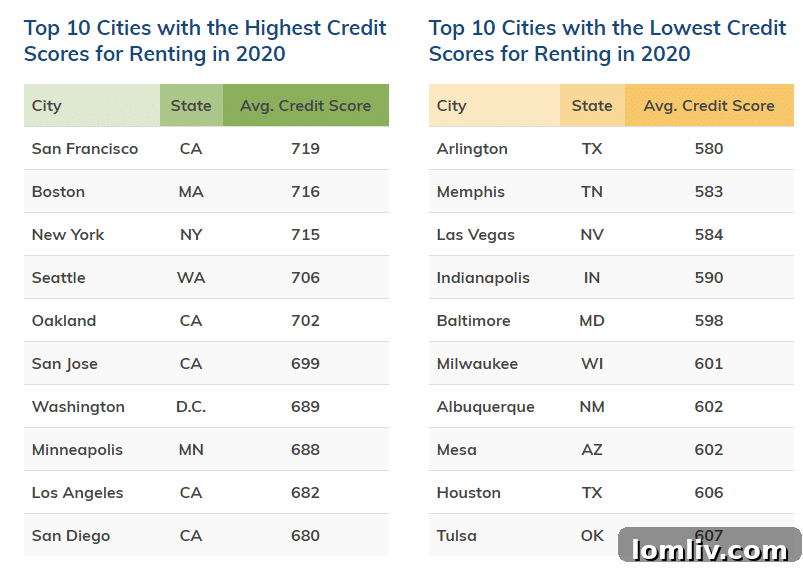
Recent analysis by RENTCafé, a leading authority on rental market trends, revealed a startling fact: Arlington ranks first among the nation’s 50 largest cities for renters with the lowest average credit scores. The average credit score for renters in Arlington across four key demographics stood at a concerning 580. To put this into perspective, San Francisco, a city synonymous with high living costs, topped the list with an average credit score of 719, highlighting a vast disparity in renter financial health across the country.
Understanding the Credit Score Landscape in Texas
While Arlington’s ranking is particularly striking, the issue of lower average credit scores extends beyond its city limits within the Lone Star State. Neighboring major cities in the Dallas-Fort Worth Metroplex also report averages significantly below the national ideal. Dallas renters, for instance, held an average score of 622, while Fort Worth renters averaged 627. These figures indicate a broader regional trend where credit health for renters lags behind other major urban centers.
In stark contrast, Austin, the state capital, showcased a much healthier financial profile for its renters, boasting an impressive average of 670. Austin not only led Texas in overall renter credit scores but also topped the state across all analyzed generational categories: Baby Boomers, Gen X, Millennials, and Gen Z. This regional divergence suggests that various economic and demographic factors contribute to the varied financial well-being of renters across different Texas cities.
Generational Credit Score Insights
The RENTCafé analysis offers a granular look into credit scores broken down by generation, providing valuable insights into the financial habits and challenges of different age groups. The study defines generations as follows:
- Gen Z: Individuals born between 1997 and 2012
- Millennials: Individuals born between 1981 and 1996
- Gen X: Individuals born between 1965 and 1980
- Baby Boomers: Individuals born between 1946 and 1964
Younger generations, particularly Gen Z, face unique challenges in establishing strong credit histories. In the D-FW Metroplex, Gen Z renters exhibited some of the lowest scores: 575 in Dallas, 585 in Fort Worth, and a strikingly low 535 in Arlington. These figures underscore the hurdle many young adults encounter when trying to secure housing, often due to limited credit history or existing student loan debt.
Conversely, older generations, having had more time to build and manage credit, generally show higher scores. For instance, Baby Boomers in Austin boasted an impressive average credit score of 722, making them the second-highest nationally, only slightly behind New York City’s Baby Boomers (732). This generational disparity highlights the long-term impact of financial literacy and consistent credit management on an individual’s ability to navigate the rental market.
A Diverging Trend: D-FW vs. The Nation
The findings from the RENTCafé analysis are particularly concerning given the national trend in renter credit scores. Across the United States, the average credit score required to rent an apartment has steadily increased by one point each year over the past three years. This upward trend suggests a growing emphasis by landlords on creditworthiness, potentially making it harder for applicants with lower scores to secure housing.
However, the Dallas and Fort Worth rental markets have moved against this national current. Both cities have experienced declines in their average renter credit scores over the past three years. In 2018, Dallas renters averaged 639, which dropped to 630 in 2019, and further to 622 in the most recent analysis. Similarly, Fort Worth saw its average decline from 647 in 2018 to 641 in 2019, settling at 627. This downward trajectory in two of Texas’s largest urban centers, especially when juxtaposed with rising national averages, points to unique socio-economic pressures impacting residents in the D-FW area.
Even for those seeking high-end apartments, credit scores in D-FW remain relatively modest. Dallas renters in luxury properties average a score of 659, while Fort Worth high-end renters average 680. While these scores are higher than the city averages, they still fall below the “good” credit range often preferred by landlords, suggesting that even affluent renters in these markets might face scrutiny.
Arlington’s Unique Rental Market Challenges
Despite the prevailing lower credit scores, Arlington’s rental market remains dynamic and increasingly expensive. According to Zumper.com research from February, the average rent for a one-bedroom apartment in Arlington reached $950. This represents a significant 5.6-percent increase over the previous month and a substantial 9.2-percent jump compared to the previous year. While studio apartment rents saw a slight decrease of 3 percent to $775 in the past month, the overall trend indicates rising costs.
Arlington currently ranks as the 67th-most expensive renter’s market in the U.S. This combination of rising rents and the lowest average renter credit scores among large cities creates a significant affordability and accessibility challenge for many residents. It suggests that despite financial hurdles, demand for housing in Arlington remains strong, potentially driven by its strategic location, job opportunities, and educational institutions.
The RENTCafé analysis, which forms the backbone of these findings, is based on an extensive dataset of 5 million anonymized rental application records from RentGrow. This vast sample size, covering the 50 largest U.S. cities, provides a robust and reliable snapshot of the national rental credit landscape.
Strategies for Navigating the Rental Market with Your Credit Score
Given the increasing importance of credit scores in apartment applications, understanding what landlords look for and how to present yourself as a reliable tenant is crucial. For those in markets like Arlington, Dallas, or Fort Worth, where average scores are lower, proactive strategies become even more vital.
What Credit Score Do You Need to Rent an Apartment?
While there’s no single universal number, most landlords prefer applicants with a solid credit history. According to ApartmentList.com, generally, a “good” credit rating is considered to be an aggregate score ranging from 670 to 739. Renters within this range are typically viewed favorably and have a better chance of getting their applications considered without additional stipulations. Scores below this range might require additional effort or alternative approaches.
Improving Your Credit Score for Renting
If your credit score falls below the ideal range, there are actionable steps you can take to improve it:
- Pay Bills on Time: Payment history is the most significant factor in your credit score. Ensure all your bills, especially credit card payments, loan installments, and utility bills, are paid by their due dates.
- Reduce Debt: High credit card balances can negatively impact your score. Focus on paying down revolving debt to lower your credit utilization ratio.
- Check Your Credit Report: Regularly review your credit report from all three major bureaus (Equifax, Experian, TransUnion) for any errors or inaccuracies. Disputing and correcting these can quickly boost your score.
- Avoid New Credit: Opening multiple new credit accounts in a short period can temporarily lower your score. Only apply for new credit when necessary.
- Become an Authorized User: If a trusted family member has excellent credit, becoming an authorized user on one of their credit cards can help improve your credit history, provided they use it responsibly.
Alternative Strategies for Renters with Lower Credit Scores
Even with a less-than-perfect score, renting an apartment is still possible. Here are some strategies to consider:
- Find a Co-Signer or Guarantor: A trusted individual with a strong credit history can co-sign your lease, essentially guaranteeing that the rent will be paid. This significantly reduces the risk for the landlord.
- Offer a Larger Security Deposit: Some landlords might be willing to overlook a lower credit score if you offer to pay an extra month’s rent as an increased security deposit.
- Provide Proof of Income and Savings: Demonstrate your financial stability by providing bank statements, pay stubs, or employment verification letters that show a consistent and reliable income, along with substantial savings.
- Write a Letter of Explanation: If there’s a specific reason for your low credit score (e.g., medical emergency, temporary unemployment), write a polite and concise letter explaining the situation and outlining how you’ve addressed it.
- Seek Out Private Landlords or Smaller Properties: Larger apartment complexes often have stricter, automated credit checks. Private landlords or smaller property owners might be more flexible and willing to consider the full scope of your application.
- Consider a Roommate: If you’re struggling to qualify on your own, consider renting with a roommate who has a stronger credit score.
NerdWallet offers an insider’s look at the credit-check process, providing additional strategies for maneuvering through it successfully.
Conclusion: Building a Strong Financial Foundation for Renters
The findings from the RENTCafé analysis underscore a critical challenge for renters in Arlington and across parts of the D-FW Metroplex. While the national trend points towards an increased reliance on credit scores in rental applications, these Texas cities face the dual hurdle of rising rents and declining average renter credit scores. For individuals navigating this complex market, understanding the role of credit, actively working to improve their financial standing, and exploring alternative solutions are key to securing desired housing.
Ultimately, a healthy credit score is more than just a number; it’s a reflection of financial responsibility that opens doors, not just for housing, but for broader financial stability. As the rental market continues to evolve, empowering renters with the knowledge and tools to manage and improve their credit will be essential for their long-term success.