Anne Rice’s Iconic New Orleans Mansion on St. Charles Avenue: A Southern Gothic Legacy For Sale
For enthusiasts of Anne Rice, the masterful storyteller who captivated millions with her tales of vampires, witches, and haunted spirits, New Orleans is far more than just a city; it is a character, a muse, and the very soul of her Southern Gothic universe. The labyrinthine streets, the historic architecture, and the palpable sense of mystery that permeates the Crescent City served as the quintessential backdrop for many of her most celebrated novels, particularly “The Vampire Chronicles” and “The Lives of the Mayfair Witches.” Fans often pilgrimage to New Orleans, eager to walk in the footsteps of her legendary characters and catch a glimpse of the very places that inspired her dark, romantic narratives. It is no surprise, then, that one of Anne Rice’s own storied residences in this enchanting city, a majestic mansion steeped in both history and literary lore, has once again become available on the real estate market, offering a unique opportunity to own a tangible piece of her extraordinary legacy.
Discovering Anne Rice’s New Orleans: Where Fiction Meets Reality
Anne Rice’s connection to New Orleans was profound and deeply personal. Born and raised in the city, she returned to it repeatedly throughout her life, drawing endless inspiration from its unique culture, its opulent yet decaying grandeur, and its melancholic beauty. Her homes in New Orleans were more than just places of residence; they were creative sanctuaries where she brought her complex characters to life and wove intricate tapestries of supernatural intrigue. These properties often found their way, subtly or explicitly, into her fictional landscapes, blurring the lines between the author’s reality and the worlds she so vividly imagined. This particular mansion holds a special place in the hearts of her admirers, rumored to have directly influenced one of her most beloved series.
The Grandeur of 3711 St. Charles Avenue: A Literary Landmark
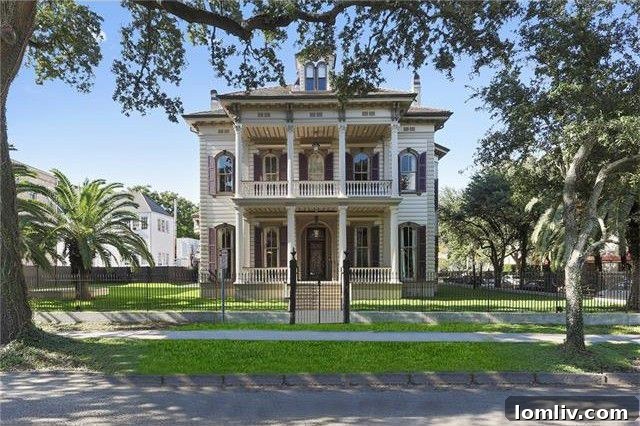
Nestled majestically on the prestigious 3711 St. Charles Avenue in Uptown New Orleans, this grand estate stands as a testament to the city’s architectural splendor. The mansion, a striking example of the opulent residences that line this historic thoroughfare, has a captivating history that extends beyond its literary ties. Anne Rice herself resided here, immersing herself in the very atmosphere that fueled her creative genius. She acquired this magnificent property at a significant period in her writing career, further cementing its place in her personal and professional narrative. Following her tenure, the mansion was sold by Rice to new owners in 2011, reportedly fetching a substantial sum of $3.19 million, a reflection of its inherent value and its unique connection to one of literature’s most iconic figures. Now, years later, the opportunity to acquire this landmark property has re-emerged, reigniting interest among literary aficionados and discerning real estate investors alike.
The Heart of Southern Gothic: Anne Rice’s Literary Connection to New Orleans
Anne Rice’s work is synonymous with the Southern Gothic genre, a literary style characterized by its exploration of grotesque themes, decaying settings, and often supernatural elements within the American South. New Orleans, with its blend of European, Caribbean, and African influences, its voodoo traditions, its cemeteries, and its sultry, humid atmosphere, provided the perfect crucible for her brand of dark fantasy. Her narratives often delve into themes of immortality, forbidden desires, existential angst, and the complex interplay between good and evil, all set against the richly atmospheric backdrop of the Crescent City. Her extensive use of New Orleans as a living, breathing entity in her stories elevated the city itself to a character status, making it inseparable from her literary identity.
The Mayfair Witches and the Spirit of the City
It is widely believed and frequently cited that the mansion at 3711 St. Charles Avenue served as the inspiration for the fictional residence of one of the families featured in her iconic “Lives of the Mayfair Witches” series. This saga, which chronicles generations of a powerful and cursed family of witches intimately tied to a malevolent spirit named Lasher, captures the very essence of New Orleans’ mystique. The idea that the Mayfair witches, with their secrets, their power, and their ancient lineage, “lived” within the stately walls of this very house adds an undeniable layer of enchantment and historical resonance to the property. For readers, knowing that Rice herself occupied this space while crafting the intricate lore of the Mayfair family creates a powerful connection, allowing them to envision the characters moving through its rooms, plotting their destinies, and perhaps even communing with unseen forces within its hallowed halls.
Crafting Worlds: “Lasher” and the Mansion’s Influence
Indeed, Anne Rice acquired the St. Charles Avenue mansion during the period she was actively writing “Lasher,” the second novel in “The Lives of the Mayfair Witches” series. This timing is crucial, as it suggests that the architecture, the ambiance, and perhaps even the subtle whispers of the house itself profoundly influenced the unfolding narrative. Authors often draw heavily from their immediate surroundings, and for a writer as sensitive to atmosphere as Rice, residing in such a historically rich and visually striking property during the creation of a major work would have been transformative. The elegant balconies, the soaring ceilings, the grand staircases, and the mature gardens could all have contributed to the vivid descriptions of the Mayfair estate, making the fictional world feel incredibly real and deeply rooted in the New Orleans landscape. This direct creative link makes the mansion not just a former home, but a genuine artifact of literary history.
Architectural Splendor and Historic Charm
Beyond its significant literary connections, the mansion at 3711 St. Charles Avenue is a magnificent architectural specimen in its own right. Uptown New Orleans is renowned for its grand 19th and early 20th-century homes, characterized by their diverse architectural styles, from Greek Revival and Italianate to Queen Anne and Colonial Revival. This particular estate likely embodies the stately elegance and craftsmanship typical of its era, featuring intricate details, spacious interiors, and a commanding presence on one of the city’s most picturesque boulevards. Imagine soaring ceilings, polished hardwood floors, ornate crown molding, and perhaps grand fireplaces that speak to a bygone era of sophisticated living. The exterior, with its lush landscaping and possibly a classic New Orleans-style porch or gallery, would offer breathtaking views of the iconic St. Charles Avenue streetcar line and the vibrant life of Uptown. Such properties are not merely houses; they are enduring symbols of New Orleans’ rich cultural heritage and architectural legacy.
Uptown Elegance: A Glimpse into New Orleans’ Past
Owning a home on St. Charles Avenue is not just about a prestigious address; it’s about embracing a lifestyle deeply interwoven with New Orleans’ history and charm. The avenue itself is a linear park adorned with ancient oak trees, stately mansions, and the rhythmic clang of the streetcar, providing a constant connection to the city’s past. A residence like 3711 St. Charles offers a unique blend of historic elegance and modern comfort, making it a highly coveted property. It represents a rare opportunity to live within walls that have witnessed generations of New Orleans’ story, while also offering the potential for contemporary enhancements that respect its heritage. The very fabric of the house likely holds tales of its own, independent of its literary fame, contributing to its profound sense of place and history.
The Enduring Appeal of Literary Landmarks
The allure of properties once owned or inhabited by celebrated authors extends far beyond their market value. These homes become pilgrimage sites for fans, places where the boundaries between the real world and the fictional universes created by the author seem to dissolve. From William Shakespeare’s birthplace in Stratford-upon-Avon to Ernest Hemingway’s Key West retreat, literary homes hold a unique fascination. They offer a tangible link to the creative process, providing insights into the environments that shaped great minds and their masterpieces. Anne Rice’s St. Charles Avenue mansion perfectly embodies this phenomenon. It’s not just a house; it’s a portal to the world of Lestat, Rowan Mayfair, and the countless other characters that emerged from her imagination. Owning such a property means becoming a custodian of a significant cultural asset, preserving a piece of literary and historical heritage for future generations.
Owning a Piece of Literary History: More Than Just Real Estate
For a prospective buyer, this mansion represents an investment not only in prime New Orleans real estate but also in an unparalleled piece of literary history. It offers the rare chance to live in a space that directly inspired some of the most enduring works of Southern Gothic literature. The prestige associated with an Anne Rice home, particularly one so deeply intertwined with her creative output, adds immeasurable value. It appeals to a niche market of buyers who appreciate both the grandeur of historic New Orleans architecture and the profound cultural significance of owning a property connected to a literary titan. Such a residence could serve as a magnificent private home, a unique cultural attraction, or even a boutique literary guesthouse, drawing visitors eager to experience the magic firsthand.
Conclusion: A Rare Opportunity to Embrace a Legend
The re-listing of Anne Rice’s former St. Charles Avenue mansion is more than just a real estate transaction; it’s an event that resonates deeply with the literary world and the countless admirers of her work. It offers a singular opportunity to acquire a grand historic property in one of America’s most enchanting cities, a home that stands as a silent witness to the genesis of some of modern literature’s most iconic tales. For anyone captivated by the dark romance of New Orleans, the mystique of Southern Gothic, and the enduring legacy of Anne Rice, this mansion is not merely a house for sale. It is an invitation to step into a story, to inhabit a place where the veil between reality and fiction is wonderfully thin, and to own a truly extraordinary piece of American literary heritage.