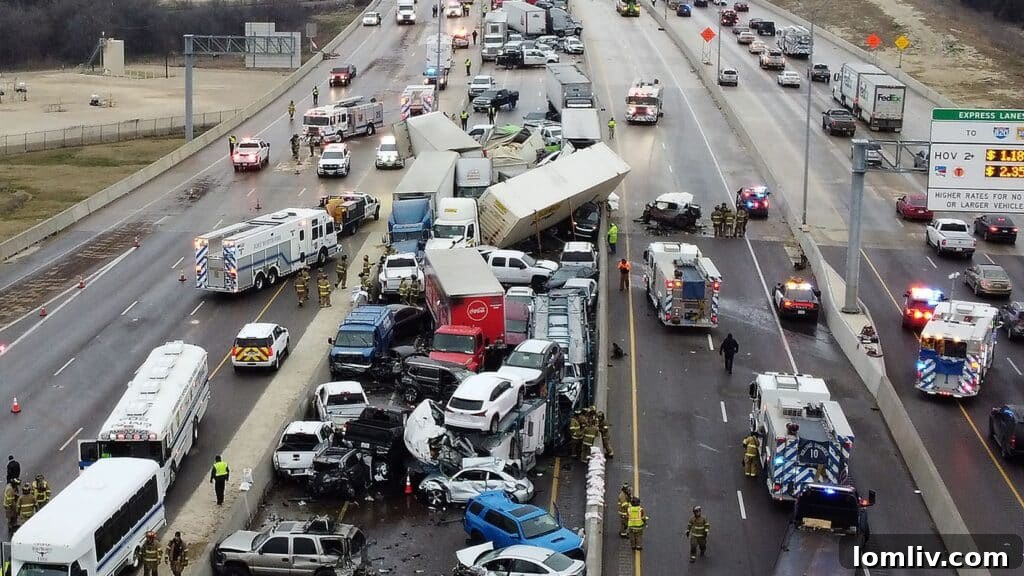
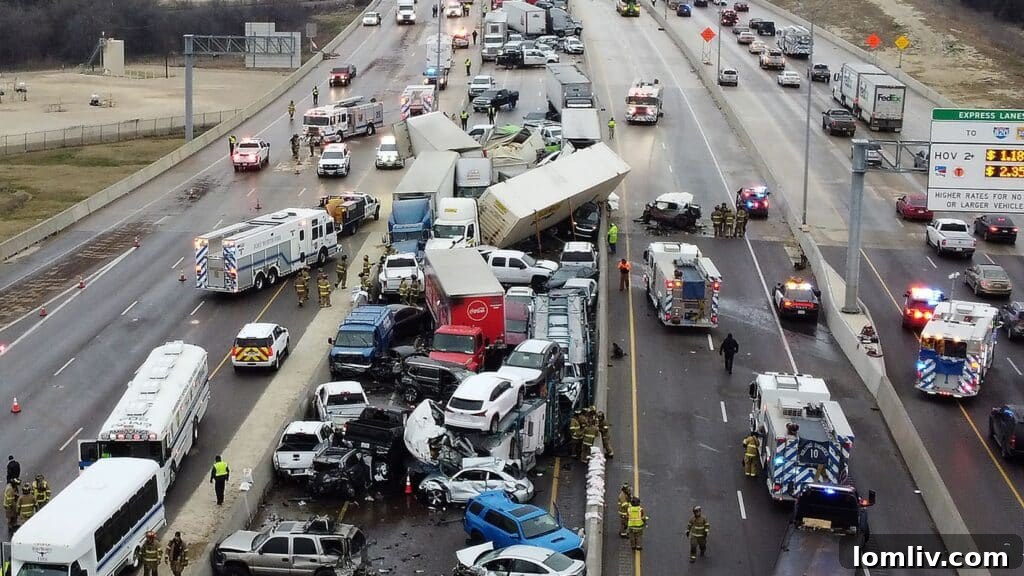
The morning of Thursday, February 12, unfolded with a chilling prelude to the immense challenges that would soon grip the region. An unimaginable 133-vehicle pile-up on an icy stretch of Interstate 35 West, near the bustling heart of downtown Fort Worth, sent dozens to local hospitals and tragically claimed six lives. This catastrophic event wasn’t merely a traffic accident; it was an ominous overture, a stark and immediate demonstration of vulnerabilities and glaring deficiencies in infrastructure preparedness, hinting at the far greater struggles awaiting the community. The chilling images of crumpled vehicles and emergency responders battling treacherous conditions quickly dominated national headlines, casting a long shadow over what was to come.
Little did anyone know, this wasn’t the last time Fort Worth would feature prominently in national news cycles in the ensuing days and weeks. The city, and indeed the entire state of Texas, was about to face a historic winter storm that would test its resilience, its infrastructure, and the very spirit of its inhabitants.
The Gathering Storm: A Scramble for Supplies in Fort Worth
Returning home on that fateful Thursday, still reeling from the news of the interstate tragedy, my partner, Carlos Gomez—an officer with Fort Worth Emergency Management—posed a question that instantly shifted my perspective. He asked if I had stocked up on food. My initial response, a proud gesture towards a rich Bolognese sauce simmering on the stove all day, was met with a distinctive, fixed stare. It was a look that conveyed a profound message: “You really don’t grasp the gravity of this situation.”
He was unequivocally right. My mental framework for a winter storm was still rooted in idyllic childhood memories of “snow days”—happy, unexpected holidays filled with shared family time, cozy indoor activities, and, dare I say, the occasional bowl of homemade snow ice cream (a delightful, albeit hygienically questionable, treat best left to nostalgic imagination). I hadn’t connected the dots between a severe cold front and a potential widespread crisis.
As Carlos prepared to leave for a quick trip to Fiesta, a local grocery store, he asked if I needed anything. My casual reply—”I dunno. Celery? Carrots?”—highlighted my blissful ignorance. These were items for dinner, not for survival. The true scope of the unfolding emergency was still a distant concept, shrouded in the comfort of my warm home and the aroma of a freshly cooked meal.
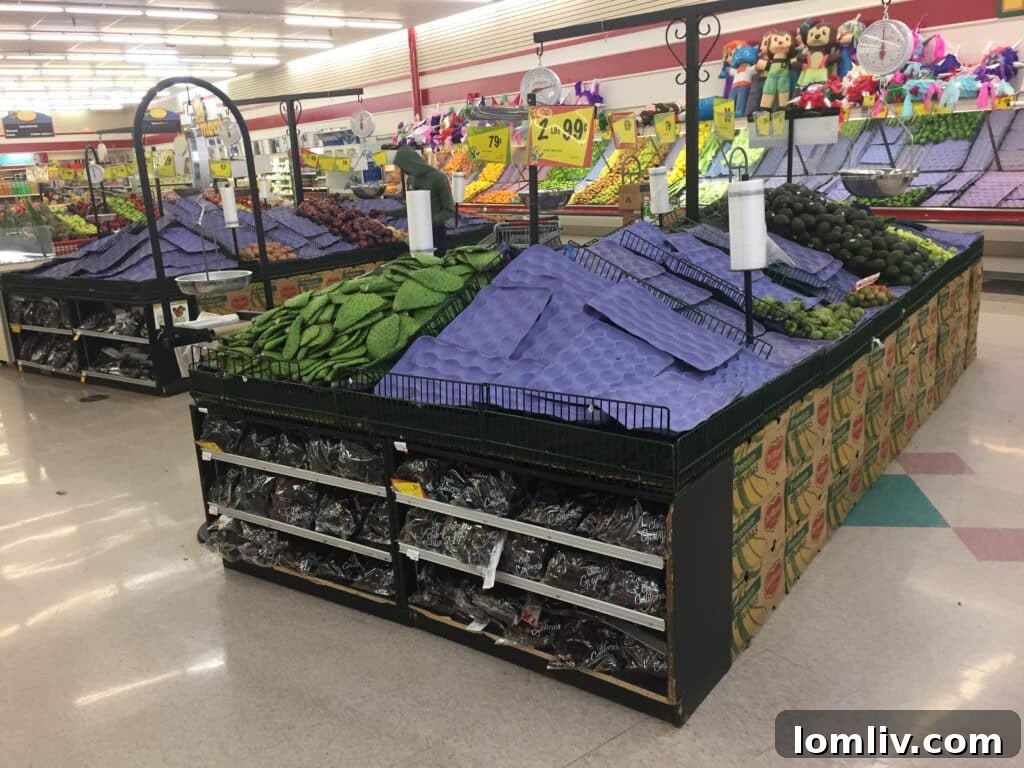
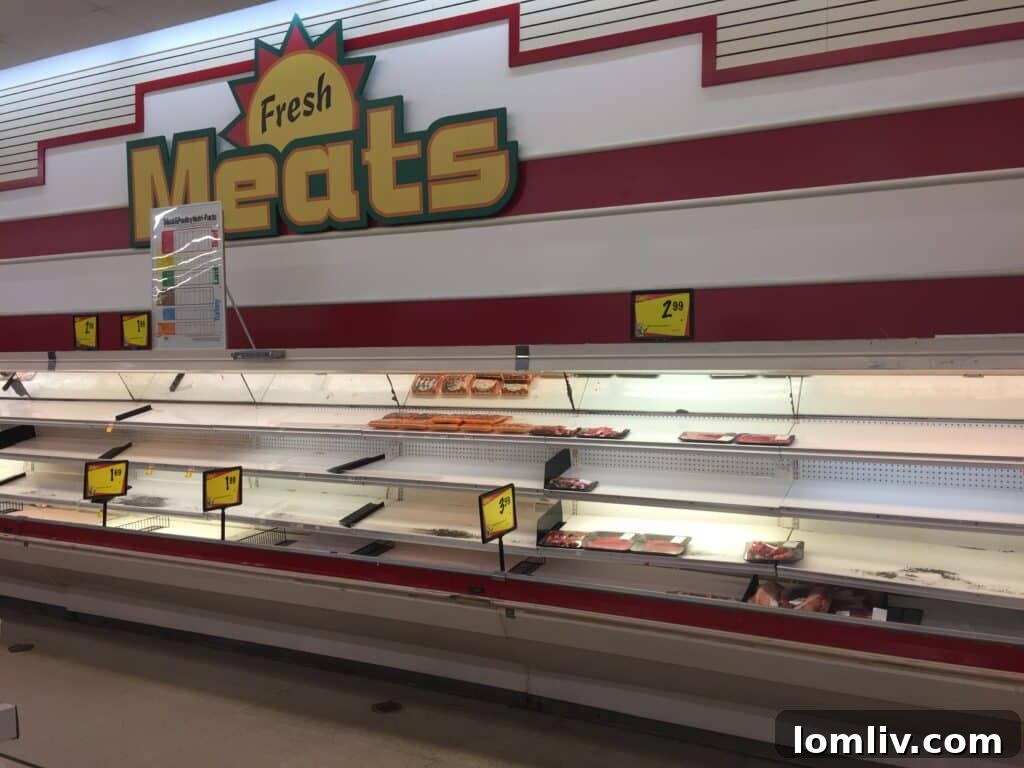
His return brought a jarring dose of reality. He came back with a rather meager, sad-looking package of fatty chicken thighs. There was no celery, no carrots – none of the fresh produce I had nonchalantly requested. The shelves, he reported, had been stripped bare. This moment was the electric shock I needed; the gravity of the situation finally hit me. I got it. The storm wasn’t just a snow day; it was an impending struggle for basic necessities, a test of preparedness on a scale I had never anticipated.
The following morning, determined not to be caught off guard again, I woke before dawn. At 6:30 a.m., I ventured out, navigating the pre-dawn darkness and the thin coat of ice glazing my car, a constant fear of black ice lurking on the roads. My destination was El Rio Grande, a large market on the South Freeway, aiming to be there precisely when their doors opened. I caught a lucky break; the main roads were surprisingly in good shape, and to my immense relief, the grocery store was still relatively well-stocked. A subsequent trip to Trader Joe’s yielded similar success. We were now, finally, adequately provisioned, a bullet seemingly dodged through sheer determination and a touch of good fortune.
However, the sense of security was fleeting. Carlos, receiving regular briefings from emergency services, began preparing me for the increasingly likely scenario of widespread power cuts across the city. My gravest anxieties immediately shifted to my elderly parents, who lived just around the corner on Willing Avenue. Their severely impaired mobility meant they were entirely dependent on a dedicated caregiving service for their daily needs, a service that might be severely disrupted by the worsening conditions. The thought of them isolated, cold, and vulnerable, loomed heavy.
The Blackout: A City Plunged into Darkness and Cold
The inevitable arrived with brutal precision. At 2 a.m. on Monday, February 15, the power grid faltered, plunging my parents’ home into darkness and an increasingly unbearable cold. They typically kept their thermostat set near a balmy 80 degrees; by the following morning, the indoor temperature had plummeted to such an extent that they could visibly see their breath. The biting cold seeped into every corner, transforming their familiar, comfortable home into a frigid, alien environment.
My sister, who had wisely chosen to visit and was thankfully present, did everything within her power to manage the dire situation. She diligently kept a small fire burning in the fireplace, a flickering beacon against the encroaching chill, and pots full of water simmering on the gas stove, not only to generate a minuscule amount of warmth but also to provide much-needed hot water. Yet, even these efforts were quickly becoming unsustainable. Their precious store of firewood was rapidly dwindling, and, compounding the misery, several crucial water pipes had frozen solid, including the kitchen faucet, cutting off a vital supply.
The situation across Fort Worth had escalated beyond mere inconvenience; it had become truly catastrophic. Judge Glen Whitley, the county executive of Tarrant County, penned a harrowing letter to Governor Greg Abbott, describing the state of affairs with stark realism. He asserted that the crisis was “of such severity and magnitude that an effective response is beyond Tarrant County’s capability to recover.” This declaration underscored the overwhelming nature of the disaster, painting a picture of a community pushed to its absolute limits, struggling against an unprecedented force of nature and a failing infrastructure.
Ryan Place Bands Together: A Beacon of Community
As conditions steadily worsened, and official lines of communication became strained or non-existent, local community networks proved to be invaluable. The Ryan Place Facebook page, a hub for residents of this historic Fort Worth neighborhood, rapidly transformed into an essential lifeline. In such an emergency, accurate and timely information became the most valuable commodity, and this digital forum excelled at providing it.

Tim Keith, the dynamic president of the Ryan Place Improvement Association, once again rose to the occasion, demonstrating exceptional leadership and unwavering commitment to his neighbors. The community was also incredibly fortunate to be well-served by Fort Worth City Councilwoman Ann Zadeh, whose regular social media posts provided critical updates. She disseminated vital information ranging from the locations of hastily established warming centers to crucial practical advice, such as step-by-step instructions on how to shut off water mains—a piece of knowledge that would prove indispensable for countless homeowners.
Indeed, many houses across the neighborhood and city were already experiencing devastating water line breaks. Among the most notable and heartbreaking incidents was the historic home of former councilman and revered community activist Joel Burns and his husband J.D. Angle, located at the iconic intersection of College and Elizabeth. The extensive water damage at their residence, captured in viral images, quickly made national news, serving as a poignant symbol of the widespread destruction.
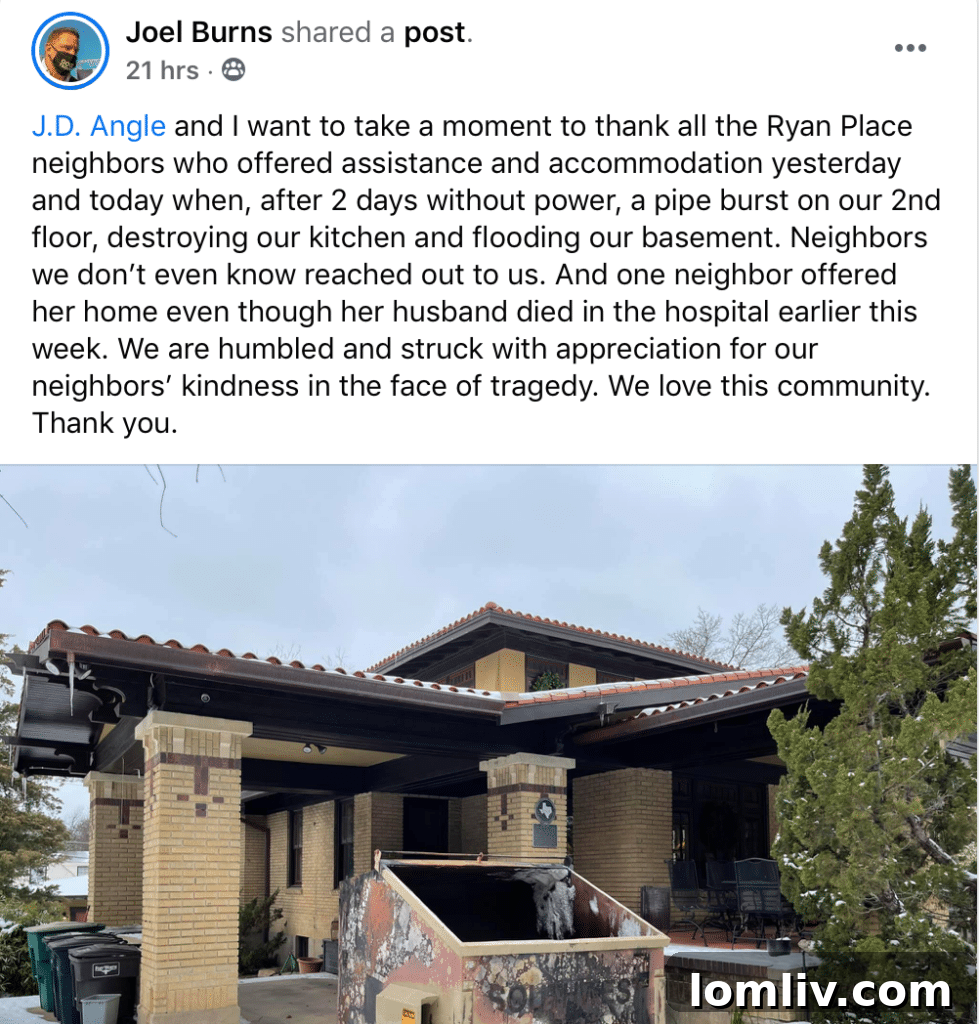
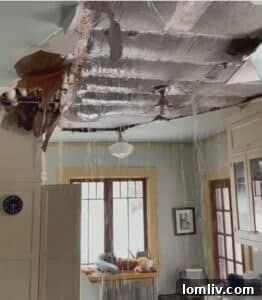
“I truly considered myself the chief peddler of information during those days,” remarked association President Tim Keith, reflecting on the overwhelming spirit of mutual aid. “It was incredible to witness. I could go on and on, detailing the countless individuals who offered everything they had—firewood for those running low, warm bowls of soup, or even generously opened their homes for neighbors to get warm or spend the night. There were so many neighborhood heroes, acting without hesitation.”
Among these everyday heroes were Kendal and Alan Lake, who transformed their home into a welcoming, warm refuge for those displaced by the cold. Matt Lewis tirelessly made rounds in his rugged Jeep, braving treacherous icy roads to deliver essential supplies to neighbors who were unable to venture out from their frozen homes. And Father Bill Estes at St. John’s Anglican Church opened the rectory, creating a makeshift mini-warming center that provided warmth and comfort to those most in need. These acts of kindness, large and small, painted a vivid picture of a community rallying together in the face of adversity, showcasing the extraordinary power of collective action and human empathy.
Keeping The Home Fires Burning: A Desperate Plea
Despite the community’s incredible efforts, my parents’ dire situation continued to weigh heavily. Their precious store of firewood, which had been a temporary savior, was down to the last few logs. The thought of them enduring another night in plummeting temperatures, completely reliant on a rapidly dwindling heat source, filled me with dread. Convinced that I would never find any firewood anywhere else in the besieged city, I swallowed my pride and resorted to a heartfelt appeal on the Ryan Place Facebook page, hoping for a miracle.
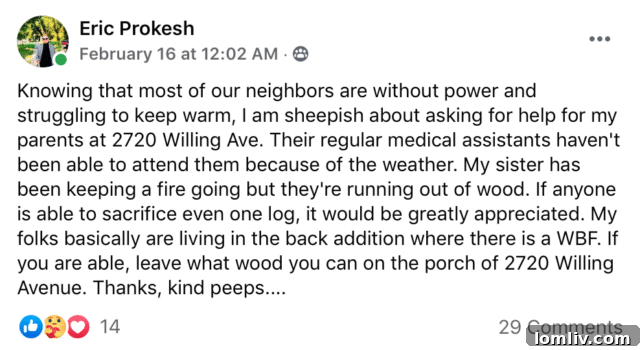
The response was nothing short of overwhelming and profoundly heartwarming. Within hours, a dozen compassionate neighbors, touched by the plea, arrived at my parents’ doorstep, leaving a generous supply of firewood that would last for several crucial days. This outpouring of generosity was a testament to the strength and interconnectedness of the Ryan Place community, a tangible manifestation of its deep-seated sense of solidarity.
Yet, even with this renewed supply, the ordeal was taking its toll. By Tuesday afternoon, my father’s spirits were profoundly low, and the overall situation remained truly dire. Neighbors across the area were recording indoor temperatures in the bone-chilling 30s. Many who had the means and opportunity had already wisely decamped, seeking refuge at the homes of friends or family members who still had power. At my parents’ house, the power had been off for over 36 grueling hours. To compound their vulnerability, no caregivers had been able to reach the house for 12 hours, leaving them isolated and without essential assistance.
“Once again our neighborhood has pulled together,” observed Keith, his voice filled with pride. “We really have something special here — a real sense of community, of looking out for one another.”
To try and conserve what little warmth they could, a blanket had been hung strategically to block off the older, colder part of their beautiful 1926 house. Light was provided by the soft glow of candlelight and the limited battery-operated lamps we had on hand. Information, a precious commodity, came through the static-laced broadcast of a vintage transistor radio, connecting them to the outside world in the absence of modern amenities. Luckily, their stove was gas-powered, allowing me to provide them with desperately needed hot meals, a small comfort in the biting cold.
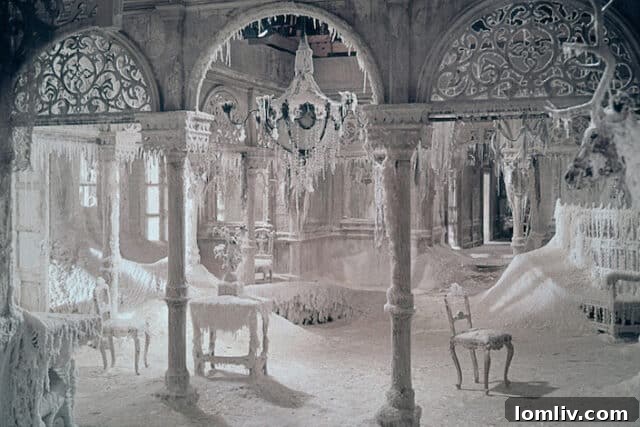
Then, at approximately 6 p.m., a sliver of hope appeared. As if by magic, the power flickered back on, filling the house with a sudden, glorious warmth and light. Almost simultaneously, Chelsea, one of their most capable and dedicated caregivers, turned up, having finally navigated the treacherous roads to attend to my mother. It was a turning point, a moment of immense relief and gratitude after days of relentless struggle, underscoring the resilience of both the community and the human spirit.
‘Prepare For The Worst’: Lessons in Resilience and Preparedness
The Fort Worth winter storm served as a brutal, yet invaluable, lesson in the critical importance of emergency preparedness. “Many people expect rescue and immediate assistance in a crisis, but for extreme situations, those who are able need to be prepared to fend for themselves,” Carlos wisely stated, echoing the hard-won wisdom gained from his role in emergency management. “The basic things like a three-day supply of water—one gallon per person per day—or even having physical cash on hand (ATMs, after all, rely on electricity), and developing a personal survival plan, are absolutely essential. Prepare for the worst-case scenario. Ninety-nine percent of the time it won’t happen, but for that one percent, it could mean the difference between life and death.”
This experience highlighted several key areas where individuals and communities can significantly bolster their resilience:
- Water Supply: Beyond the recommended one gallon per person per day for drinking, consider water for sanitation and basic hygiene.
- Food Storage: Stock non-perishable food items that require no cooking or refrigeration, ensuring a minimum of a three-day supply. Manual can openers are a must.
- Power Alternatives: Invest in power banks for phones, battery-operated lights, and, if feasible, a generator. Understand how to safely use alternative heating sources.
- Cash on Hand: Digital transactions become impossible without electricity. A small emergency fund in cash is crucial for essential purchases.
- Communication Plan: Establish a family communication plan, including out-of-state contacts, as local networks may be overwhelmed.
- Warmth and Shelter: Beyond just warm clothing, have extra blankets, sleeping bags, and consider how to create an indoor “warm room” to conserve body heat.
- Vehicle Readiness: Keep your car’s fuel tank full, as gas stations may not operate. A car can be a temporary warming spot or a power source for charging devices.
- Community Networks: Actively engage with local community groups, both online and offline. These networks prove invaluable for information sharing and mutual aid when formal services are stretched thin.
- Special Needs: For those with impaired mobility, chronic health conditions, or who rely on medical equipment, a more detailed and personalized emergency plan is paramount, including arrangements with caregivers and backup power for essential devices.
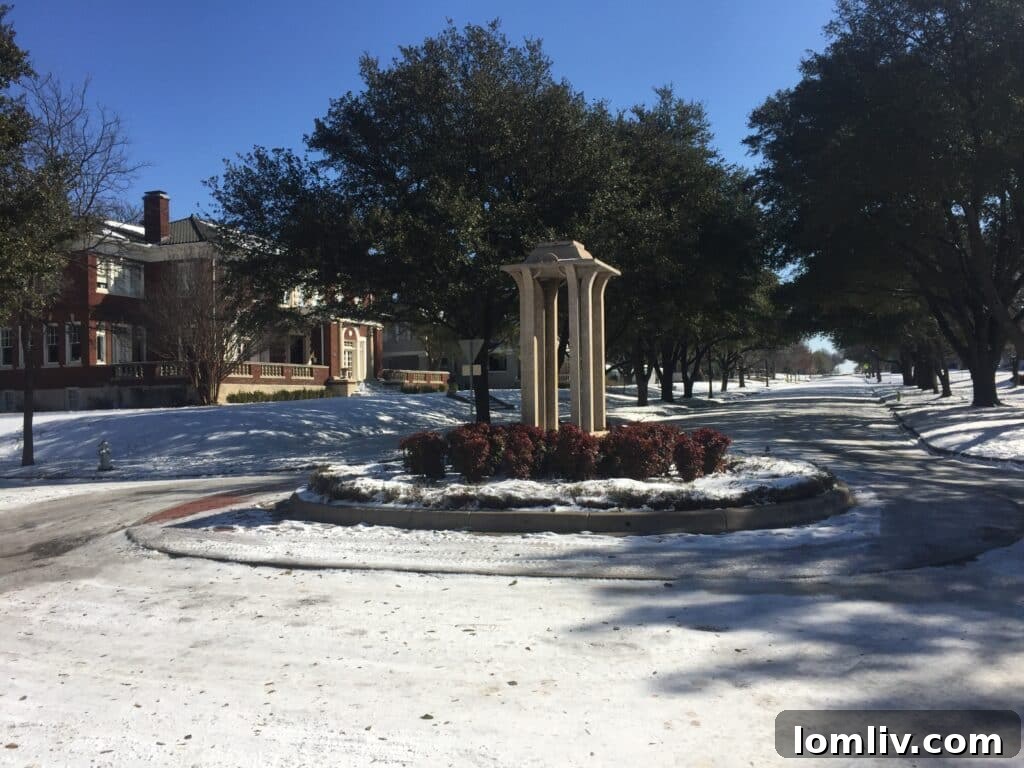
The lasting impact of the storm extends beyond material damage; it forged a deeper sense of connection and belonging. Personally, I feel an unparalleled sense of community in Ryan Place, one I have never experienced anywhere else I have lived. This collective ordeal illuminated the best of humanity, revealing the profound capacity for kindness and mutual support that lies within us. And for that, I am eternally grateful for my generous and giving neighbors, who, in our time of deepest need, truly became the first responders for those around them, embodying the very essence of community spirit and resilience.