Unveiling Dallas’s Architectural Vision: A Journey Through Award-Winning Unbuilt Designs
Dallas, a city known for its dynamic skyline and burgeoning urban landscape, is also a crucible of architectural innovation. Beyond the structures that grace its streets, a vibrant world of conceptual design flourishes, driven by visionary architects who push the boundaries of what’s possible. These ideas, though not always realized in brick and mortar, are monumental in their ambition and profound in their potential impact. They serve as blueprints for future progress, challenging conventional thinking and inspiring new solutions to complex urban, social, and environmental dilemmas. It is in this spirit of innovation that the Dallas Chapter of the American Institute of Architects (AIA Dallas) proudly shines a spotlight on some of the most remarkable unbuilt structures conceived by Dallas-based firms, celebrating the sheer ingenuity and foresight that define the city’s architectural talent.
The AIA Dallas Unbuilt Design Awards stand as a testament to the power of architectural thought, recognizing designs that, despite remaining conceptual, offer compelling responses to the world’s most pressing challenges. An esteemed jury, composed of globally recognized architects and thought leaders—including Jenny Wu of Oyler Wu Collaborative, Elizabeth Whittaker, AIA, from Merge Architects, and Adam Yarinsky, FAIA, of Architecture Research Office—undertook the rigorous task of selecting the honorees. From a pool of 34 exceptional entries, five projects were singled out for their outstanding contributions, judged on their innovative engagement with cultural, social, environmental, and contextual considerations. These awards not only celebrate individual brilliance but also foster a broader appreciation for the role of conceptual design in shaping our collective future.
The array of award-winning projects is as diverse as it is inspiring. Among the accolades were two distinct, yet equally profound, conceptual designs for the Dallas Holocaust Museum, each offering a unique architectural interpretation of memory and education. Another winner captivated with its vision for a strikingly modern airport terminal in China, redefining the travel experience through innovative design. A fourth project presented a fascinating pavilion designed to interact dynamically with sound, blurring the lines between architecture and sensory experience. Beyond these top honorees, the exhibition showcased a rich tapestry of other noteworthy entries, including a thoughtful re-design of the first floor of the iconic Belo building at 400 Record Street, an innovative urban retail infill project slated for Fort Worth Avenue, and a truly imaginative hotel constructed from 150 repurposed shipping containers. Residential creativity was also on full display, featuring a sleek, modern residence envisioned for Preston Hollow on Belmead, alongside “Grotto,” an ingenious prototype for efficient multi-family housing. Furthermore, visitors were enchanted by a beautiful, modern concept for a public library nestled in Vickery Park, promising to transform a community space into an architectural gem.
Innovative Visions: Unpacking the Award-Winning Concepts
The conceptual projects honored by the AIA Dallas Design Awards are more than just drawings; they are narratives of possibility, each telling a unique story of architectural aspiration and problem-solving. These designs embody forward-thinking approaches to sustainability, community engagement, cultural preservation, and technological integration, reflecting the multifaceted role of contemporary architecture.
The M3 Container Hotel: A Paradigm of Sustainable Hospitality
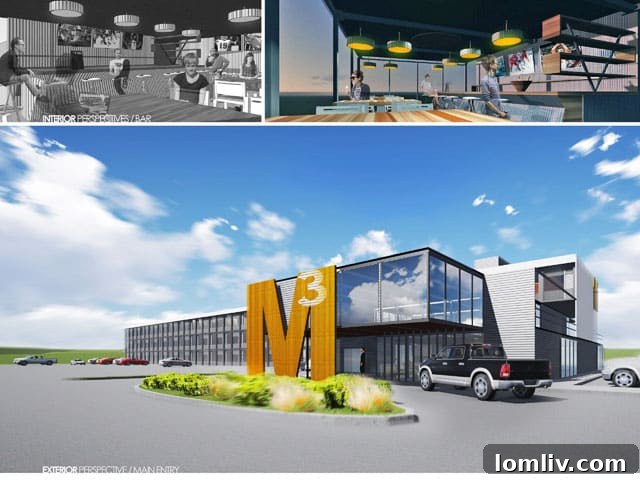
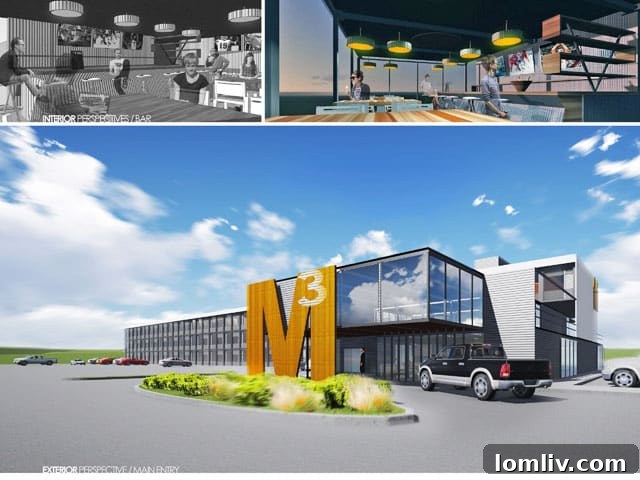
Beck Architecture’s proposal for a hotel crafted from 150 shipping containers is a bold statement on sustainable and modular construction. This innovative design not only addresses the growing demand for cost-effective and rapidly deployable accommodations but also champions the principles of recycling and adaptive reuse. Shipping container architecture, with its inherent strength and standardized dimensions, offers a versatile framework for creating unique spaces. The M3 Container Hotel concept likely envisions a vibrant, modern aesthetic, perhaps featuring various configurations for rooms, common areas, and even rooftop gardens, demonstrating how industrial components can be transformed into sophisticated and eco-conscious hospitality solutions. This project stands as a testament to the creative potential unleashed when architects challenge traditional building methodologies and embrace unconventional materials, offering a fresh perspective on urban development and temporary lodging.
Vickery Meadow Branch Library: A Beacon of Community and Knowledge
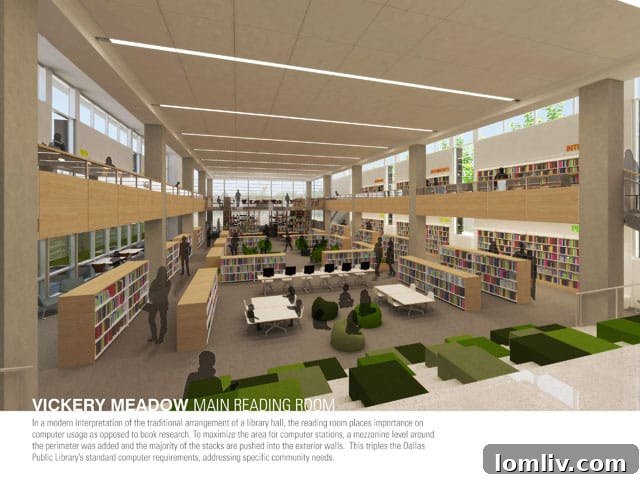
Designed by Oglesby Greene, the concept for the Vickery Meadow Branch Library reimagines the public library as a dynamic, light-filled hub for community engagement and intellectual growth. The emphasis on “bright and open” spaces speaks to a philosophy of accessibility and transparency, inviting patrons of all ages and backgrounds to explore, learn, and connect. Modern library design moves beyond mere book storage, envisioning flexible spaces for workshops, collaborative learning, digital media access, and quiet contemplation. This design likely incorporates expansive windows to maximize natural light, creating an uplifting atmosphere that reduces energy consumption and enhances user well-being. The architectural elegance of this conceptual library promises to elevate Vickery Meadow, providing a much-needed contemporary anchor for education and cultural exchange, solidifying its role as a vital community asset.
Detailed Project Spotlights: Visionary Architecture Unveiled
The exhibition, launched on May 28th at Life in Deep Ellum, offered the public a unique opportunity to immerse themselves in these groundbreaking concepts. Running until July 11th, the display invited visitors not only to admire but also to participate by selecting their favorite design for one of the coveted People’s Choice Awards, which were announced at the exhibition’s conclusion. This interactive element underscored the democratic spirit of design, allowing the community to weigh in on the visions that resonated most deeply with them.
Heath May, AIA, of HKS, Inc., and the esteemed AIA Dallas Design Award Committee Chair, articulated the profound significance of these submissions: “The 2015 Unbuilt Design Award submissions highlight the incredibly diverse work being done by Dallas architects in communities around the world. This year’s winning projects exemplify beautiful and inspiring design that are responsive to contemporary issues.” His words capture the essence of what makes these awards so vital—they showcase not just aesthetic brilliance but also a deep commitment to addressing the pressing challenges of our time through innovative architectural thought.
B3 Plot Cultural Pavilion _ Concept, RTKL Associates, Inc. (Dubai, UAE)
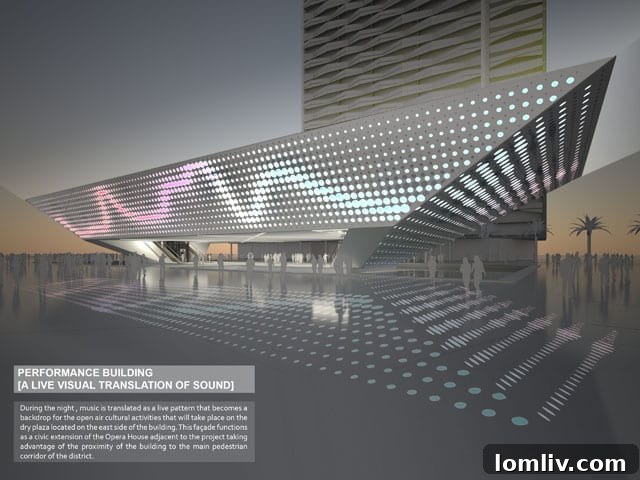
This 38,000 square foot concept by RTKL Associates, Inc. for Dubai’s B3 Plot Cultural Pavilion is a masterclass in contextual design. Guided by the rich cultural influence of its location, the pavilion strives to transcend its function as a mere building, aiming to become a vibrant community hub that significantly adds value to the region. The design intelligently fuses deeply rooted cultural traditions with cutting-edge modern technologies, creating a unique solution tailored to the evolving needs of a burgeoning neighborhood. Such cultural pavilions are crucial for fostering local identity, promoting artistic expression, and providing dynamic spaces for public gathering and interaction, ensuring that heritage and progress coexist harmoniously.
Grotto: An Infill Prototype, NIMMO (Dallas, Texas)
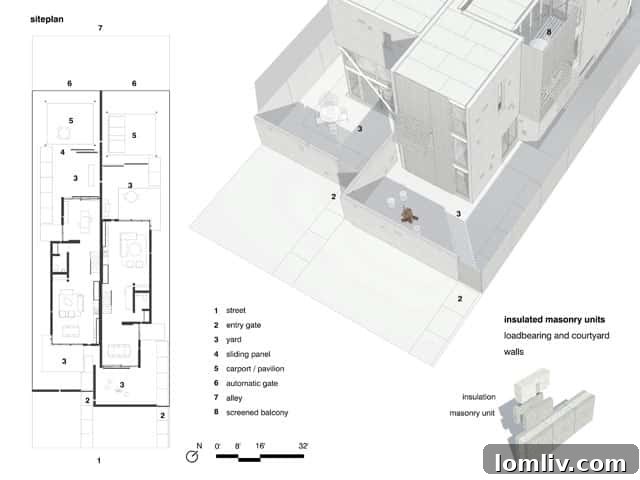
NIMMO’s “Grotto: An Infill Prototype,” a compact 1,650 square foot design for Dallas, Texas, addresses the critical issue of urban infill – intelligently utilizing unoccupied land in densely populated areas. This prototype showcases a flexible yet remarkably efficient design, meticulously crafted to meet the diverse needs and dynamic lifestyles of urban dwellers. The design thoughtfully integrates indoor and outdoor spaces, featuring multiple connections and versatile uses that enhance livability and maximize spatial utility. Furthermore, “Grotto” places a strong emphasis on sustainable strategies and systems, implemented with an unwavering focus on construction quality. This project serves as a visionary model for future urban housing, demonstrating how small footprints can yield significant impacts in creating sustainable, adaptable, and attractive living environments.
Dallas Holocaust Museum I Center for Education and Tolerance, GFF (Dallas, Texas)
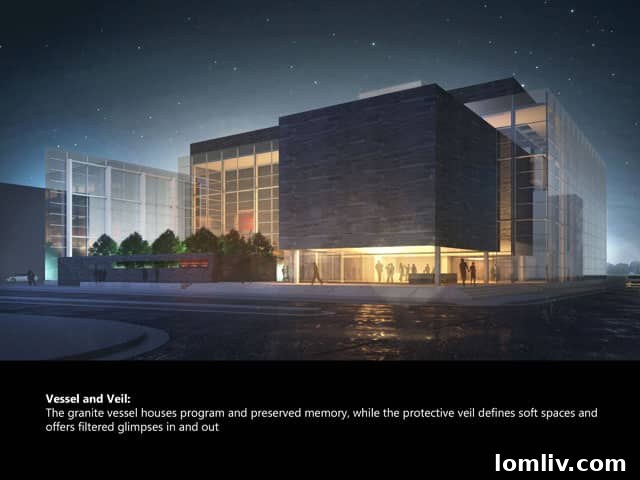
GFF’s 52,230 square foot conceptual design for the Dallas Holocaust Museum I Center for Education and Tolerance is an architectural meditation on memory, loss, and resilience. The design features a striking “hard-shelled vessel” enveloped by a delicate, transparent veil, with entry granted through a contemplative garden. This juxtaposition of solid and void, stone and glass, and the symbolic intertwining of yesterday and tomorrow, purposefully creates a sense of tension. This architectural narrative encourages visitors to delve deeper into the profound points of transition and reflection. The culmination of the experience is envisioned as a towering plane of glass containing 60,000 stars, each representing 100 souls, offering a powerful, evocative memorial that speaks volumes without uttering a single word. Such a design ensures the museum is not merely a building but a deeply immersive emotional and educational journey.
Dalian Airport Terminal Competition, Corgan (Dalian, China)
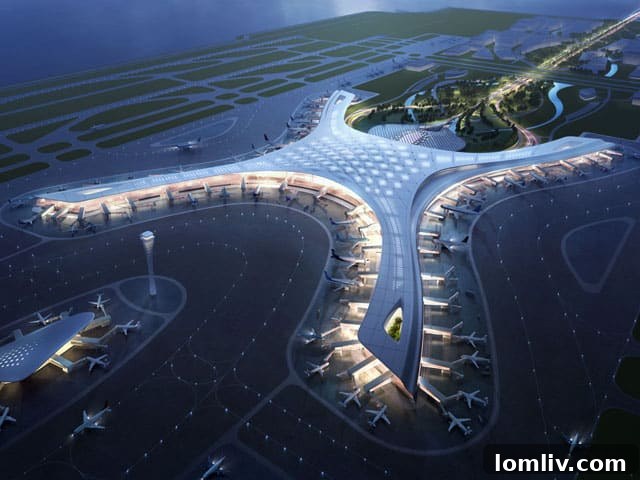
Corgan’s ambitious 7,300,000 square foot design for the Dalian Airport Terminal Competition in China presents a holistic vision for future air travel. The terminal’s design is meticulously crafted to meet the complex needs of modern passengers while simultaneously delivering a truly unique and memorable experience. Central to its philosophy is a “flow-based, natural pattern design” that seamlessly integrates natural landscaping and tranquil spaces with cutting-edge technologies. This approach is not only aesthetically pleasing but also profoundly practical: the terminal is envisioned as environmentally friendly, economically right-sized, and remarkably, capable of generating its own power and economic revenue. This is achieved through flexible, passenger-oriented operations and innovative concessions programs, setting a new benchmark for sustainable and self-sufficient airport infrastructure.
Dallas Holocaust Museum Center, OMNIPLAN Architects (Dallas, Texas)
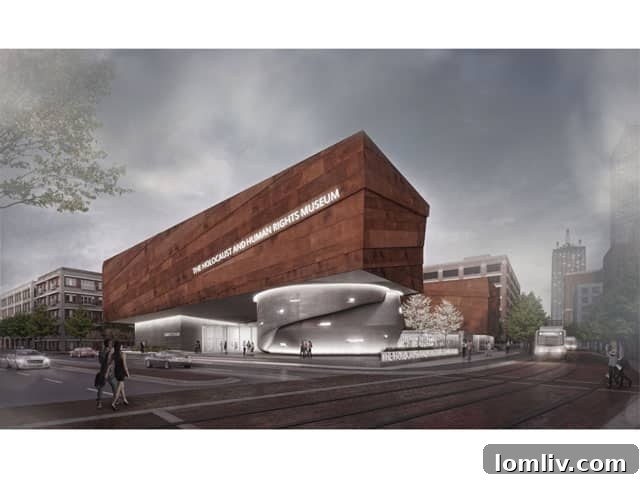
OMNIPLAN Architects’ 50,000 square foot conceptual design for the Dallas Holocaust Museum Center takes a different yet equally powerful approach to creating a meaningful visitor experience. The core aim of this building’s design is to forge an intuitive and unobstructed path for all visitors, ensuring that the primary focus remains steadfastly on the emotional impact of each exhibit, free from distractions. This dynamic museum building is conceived to strikingly distinguish itself from its immediate neighbors, yet it does so while meticulously complying with the stringent requirements of downtown Dallas and its historic West End. OMNIPLAN’s design emphasizes clarity, emotional resonance, and a respectful integration into the urban fabric, creating a space that facilitates deep contemplation and education.
The Enduring Impact of Unbuilt Architecture
The collection of designs showcased at the AIA Dallas Unbuilt Design Awards exhibition transcends mere architectural drawings; they are a profound demonstration of creative intellectual capital. Each project, whether a grand airport terminal or an intimate housing prototype, offers a glimpse into how architects envision solutions to contemporary challenges—from the global need for sustainable infrastructure to the local imperative for meaningful public spaces and sensitive memorials. These unbuilt works serve as vital thought experiments, allowing designers to explore innovative materials, programmatic relationships, and structural possibilities without the immediate constraints of construction budgets or site limitations. They push the boundaries of imagination, inspiring both the architectural community and the public to reconsider what is achievable and how design can fundamentally improve quality of life.
The exhibition at Life in Deep Ellum not only celebrated these individual achievements but also underscored the collective vision of Dallas’s architectural community. By inviting public participation through the People’s Choice Awards, AIA Dallas effectively fostered a dialogue between designers and the communities they serve. This engagement is crucial, as it builds public understanding and appreciation for the complex processes and profound impacts of architectural design, even when it remains in the realm of concept. The insights gained from such conceptual projects often find their way into future built environments, influencing codes, materials, and design philosophies. Thus, what appears “unbuilt” today can lay the groundwork for the groundbreaking structures of tomorrow, cementing Dallas’s reputation as a hotbed of architectural innovation and thoughtful urban development.