Celebrating Architectural Excellence: Highlights from the AIA Dallas Built Design Awards
The Dallas chapter of the American Institute of Architects (AIA) recently unveiled the distinguished winners of its annual Built Design competition, a celebrated event distinct from June’s Unbuilt awards. This prestigious competition showcases completed projects that exemplify outstanding architectural achievement, innovation, and design quality. With a remarkable 72 nominations, the field was incredibly diverse, featuring eight private residences, 10 medical facilities, and nine educational projects, alongside a notable entry from a spirited Tyler, Texas, bank that submitted three distinct designs.
The caliber of submissions this year truly underscored the vibrant architectural landscape, not just within Dallas but also highlighting international excellence. Each project, meticulously evaluated by a panel of expert judges, demonstrated a commitment to pushing boundaries, addressing complex challenges, and creating spaces that inspire and function harmoniously. Below, we delve into some of the most captivating winners, exploring the ingenuity behind their designs and their profound impact on their respective environments.
Harim Group Headquarters: A Fusion of Form, Function, and Sustainability in Seoul
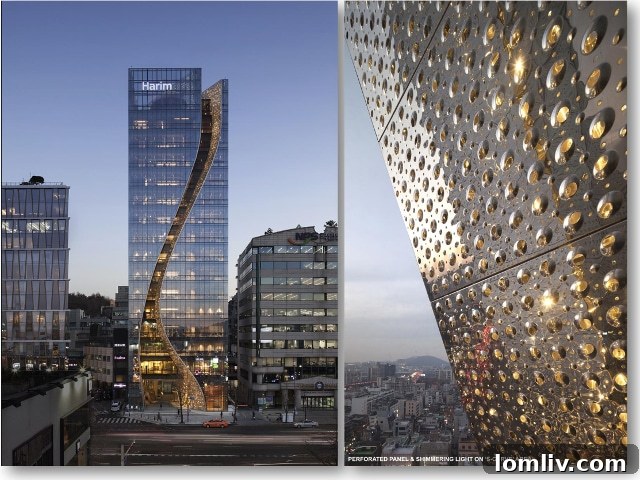
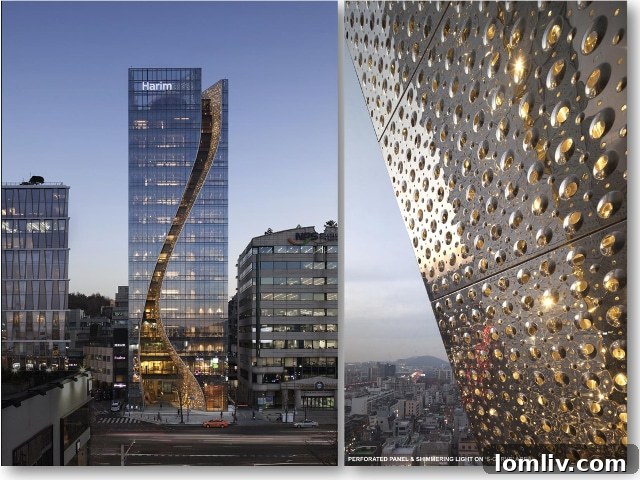
Leading the pack as a personal favorite, the Harim Group Headquarters in Seoul, South Korea, designed by Beck Architecture, stands as a testament to the power of high-rise architecture that is both aesthetically captivating and deeply rooted in sustainable principles. Beyond its striking visual appeal, this building, home to a prominent Korean agriculture business, masterfully integrates environmental considerations into its very structure.
The building’s most distinctive feature is its elegant S-curve facade. This design choice is far from arbitrary; it is meticulously engineered based on prevailing wind currents. The strategic indentation of the curve is specifically designed to maximize natural airflow, a sophisticated passive cooling strategy that significantly reduces reliance on mechanical ventilation. In a pioneering move for modern high-rises, the building incorporates operable windows on one side and strategically placed exhausts on the other, fostering a continuous, natural cross-ventilation system. This deliberate emphasis on natural airflow is a refreshing departure from contemporary building practices, which often prioritize solely HVAC solutions, demonstrating a profound commitment to occupant well-being and energy efficiency.
Visually, the Harim Group Headquarters exudes a refined glitz, primarily through its perforated, polished stainless steel lining that accentuates the S-curve. Backed by dynamic LED lights, this facade creates a mesmerizing play of light and shadow, transforming the building’s appearance from day to night. Further enhancing its elegance is a semi-transparent top section, which not only contributes to the building’s sleek silhouette but also subtly masks a truly exceptional space: a state-of-the-art conference room encircled by a lush rooftop garden. This seamless integration of green space into a high-rise not only enhances biodiversity but also offers occupants a serene retreat with panoramic views, truly blending nature with urban sophistication. Even its neighboring structure to the right hints at green initiatives, with foliage playfully peeking from its roofline, suggesting a broader urban greening trend.
In total, eight projects were honored across various categories. Let’s explore a few more of these exceptional designs.
Charlotte and Donald Test Pavilion; Dallas, Texas (Buchannan Architecture)
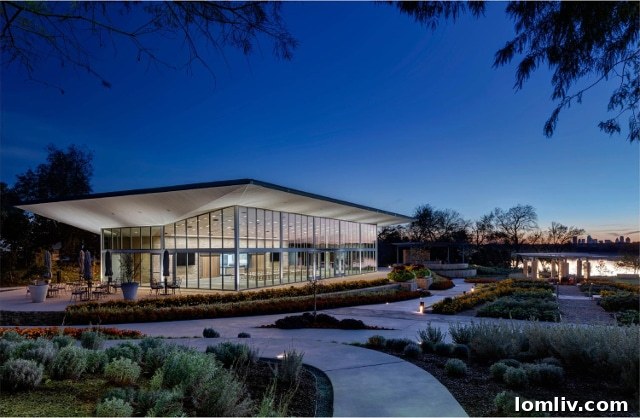
Nestled within the breathtaking grounds of the Dallas Arboretum, the Charlotte and Donald Test Pavilion, designed by Buchannan Architecture, presents a compelling dialogue between architectural grandeur and the natural world. This pavilion draws inspiration from iconic cultural venues such as the Kennedy Center in Washington D.C. and the David Geffen Hall in New York’s Lincoln Center, both renowned for their glassed volumes overlooking vibrant urban environments. However, the Test Pavilion reinterprets this concept, positioning its transparent enclosure to offer expansive, uninterrupted views of the Arboretum’s verdant landscapes.
The design expertly employs wide roof overhangs, which serve a dual purpose: they provide ample shade, mitigating solar gain in the Texas heat, while simultaneously acting as a powerful visual magnet, drawing the eye to the shimmering glass box beneath. This interplay of robust shelter and transparent enclosure creates a sense of both protection and openness. Adding to its unique character, a modified butterfly roof graces the structure, introducing a dynamic architectural element that enhances visual interest and contributes to the airy, expansive feel of the interior. The pavilion successfully frames the beauty of its natural surroundings, inviting visitors to immerse themselves in both art and nature within a thoughtfully crafted space.
Cliff House, Oak Cliff (DSGN Associates): A Modern Transformation of a Historic Church
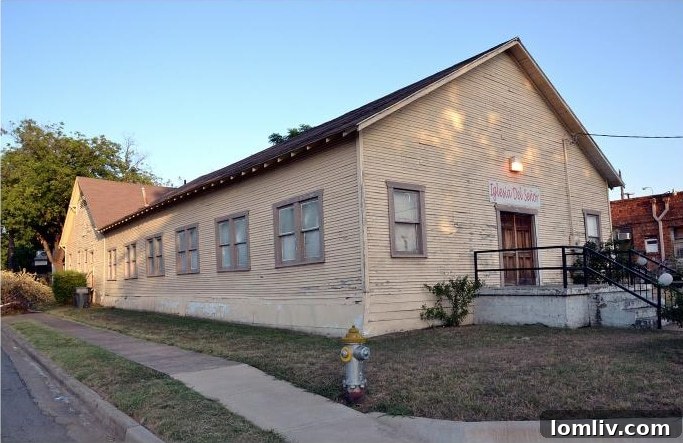
The Cliff House project by DSGN Associates exemplifies the transformative potential of adaptive reuse, turning a humble church at Davis and Tyler Streets in Oak Cliff into a stunning wedding chapel and events center. Originally constructed in 1936 and serving as the home of the Davis Street Baptist Church for decades, this rather unassuming clapboard structure has undergone a complete and grand makeover, breathing new life into a cherished community landmark.
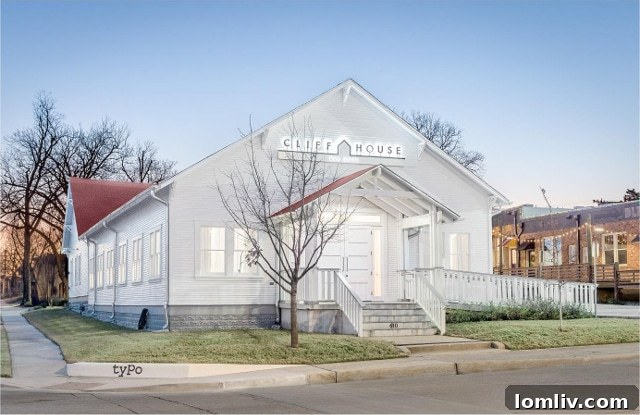
The exterior renovation went far beyond a simple repaint. A new roof was installed, and the original corbels, historical architectural features, were meticulously restored, honoring the building’s heritage. Practical additions included new gutters and a comprehensive restoration of the foundation, ensuring the building’s longevity. The entrance was dramatically enhanced with the addition of new windows, a welcoming porch, and a handicapped ramp, making the venue accessible to all. While an unsightly power line remains a minor visual detractor on the front, the overall exterior transformation is nothing short of remarkable, blending historical reverence with modern functionality.
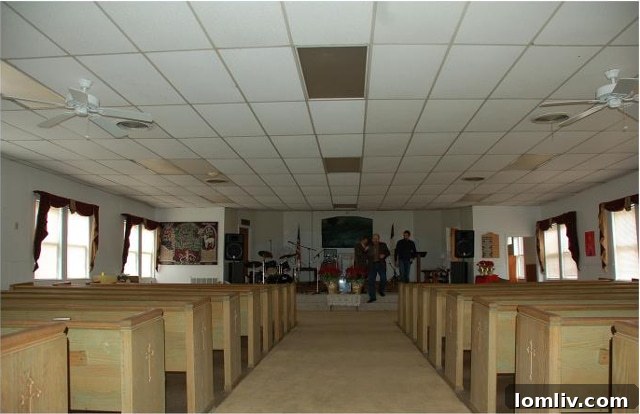
The interior, before its transformation, reflected years of wear and tear and expedient fixes. A visually unappealing drop ceiling, along with numerous fans, clearly indicated past struggles with environmental control. Drop ceilings were commonly installed to reduce the volume of a space, thereby making heating and cooling (a significant concern in Texas) more cost-effective, but often at the expense of aesthetic appeal and spatial grandeur.
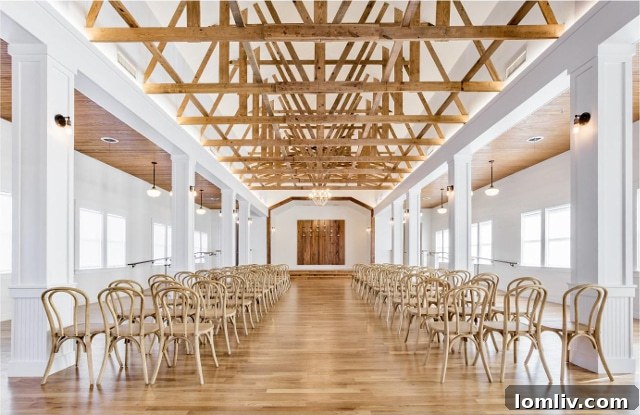
The new interior space, however, speaks volumes of thoughtful design and meticulous execution. It is now wonderfully light, bright, and airy, with no evident concerns about maintaining a comfortable climate, even during a scorching Dallas summer. The original volume of the space has been reclaimed, showcasing the exposed roof trusses that lend an industrial-chic elegance. A prominent colonnade not only provides crucial structural support for the roof but also beautifully demarks the main seating area, creating clear, wide aisles to the left, right, and center. This design ensures both functionality for events and an enduring sense of spaciousness and grace, perfectly suited for its new role.
Old Dallas High School, Dallas (Merriman Anderson Architects): A Historic Landmark Reimagined
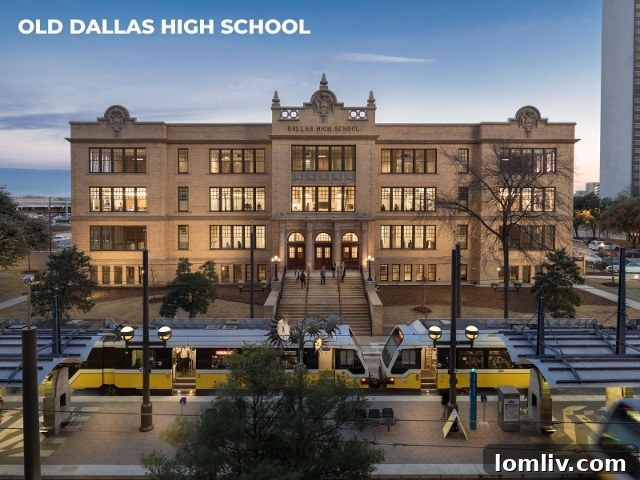
The Old Dallas High School, an architectural gem built in 1907, languished in disuse for decades, collecting dust and fading from public memory. Its revival, spearheaded by Matthews Southwest, has transformed this historic edifice into a vibrant mixed-use development, now housing office, restaurant, and retail spaces. This ambitious project, expertly executed by Merriman Anderson Architects, faced the formidable challenge of adapting a century-old structure to meet contemporary standards of efficiency and sustainability.
Perhaps the most significant achievement of this renovation was its pursuit and attainment of LEED Gold certification for energy efficiency. This involved a comprehensive overhaul of the building’s systems and materials to minimize environmental impact and maximize performance. Retrofitting an old building to achieve such a high level of sustainability presented numerous complexities, yet the project successfully integrated modern green technologies without compromising the building’s historical integrity.
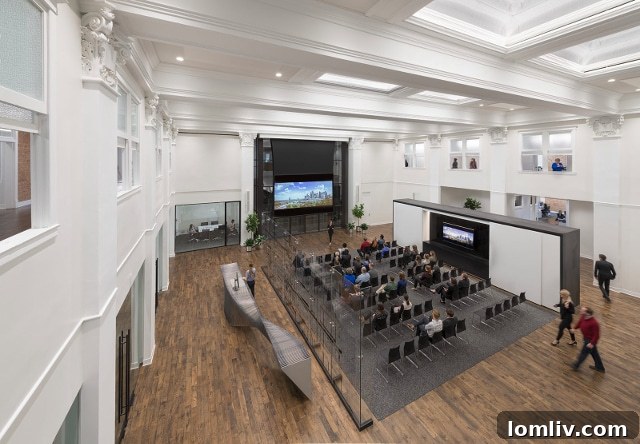
Another truly remarkable aspect of this project was the extensive reuse of the original structure. An astounding 99.64 percent of the building’s core and shell were preserved and repurposed, a testament to sustainable adaptive reuse. This commitment to conservation not only reduced waste but also allowed the magnificent architectural details of the original 1907 design to shine through. As seen above, the intricate carvings, grand archways, and robust masonry have been lovingly retained, offering a powerful visual link to the past. These details, once witness to generations of students and their youthful antics, are now gracefully integrated into a sophisticated commercial environment, blending history with a vibrant new purpose.
The transformation of Old Dallas High School is a shining example of how historic preservation can go hand-in-hand with modern development, creating spaces that are not only energy-efficient and functional but also rich in character and history. It stands as a beacon for future projects contemplating the reuse of aging urban infrastructure, proving that the past can indeed inform and enrich the present.
Casa Linder, Dallas (Buchannan Architecture): A Restrained Urban Farmhouse
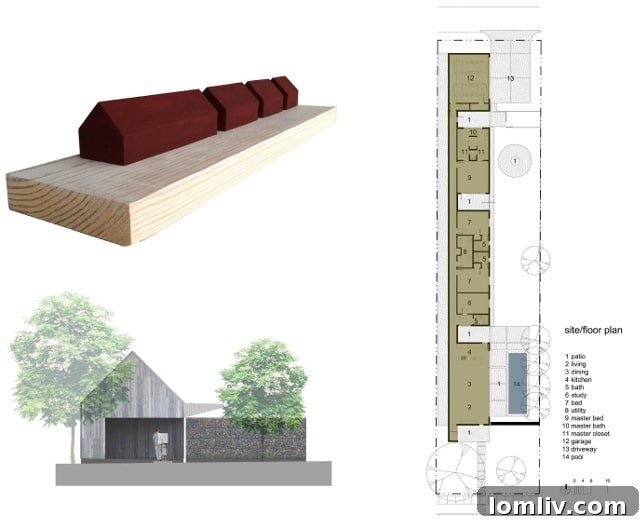
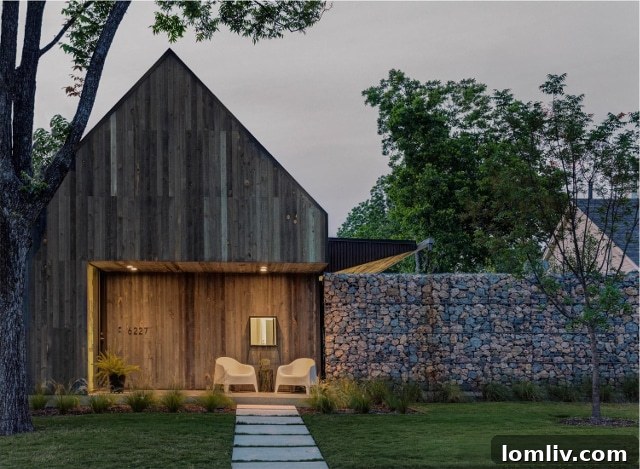
Among the single-family home entries in the competition, which often veered into realms of indulgence, eccentricity, or predictable “cookie-cutter” designs, Casa Linder by Buchannan Architecture stood out for its remarkable restraint and thoughtful innovation. This East Dallas farmhouse reinterpretation, spanning a modest 3,700 square feet, elegantly challenges conventional suburban archetypes. Its front elevation immediately captivates with a striking composition of reclaimed materials, thoughtfully juxtaposed with a gabion wall – a structural element comprising rocks encapsulated in a steel mesh. This gabion wall not only adds a compelling textural layer but also ingeniously masks the pool area, providing both privacy and a distinct aesthetic.
Casa Linder embodies the concept of a “long house,” a design strategy that unfolds as a series of interconnected spaces, all organized along a central spinal corridor. Each section of the house is dedicated to a distinct function, progressing from the most public to the most private. The largest section accommodates the expansive living, dining, and kitchen areas, designed for open-plan entertaining and daily family life. From there, the layout transitions to guest rooms, leading to a private master suite, and finally, the garage. This strategic arrangement ensures a seamless flow while providing clear functional zones. A notable anecdote could be that teenagers attempting to sneak out with the car would find it nearly impossible under the watchful architectural gaze of these parents!
A distinctive material choice that defines Casa Linder’s exterior is the corrugated “Corten” weathering steel used for both cladding and roofing. Corten steel is renowned for its unique characteristic of developing a rust-like patina over time, which not only protects the steel from further corrosion but also imparts a rich, earthy red hue that deepens with age. This material choice imbues the house with a robust, honest aesthetic that beautifully complements the reclaimed elements.
What truly set this design apart for me was its ingenious use of a typical city lot to foster an almost open-courtyard environment. In an urban setting where privacy is often at a premium, Casa Linder masterfully configures its spaces and exterior elements to shield its occupants from overlooking neighbors, particularly from at least one side. This thoughtful consideration of site context and occupant experience elevates Casa Linder beyond mere aesthetics, making it a truly functional and sensitive piece of modern architecture.
For those eager to explore the full spectrum of nominated projects and winners, I highly encourage you to click here. Engaging with these diverse designs offers a personal education in architecture, allowing you to discern what resonates with your own aesthetic and functional sensibilities. For instance, I was particularly impressed by the transparency and intelligent repurposing of the 2200 Main building in Dallas, a truly commendable adaptive reuse project. Conversely, the exterior reskinning of the Tyler Morning Telegraph building left me less enthused, highlighting the subjectivity inherent in architectural critique. You might also find yourself questioning the visual design choices made for the College of Visual Arts and Design at UNT Denton, or perhaps feeling a stark contrast from the jarring juxtaposition of the ultra-modern U.S. Bank Stadium outside Minneapolis with its quaint, century-old neighborhood. Each project offers a unique perspective on design challenges and solutions, inviting a deeper appreciation for the architectural craft.

Remember: My passion and professional focus lie in high-rises, homeowners’ associations (HOAs), and property renovations. However, my appreciation for architecture extends broadly to both modern and historical styles, always with an eye toward balancing aesthetic vision with practical considerations, including the ever-evolving YIMBY (Yes In My Backyard) movement. I believe in fostering sustainable urban development that integrates innovative design with community needs.
My commitment to insightful commentary on real estate and architecture has been recognized by the National Association of Real Estate Editors (NAREE), which honored my writing with three Bronze awards in 2016 (for an article on housing styles), 2017 (on property taxes), and 2018 (covering a tragic condo fire), along with two Silver awards in 2016 (exploring second homes in Marrakech) and 2017 (discussing second homeownership in Bermuda). These accolades affirm my dedication to providing engaging and informative content.
Do you have an compelling story to share, a groundbreaking project to highlight, or perhaps even a marriage proposal to make? I’m always eager to hear from my readers. Please don’t hesitate to shoot me an email at [email protected]. While I encourage you to look for me on Facebook and Twitter, you’ll likely find my presence more elusive than active, yet your efforts are always welcome!