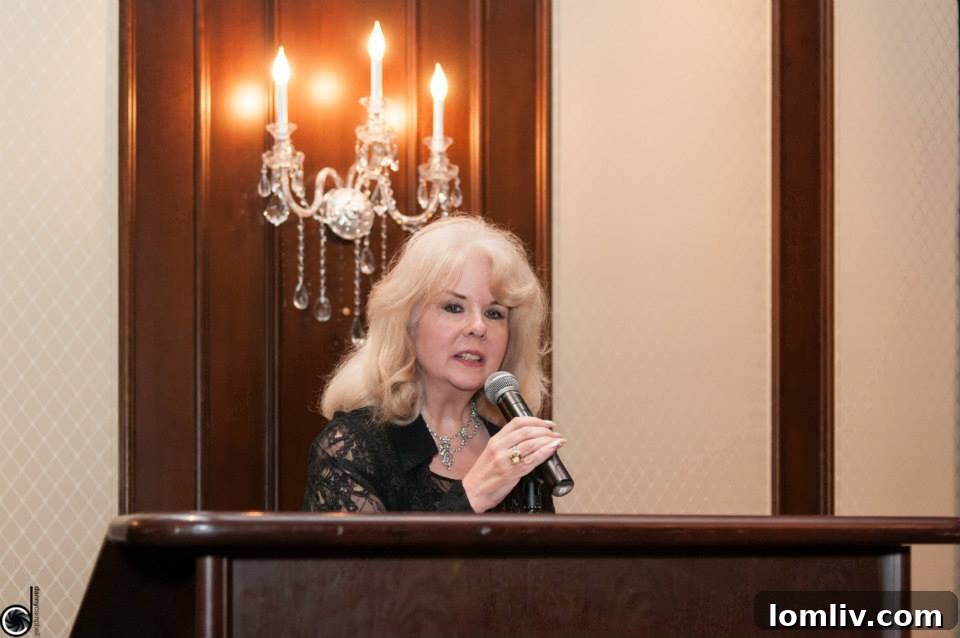
Nancy Smith Becker: A Journey Through History, Society, and Philanthropy
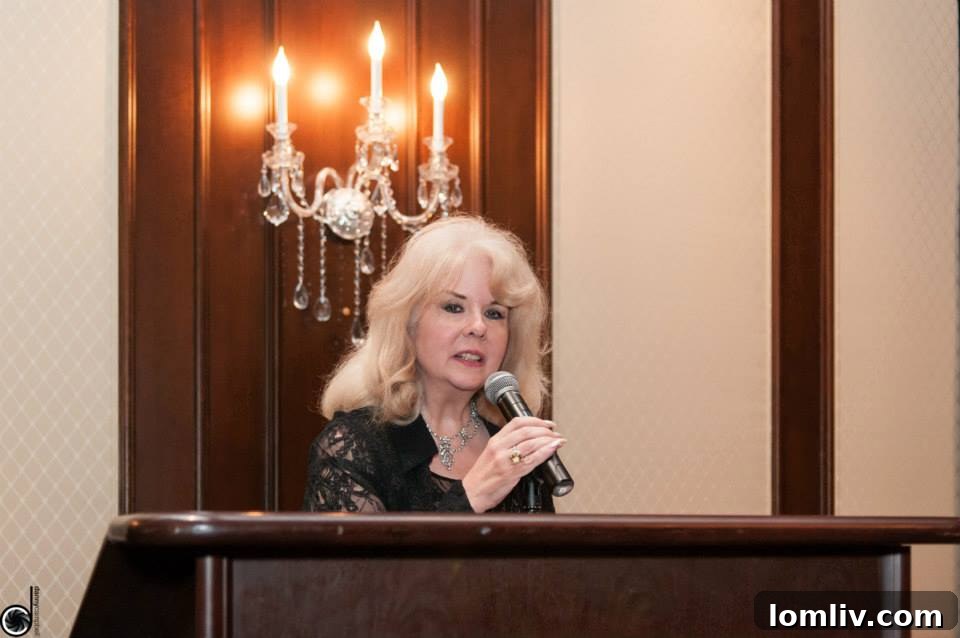
In the vibrant tapestry of Dallas history, few threads weave as intricately through journalism, philanthropy, and profound historical scholarship as that of Nancy Smith Becker. A true Dallas luminary, her multifaceted career has seen her not only chronicle the lives of the city’s elite but also delve deep into the glamorous, often turbulent, past of European royalty. From the bustling newsrooms of major metropolitan newspapers to the quiet archives of Parisian history, Nancy Smith Becker’s journey is a testament to intellectual curiosity and unwavering dedication.
A Storied Career in Journalism: Chronicling Dallas and Beyond
For decades, Nancy Smith Becker, affectionately known to many simply as Nancy Smith, held a privileged vantage point on American society and politics. As the long-serving Society Editor for both the revered Dallas Morning News and, subsequently, the last society editor at the Dallas Times Herald, she possessed an unparalleled understanding of the social currents shaping her beloved city. Her role extended far beyond mere event coverage; she was a keen observer of human nature, a masterful storyteller, and a trusted chronicler of significant moments.
Her assignments frequently took her to the heart of national events, covering pivotal moments such as the Reagan Republican convention and the inaugurations of Presidents Reagan, Bush, and Carter in Washington, D.C. These experiences offered her a unique perspective on the nation’s leadership and political landscape. Back in Dallas, Nancy was the omnipresent force at every major social gathering, from the glittering Crystal Charity Ball to the venerable Idlewild. She famously quipped that her closet held “more ball gowns than day clothes,” a delightful anecdote that perfectly captures the glamorous demands of her profession and her immersion in Dallas’s social scene.
Beyond the political and social arenas, Nancy’s journalistic prowess also brought her face-to-face with an array of cultural icons. Her interview subjects constituted a veritable “who’s who” of Hollywood legends and influential figures, including the incomparable Cary Grant, the distinguished Gregory Peck, the alluring Lana Turner, the captivating Rita Hayworth, and the esteemed former First Lady Barbara Bush, whom she interviewed an impressive five times. Each encounter undoubtedly offered a unique glimpse into the personalities and lives that shaped popular culture and public discourse.
From Dallas Society to Parisian Palaces: A Deep Dive into European History
Nancy Smith Becker’s journalistic curiosity eventually blossomed into a profound passion for historical research, particularly focused on France. Between 1999 and 2004, her six trips to Europe ignited an ambitious five-year research project centered on the “lost palaces of Paris.” This initial exploration soon led her to an even broader and more captivating subject: France’s ultra-glamorous Second Empire. This period, under the rule of Emperor Napoleon III and Empress Eugénie, profoundly influenced America’s own Gilded Age, characterized by rapid economic growth, industrial expansion, and lavish displays of wealth and culture.
Her extensive research culminated in the publication of two critically acclaimed books, which, while possessing the narrative flair of compelling romance novels, are meticulously researched works of non-fiction. These include Imperial Wedding of Old Paris and Imperial Triangle: Love, Power and Revenge in Old Paris and Madrid. In these volumes, Nancy masterfully reconstructs the intricate political machinations, societal norms, and personal dramas of a bygone era, bringing to life the figures and events that shaped 19th-century Europe. Readers are transported to opulent ballrooms, hushed diplomatic chambers, and the grand avenues of imperial Paris, experiencing the rich history through a captivating and accessible lens.
A Pillar of the Dallas Community: Philanthropy and Leadership
A fourth-generation Dallasite and a sixth-generation Texan, Nancy Smith Becker’s roots run deep in her community. Her commitment to civic engagement and philanthropy is as robust as her intellectual pursuits. Married to Lawrence Becker, she has dedicated countless hours and boundless energy to various charitable causes, leaving an indelible mark on Dallas’s philanthropic landscape.
Among her significant contributions, Nancy has twice chaired the prestigious Greer Garson Galas, events critical for raising funds and awareness for Parkinson’s research. She also helmed the Northwood University Ball and co-chaired the dynamic March of Dimes Star-Studded Stomp. Her organizational skills and dedication were further evident as she served as assistant chairman for five TACA (The Arts Community Alliance) balls, supporting the vibrant arts scene in Dallas. In 2007, she chaired the Rotary District 5810 Gala, an event graced by the legendary Marvin Hamlisch, which successfully raised approximately $100,000. These vital funds were instrumental in building much-needed water wells in remote communities across Asia and Africa, showcasing her global humanitarian concern. Since 2008, she has also served as president of both the Trippers and Argyle Clubs, continuing her leadership within local social and service organizations.
Academic Foundation and Diverse Expertise
Nancy’s multifaceted career is built upon a strong academic foundation. She graduated from Southern Methodist University (SMU) with a Bachelor of Arts degree, double-majoring in French and history – a combination that clearly foreshadowed her future passions. She further honed her historical acumen by attending the SMU Graduate School in history. Her early international experiences include a formative summer spent studying at l’Ecole Nouvelle de la Suisse Romande in Lausanne, Switzerland, an experience that undoubtedly cultivated her keen interest in European culture and languages from a young age.
Beyond her authorship and journalistic credentials, Nancy Smith Becker also holds a certification as a licensed appraiser of decorative arts. This specialized expertise is a natural extension of her deep understanding of historical periods, artistic movements, and the material culture that defines them. It underscores her holistic appreciation for history, not just as a collection of facts and stories, but as a tangible legacy preserved in art and artifacts.
Connecting Past and Present: Historical Echoes in a Modern Tragedy
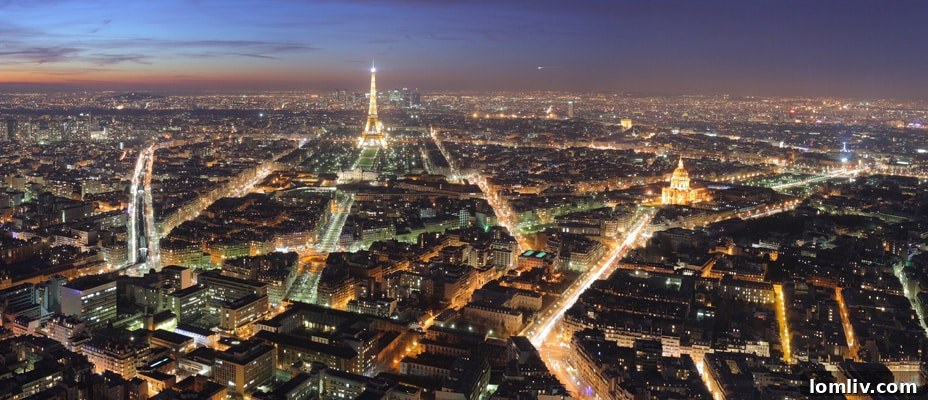
In the wake of profound tragedy, Nancy Smith Becker’s unique blend of historical insight and empathy offers a poignant perspective. Following the devastating terrorist attacks that struck Paris, the city of beauty and grace, Nancy drew upon her extensive knowledge to shed light on the historical context of one of the attack sites, the Bataclan theatre. She revealed a powerful connection: the theatre was among those constructed during the very era she had so meticulously researched—the Second Empire of Napoleon III and Empress Eugénie.
Her insights provided a deeper, more painful layer of understanding:
The Bataclan is a theatre located at 50 boulevard Voltaire in the 11th arrondissement of Paris. Built in 1864 by the architect Charles Duval, its name refers to Ba-Ta-Clan, an operetta by Offenbach, but it is also a pun on the expression le tout bataclan (the whole caboodle), the oldest written use of which predates Offenbach in a journal entry of 11 Nov 1761 by Favart. The nearest Métro stations are Oberkampf on Line 5 and Line 9 and Filles du Calvaire on Line 8.
When I was studying the Paris Commune for my 3 books on Paris, the majority of revolutionaries were from Belleville in the east part of Paris beyond the Marais and the Place de la Bastille. Most tourists never go to the east part of Paris unless they go to Père Lachaise cemetery. The attacks in Paris tonight were in the 11th arrondissement, which is in that east part of Paris right before Belleville. It’s where people moved in the 1850s when Haussmann’s renovations in Paris displaced people who could no longer afford the rents in central Paris. In Belleville, just to the east of where this happened, this is a description: The demographics of the neighbourhood have undergone many changes throughout the decades. While Armenians, Greeks, and Ashkenazi Jews were once the predominant ethnic groups, North Africans, and more recently, sub-Saharan Africans have been displacing these others. Just to the left of this was rue Saint-Antoine and that’s where most of the furniture factories and artisans were who made the French decorative arts. So I wonder if the people who committed this lived around that area and how many others are there ready to commit more acts. During the Paris Commune, 25,000 Parisians died in one week in 1871, and there was even a battle in Père Lachaise Cemetery.
Nancy’s analysis highlights the deep historical roots embedded within Paris’s urban fabric. The 11th arrondissement, where the Bataclan stands, carries the weight of past social upheavals. She vividly connects the theatre’s location to the Paris Commune of 1871, a brutal civil conflict that saw immense loss of life. Her research reveals that the revolutionaries of the Commune largely hailed from the working-class eastern districts like Belleville, an area immediately adjacent to the 11th arrondissement and often overlooked by tourists. This region became home to those displaced by Baron Haussmann’s grand renovations of central Paris in the 1850s, which, while beautifying the city, also dramatically increased rents and social stratification.
Furthermore, Nancy points to the evolving demographics of Belleville, noting the successive waves of immigrant communities – from Armenians and Greeks to North Africans and sub-Saharan Africans – who have shaped the neighborhood’s character. Her reflections extend to the historical significance of nearby Rue Saint-Antoine, a hub for furniture factories and artisans responsible for France’s renowned decorative arts. This intricate historical layering leads her to a profound and unsettling question: whether the perpetrators of modern violence might similarly be rooted in the social and economic landscapes of these historically volatile districts, drawing a chilling parallel to the intense conflict and loss of life witnessed during the Paris Commune.
Conclusion: A Legacy of Insight and Impact
Nancy Smith Becker stands as a remarkable individual whose life’s work seamlessly blends the immediacy of journalism with the profound depth of historical scholarship and the dedicated spirit of philanthropy. Her ability to navigate the intricacies of Dallas society, uncover the forgotten narratives of imperial Paris, and contribute meaningfully to her community speaks to a rare combination of intellect, drive, and compassion. Whether chronicling a gala, elucidating the Second Empire, or offering historical context to contemporary tragedies, Nancy Smith Becker continues to enlighten, inspire, and impact all who encounter her extraordinary story.