Dallas’s Future Unpacked: Leaders Address Affordable Housing, Economic Growth, and 2024 Bond Election
The annual Downtown Dallas Inc. State of Downtown event typically serves as a vibrant celebration of the city’s urban core, highlighting its incredible growth and momentum. However, this year’s gathering took on a more pressing tone, focusing on a critical issue at the forefront of every Dallas resident’s mind: the urgent need for affordable housing solutions. The esteemed panel provided a crucial platform for local leaders to delve into this complex challenge, alongside other pivotal topics shaping Dallas’s trajectory.
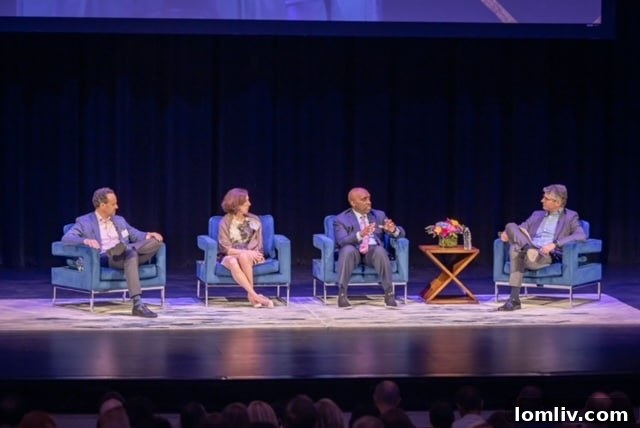
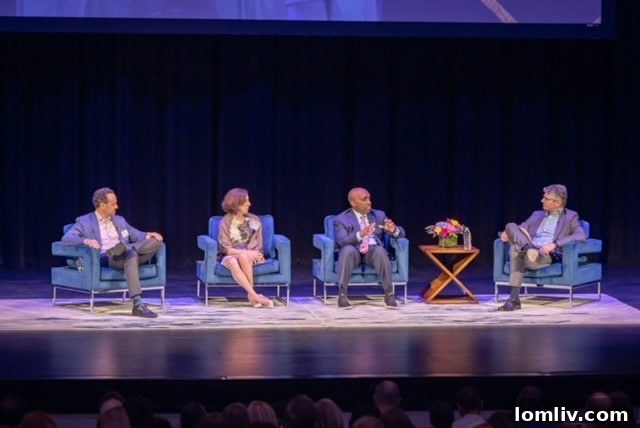
Held at the illustrious Moody Performance Hall, the event featured a panel of influential figures: City Manager T.C. Broadnax, Housing Forward chairman Peter Brodsky, and Billingsley Company partner Lucy Burns. Moderated by Dallas Morning News publisher Grant Moise, the discussion spanned critical issues including homelessness, strategic housing initiatives, and the highly anticipated 2024 bond election, offering attendees a comprehensive overview of the city’s immediate challenges and long-term vision.
Tackling Homelessness and Expanding Affordable Housing in Dallas
The conversation quickly turned to the city’s efforts in addressing homelessness and the future of housing stability. Peter Brodsky highlighted the significant role of federal COVID-19 relief funds, which provided much-needed resources to the city’s Rapid Rehousing program. However, he cautioned that these vital funds are now approaching their expiration, underscoring the urgent need for sustainable, localized funding strategies.

Brodsky eloquently explained the philosophy behind Rapid Rehousing, a program designed to move individuals experiencing homelessness into stable housing as quickly as possible. “Rapid rehousing is a concept that basically says it’s very stressful living in a congregant shelter,” he stated. “People who have experienced homelessness, particularly for long periods of time, often grapple with significant mental health issues and substance abuse challenges. It’s incredibly difficult to address these complex needs while living in a highly stressful, unstable environment. The core idea is to swiftly transition people into permanent housing, providing them with a secure home base, a sense of normalcy, enhanced security, and the safety net necessary to access vital wraparound services they desperately need.” This approach focuses on the psychological and practical benefits of immediate stability, allowing individuals to more effectively engage with support systems.

The success of these initiatives relies heavily on collaborative funding. Brodsky detailed how both the City of Dallas and Dallas County each contributed a substantial $25 million to Housing Forward, an ambitious program aiming to rehouse 6,000 individuals by 2025. These public investments were significantly bolstered by additional private funds, showcasing a powerful public-private partnership committed to addressing Dallas’s homelessness crisis.
Reflecting on the progress made, Brodsky underscored the invaluable “muscle memory” developed through these efforts. “I think the biggest win here is just the muscle memory we’ve developed for how to house people more quickly, how to collaborate effectively with the city, and how to bring in really important non-city agencies like DDI to work together, rowing in the same direction,” he emphasized. This enhanced coordination and streamlined processes are crucial for future endeavors. The positive outcomes are tangible: approximately 90 percent of individuals rehoused through the program remain stably sheltered one year later, a performance metric that is critical for securing future federal funding and demonstrating the program’s efficacy.
Revitalizing Downtown Real Estate and Fueling Dallas’s Economic Development
The discussion transitioned to the state of downtown real estate and the broader economic development landscape in a post-pandemic world. Lucy Burns, a prominent figure in Dallas’s real estate sector, identified key challenges as employees gradually return to full-time office work. While the energy of downtown is undeniable, a nuanced approach is required to sustain its competitive edge.
“Downtown has two obvious challenges,” Burns noted. “One is that a lot of office space that exists there today is old and becoming more and more irrelevant in the face of modern business needs. The other is commute times for businesses. If I’m a business and I’m looking to locate my operations center, the first thing I ask myself is where my employees live and how accessible the location is for them.” This highlights the imperative for developers to modernize existing structures and create new, state-of-the-art office spaces that meet contemporary demands for flexible layouts, advanced technology infrastructure, and enhanced employee amenities.
Burns stressed that continued investment in new, innovative office spaces is essential for Downtown Dallas to remain an attractive destination for companies considering relocation from other parts of the country. To truly thrive, the urban core needs to offer not just space, but a vibrant ecosystem that supports businesses and their employees alike. The city’s commitment to strategic growth was further evidenced by Grant Moise’s mention of the newly established Economic Development Corporation (EDC) actively advertising for its first-ever CEO.
City Manager T.C. Broadnax expressed considerable optimism about this new leadership role, anticipating that the EDC will forge critical partnerships and focus on the long-term economic sustainability of Dallas. “I’m excited about it,” he shared. “I think it’s long overdue. We’ve got to do our best as a city to support them but also let them get their own sea legs and get out there and do the things their peers are doing to fight the good fight for the city of Dallas.” This underscores a strategic shift towards a dedicated entity focused solely on attracting and retaining businesses, fostering innovation, and creating high-quality job opportunities.
Peter Brodsky concurred, emphasizing the importance of an “entity outside of the city government that’s going to have a City of Dallas jersey on, not just a regional jersey.” While regional collaboration is vital, a strong, independently focused Dallas EDC ensures that the city’s unique economic interests are championed with unwavering dedication. “The region can’t thrive if the core isn’t thriving,” he concluded. “Dallas is the core of the region, and downtown is the core of the city.” This sentiment powerfully reinforces the interconnectedness of downtown’s health with the prosperity of the entire metropolitan area.
Dallas City Budget and the Pivotal 2024 Bond Program
City Manager Broadnax also addressed recent criticisms surrounding Dallas’s recently approved $4.63 billion budget and a modest property tax rate decrease, reassuring the public that the city remains in robust financial health. He clarified the city’s budgetary approach: “Our budget uniquely is not divided up among districts, whether that’s the central business district or even any of the 14 council districts. It’s really a citywide budget… It’s really around service delivery and where our needs are.” This comprehensive approach ensures that resources are allocated based on critical citywide priorities rather than segmented interests.
Over the past five to six years, Dallas’s budget has experienced substantial growth, increasing by approximately $600 million. Broadnax proudly noted that a significant portion—around 90 percent—of these additional funds has been directed towards key council priorities, including enhancing public safety, maintaining and expanding parks and libraries, and implementing innovative solutions to address homelessness. “We’ve been asked to increase or enhance services, not reduce them,” he stated, reflecting the community’s demand for improved civic infrastructure and support systems.
Addressing concerns about a potential “fiscal cliff,” Broadnax offered a definitive reassurance. “As much conversation as there has been about fiscal cliffs, whether that’s associated with federal funding or just the general nature of our budget, there is no fiscal cliff. We do a two-year balanced budget, so next year is actually already baked in and cured… The city is in good hands. Our future is much brighter than our past.” This commitment to a two-year balanced budget provides stability and foresight, insulating the city from abrupt financial challenges and ensuring continuous service delivery.
Looking ahead, the discussion shifted to the transformative 2024 capital bond program. If approved by voters next year, this program promises to allocate an impressive $1 billion towards critical infrastructure improvements, encompassing streets, parks, city facilities, and vital drainage enhancements. The city is proactively engaging residents through community town hall meetings, seeking feedback to inform the recommendations that a dedicated Community Bond Task Force will present to the Dallas City Council by year-end. This participatory approach ensures that the bond addresses the most pressing needs of the community.
Broadnax revealed the daunting scale of deferred maintenance facing Dallas, estimating it at approximately $16 billion. The bond program is crucial for tackling these long-standing issues. He emphasized a particular focus for the upcoming bond. “I believe there’s more interest this year around housing to help our residents with affordability and preservation,” he stated. Furthermore, he articulated a strategic vision for future investment: “The next big wave of investment and redevelopment, in my mind and everybody’s eyes, is South Dallas. We’ve got to find ways to enhance and deal with our infrastructure issues there as well as preserve housing and rehabilitation efforts to make sure people who live in the southern part of the city are not moved out just because progress is finally coming.” This commitment aims for equitable development, ensuring existing communities benefit from revitalization rather than being displaced.
Peter Brodsky voiced strong support for allocating a “significant portion” of the bond towards affordable housing initiatives. He passionately argued for the necessity of this investment: “We can’t have a city where people can’t afford to live. With the housing inflation that’s happened in the region over the last couple of years, we’re going to begin to lose the people who teach our children, protect our streets, put out our fires, and provide nursing care if we can’t provide housing that’s affordable for them. That’s a major investment that’s going to allow us to grow in a healthy, sustainable way.” This perspective highlights that affordable housing is not just a social issue but an economic imperative for maintaining a functional and diverse workforce essential for Dallas’s continued prosperity.
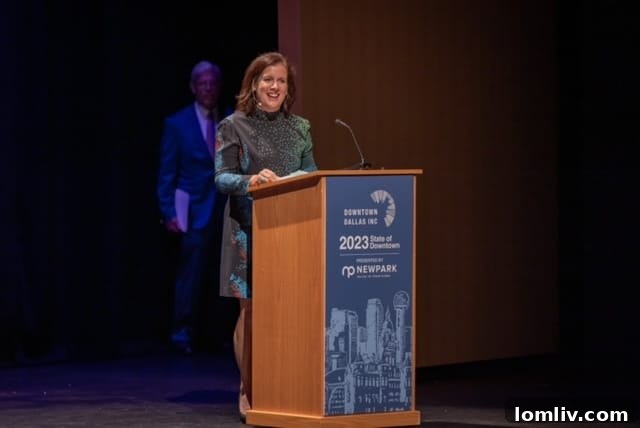
Downtown Dallas Inc.’s Vision for a Transformed Urban Core
Jennifer Scripps, President and CEO of Downtown Dallas Inc., concluded the event by highlighting a significant achievement: the passage of Proposition A. This landmark initiative, funded through a two percent increase in hotel occupancy taxes, will provide crucial resources for extensive renovations at the Kay Bailey Hutchison Convention Center Dallas and Fair Park. This investment is poised to dramatically enhance Dallas’s capacity to attract major conventions and events, bolstering its position as a premier global destination.
Scripps articulated the far-reaching impact of Proposition A, extending beyond mere facility upgrades. “When voters said yes to Prop A, they said yes to more than just improving a convention center,” she declared. “They said yes… to the way we can truly transform the southwestern quadrant of downtown Dallas into a vibrant, connected mixed-use district.” This ambitious vision encompasses creating a dynamic area where residential, retail, entertainment, and commercial spaces seamlessly converge, fostering a lively and pedestrian-friendly environment. The revitalization of this quadrant is expected to not only boost tourism and convention business but also create new opportunities for residents and businesses alike, solidifying Downtown Dallas as a beacon of urban innovation and sustainable growth.
The “State of Downtown” event reiterated that Dallas is at a pivotal juncture, grappling with complex challenges while simultaneously embracing unprecedented opportunities. The collaborative spirit among city leaders, developers, and community advocates, as evidenced by the panelists’ discussions, paints a promising picture for a Dallas that is not only economically vibrant but also socially inclusive and forward-looking.