Navigating the Shifting Sands: Builder Confidence Dips Amidst Mounting Housing Affordability Concerns
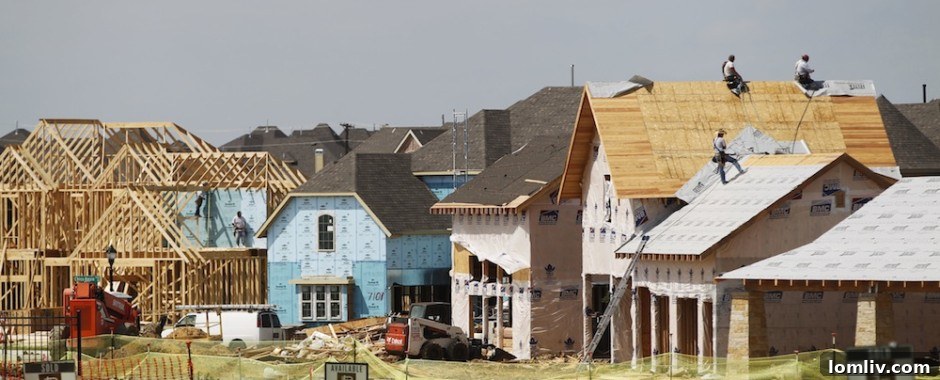
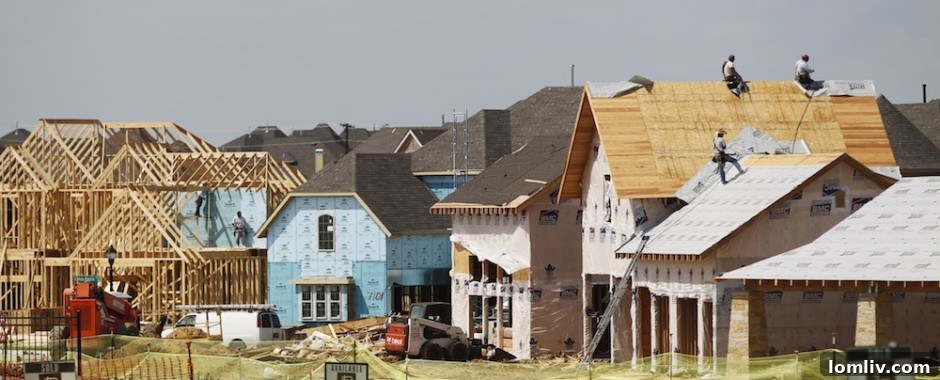
The landscape of the American housing market is experiencing significant shifts, with growing housing affordability concerns exerting considerable pressure on industry sentiment. November witnessed a notable decline in builder confidence for newly-built single-family homes, as reported by the National Association of Home Builders (NAHB)/Wells Fargo Housing Market Index (HMI). The index registered an eight-point drop, settling at 60. While this sharp decline is a clear signal of increasing market headwinds, it’s crucial to note that builder sentiment still resides in positive territory, indicating that more builders view market conditions as favorable than unfavorable, albeit by a narrower margin.
This downturn reflects a complex interplay of factors that are collectively impacting both demand and supply within the residential construction sector. Builders across the nation are observing a nuanced consumer response: while underlying demand for new homes persists, prospective buyers are increasingly adopting a wait-and-see approach. This hesitation is largely attributed to anxieties surrounding escalating mortgage interest rates and persistently high home prices, which are eroding purchasing power and making homeownership less accessible for a significant portion of the population.
Understanding the NAHB/Wells Fargo Housing Market Index (HMI)
For three decades, the NAHB/Wells Fargo Housing Market Index has served as a critical barometer for the health of the U.S. housing market. Derived from a comprehensive monthly survey, the HMI offers invaluable insights into builder perceptions of current single-family home sales and their expectations for sales over the upcoming six-month period. Builders are asked to rate these conditions as “good,” “fair,” or “poor.” Additionally, the survey gauges the traffic of prospective buyers, categorizing it as “high to very high,” “average,” or “low to very low.”
These individual component scores are then meticulously aggregated and seasonally adjusted to yield a single index number. A figure exceeding 50 is indicative of a positive outlook, signifying that a majority of builders perceive market conditions as good rather than poor. Conversely, an index below 50 would suggest a prevailing sense of pessimism. The HMI is widely regarded by economists, policymakers, and industry stakeholders as a leading economic indicator, offering an early glimpse into future economic activity given housing’s profound linkages throughout the economy.
Key Indicators Decline: A Deeper Look into November’s HMI Results
November’s HMI report painted a clear picture of decelerating optimism across all major indices. The component tracking current sales conditions experienced a seven-point fall, landing at 67. This suggests that while sales are still considered good by many, the pace and volume are not as robust as in previous months. More concerning perhaps was the 10-point plummet in the index gauging sales expectations for the next six months, which dropped to 65. This significant dip signals that builders are bracing for a more challenging sales environment in the near future, anticipating continued headwinds that could cool demand further.
Crucially, the metric charting buyer traffic registered an eight-point drop, settling at 45. This particular figure is noteworthy because it falls below the critical threshold of 50, indicating that more builders are now reporting low to very low traffic of prospective buyers compared to those reporting average or high traffic. Reduced buyer traffic is often a precursor to slower sales, highlighting a direct impact of affordability challenges on consumer engagement with the market.
Beyond the national averages, regional HMI scores, calculated using three-month moving averages, also showed mixed trends. The Northeast region displayed a glimmer of resilience, gaining two points to reach 58. In contrast, the Midwest edged one point lower to 57, suggesting stable but not growing confidence. The South, a historically robust housing market, declined two points to 68, while the West experienced the most significant regional drop, falling three points to 71. Despite the declines, the South and West continue to exhibit the highest levels of builder confidence compared to other regions, albeit with a downward trajectory.
Unpacking the Root Causes: Why Housing Affordability is at a 10-Year Low
The current state of housing affordability, now at a decadal low, is not merely a consequence of recent market shifts but the culmination of several persistent challenges. Randy Noel, NAHB Chairman, underscored the ongoing consumer demand, yet highlighted the palpable “pause” driven by financial concerns. NAHB Chief Economist Robert Dietz provided a comprehensive analysis, pointing to a confluence of factors that have stalled housing demand after years of accommodating rising construction costs.
Rising Interest Rates and the Mortgage Burden
Perhaps the most immediate and impactful factor contributing to the affordability crisis is the rapid ascent of mortgage interest rates. Over recent months, the cost of borrowing has surged, directly translating into higher monthly mortgage payments for prospective homebuyers. Even a modest increase in interest rates can significantly reduce a buyer’s purchasing power, effectively pushing many out of the market or forcing them to compromise on the size, location, or features of their desired home. For first-time homebuyers or those with tighter budgets, these rate hikes represent a formidable barrier, making the dream of homeownership seem increasingly out of reach. The prospect of further rate hikes casts a long shadow, prompting builders to adopt a more cautious stance on future market conditions.
Escalating Home Prices
Compounding the challenge of rising interest rates are the persistently high—and in many areas, still climbing—home prices. For several years, robust demand, coupled with an inadequate supply of housing, has fueled significant price appreciation. While home price growth initially helped absorb increasing construction costs, the cumulative effect of these price gains has now reached a critical threshold. Many markets have seen home values rise at a pace far outstripping wage growth, creating a widening gap between what homes cost and what the average household can afford. This is particularly acute in desirable urban and suburban areas where land is scarce and competition remains fierce.
Persistent Supply-Side Hurdles: Labor, Lots, and Regulations
The supply side of the housing market has been grappling with its own set of structural challenges, which have contributed significantly to the slow recovery in single-family construction and the resultant high prices. These include:
- Labor Shortages: A chronic shortage of skilled labor in the construction industry has constrained builders’ ability to meet demand efficiently. This scarcity not only slows down construction timelines but also drives up labor costs, which are inevitably passed on to the consumer in the form of higher home prices.
- Lot Scarcity: The availability of developed lots, especially in prime locations, remains a significant hurdle. Securing suitable land for new developments is often a time-consuming and expensive endeavor, contributing to higher upfront costs for builders and limiting the overall housing supply.
- Rising Regulatory Costs: Builders face a growing burden of local, state, and federal regulations, which add substantial costs and complexities to the construction process. These regulatory compliance expenses, ranging from zoning requirements to environmental impact assessments, are a non-negotiable part of development and ultimately factor into the final sale price of a home.
Housing as a Leading Economic Indicator: A Call for Policy Focus
Robert Dietz passionately emphasized that housing, historically, has been a leading indicator for the broader economy. This means that trends in the housing market often foreshadow shifts in economic activity, either upward or downward. Given this critical role, Dietz expressed concern that recent policy statements on economic conditions have largely overlooked commentary on housing, despite the current affordability crisis hitting a 10-year low. This oversight, he argued, is a significant misstep, as a struggling housing sector can have ripple effects across numerous industries, from manufacturing and retail to finance and employment.
Policymakers, therefore, are urged to shift their focus more intently onto residential market conditions. Addressing the structural issues that impede housing affordability and supply requires a concerted effort. This could involve exploring policies aimed at easing regulatory burdens, incentivizing workforce development in construction, streamlining the permitting process for new developments, and potentially revisiting monetary policy in light of its direct impact on mortgage rates. A proactive approach to stabilize and support the housing market is not just about helping homebuyers; it’s about safeguarding broader economic stability and fostering sustainable growth.
Looking Ahead: Navigating the Future of the Housing Market
The recent dip in builder confidence underscores a period of adjustment and uncertainty within the housing market. While challenges such as high interest rates, elevated home prices, and persistent supply-side constraints continue to test the resilience of both builders and buyers, the underlying demand for housing remains a fundamental force. The market is not collapsing but rather recalibrating, as consumers and builders alike adapt to new economic realities.
For the housing market to regain its momentum and improve affordability, a collaborative effort involving builders, policymakers, and financial institutions will be essential. By addressing the core issues of supply bottlenecks, cost escalations, and financial accessibility, the industry can pave the way for a more stable and equitable housing environment in the future. Monitoring indices like the HMI will continue to be crucial in tracking these developments and informing strategic decisions.
Editor’s Note: The NAHB/Wells Fargo Housing Market Index is strictly the product of NAHB Economics, and is not seen or influenced by any outside party prior to being released to the public. HMI tables can be found at nahb.org/hmi. More information on housing statistics is also available at housingeconomics.com.