

William B. Travis Academy/Vanguard Band Controversy: A Tale of Adult Disagreement and Student Disqualification
In a deeply unfortunate turn of events at William B. Travis Academy/Vanguard, a clash between adult leadership has led to the heartbreaking disqualification of a highly talented student band from a prestigious state competition. This situation serves as a stark reminder of how personal disagreements at the administrative level can profoundly impact the educational and aspirational journeys of young people. The narrative unfolded with a palpable sense of frustration and confusion among parents, students, and community members involved with the school’s acclaimed music program.
The core of the issue stems from a significant and unresolved conflict between Principal Mari Smith and Band Director Randy McCann. Their inability to reconcile their differences created an untenable atmosphere, ultimately culminating in McCann’s transfer from the school. This internal discord, widely acknowledged by those within the Dallas Independent School District (DISD) and reported by local media, cast a long shadow over the achievements of the William B. Travis band, which had been on the cusp of an unprecedented honor.
The Heartbreaking Disqualification from the TMEA Honor Band
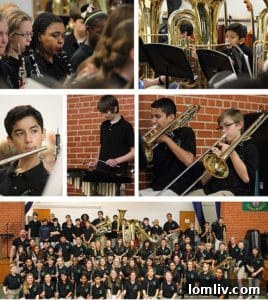
The immediate and most devastating consequence of this administrative dispute was the band’s disqualification from the Texas Music Educators Association (TMEA) Honor Band competition. This is not just any award; it is one of the most distinguished accolades a school band can receive in Texas, representing countless hours of dedication, practice, and exceptional musical talent. For the 78 students of the William B. Travis Academy/Vanguard band, this was more than just a competition; it was the culmination of their hard work, a chance to showcase their skills on a grand stage, and a potential pathway to future musical endeavors.
Adding to the sting of the disqualification was the band’s impressive track record. They were not merely participants; they were contenders. The previous year, the Travis band had achieved the remarkable feat of being first runner-up, demonstrating their consistent excellence and building high hopes for securing the top honor this year. A victory at the TMEA Honor Band would have marked a historic first for the Dallas ISD, a testament to the quality of music education within the district and particularly at William B. Travis Academy/Vanguard. However, strict TMEA rules dictate that if a band director leaves their position at any point during the competition cycle, the band is automatically disqualified. This rule, designed to ensure continuity and fair competition, inadvertently became the instrument of the students’ disappointment in this particular context.
The principal’s request for McCann’s transfer, followed by considerable deliberation within the district, resulted in his official relocation just days before the scheduled performance. This timing, directly preceding their critical competition, sealed the fate of the 78 aspiring musicians. Their dreams of competing for a state title, an honor earned through relentless effort and passion, were abruptly curtailed, leaving a void of confusion and anger among the school community.
Understanding the Deep-Seated Conflict and its Origins
While the immediate trigger for McCann’s transfer was Principal Smith’s request, the deeper roots of the conflict remain shrouded in the confidentiality typically afforded to personnel matters. District policy often prevents public comment from those directly involved, leaving the community to piece together an understanding from various accounts and observations. What is clear, however, is that the animosity between Principal Smith and Band Director McCann had become significant enough to disrupt the school environment and, ultimately, impact student programming.
Many within the Travis community attest that Smith and McCann, at one point, maintained a cordial professional relationship. Yet, something shifted, creating an “untenable” situation that escalated over time. Speculation among parents points to a potential long-standing dispute, with some suggesting that the friction began as early as 2013. According to John North, a parent deeply involved in the community, a disagreement arose when Mr. McCann and parents sought district approval for the band to participate in a different competition in Florida. Despite initial objections from Principal Smith, the district eventually allowed the trip, which the band ultimately won. This incident is frequently cited as a possible genesis for a personal rift, with some believing Ms. Smith harbored a desire for retribution against Mr. McCann for what she perceived as insubordination or “disloyalty.”
The overriding sentiment among parents and observers is profound disappointment that adult differences overshadowed the welfare and achievements of the students. “It will always chap my hide when two grown-ups and their needs come before the needs and hard work of 78 students. Always,” expressed one community member, echoing the widespread frustration that personal grievances were prioritized over student success.
A Community Rallies: Parental Outcry and Student Support
The news of the band’s disqualification and Mr. McCann’s transfer ignited a strong wave of protest and advocacy from the William B. Travis Academy/Vanguard community. Parents and former students, who had witnessed firsthand the dedication of Mr. McCann and the talent he fostered, quickly mobilized to voice their discontent. For weeks, they had attempted to intervene, appealing to district officials to consider the children’s best interests above the adults’ unresolved conflicts, but to no avail.
Evidence of this fervent support came in the form of a petition, bearing 249 signatures from students, all expressing unwavering support for Randy McCann. This collective plea highlighted the profound impact McCann had on their musical education and personal development. Shari North, a former Dallas ISD music educator and parent of Travis students, articulated the community’s outrage forcefully. “I have worked in, around, and for the DISD for decades. This situation is the worst treatment of a teacher I have ever seen. Mr. McCann not only deserves his job back, Hinojosa should publicly apologize to him,” she stated, reflecting the belief that McCann had been unfairly targeted.
Her daughter, Caroline, a former student of McCann who progressed to Booker T. Washington High School for the Performing and Visual Arts (HSPVA), penned an emotional letter to Dallas ISD. Caroline’s testimony illuminated McCann’s profound influence: “Entering Travis as a 6th grader, with little to no passion for classical music and unaware that I had any immeasurable musical talent at all, Mr. McCann helped me personally as I blossomed into a successful clarinet player under his direction.” She detailed her achievements under his guidance, including acceptance into the DISD All City Band, TMEA All Region Band, and finally, Booker T. Washington HSPVA. Caroline concluded her heartfelt appeal by questioning the district’s priorities: “While he might just be an insignificant band teacher in the eyes of DISD leadership, on campus, he brings a happy spirit nobody else replicates. I assume DISD has some reason for inflicting this transfer, but I ask if it’s reason enough to separate a teacher from students who adore him?”
Dabney Jungerman, the Travis PTA president, further affirmed the community’s sentiment: “It is the parents’ belief that our principal is having him transferred for personal reasons. Our band parents do not believe this move is in the best interest of our students but is in the best interest of our principal.” This collective voice underscored the community’s conviction that the decision was driven by personal vendettas rather than the educational welfare of the students.
Dallas ISD’s Dilemma: A “Lose-Lose” Scenario for School Leadership
To gain a comprehensive understanding of the situation, district officials, including Stephanie Elizalde, the chief of school leadership for Dallas ISD, engaged with concerned parties. Elizalde acknowledged the intense emotional nature of the situation and the inherent difficulties in explaining decisions related to personnel matters, which are often bound by strict confidentiality policies. This limitation, she noted, inevitably leaves crucial components missing from the public narrative, making it challenging for the community to fully grasp the complexities.
Elizalde described her position as being “between a rock and a hard place,” highlighting that any decision she made would likely be met with disapproval from some quarter. Initially, following Principal Smith’s transfer request, the executive director of the Hillcrest feeder pattern, Mark Ramirez, reversed the decision after hearing parental complaints. However, the matter eventually escalated to Elizalde’s desk, forcing her to make a tough call to ultimately reinstate the transfer.
The central point of contention for many parents was the timing: couldn’t the transfer have been delayed by just one day to allow the band to compete? Elizalde clarified that such a delay, while seemingly simple, was not feasible under TMEA rules. She explained that she consulted extensively with the district’s visual and performing arts department to thoroughly understand the TMEA guidelines. “The rules say that the moment the district knows the band director will not be there for the following school year, we’re required to notify them,” Elizalde stated. She emphasized her commitment to transparency and adherence to regulations, explaining that misrepresenting the school or district by not disclosing the transfer was not an option. Even if such a misrepresentation had occurred, the transfer itself would have led to automatic disqualification.
Furthermore, Elizalde revealed a deeper ethical consideration. Even if the band had competed on Thursday and somehow circumvented the immediate disqualification, Mr. McCann’s transfer would have still disqualified them from performing in February at the TMEA annual conference in San Antonio. This meant that the students could have won the competition, only to have their honor revoked months later and awarded to the runner-up. “And that didn’t sound good for the kids, either,” Elizalde reflected. “To win, and then come February bring up all these wounds again by having to say, ‘Oh, that’s right, you aren’t going to be able to perform in San Antonio because Mr. McCann isn’t here anymore’?” This scenario, she concluded, would have been an even greater disservice and unfair emotional burden on the students.
Addressing the underlying conflict, Elizalde confirmed individual meetings with both Mr. McCann and Principal Smith. While unable to divulge specifics, her assessment was clear: “It would’ve been no good for kids to have them both on campus.” This statement underscores the severity of the animosity, suggesting that the continued presence of both individuals would have created an unhealthy and unproductive environment for the students and staff. Elizalde expressed regret over how the situation unfolded, admitting, “Have I handled it well? I haven’t. I haven’t.” She acknowledged the immense difficulty of the decision, noting that while some parents understood her reasoning despite disagreeing with the outcome, others remained deeply upset. Ultimately, she reiterated her conviction that she made the “best choice” given the circumstances, describing it as a “lose, or lose lose” situation, highlighting the lack of truly favorable options.
The Lingering Impact and Hope for the Future
The William B. Travis Academy/Vanguard band controversy leaves behind a complex legacy, primarily impacting the 78 students whose immediate dreams were dashed. While the specifics of the adult conflict may remain obscured by policy, the broader lesson is clear: the success of educational programs is profoundly dependent on constructive collaboration among school leadership. When personal animosities supersede professional responsibilities and student welfare, the entire community suffers.
The immediate future for the Travis band involves adapting to change. Randy McCann has been transferred to James B. Hood Middle School, leaving a vacancy at Travis that will need to be filled by a new director. This transition will undoubtedly present challenges, but it also opens a new chapter for the program. Despite the immense disappointment, the inherent talent and dedication of the students, coupled with the strong foundation built by McCann, offer hope for continued success.
The community, though bruised, remains optimistic about the students’ potential. The goal now shifts to supporting the students as they navigate this change and prepare for future competitions. The aspiration is that the William B. Travis band, under new leadership, will return to the TMEA competition next year, stronger and more determined than ever, ready to reclaim their place among the state’s elite musical ensembles and crush their competition, proving their resilience in the face of adversity. This unfortunate chapter serves as a poignant reminder of the delicate balance required in school administration and the paramount importance of safeguarding student opportunities above all else.