
Choosing between a villa in Dubai or Abu Dhabi in 2026 comes down to your investment and lifestyle priorities. Dubai remains the best option for investors who prioritize rental demand, resale liquidity, and a larger short-term market such as the Airbnb segment. Abu Dhabi, by contrast, typically offers more space for the same budget, a calmer development pipeline, and a buy-and-hold appeal that suits families and long-term investors. Consider these differences carefully before committing.
Both emirates posted strong activity in early 2026: Dubai recorded over 45,000 home sales in Q1, while Abu Dhabi continued to set local records. The two markets are hot, but they follow different dynamics and cater to different buyer profiles.
Quick Cash vs. Long-Term Growth

Buyers in the UAE generally split into two groups. If your strategy depends on steady rentals, quick resale when the market suits you, and higher market liquidity, Dubai is likely the better fit. If you want a family-oriented home, more indoor and outdoor space for your money, and a more conservative long-term holding strategy, Abu Dhabi merits strong consideration.
Infrastructure in both cities is robust, but their real estate cycles are not synchronized. The key question is whether your priority is rental income and exit flexibility, or long-term equity growth and lifestyle value.
Heading into 2026, Dubai faces a heavier delivery pipeline after a large launch cycle. While many units were delivered in 2025, a sharp rise in 2026 completions is expected, though construction delays and cost pressures could push some handovers later. Increased inventory can create localized pressure on rents and pricing.
Abu Dhabi’s pipeline is smaller and more back-loaded, with villas representing a smaller share of new supply. That relative supply discipline can help support pricing in selected communities.
Market Snapshot: Pricing, Yields, and Supply
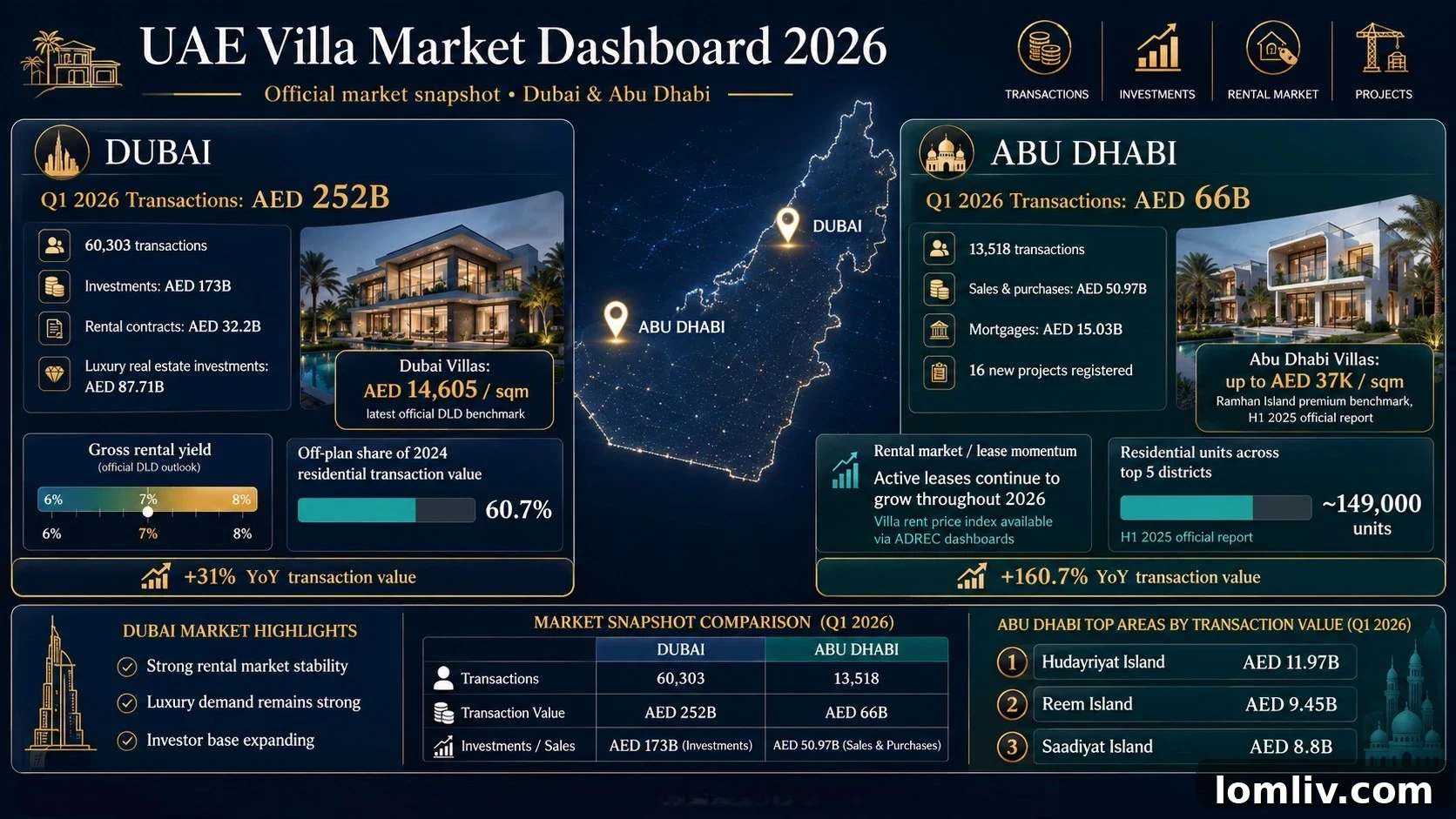
Villas in Dubai generally command higher prices because of strong demand and easier resale prospects. That premium buys market depth and liquidity. Abu Dhabi, meanwhile, often stretches your budget further in terms of square footage and neighborhood lifestyle, attracting buyers who prioritize living space and value over immediate resale speed.
Price gaps vary significantly by community, developer reputation, property age, and whether a property is ready or off-plan. Gross rental yields are also community-dependent. High-demand villas in Dubai can yield strong returns, but elevated entry prices, service charges, and incoming supply can compress yields in some areas. In early 2026, villa rents in Dubai showed signs of cooling and have largely stabilized in many neighborhoods.
Abu Dhabi’s villa yields remain competitive in certain pockets. Historical data from Bayut showed strong returns in communities like Al Reef, Al Raha Gardens, and Al Raha Beach. The 2026 supply outlook is the main variable: Dubai’s larger development pipeline presents greater inventory risk, while Abu Dhabi’s more controlled delivery pace may reduce near-term imbalances. Some industry estimates suggest Abu Dhabi’s actual 2026 completions could be materially lower than headline figures, which would further support pricing in established villa communities.
Abu Dhabi’s Premier Villa Communities
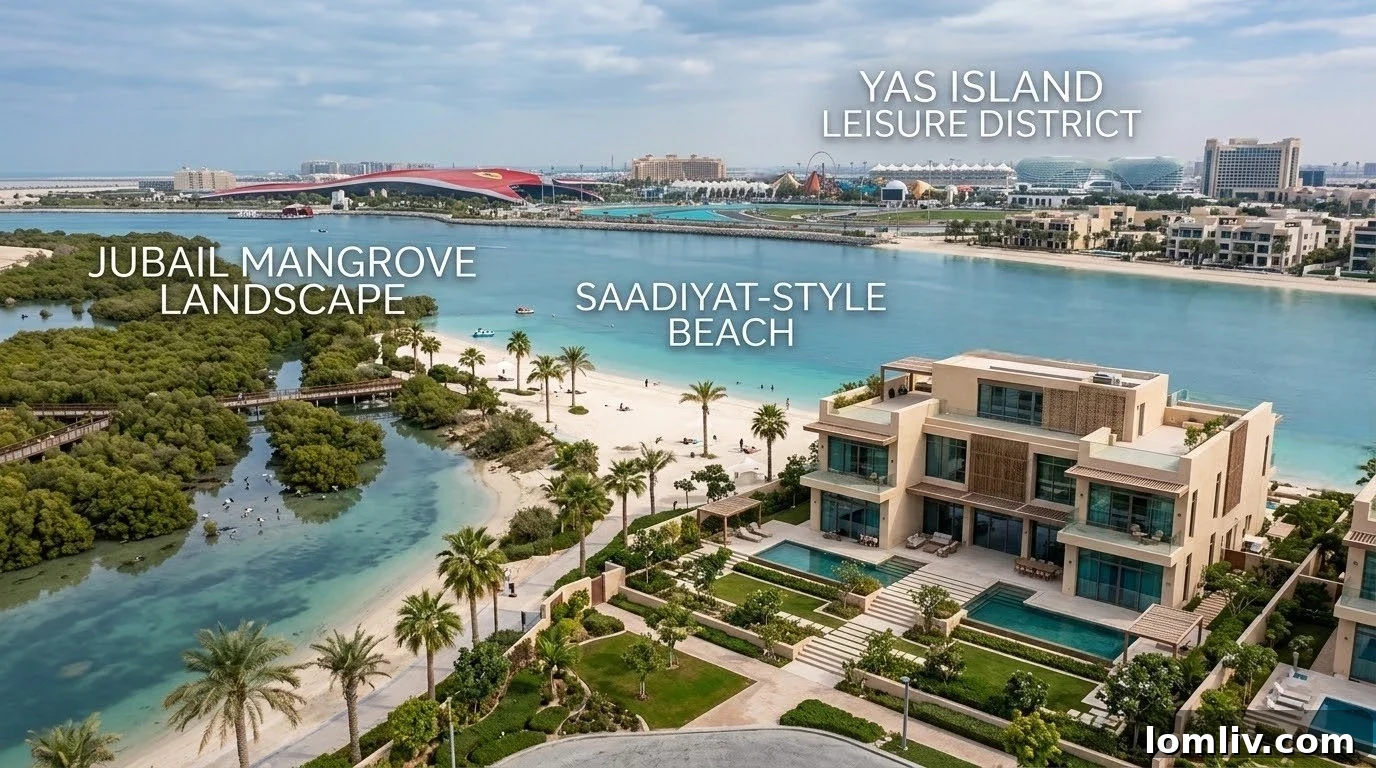
Saadiyat Island
Saadiyat Island is Abu Dhabi’s flagship luxury villa address, prized for waterfront living, cultural amenities, and a prestigious location. Entry costs are higher, but scarcity, lifestyle appeal, and long-term capital preservation are strong draws for buyers focused on quality and exclusivity.
Yas Island
Yas Island combines entertainment, retail, hospitality, and family-friendly attractions, often priced below comparable trophy locations in Dubai. It balances end-user lifestyle appeal with sound investment fundamentals, making it an important market for both residents and investors.
Abu Dhabi’s 2026 supply is concentrated in areas such as Yas, Reem, and Saadiyat, so careful project selection matters when assessing future performance.
Jubail Island
Jubail Island is notable for blending luxury homes with protected natural surroundings, including mangrove forests and coastal estuaries. The community emphasizes wellness and nature, offering amenities such as beach clubs, marinas, and large parks—an attractive sanctuary for buyers seeking tranquility close to the city.
Dubai’s High-Demand Villa Locations
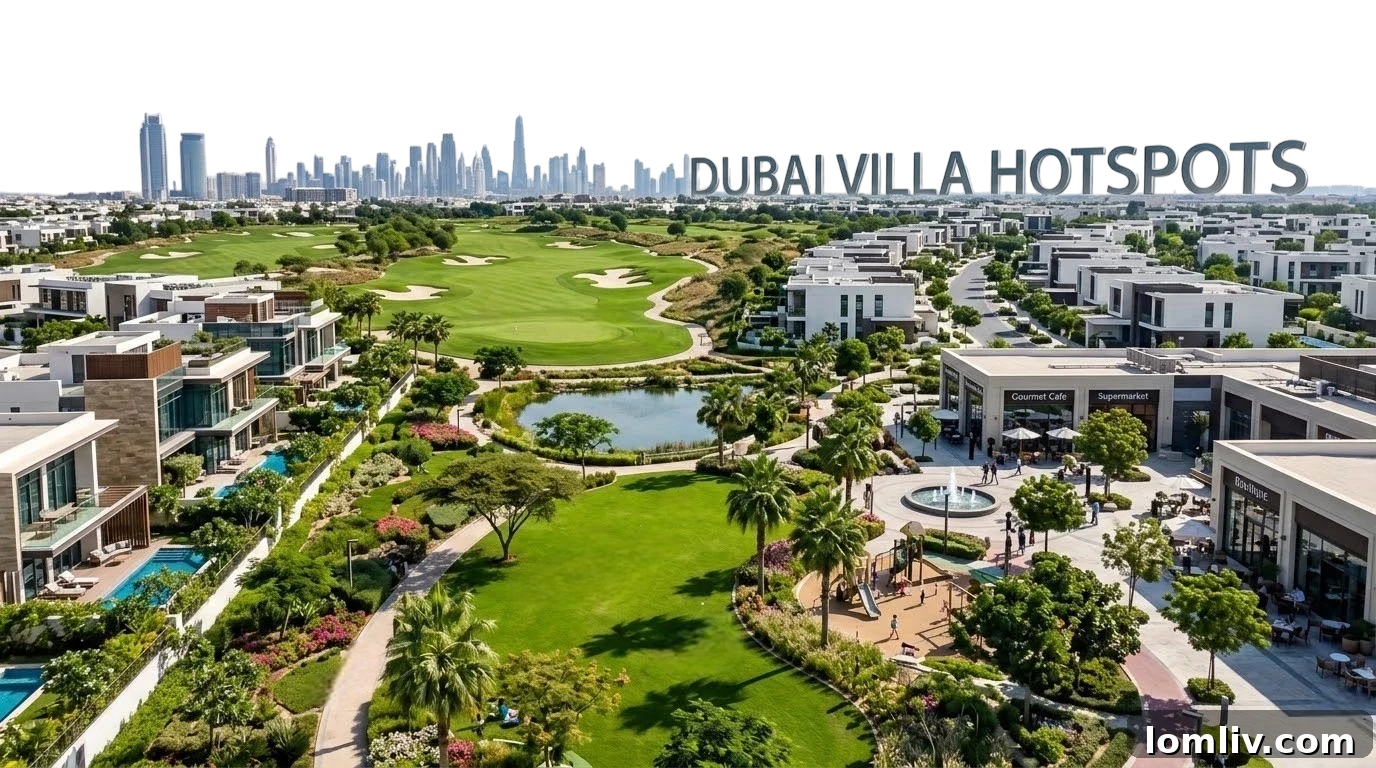
Dubai Hills Estate
Dubai Hills Estate is one of Dubai’s strongest family-oriented villa neighborhoods, anchored by a large park, Dubai Hills Mall, and an 18-hole championship golf course. These amenities support tenant demand and resale appeal, and rental data consistently ranks the community highly for luxury villa rentals.
Arabian Ranches and Tilal Al Ghaf
Arabian Ranches and Tilal Al Ghaf remain popular with families and expatriates, whether renting or buying. Arabian Ranches is established and predictable, while Tilal Al Ghaf has gained attention for its design, schooling options, and community amenities. Landlords should focus on tenant retention and factor in ongoing service charges and maintenance when modeling returns.
Matching the Market to Your Strategy

If your plan relies on rental income and the ability to exit more quickly, Dubai offers deeper liquidity, a larger tenant base, and greater visibility to international buyers. However, not every Dubai villa will outperform—performance will become more community-specific and hinge on developer quality, handover timing, and realistic pricing.
For families or buy-and-hold investors, Abu Dhabi often represents the smarter option. Villa prices in Abu Dhabi rose significantly in 2025 due to limited inventory and an influx of genuine homebuyers, while citywide rents grew at a steadier pace. That reflects a market driven more by long-term settlement than short-term flipping.
Luxury buyers have choices in both emirates: Dubai’s globally visible addresses include Palm Jumeirah, Emirates Hills, and Jumeirah Bay, while Abu Dhabi highlights lower-density waterfront neighborhoods such as Saadiyat and Jubail. In many mid- and upper-tier segments, Abu Dhabi offers more space for the same budget; Dubai offers greater ease of resale when liquidity is a priority.
Smart Moves Before You Sign

Perform thorough due diligence. Review the master developer’s delivery record, escrow protections, realistic handover timelines, service charges, and resale history for the exact sub-community. If buying off-plan, include a buffer for possible delays rather than relying solely on advertised handover dates.
Transaction costs differ between the emirates and can affect net returns. For example, sale registration and transfer fees vary and should be included in any ROI calculation. Confirm visa eligibility requirements tied to property ownership and ensure the specific property meets any thresholds if residency is a goal.
Visit neighborhoods at different times, check school routes, traffic, nearby construction activity, and actual occupancy. Work with a local broker familiar with the micro-market and request a Comparative Market Analysis for the exact street, villa type, plot size, and handover status. That process helps remove emotion and protect your downside.
Making Your Final Decision
Dubai delivers liquidity, rental depth, and a larger international buyer pool, making it attractive for investors who value turnover and rental demand. Abu Dhabi offers a compelling lifestyle proposition, often lower cost per square metre in many segments, and a more measured supply profile that supports steady capital growth.
Run the comps, factor in the 2026 supply pipeline, and calculate full transaction costs before deciding. Focus on net returns, liquidity needs, and livability to determine which emirate best matches your goals for 2026.