The Digital Revolution: Transforming Real Estate Marketing and Media Landscapes
The landscape of marketing and media is undergoing a seismic shift, driven by the pervasive influence of digital technology. While this transformation has been evident for years, some industries and professionals continue to cling to outdated methods, often at a significant cost. The real estate sector, for instance, presents a stark example of this dichotomy, where traditional advertising still commands substantial investment despite dwindling returns. The figures speak volumes, painting a clear picture of a market in urgent need of a digital awakening.
The Costly Misstep: Why Print Advertising Fails Realtors in the Digital Age
It’s an astonishing truth that real estate professionals collectively poured an estimated $1.5 billion into marketing property listings in print media last year alone. This figure is not just a statistic; it’s a symptom of an industry struggling to adapt to modern consumer behavior. The disconnect becomes even more glaring when confronted with the reality that an incredibly small fraction of homebuyers—a mere 1 percent—actually discover their new homes through print newspapers or other traditional media channels. This staggering imbalance highlights a critical flaw in prevailing marketing strategies, underscoring the urgent need for a paradigm shift.
As industry experts have repeatedly pointed out, “Agents and brokers keep using tired tactics that no longer produce results.” This isn’t an indictment of effort but rather a call for efficiency and effectiveness. The vast majority of today’s homebuyers begin their search online, leveraging powerful search engines, comprehensive real estate portals, and engaging social media platforms. Investing billions in a channel that reaches a negligible portion of the target audience is not just inefficient; it’s financially unsustainable in the long run.
Industry insights reveal that despite only 1 percent of homebuyers finding their home in print newspapers or traditional media, real estate agents spent $1.5 billion to market in newspapers last year, illustrating a profound disconnect in marketing efficacy.
The Blind Spot: Unmeasurable Returns on Traditional Investment
Consider a typical scenario: you’re selling your home and interviewing potential real estate agents. You inquire about their marketing plan, eager to understand how they will maximize your property’s exposure. An agent, let’s call her Suzie Q. Agent, confidently responds, “I advertise it extensively in the local newspaper and a selection of prominent magazines.”
Your immediate, and quite justified, follow-up might be: “Really? Does that approach truly yield results in today’s market?”
Suzie Q. Agent, perhaps with a touch of practiced assurance, replies, “Oh yes, absolutely.”
But here’s the crucial question you, as a savvy homeowner, must ask: “How do you quantify that success? Show me the data, the measurable outcomes, the return on investment.” This isn’t an unreasonable demand; it’s a fundamental expectation in any business transaction. Would you entrust your investment portfolio to a stockbroker who chose stocks based purely on a gut feeling or anecdotal evidence? Most certainly not. Yet, many homeowners unwittingly accept such vague assurances when it comes to one of their most significant assets.
The inherent limitation of print advertising lies in its inability to provide concrete, actionable data. There’s simply no way to accurately track who reads an ad, whether it captivated their interest, or if it led directly to an inquiry or a sale. Unlike digital campaigns, which offer granular analytics on impressions, clicks, conversions, and audience demographics, print ads are essentially a shot in the dark. Furthermore, the shareability of print is virtually nonexistent in a world accustomed to instant digital sharing. Unless you painstakingly clip an ad and mail it to your grandmother, its reach is confined to the physical copy, severely limiting its viral potential.
Agents frequently recount stories of friends complimenting their ads: “Saw your ad, looks great.” While such remarks might offer a momentary ego boost, they rarely translate into tangible leads or sales. This feedback often falls into the realm of “branding” – an agent’s face on a billboard, for instance, might enhance name recognition, but does it directly help sell homes? The evidence increasingly suggests that while branding has its place, it must be strategically integrated into a broader, results-oriented marketing framework, particularly one that prioritizes measurable outcomes.
The Digital Transformation of Media: The Dallas Morning News Navigates the New Era
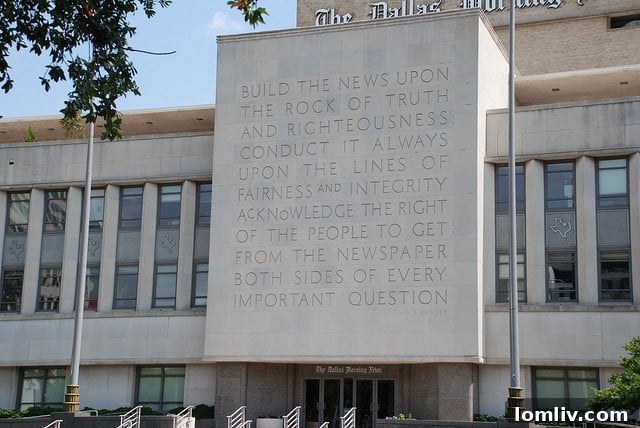
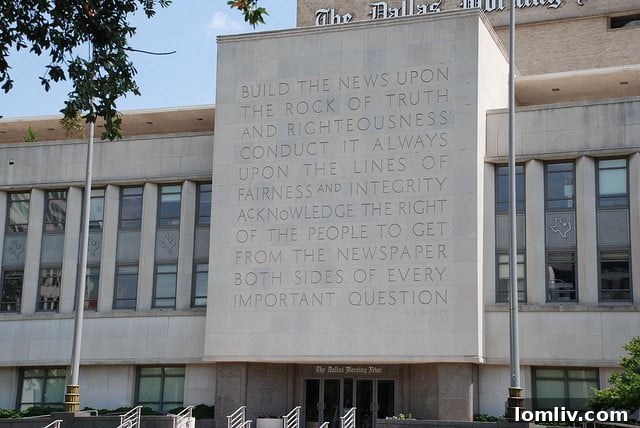
It is against this backdrop of industry-wide digital evolution that we observe the poignant transformation unfolding within traditional media institutions. It was with a sense of profound sadness that I recently learned of the exodus of many talented journalists from The Dallas Morning News this fall. This departure isn’t a reflection of their individual capabilities but rather a symptom of the immense, indeed, often brutal, changes that are reshaping the print industry globally, forcing a decisive pivot towards online platforms. The DMN’s recent round of buyouts saw at least 40 journalists, out of a total of 167 employees offered packages, opting to leave, with many departing as early as September 11th. This seismic shift underscores the undeniable reality that the future of news, much like real estate, is unequivocally digital.
The newspaper offered a buyout to 167 employees “whose age and years of service [at the DMN] total at least 60 years,” from across a range of publications that included DMN, Al Dia, NeighborsGo, FD, Briefing and GuideLive.com. Editor Mike Wilson described the buyouts as part of an effort to make the newsroom more digitally minded, saying that the staffers who left would be replaced with “outstanding digital journalists.”
As detailed by Teresa Gubbins at CultureMap, this marks the DMN’s third round of significant staffing changes since 2006. The paper’s new editor, Mike Wilson, has articulated a clear vision: these buyouts are an integral part of a strategic plan to cultivate a “digitally-minded” news organization. This transformation isn’t merely about publishing articles online; it’s about fundamentally rethinking how news is gathered, produced, distributed, and consumed in the 21st century. It necessitates a shift in skill sets, a greater emphasis on multimedia content, data analytics, and direct audience engagement.
The internal memo confirmed that the staffers who accepted buyouts would be replaced with “outstanding digital journalists,” signaling a definitive commitment to a future-focused newsroom.
It is, however, reassuring to note that real estate editor Steve Brown was reportedly not among those affected by this particular round of changes, ensuring continued coverage of this vital sector. These staffing adjustments at the DMN, located at 508 Young Street, reflect a broader industry trend where adaptability and a strong digital presence are no longer optional but essential for survival and relevance. They raise important questions about the evolving nature of local journalism and the skills required to thrive in a rapidly changing media landscape. The transition from print-centric roles to those focused on digital platforms, SEO optimization, social media storytelling, and interactive content creation is a testament to the ongoing evolution of the news industry.
Embracing the Digital Imperative: A Unified Vision for Real Estate and Media
The parallels between the challenges faced by real estate professionals and those confronting traditional news outlets like The Dallas Morning News are striking. Both industries are grappling with fundamental shifts in consumer behavior and the undeniable dominance of digital platforms. For realtors, the move away from print advertising towards targeted, measurable online campaigns is not just about efficiency; it’s about staying competitive and meeting clients where they are – which is almost invariably online.
Modern real estate marketing leverages a diverse array of digital tools: sophisticated online listing services, engaging social media campaigns, high-quality virtual tours and photography, targeted email newsletters, and robust search engine optimization (SEO) to ensure properties are easily discoverable. These methods offer unparalleled measurability, allowing agents to track leads, analyze engagement, and refine their strategies in real-time. This data-driven approach stands in stark contrast to the guesswork inherent in traditional print advertising, providing a clear path to demonstrating value and delivering results to sellers.
Similarly, for media organizations, the shift to digital is about more than just maintaining readership; it’s about fostering new forms of engagement, diversifying revenue streams, and reaching a global audience. Investing in “digital journalists” means cultivating professionals who understand not only traditional journalistic ethics but also the intricacies of online storytelling, audience analytics, and platform-specific content creation. It’s about building a sustainable future for vital public service journalism in an increasingly digital world.
The Future is Now: Navigating Success in a Digital-First World
The lessons from both the real estate and media industries are clear: the future is digital, and adaptation is not merely an advantage but a necessity. For real estate agents, this means reallocating those billions from ineffective print ads to sophisticated digital strategies that reach, engage, and convert actual homebuyers. For news organizations, it signifies a continuous evolution of their journalistic craft to thrive in an environment where information is consumed instantly, interactively, and often on mobile devices.
Those who embrace this digital imperative—learning new skills, adopting innovative tools, and prioritizing data-driven decision-making—will be the ones to flourish. The stories of transformation from The Dallas Morning News and the undeniable statistics of real estate marketing serve as powerful reminders that clinging to the past is no longer a viable option. The rock of truth has spoken: the path to success in both marketing and media is paved with digital innovation.