Nestled just beyond the bustling thoroughfare of Fort Worth Avenue, a serene and picturesque community known as Stevens Park Village beckons. This charming enclave, comprising 176 unique homes, offers a tranquil escape within the vibrant North Oak Cliff area of Dallas. Developed by Annie Stevens between 1939 and 1941, the neighborhood exudes an undeniable sense of history and charm, characterized by its distinctive architecture and mature, tree-lined streets. It’s a place where time seems to slow down, inviting residents to savor the simple pleasures of community living and the rich heritage of Dallas.
Stevens Park Village is a treasure trove of architectural styles, primarily featuring sturdy Austin stone Prairie-style cottages and classic bungalows. Enthusiasts of unique period homes will even spot a few rare Dilbeck designs, adding to the neighborhood’s distinctive character and architectural diversity. Each property, with its meticulously kept lawn and groomed hedges, contributes to the overall aesthetic of a well-loved and cohesive community. The homes are robust, built with a quality that speaks to their enduring legacy, and are carefully situated along meandering streets that invite leisurely strolls under canopies of mature trees, offering shade and natural beauty.
Despite its proximity to busier arteries and even a public housing project like Cliff Manor Apartments just down Fort Worth Avenue, Stevens Park Village maintains an exceptionally low-key ambiance. Traffic is minimal, and crime rates are remarkably low, fostering an environment of safety and serenity that residents cherish. Lush greenbelts weave through the neighborhood, offering residents scenic pathways and natural beauty, while the palpable sense of community is strengthened by friendly neighbors who often greet each other by name. It’s an idyllic setting, often described as quaint and charming, truly embodying the essence of a hidden gem for North Oak Cliff real estate.
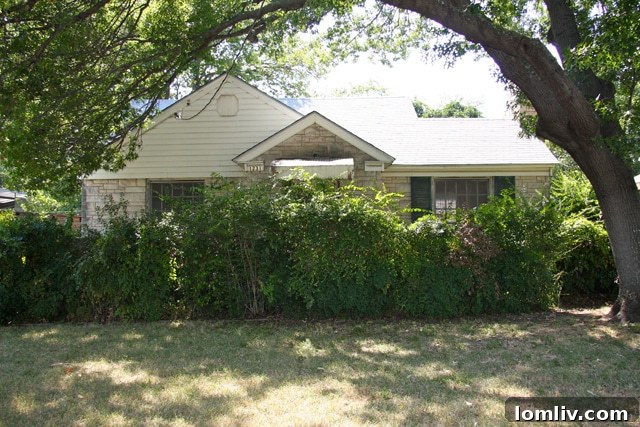
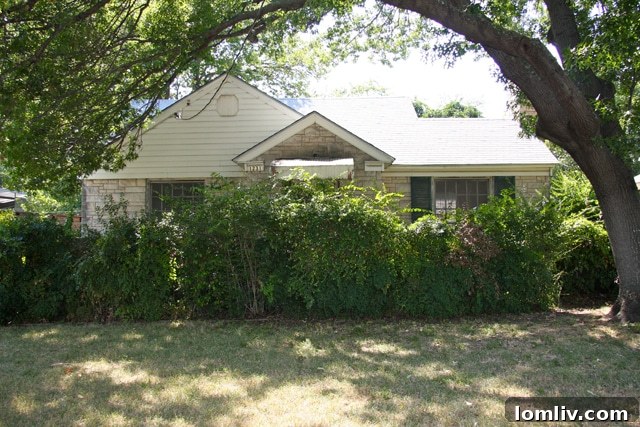
Yet, amidst this picture-perfect landscape, one particular residence stood out—or rather, failed to stand out, obscured by years of neglect. At 1231 Walter Drive, overgrown hedges threatened to swallow the facade, their wild growth a stark contrast to the manicured lawns surrounding them. Peeling paint struggled to mask the severe deterioration of its original window frames, revealing rotting wood beneath. This was a home that had unequivocally lost its luster, crying out for immediate attention and care. And it was precisely this deeply bruised and battered property that captured the heart and vision of Donovan Westover, a dedicated historic home preservationist.
Donovan Westover, a passionate preservationist with a keen eye for historical architecture, had long been searching for a project of this magnitude. He wasn’t seeking perfection; rather, he yearned for a home with a story of neglect, a structure patiently waiting to be resurrected and returned to its former glory. The 1942 cottage at 1231 Walter Drive perfectly fit this ambition. Recognizing its immense potential despite its dire condition, Westover and his partner acquired the property at a remarkably advantageous price, setting the stage for a meticulous and transformative restoration journey. Their mission was clear: to uncover the inherent vintage beauty of the home, which lay hidden beneath layers of grime, decay, and years of oversight, ultimately restoring it to a vibrant Oak Cliff vintage cottage.
To bring his ambitious vision to life, Westover enlisted the expertise of acclaimed architect Alicia Quintans, a resident of the nearby Beckley Club Estates and a recognized name in historical restoration. Quintans, celebrated for her sensitive approach to period architecture and seamless integration of modern functionality, was the ideal partner for this intricate project. Westover’s core philosophy for the project was to meticulously restore as much of the home’s original character as possible, both structurally and aesthetically. This meant preserving its authentic charm and architectural details, while simultaneously integrating contemporary comforts and stylish design elements that cater to today’s discerning homeowners. The goal was not merely a renovation, but a respectful revival, ensuring the home would not only be beautiful but also perfectly capable of meeting modern living needs, making it a prime example of Dallas historic home preservation.
The first step in this transformative process involved an intensive inspection. I, along with Candy, had the privilege of joining Westover and Quintans as the architect took her very first look inside the dilapidated cottage. As we waited along the sidewalk, feeling somewhat out of place in our heels and sundresses amidst the property’s state, Westover began to set the scene, preparing us for the profound neglect we were about to witness. “It was in this family for a long time,” he explained, recounting the history of the previous owners as we approached the front porch, offering us a closer vantage point to appreciate the home’s exterior integrity and structural bones.
Upon closer examination, Quintans confirmed that, despite the obvious surface-level issues, the exterior shell of the home was remarkably sound. The house boasted a robust foundation, a testament to the geological advantage of the entire area being constructed upon solid bedrock. This foundational strength offered a promising starting point for the extensive work ahead, significantly easing concerns about structural integrity. Westover further contextualized the property’s location, motioning towards where Walter Drive gently transitions into Barberry. “We are literally on the edge of Oak Cliff,” he added, highlighting its strategic position. Just a block or two further, the neighborhood descends towards the busy thoroughfare of Interstate 30, underscoring the unique blend of urban connectivity and quiet residential living that defines Stevens Park Village.
Quintans, ever the expert, meticulously inspected the masonry, noting with admiration, “They don’t do mortar like this anymore.” She pointed out the larger aggregate in the original mortar, a detail indicative of superior, more durable construction techniques prevalent in the era, contributing to the structure’s enhanced strength and longevity. While the window sills had regrettably succumbed to rot, a clear sign of persistent water damage over decades, the plinths—the base supports for columns or pilasters—remained perfectly set and intact, suggesting underlying structural resilience elsewhere. Our anticipation grew as we finally stepped through the front door, and it was at this moment that the full extent of the interior’s condition became shockingly apparent. My jaw quite literally dropped; this home wasn’t just in need of a facelift—it demanded a complete gutting, a profound transformation for this 1942 cottage restoration.
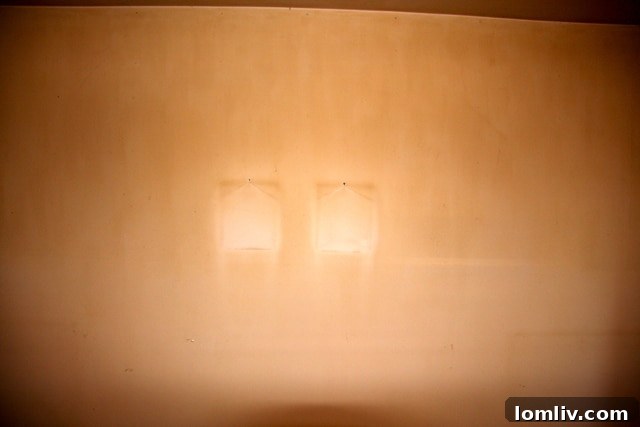
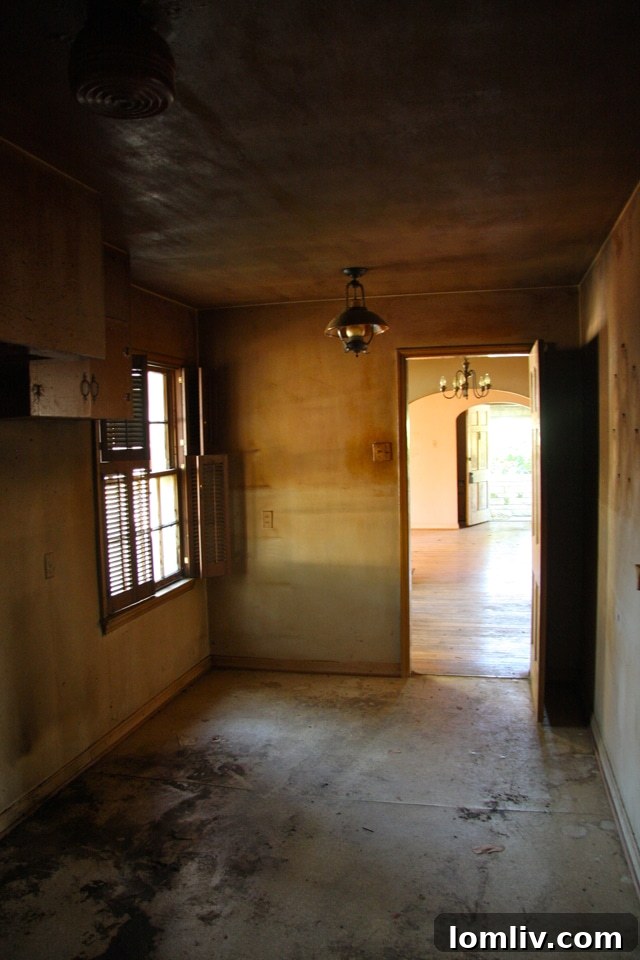
The interior presented a formidable challenge, a scene that confirmed Westover’s initial assessment with undeniable force. “We’re going to strip every inch of sheetrock,” Westover declared, his voice firm with resolve and a clear understanding of the necessary scope. My internal monologue echoed, “Obviously.” There was no alternative; every single surface, from the highest point of the ceilings down to the floors, was uniformly coated in a thick, shiny, amber-tinted layer of cigarette smoke tar. It was a visceral reminder of decades of heavy indoor smoking, a pervasive stain that had seeped into the very fabric of the home, impacting its aesthetic and undoubtedly its air quality.
Westover vividly recounted his first personal encounter with the tenacious residue. On one of his initial visits, during a sunny but humid day, he inadvertently touched one of the walls. The tar, sticky and resinous, clung tenaciously to his fingers, requiring several minutes of vigorous handwashing to remove the stubborn coating. This anecdotal experience perfectly illustrated the scale of the challenge: this wasn’t mere dirt, but a deeply embedded, chemical stain that had permeated every corner, demanding a radical approach to detoxification and renewal. The air itself felt heavy, carrying the ghost of stale smoke, a testament to the home’s past and the daunting task of purification that lay ahead for the dedicated restoration team to achieve a truly clean slate for the Oak Cliff home restoration.
Despite the overwhelming extent of the damage and the formidable challenges ahead, the restoration project is not without its encouraging “bright spots,” elements of the original home that hold immense potential for preservation and revitalization. One such gem is the original fireplace, currently hidden beneath layers of old paint and an incomplete stucco job. Once carefully stripped and restored to its natural beauty, it promises to become a stunning focal point, reinstating its classic grandeur and serving as a warm, inviting hearth for the modernized living space. Its integrity offers a tangible connection to the home’s past, a key element in Westover’s vision for authentic Dallas historic home preservation.
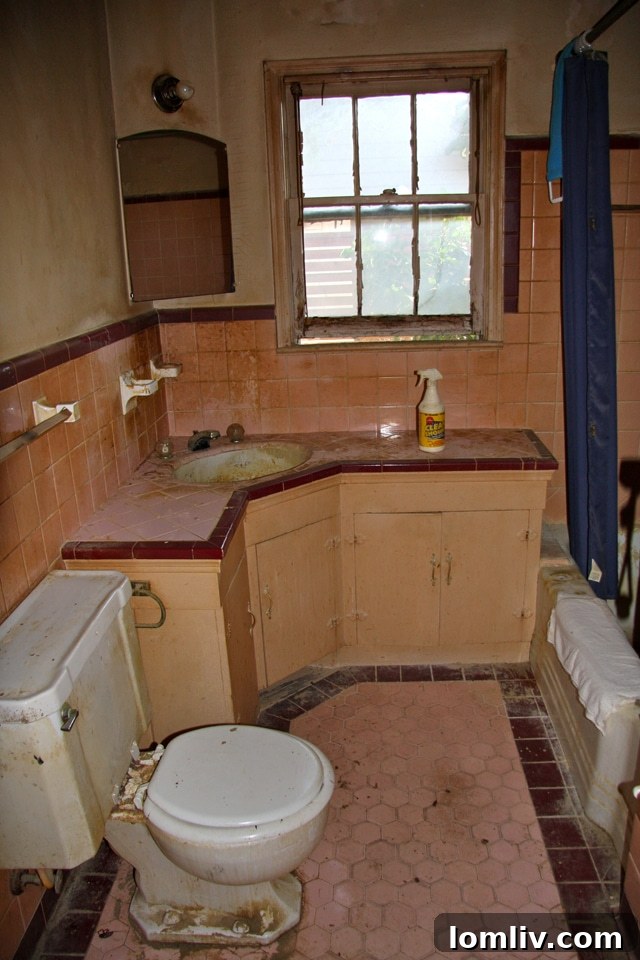
The bathroom, though showing extensive damage to its sink and surrounding walls, holds another delightful surprise: much of its classic pink-and-maroon tile work is still in remarkably good shape. These vibrant, historically significant tiles are a testament to mid-century design and craftsmanship. With diligent and very heavy scrubbing, the team anticipates that these charming original tiles can be thoroughly cleaned and salvaged. This preservation effort will not only maintain a valuable piece of the home’s vintage aesthetic but also significantly reduce waste and embody a commitment to sustainable restoration practices, proving that character can indeed be retained even in a gut renovation. Such details are crucial in retaining the cottage’s authentic 1940s character while seamlessly integrating it into a stylish, functional modern home.
Creative re-imagining of existing spaces is also a cornerstone of this project. The room situated between the garage and the kitchen presents an ideal opportunity for transformation into a beautiful screened porch. This new addition will offer a tranquil transition space, perfect for enjoying the pleasant Dallas weather without the inconvenience of insects, adding valuable functional square footage and enhancing the home’s appeal for indoor-outdoor living. Furthermore, while the existing garage is noted as “a bit lopsided in some areas,” its fundamental structure is sound enough to be repurposed effectively as a carport, offering convenient, sheltered parking while maintaining the property’s historical footprint and maximizing its utility.
Inside, the original hardwood floors, though obscured by years of wear and the pervasive tar, appear to be in decent enough condition to be lovingly refinished. Once unveiled from beneath the layers of neglect, these timeless floors will bring warmth, character, and elegance back into the living areas, complementing the other restored features. The graceful archways that eloquently separate the living and dining rooms remain as charming and structurally intact as ever, acting as beautiful architectural statements that define spaces while maintaining an open, inviting flow characteristic of homes from this era. These elements collectively reinforce the immense potential that Alicia Quintans recognized immediately upon her comprehensive assessment of this Stevens Park Village home.
Surveying the significant undertaking with an air of hopeful determination, Quintans remarked, “There is a lot of potential here.” Her words encapsulated the spirit of the entire restoration team: acknowledging the immense work ahead, yet fully confident in the rewarding outcome. The project at 1231 Walter Drive is undoubtedly a monumental task, demanding meticulous planning, skilled craftsmanship, and a deep respect for historical integrity. As Westover and Quintans embark on this ambitious journey of transforming a forgotten house into a cherished home, we will be following along closely, documenting each phase of their progress and celebrating every step of its revival, from initial demolition to the final, gleaming finishes. This project is a testament to the enduring appeal of North Oak Cliff homes and the power of dedicated preservation.
As our visit concluded and we prepared to depart, I found myself profoundly admiring Donovan Westover’s unwavering commitment to his goal: not merely to renovate, but to truly bring history back in style. This endeavor at 1231 Walter Drive is more than just a home renovation; it’s a powerful statement about the value of historic home preservation, the beauty of skilled restoration, and the enduring charm of North Oak Cliff. It is my sincere hope that the rest of Dallas takes note of this inspiring project, recognizing the immense worth in safeguarding and celebrating our architectural heritage, and perhaps, that it follows suit in preserving the unique character of our beloved city. Projects like these remind us that with vision and dedication, even the most neglected structures can be transformed into vibrant testaments to a rich past and a promising future, inspiring a new generation of homeowners and preservationists alike to invest in Dallas home restoration.