

Navigating the complexities of global real estate markets offers invaluable insights into local development challenges and opportunities. For those who missed the initial discussion, Part One of this series is available here, where we explored how the worldwide quest for secure investments yielding decent returns has profoundly reshaped urban real estate landscapes, particularly in dynamic cities like Hong Kong. While Dallas may seem geographically distant from Hong Kong’s bustling metropolis, a closer look reveals striking parallels and critical lessons. Hong Kong, with a population of approximately 7.24 million, shares a similar demographic scale with the Dallas-Fort Worth Metroplex, which hosts around 7.1 million residents. The stark contrast, however, lies in land mass: the Metroplex sprawls across an expansive 9,286 square miles, whereas Hong Kong manages its vast population on a significantly more constrained 1,064 square miles. This results in Hong Kong boasting a population density nine times greater than that of Dallas, making its housing market a hyper-compressed, high-stakes version of what Dallas might one day become.
Understanding Hong Kong’s real estate trajectory provides a unique lens through which to examine Dallas’s own growth. The rapid urbanization and investment patterns in Hong Kong offer crucial insights into the outcomes of intense development, speculative investment, and the unforeseen pitfalls of ambitious government urban planning initiatives. This installment delves into these critical areas, highlighting how investment behaviors, development strategies, and even well-intentioned public policies can lead to both economic boom and significant societal challenges in rapidly expanding urban centers.
The Global Phenomenon of Empty Homes: A Real Estate Paradox
One of the most concerning and ironic consequences of speculative real estate investment in “hot” global markets is the proliferation of vacant properties. In cities like Seattle, Vancouver, and London, investor-owned properties are often treated less as homes and more as oversized safe deposit boxes, or “piggy banks,” for parking excess cash. These properties are frequently left empty, deliberately withheld from the rental market, thereby exacerbating existing housing shortages and depriving local communities of much-needed residential units. Estimates suggest that in London alone, between 40 to 50 percent of homes may be vacant on any given night. This phenomenon isn’t unique to London; it’s a widespread issue in many sought-after urban centers globally. The stark contrast between a plethora of empty, investor-owned luxury units and a growing homeless population in these very same markets represents a profound societal irony and a significant policy failure.
As Dallas continues its impressive growth trajectory, it becomes increasingly imperative for municipal governments and urban planners to meticulously study the successes and, more importantly, the mistakes of other rapidly expanding markets. In environments where real estate becomes a primary vehicle for investment rather than shelter, property owners often reap substantial financial rewards, frequently at the expense of local tenants and young families striving to establish households. This dynamic can create an unsustainable housing ecosystem, where affordability spirals out of reach for a significant portion of the population.
While Dallas’s real estate market is undoubtedly experiencing a significant boom (relative to its historical trends), it has not yet reached the “global hot” status of cities like Hong Kong. Dallas lacks the coastal appeal, mountainous terrain, or the physical boundaries that naturally constrain supply, nor does it possess a globally bustling business sector on the scale of Asia’s financial hubs. Nonetheless, Dallas is projected to undergo swift and substantial population growth in the coming decades. By proactively learning from the experiences of other cities, Dallas can better manage its impending growth, striving to prevent the unchecked rise of poverty and homelessness, and ensuring that its urban development benefits all residents, not just a select few investors. Adopting forward-thinking policies and learning from international examples can help Dallas build a more equitable and sustainable future.
Hong Kong: A Microcosm of Extreme Real Estate Dynamics
Hong Kong stands as a quintessential example of an intensely expensive real estate market, a poster child for global housing inflation. Its unique geographical characteristics—a collection of islands, predominantly mountainous terrain, and extremely limited developable land—combine with its strategic position as Asia’s banking and financial backbone to create an unparalleled demand for property. This confluence of factors drives prices to astronomical levels, making homeownership an increasingly unattainable dream for many local residents.
During a recent visit, the front-page real estate news highlighted a developer’s offering of new-build, compact studio-to-two-bedroom condominiums for “under $1,000 per square foot.” While this might sound steep to an outsider, it was considered an “unheard of” bargain in Hong Kong’s recent memory, sparking a frenzy of interest. The limited release of just 308 units attracted an astonishing 16,700 prospective buyers, underscoring the severe demand-supply imbalance and the desperate hunger for even slightly more affordable options. In this market, homes trading at $2,000 per square foot are considered “pedestrian,” while properties exceeding $3,000 per square foot are still likely to be less luxurious or spacious than a high-end residence at a development like The Stoneleigh in Dallas. These figures vividly illustrate the extreme pressures on Hong Kong’s housing market and serve as a stark warning of what can occur when supply is critically limited and investment demand is virtually limitless.
Redevelopment Skewed Toward Investors: A Growing Concern
Another significant issue plaguing “hot” urban real estate markets is the pervasive tendency for new developments to be designed and marketed primarily for the rarely-present investor rather than for local, owner-occupant buyers. This trend exacerbates the problem of empty homes and further distorts property values. Beyond the general price increases fueled by a large proportion of investor-owned properties, these newly constructed units often fail to meet the practical needs or affordability criteria of local residents. Their layouts, amenities, and price points are tailored for a global investor class seeking capital appreciation, not for families or individuals looking for a permanent home within their community.
Dallas is already witnessing the early signs of this trend. Developments specifically targeting overseas buyers, such as those in Corinth aimed at Chinese investors, indicate a shift in market focus. It is not difficult to envision luxe high-rises emerging in Dallas that, like their counterparts in Hong Kong or London, primarily attract multi-home investors rather than local residents. In Hong Kong, it was reported that in a specific two-week period in September, a staggering 30 percent of all property transactions were made by investors. Similarly, in London, condominium developments initially targeting Middle Eastern investors experienced a significant slowdown before Brexit, often having to offer substantial discounts to finally attract local buyers. This pattern highlights a critical disconnect: when development prioritizes speculative investment over community needs, it creates an artificial market that eventually struggles to sustain itself without local demand, leading to potential instability and unfulfilled housing needs for the resident population.
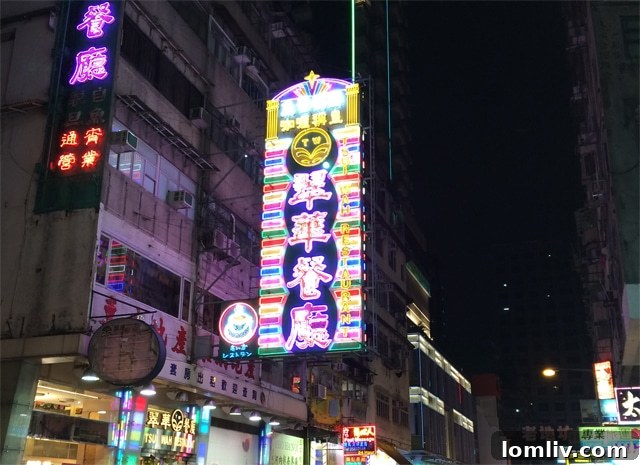
Strategic Acquisitions: The “En Bloc” Purchase to Force Redevelopment
A particularly ingenious, though ethically complex, strategy observed in Hong Kong’s hyper-competitive real estate market is the practice of patient investors systematically purchasing individual condominium units within older mid- or high-rise buildings. The ultimate goal is to secure a majority stake, typically a threshold defined by local property law or building bylaws (e.g., 80% or 90% ownership), to then vote to sell the entire building “en bloc” to a developer. This allows the developer to acquire the entire site for demolition and subsequent redevelopment, often into a much taller, denser, and more profitable new structure. In Hong Kong, where vertical expansion is often the only way to create new supply due to extreme land scarcity—a concept underscored by sipping a drink on the 118th floor of the Ritz—this strategy is a powerful driver of urban renewal and profit.
While the outright demolition of a Dallas high-rise might seem unlikely given its more expansive urban fabric, the underlying principle of consolidating ownership for strategic redevelopment is not exclusive to Asia. Seattle is currently experiencing a version of this, as investors acquire middle-class apartment buildings, not necessarily for demolition, but for extensive renovation and repositioning as luxury properties, effectively displacing existing residents and raising the area’s overall cost of living.
This tactic holds potential relevance for specific areas in Dallas, such as Preston Center and the historic “Pink Wall” district, which I have frequently written about. Much of the Pink Wall, ripe for redevelopment, is currently protected by intricate deed restrictions. These restrictions typically require 51 percent of the complexes within a sub-district, which collectively account for 51 percent of the street frontage, to vote in favor of their removal. This appears to be a formidable barrier to redevelopment.
However, upon closer examination, this “high bar” might not be insurmountable for a patient and strategic developer. Such an entity would only need to acquire 51 percent of the individual units within complexes that collectively represent 51 percent of the street frontage. This means a developer wouldn’t need to buy 51 percent of all complexes, but rather a little over 25 percent of the total units (since 51% of 51% is approximately 26%). Given the relatively low density and often dated nature of many of these complexes, the overall investment, though significant, might not be as tremendous as one would initially assume. It primarily requires strategic planning, deep pockets, and considerable patience. Once these deed restrictions are successfully removed, amending the municipally enforced zoning regulations to permit higher density or different land uses would become a significantly easier process, paving the way for substantial redevelopment and potentially mirroring the Hong Kong-style vertical expansion in a Dallas context.
The Persistent Challenge: Insufficient and Unaffordable Housing Supply
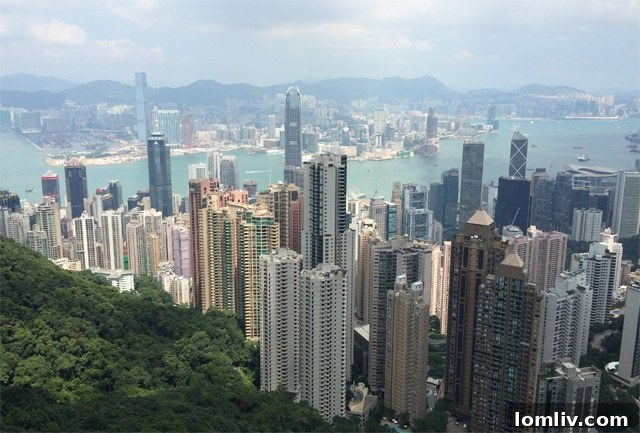
A critical challenge, regardless of a city’s global standing, is the consistently slow pace of constructing new housing stock that caters to the typical local buyer across a diverse range of income levels. Too often, the market prioritizes high-end luxury developments, leaving a significant gap in affordable and mid-range housing options. There is a hopeful anticipation that a nationwide slowdown in the luxury real estate market might incentivize developers to pivot towards projects with more financially accessible price points, thereby addressing broader market needs. In Dallas, for example, developments like Turtle Creek Haus, with its latest plans, seem to be moving away from super-deluxe, sprawling floorplans. While specific pricing details remain undisclosed, the estimated square footage suggests these will not be another Museum Tower or Stoneleigh, hinting at a potential shift towards slightly more modest, though still upscale, offerings.
As one might expect, Hong Kong epitomizes the scarcity of lower-priced housing options, a reality starkly illustrated by the disbelief surrounding “sub-$1,000 per-square-foot” condos. In 2013, Hong Kong’s highest official, Leung Chun-Ying, grandly announced plans for the construction of 17,000 lower-cost flats. However, bureaucratic hurdles, development complexities, and shifts in priorities have significantly derailed these ambitions; once complete, the project is now reportedly slated to deliver just 4,000 housing units. This dramatic shortfall highlights the immense difficulty, even for governments, in addressing the affordable housing crisis in densely populated, high-demand markets.
In Dallas, the skyline is dotted with construction cranes, prompting many to wonder who will occupy all these new homes, condominiums, and apartments. What often goes overlooked is the historical context: during the recession, population growth didn’t halt, and children continued to grow into adults seeking independent housing. Dallas fell behind in housing supply, and then its popularity surged with corporate relocations and organic population growth. The current building boom, while impressive visually, is simply not enough to meet the accumulated demand, nor is it delivering properties that are as affordable as the growing population desperately needs. The disparity between what’s being built and what’s genuinely needed creates a widening gap in housing equity.
I strongly advocate for Dallas to pay closer attention to the intricate dynamics of the global real estate stage. Each new market I analyze offers fresh perspectives, bringing home both innovative ideas and critical cautionary tales. Imagine the collective benefit if our elected officials, urban planners, and developers were equally well-versed in these international lessons, enabling Dallas to build a more resilient, equitable, and sustainable future for all its residents.
Remember: My expertise spans high-rises, homeowners associations (HOAs), and renovation projects, but I also deeply appreciate the balance between modern and historical architecture within the context of the YIMBY (Yes In My Backyard) movement. If you’re interested in hosting a Candysdirt.com Staff Meeting event, please reach out. In 2016, my writing was honored with Bronze and Silver awards from the prestigious National Association of Real Estate Editors. Do you have a compelling real estate story to share, or perhaps even a marriage proposal to make? Feel free to send me an email at [email protected].