O’Neil Ford’s Dallas Masterpiece: 3756 Armstrong Avenue Sells for $4.95 Million at Auction
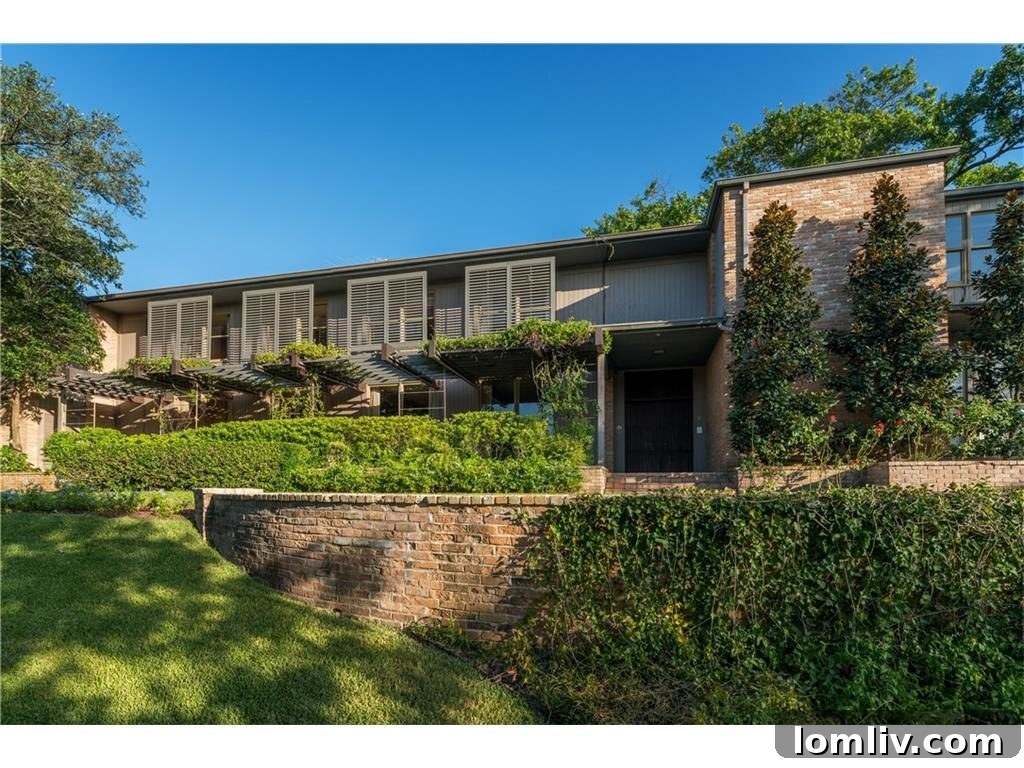
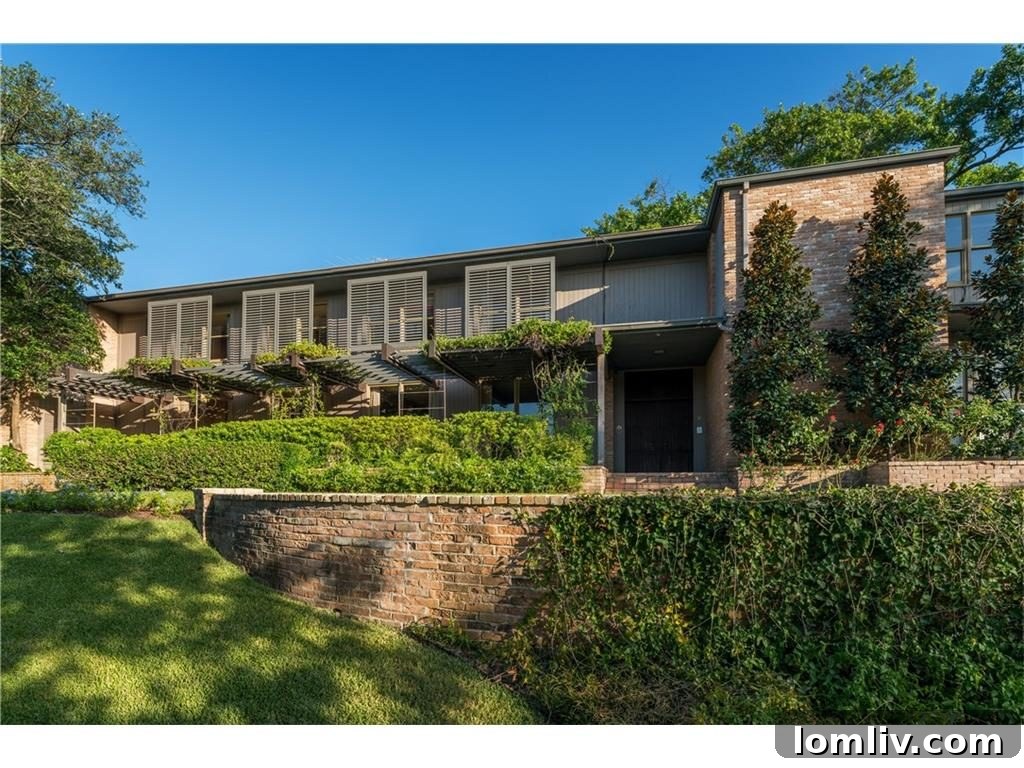
In a significant moment for Dallas real estate and architectural preservation, one of the city’s most iconic residences, 3756 Armstrong Avenue, has found new owners. This sprawling Highland Park estate, celebrated as the largest residential creation by the legendary O’Neil Ford in Dallas, recently concluded a highly anticipated auction. The meticulously orchestrated event by Heritage Auctions culminated in a successful sale to a discerning couple for an impressive $4.95 million, including the buyer’s premium. This transaction marks not just a change of ownership for a magnificent property but also underscores the enduring allure of historically significant homes in the heart of Texas.
The sale generated considerable buzz within the luxury real estate community, drawing a vibrant cohort of potential buyers eager to acquire a piece of Dallas history. With approximately twelve bidders actively participating, the auction floor was charged with anticipation. Bidding commenced at a robust $3 million, a testament to the property’s inherent value and architectural pedigree. The swift progression of bids reflected keen interest, ultimately leading to the gavel striking at $4.95 million. The successful purchasers were skillfully represented by Allie Beth Allman, a prominent name in Dallas’s high-end real estate market, further solidifying the prestige associated with this unique offering.
A Legacy Etched in Stone: The Vision of O’Neil Ford
O’Neil Ford stands as an undisputed titan of 20th-century American architecture, particularly revered for his profound influence on what became known as Texas Regionalism. His designs masterfully blended modernist principles with a deep respect for local climate, materials, and cultural context. Ford believed in creating buildings that were not merely structures but extensions of their environment, embodying a sense of place and belonging. His philosophy prioritized functionality, natural light, ventilation, and the use of indigenous materials such as limestone, brick, and cypress, resulting in homes and public buildings that felt both contemporary and timeless.
Across Texas, Ford’s architectural fingerprints are visible in numerous distinguished projects, from the academic grandeur of Trinity University in San Antonio to the serene beauty of the Little Chapel in the Woods at Texas Woman’s University. In Dallas, his contributions are particularly significant, shaping the city’s aesthetic and architectural identity. 3756 Armstrong Avenue represents a pinnacle of his residential work, a grand embodiment of his innovative vision on a monumental scale. It showcases his commitment to crafting spaces that are not only visually striking but also supremely livable and deeply connected to their surroundings. This house is more than just a dwelling; it is a tangible piece of O’Neil Ford’s architectural legacy, a testament to his enduring genius and his ability to define a regional style with universal appeal.
3756 Armstrong Avenue: A Masterpiece of Texas Regionalism
Custom-built in 1954 for the young and prominent Dallas couple Jack and Nancy Penson, 3756 Armstrong Avenue was conceived as a dream home, a place where their family could thrive amidst unparalleled architectural beauty. At nearly 9,800 square feet, it stands as O’Neil Ford’s most expansive residential undertaking in Dallas, a true statement piece of mid-century design. The house is an exemplary manifestation of Texas Regionalism, characterized by its thoughtful integration with the landscape, emphasis on local materials, and a design philosophy that prioritizes comfort and elegance without ostentation.
The exterior of the home, with its distinctive lines and carefully chosen textures, speaks volumes about Ford’s architectural prowess. Large windows and strategically placed openings flood the interiors with natural light, blurring the lines between indoor and outdoor spaces, a hallmark of modernist design. The use of materials indigenous to the region grounds the house firmly in its Texan setting. Inside, the expansive layout flows seamlessly, designed for both grand entertaining and intimate family life. Remarkably, the original design integrity of this sprawling estate has been largely preserved over the decades. While there have been minor, respectful modifications—including a sensitive second-story addition, an expansion of the master bathroom to meet contemporary needs, and the enclosure of a rear porch for added functionality—the core essence and architectural spirit of Ford’s original vision remain powerfully intact. These thoughtful updates have allowed the home to evolve with changing lifestyles while honoring its historical significance, a rare balance in properties of this age and magnitude.
A Home Full of Memories: The Penson Family Story
Beyond its architectural grandeur, 3756 Armstrong Avenue holds a rich tapestry of family memories, making its recent sale particularly poignant. The Penson family poured their lives into this home, creating a vibrant sanctuary that witnessed generations of joy, celebration, and everyday life. Read Penson Gendler, one of the Penson daughters and now a neighbor, shared poignant recollections of her childhood within these hallowed walls. Moving in at the tender age of two, her earliest memories are intertwined with the spacious rooms and expansive grounds, though the full architectural significance of her home only became apparent to her much later in life.
Read recounts a childhood surrounded by friends who also lived in large, contemporary homes, some even grander than her own. Yet, for her parents, Jack and Nancy Penson, 3756 Armstrong was unequivocally their dream house. “They never talked about moving,” Read remembers, conveying the depth of their attachment. “Both said they would go out of that house feet first.” This sentiment perfectly encapsulates the profound emotional bond the family had with their residence. The Penson home was a hub of activity, frequently hosting a myriad of social events, from elegant deb parties and lively teen gatherings to joyous birthday celebrations and impactful charitable functions. It was a place where community thrived and connections were forged.
Even the subsequent generations, the Penson grandchildren, harbor cherished memories of visits to “Nan and Granddaddy’s house.” Holidays were particularly special, often centered around spirited swimming sessions in the iconic pool and delicious barbecues enjoyed in the expansive outdoor spaces. These were moments of pure, unadulterated family time and fun, etching an indelible mark on their hearts. The question of whether the three Penson daughters will miss their ancestral home deeply resonates. Read, who now resides in a beautiful home of her own, offers a profound and philosophical perspective on the transition: “Whatever we do with it now will be in our own hearts.” This statement speaks to the idea that the true essence of a home, its emotional resonance and legacy, transcends its physical structure, residing forever in the memories and affections of those who lived there.
The High-Stakes Auction and Its Impact on Dallas Luxury Real Estate
The auction of 3756 Armstrong Avenue by Heritage Auctions was not merely a transaction; it was a carefully choreographed event that captivated the attention of Dallas’s elite real estate market. Heritage Auctions, renowned for its expertise in selling unique and high-value properties, demonstrated its mastery in showcasing this architectural gem to a global audience. The “very well-orchestrated” nature of the auction ensured transparency and excitement, drawing a diverse pool of serious bidders, each recognizing the unparalleled opportunity to own a piece of O’Neil Ford’s legacy.
The bidding process itself unfolded with a compelling intensity, reflecting the property’s rarity and desirability. Starting at a confident $3 million, the price climbed steadily, indicating strong competitive interest. The final sale price of $4.95 million, inclusive of the buyer’s premium, significantly surpassed the initial bid, underscoring the robust demand for architecturally significant homes in prime locations like Highland Park. This successful acquisition by a discerning couple, expertly facilitated by Allie Beth Allman, sends a clear signal about the enduring strength and resilience of the Dallas luxury real estate market. It highlights a growing appreciation among affluent buyers for properties that offer not just expansive living spaces but also a rich history, unique design, and a connection to celebrated architectural heritage. Such high-profile sales often serve as benchmarks, influencing valuations and market sentiment for other prestigious properties in the region.
Preservation in Peril: The Future of an Architectural Icon
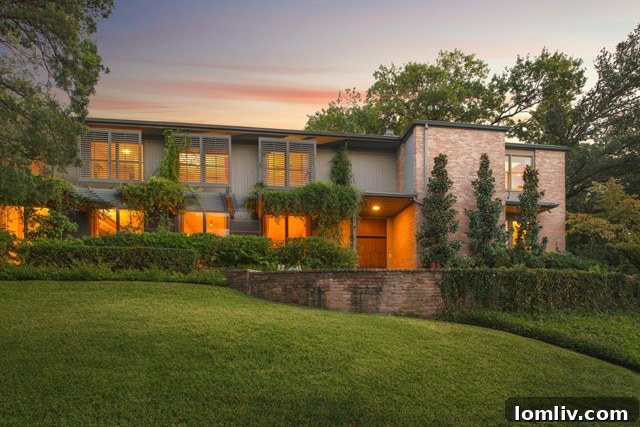
The sale of 3756 Armstrong Avenue also brings to the forefront critical questions about architectural preservation in rapidly developing urban centers like Dallas. Despite its undeniable historical and artistic value, the Penson House has been tragically identified by Preservation Dallas as one of the major Dallas buildings facing the danger of destruction. This designation highlights a perennial challenge: balancing the desire for modern development with the imperative to safeguard irreplaceable architectural heritage. Historic homes, especially those on valuable land in desirable neighborhoods such as Highland Park, often become targets for demolition to make way for larger, newer constructions that maximize lot value.
The home, described as “solidly built,” certainly possesses the structural integrity for extensive remodeling or sensitive restoration. However, the fate of such properties often rests squarely on the vision and commitment of their new owners. The prospect of demolition, while unthinkable to many who cherish its legacy, is a very real concern for properties lacking protective designations or easements. Read Penson Gendler, reflecting on this sobering possibility, shared a deeply moving perspective with her sister. Her words offer a profound philosophical stance on the house’s identity and legacy, regardless of its physical future.
“Yes,” says Read. “I told my sister, in a way, this is our house and always will be the way our parents built it, and how our family lived there. If someone else tears it down, now, then we will have been the only ones — no one else gets to live there.”
This powerful statement suggests that for the Penson family, the true essence of 3756 Armstrong Avenue is not merely its physical structure but the indelible imprint of their lives within it. If the house were to be demolished, it would mean that no other family would experience the unique joy and connection that they did within those Ford-designed walls. It’s a poignant articulation of loss, but also of the unique permanence of memory and family history.
The Enduring Appeal of Historic Dallas Homes and Architectural Preservation
The narrative surrounding 3756 Armstrong Avenue is a microcosm of a larger, ongoing dialogue in Dallas and other historic cities: the delicate balance between progress and preservation. Properties like this O’Neil Ford masterpiece are more than just luxury residences; they are irreplaceable components of the city’s cultural and architectural fabric. They tell stories of past eras, reflect innovative design philosophies, and contribute significantly to the unique character and charm of neighborhoods like Highland Park.
The successful sale of such a significant property at auction reinforces the growing market for historic luxury homes. Discerning buyers increasingly seek out residences that offer not only prestige and comfort but also a tangible connection to history and a distinct architectural identity. However, the threat of demolition, as highlighted by Preservation Dallas, underscores the critical need for continued advocacy and proactive measures to protect these treasures. Whether through historic district designations, conservation easements, or simply through the informed choices of new owners, safeguarding these architectural legacies ensures that future generations can appreciate the rich tapestry of Dallas’s built environment.
Conclusion: A New Chapter for an Architectural Landmark
The auction of O’Neil Ford’s monumental 3756 Armstrong Avenue heralds a new chapter for one of Dallas’s most significant architectural achievements. Its sale for $4.95 million not only marks a major transaction in the Highland Park luxury real estate market but also reignites conversations about the value of design, history, and family legacy. As the keys are handed over to its new stewards, the hope remains that this masterpiece of Texas Regionalism will continue to stand as a proud testament to O’Neil Ford’s genius and the enduring spirit of the Penson family who called it home for so many decades. Its future, whether through sensitive restoration or bold reimagining, will undoubtedly be watched closely by architects, historians, and the community alike, symbolizing the ongoing evolution of Dallas’s rich architectural landscape.