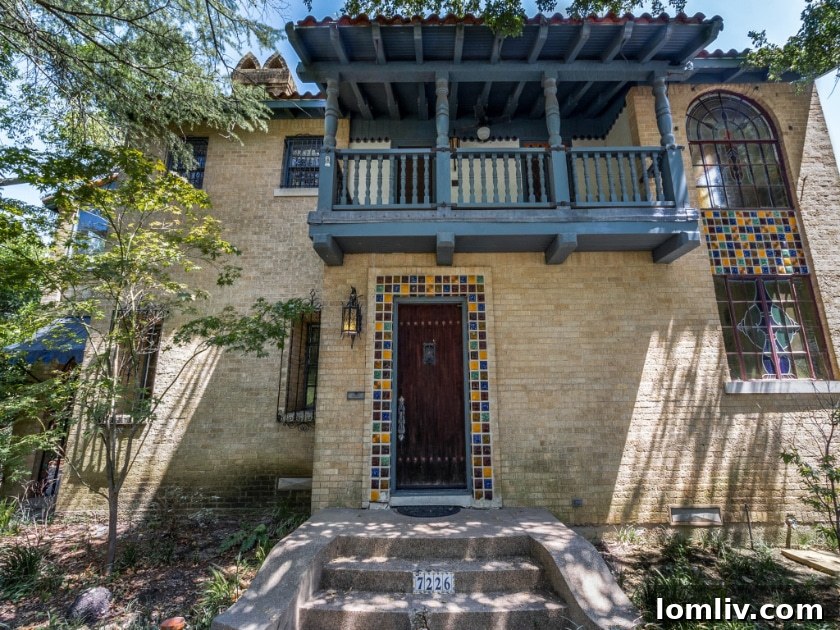
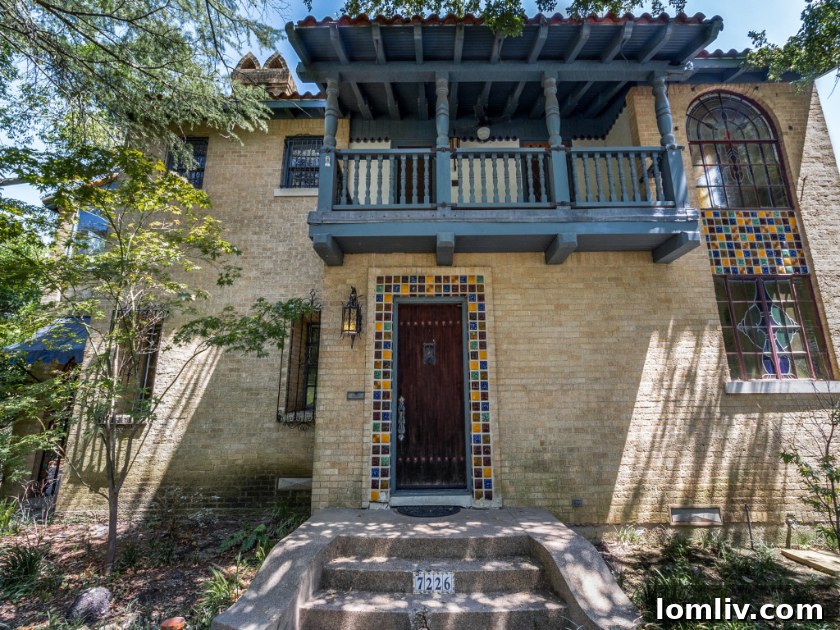
For those familiar with the legendary architect Clifford Hutsell, his homes are recognized as captivating architectural masterpieces, each infused with a delightful sense of whimsy and intricate detail. If his name is new to you, prepare for a fascinating introduction to a visionary whose designs have left an indelible mark on Dallas’s most cherished neighborhoods.
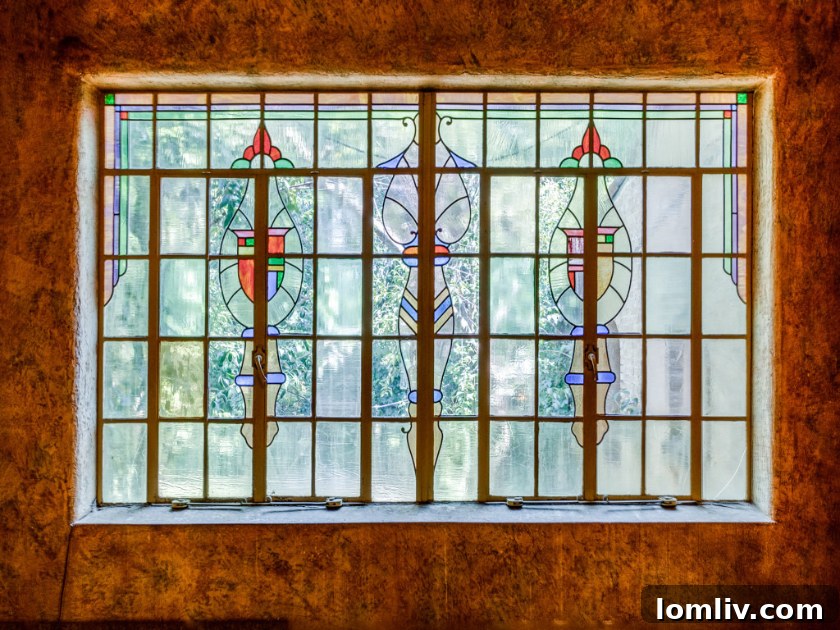
Clifford Hutsell’s distinctive style was born from inspiration he found during a transformative 1929 visit to California. There, he was particularly captivated by the unique residence of cowboy film star Tom Mix, a property that embodied the romanticism and flair of Spanish Colonial Revival architecture. Upon his return to Dallas, Hutsell embarked on an exciting new architectural journey, dedicating himself to the Spanish Eclectic style, enriched with his signature whimsical embellishments. A Hutsell home is unmistakable: often characterized by luminous stained glass, vibrant multicolored tile roofs, exquisitely elaborate decorative ironwork, strikingly distinctive chimneys, and occasionally, charming outdoor curtains that soften their robust facades. Between 1926 and 1941, Hutsell designed and constructed approximately 50 such homes, predominantly nestled within the picturesque Lakewood neighborhood. To be the steward of one of these architectural gems is a rare privilege, and owners often cherish them for decades.
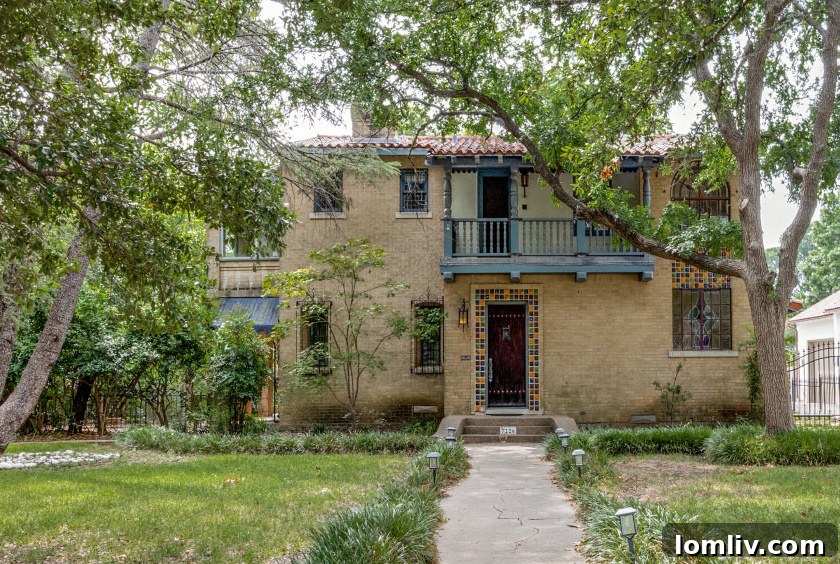
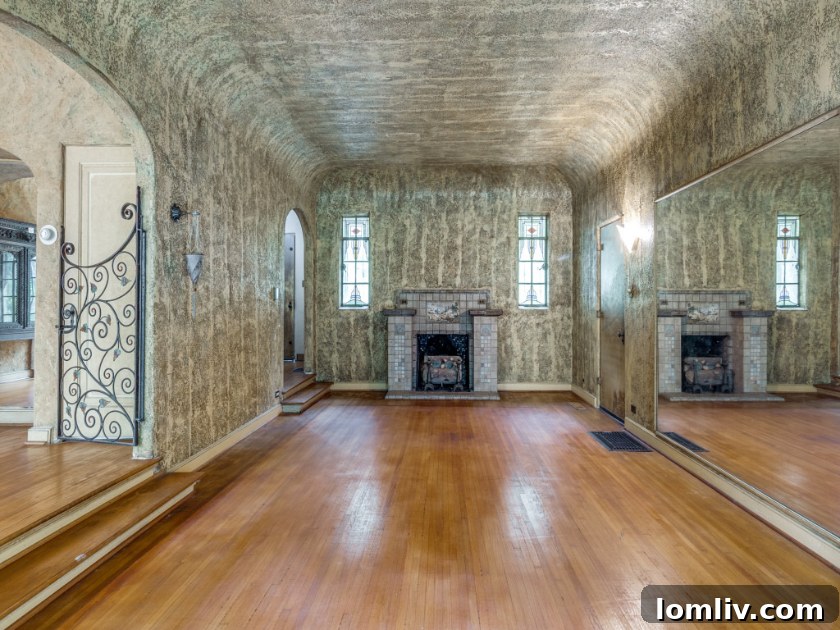
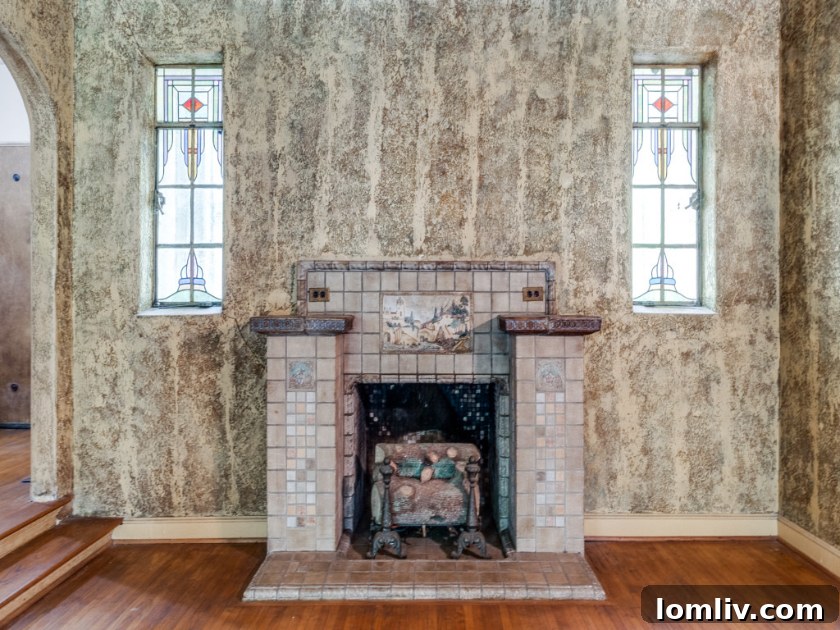
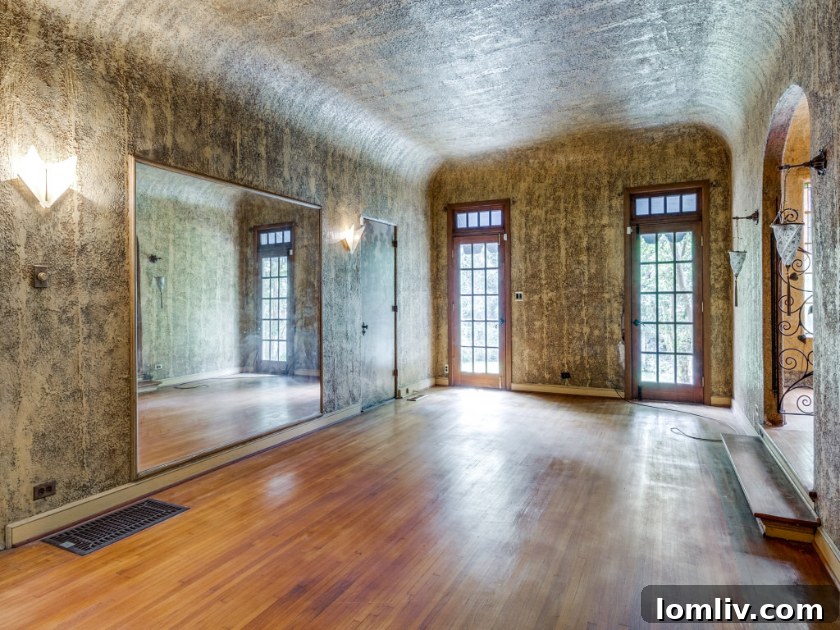
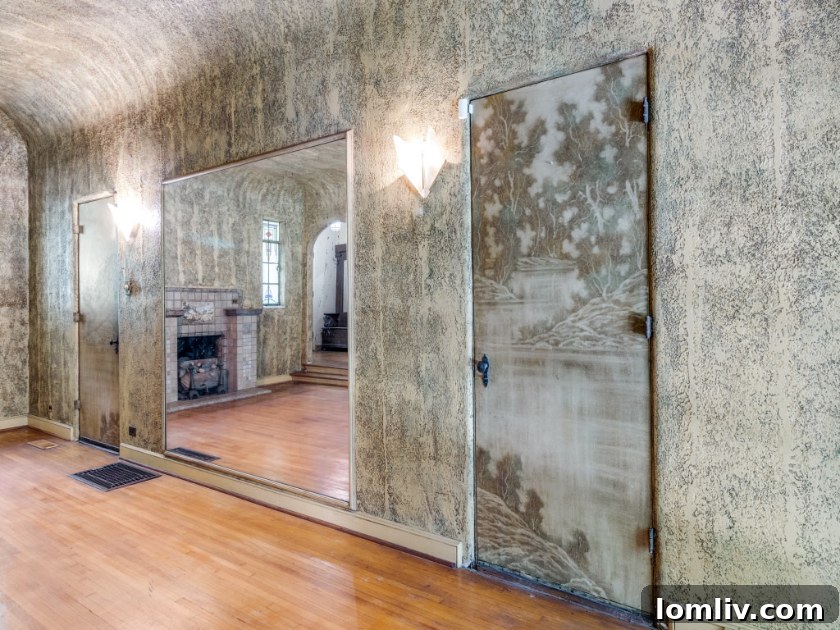
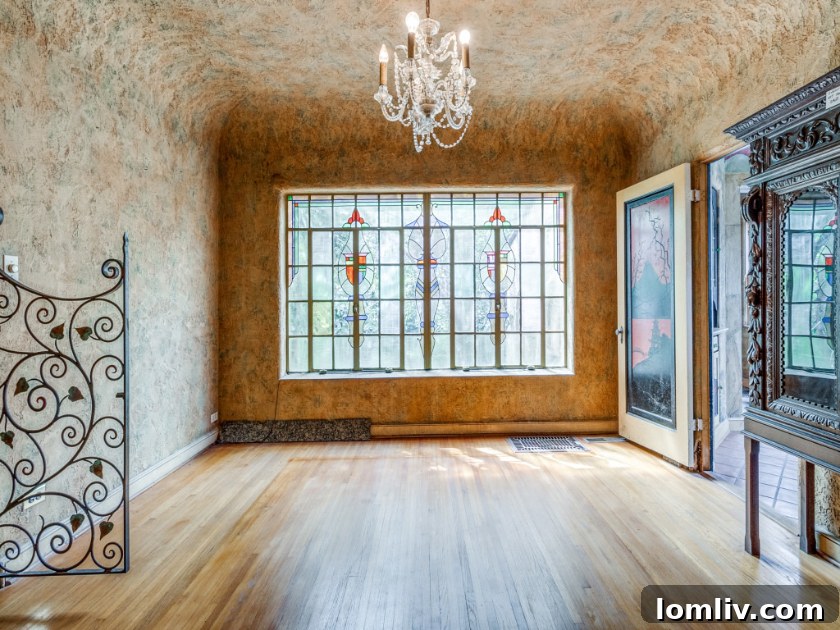
The current Spanish Eclectic residence, meticulously designed by Clifford Hutsell in 1932, is a testament to this enduring appeal. Its previous owners, a family who resided here for an remarkable 48 years, maintained the property with exceptional care, preserving its integrity and many of its original, rare features. This home stands out even among Hutsell’s already unique portfolio, showcasing elements rarely seen elsewhere. For instance, the living room boasts a truly distinctive floor-to-ceiling painted treatment, where a landscape of harmonious hues wraps the entire space, almost artfully concealing doors leading to the exterior and seamlessly extending onto the majestic fireplace. This immersive artistic environment transforms the room into a living canvas.
This house is an example of very sophisticated artistry that almost cannot be replicated now.
Carol Gantt
Carol Gantt, a celebrated designer and preservation construction consultant from Gantt Design, stands as one of the nation’s foremost authorities in her field. Her extensive experience includes working on numerous Hutsell homes, where she has masterfully crafted seamless additions and sensitive updates—projects that undoubtedly would have earned Hutsell’s esteemed seal of approval. Gantt’s expertise provides a crucial perspective on the value and rarity of this particular property.
“This is unequivocally the best-preserved Hutsell I’ve encountered in 35 years,” Gantt asserts. “To replicate the sheer volume and artistic merit of the ironwork alone would easily exceed $100,000 in today’s market. Furthermore, this house features the most exquisitely preserved elaborate painting I have ever seen in a Hutsell design. There is likely a substantial mural depicting trees ascending the staircase wall, a hidden masterpiece that awaits careful and skilled restoration.” Her words underscore the irreplaceable nature of the home’s original craftsmanship and its significant artistic value.
Gantt’s assessment is echoed by Brian Boyd, a former neighbor and fellow Hutsell homeowner, who is widely regarded as a local authority on the architect’s work. Having lived in multiple Hutsell residences over the years, Boyd possesses an intimate understanding of their unique character and construction. He has personally overseen the restoration of murals in his own homes and for his neighbors, making him an invaluable resource. Boyd consulted with the previous owners of this property regarding the restoration of the grand staircase mural, which, though long painted over, was known to exist. Regrettably, the project never commenced. However, the mere knowledge that a stunning floor-to-ceiling landscape mural lies beneath layers of paint, waiting to be meticulously recovered and brought back to life, sends a shiver of pure excitement through the spine of any dedicated Hutsell admirer. The prospect of revealing this hidden artistic treasure adds an extraordinary layer of intrigue and potential to the home.
The Endless Charm and Unrivaled Craftsmanship of Clifford Hutsell Designs
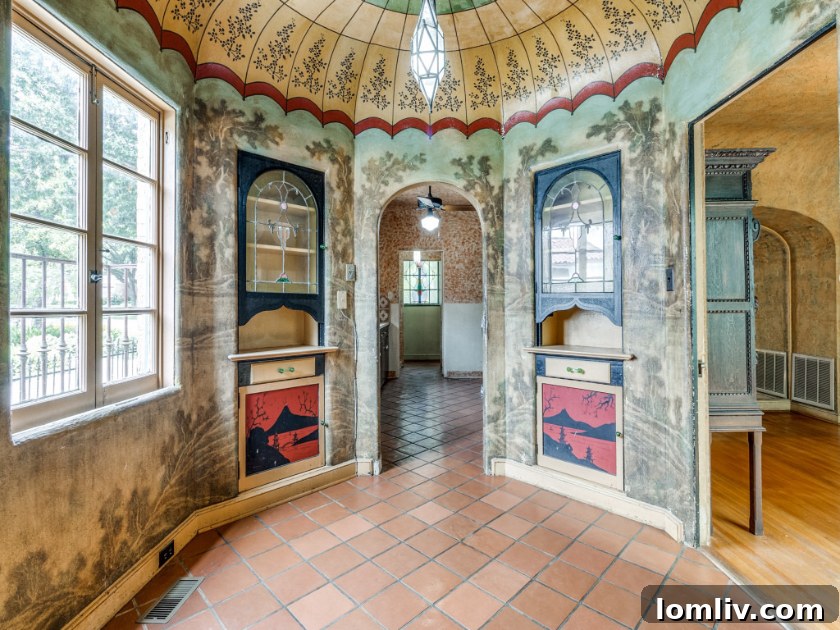
Beyond the grand murals and intricate ironwork, Clifford Hutsell’s unique vision extended to every corner of his homes, imbuing each space with distinct character. He particularly favored hexagonal breakfast rooms, often transforming them into whimsical retreats with painted tent ceilings and delicate Asian accents adorning the cabinetry. Hutsell found himself in an extraordinary position during the challenging era of the Great Depression. His clientele consisted of affluent individuals who could still afford bespoke architectural designs, a rare luxury at the time. This afforded him the opportunity to employ Dallas’s most exceptionally talented artisans and craftsmen. These skilled individuals, undoubtedly profoundly grateful for the work during such difficult economic times, were empowered to dedicate their utmost creativity and effort to Hutsell’s projects, resulting in an unparalleled level of detail and quality.
A prime example of this collaboration is the breathtaking ironwork, both exterior and, remarkably, interior. Potter Metal Art Studios, renowned for their masterful craftsmanship, fabricated Hutsell’s elaborate iron gates. Indeed, Hutsell delighted in installing ornate interior gates, often creating a graceful, yet distinct, separation between formal living and dining rooms. These interior gates were not merely functional but served as stunning works of art, adding an extra layer of elegance and grandeur to his residential designs.
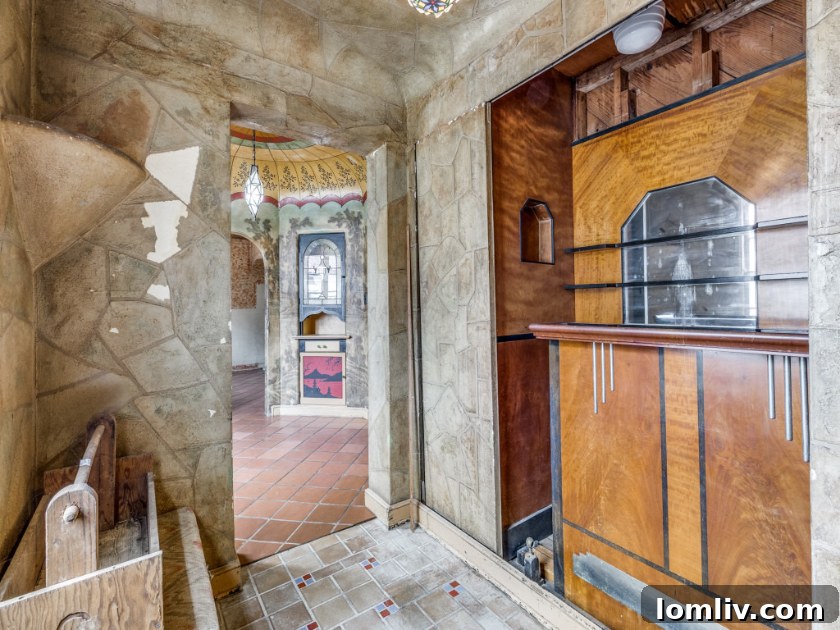
It’s important to recall the historical context of Hutsell’s most prolific period: not only was the Great Depression in full swing, but so was Prohibition. In such a restrictive era, hidden bars became an essential, almost clandestine, feature in many upscale homes. This particular Hutsell residence brilliantly incorporates one such secret space, complete with ingenious sliding walls that conceal its entrance and even a trap door in the floor. Adding to the mystique, an exterior staircase provides direct access to this hidden bar, cleverly punctuated by a small, round window—a subtle yet brilliant detail allowing occupants to discreetly check for approaching guests or, perhaps, uninvited visitors.
Charlotte Walters, Hutsell’s granddaughter, who herself resides in Lakewood, recently shared captivating anecdotes that shed light on the societal nuances of the Prohibition era. Her insights reveal a deeper cultural significance behind these architectural choices.
“Hidden bars were incredibly popular for several reasons,” Walters explained. “Beyond the obvious necessity due to Prohibition, there was a prevalent culture of strong religious observance, particularly among Baptists. Preachers would often drop by unannounced on Sundays, and hosts needed to be able to quickly and discreetly conceal any spirits.” This charming detail highlights Hutsell’s keen understanding of his clients’ lifestyles and the societal pressures of the time, integrating practical yet luxurious solutions into his designs.
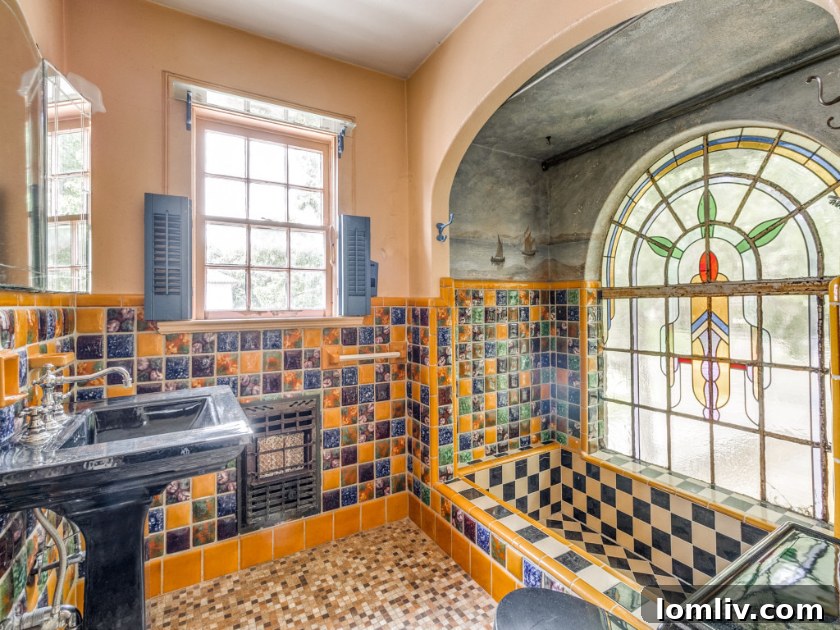
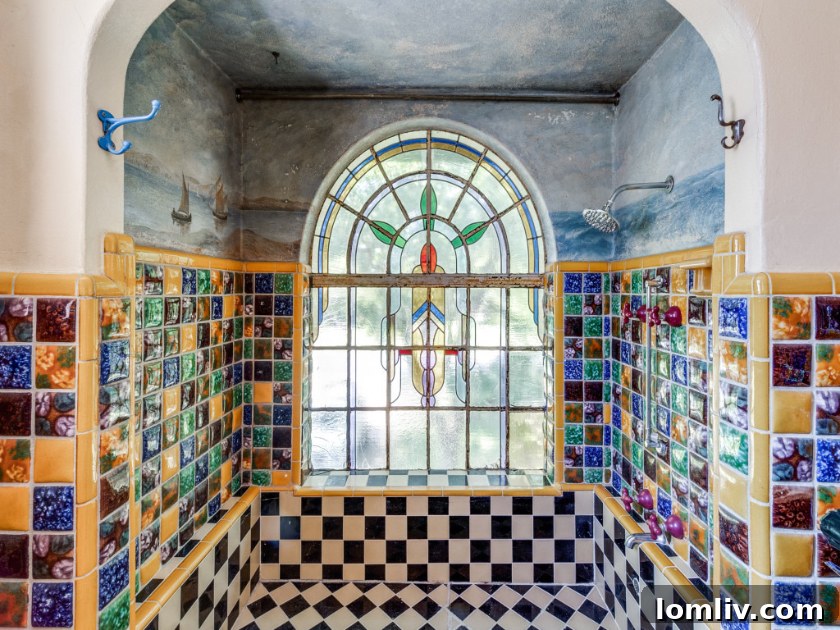
A Hutsell bathroom transcends mere utility; it is a true fantasy fulfilled, a private oasis of luxury and imaginative design. While the concept of a “spa tub” might seem contemporary, Clifford Hutsell was already pioneering this indulgent feature in the 1930s. Imagine the sheer delight of sinking into a luxurious bubble bath, enveloped by the soft glow of stained glass, surrounded by an eclectic array of vibrant, colorful pillow tiles, and gazing upon a serene painted scene of White Rock Lake. These bathrooms were not just functional spaces but sensory experiences, designed to transport and soothe, reflecting Hutsell’s commitment to combining comfort with unparalleled artistry.
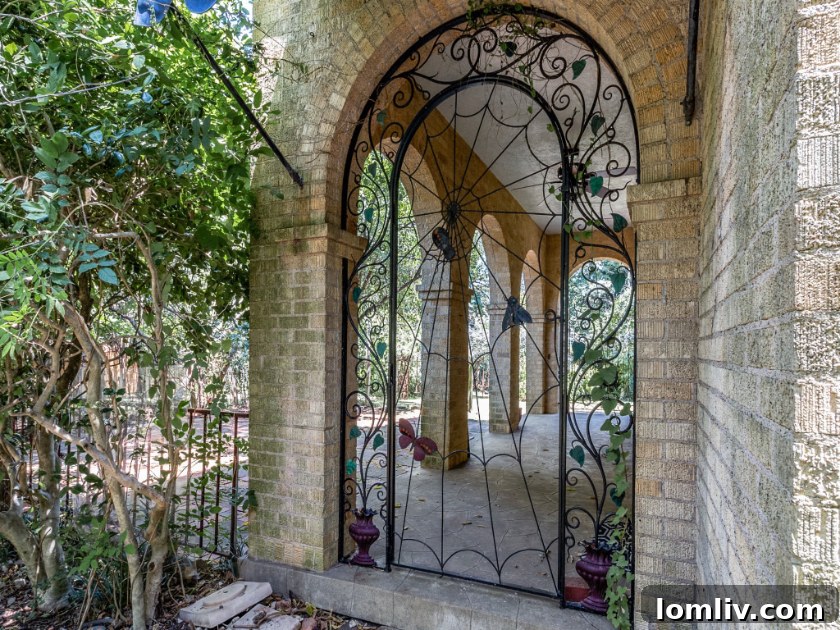
Among the multitude of delightful features, one of the most charming and talked-about elements of this Spanish Eclectic Hutsell is the bespoke gate leading to the covered patio. Designed as an enormous, intricate spider web, it is further adorned with meticulously crafted metal bugs and delicate butterflies, a whimsical touch that perfectly encapsulates Hutsell’s playful spirit.
Charlotte Walters recounts a fascinating origin story for this unique design: when her mother was just eight years old, Hutsell reportedly asked her to design a gate for a duplex. She responded with a spider motif, a design that reflected her apparent fondness for these creatures. This spider theme also famously appeared painted on a beam in Hutsell’s own home. Years later, when that house was acquired and meticulously restored by Brian Boyd, he thoughtfully ensured that a painted spider retained its place of honor on the newly restored beam, preserving this personal touch. Therefore, the presence of a distinct spider gate in this current Hutsell residence strongly supports the theory that it sprung from the creative and imaginative mind of his own daughter, adding a deeply personal and familial layer to its unique artistry.
A Gold Mine of a Historic Home: Preserving Lakewood’s Architectural Soul
Lakewood, renowned for its distinctive charm and architectural diversity, was meticulously developed by some of America’s most creative architects and skilled craftsmen. Among them, Clifford Hutsell’s homes stand as major contributors to the neighborhood’s unparalleled visual appeal and historic character. An ongoing and vital effort, initiated by dedicated local resident Summer Loveland, seeks to protect Lakewood’s invaluable historic homes. However, despite its profound significance and defining character within the Lakewood landscape, this incredible property is currently not situated within a formally protected conservation area. This situation underscores the urgent need for heightened awareness and preservation initiatives to safeguard such irreplaceable assets.
This home perfectly embodies the unique character that defines Lakewood, with its iconic multi-colored tile roof, original brickwork, exquisite stained glass, charming pillow tile surrounding the front door, and an abundance of magnificent mature trees. It possesses immense potential for sensitive restoration and offers ample space for thoughtful additions. A majority of neighbors who attended the Lakewood Conservation District expansion meetings expressed a strong preference for regulations that allow for a larger footprint for lovingly restored homes, as opposed to permitting entirely new, often incongruous, construction. This approach, we hope, will actively encourage homeowners to remodel and enhance these historic properties rather than resorting to demolition, thereby preserving the cherished charm and architectural integrity of our beloved neighborhood for generations to come.
Summer Loveland
Recognizing the shift in contemporary living preferences, I posed a crucial question to Brian Boyd: How does a Hutsell home truly live in today’s world? After all, modern homeowners are accustomed to expansive open-plan family rooms and bathrooms designed with capacities that could almost accommodate a small gathering. Boyd’s response offers a profound insight into the enduring allure of these historic residences.
“Hutsell homes possess an undeniable soul,” Boyd stated thoughtfully. “Living in one is a profoundly different experience than residing in a newly constructed house. There’s a palpable sense of history and memory woven into the very fabric of the home; you truly feel it. Updating these homes is not only very doable but can be done beautifully. The key is to engage a skilled architect who can thoughtfully extend the home, typically towards the back, while meticulously matching the existing tile and fireplace styles. Considering the substantial investment I observe in Lakewood real estate today, discerning buyers can certainly afford to undertake such sensitive and respectful renovations.”
It is unequivocally clear that a house like this Hutsell masterpiece, located at 7226 Lakewood Blvd, will never be built again. The prohibitive cost of sourcing and commissioning the multitude of highly specialized craftsmen required to even attempt a facsimile of this home today makes it an impossibility. One could erect a generic, large white box for a mere fraction of the expense. In essence, this home represents far more than just real estate; it is, in many profound ways, an irreplaceable goldmine of architectural heritage, artistic integrity, and historical significance.
David Bush of David Bush Realtors is honored to present this rare Spanish Eclectic masterpiece, meticulously designed by Clifford Hutsell, offered at $2.5 million. An exclusive Open House will be held on Sunday, August 13, from 1-5 p.m., providing a unique opportunity to experience this unparalleled property firsthand.