Guthrie, Oklahoma: A City Forged in a Day, Home to Enduring History
Imagine a vast expanse of untouched prairie, quiet save for the whisper of the wind, suddenly bursting into a cacophony of human ambition. This was the scene that unfolded in Guthrie, Oklahoma, a mere eleven years before the historic structure now known as the White Peacock Inn welcomed its first occupants. What began as a humble railroad stop transformed into a bustling city of over 10,000 residents in an astonishingly brief six hours on April 22, 1889. This extraordinary event, known as the Land Run, didn’t just populate a town; it created an instant metropolis, laying the foundation for Oklahoma’s unique and dynamic history.
The 1889 Land Run for the Unassigned Lands of Oklahoma Territory was an unprecedented spectacle. Thousands of eager settlers, gathered at the boundary lines, waited for the signal. When the bugle sounded, a frantic race ensued, with individuals on horseback, in wagons, and even on foot, clamoring to stake their claim to a piece of the promised land. Guthrie, strategically located along the Santa Fe Railroad, became an immediate magnet for these hopeful pioneers. Within hours, a landscape of tents and makeshift structures dotted the prairie, forming streets and neighborhoods where none had existed just moments before. This incredible boom propelled Guthrie into immediate prominence, leading to its swift designation as a territory capital and, later, the first state capital of Oklahoma in 1907. Though its tenure as state capital was brief, lasting only three years before voters chose Oklahoma City, Guthrie’s early political importance left an indelible mark on its architecture and character.
The Land Run of 1889: A Crucible of American Settlement
The story of Guthrie is inextricably linked to the audacious spirit of the American frontier and the federal government’s policy of opening up “unassigned” Indian lands for settlement. Before 1889, much of what is now Oklahoma was considered Indian Territory, reserved for various Native American tribes. However, growing pressure from land-hungry settlers and railroad companies led to the decision to open approximately 2 million acres in the heart of the territory. The Land Run was devised as a seemingly equitable method for distributing this land, though it was fraught with challenges and controversy, including the notorious “Sooners” who illegally entered the territory before the official start. Nevertheless, the image of thousands simultaneously racing to claim land remains one of the most iconic moments in American westward expansion.
Guthrie’s transformation was not merely about population growth; it was about the instantaneous creation of civil society. People arrived not just with land claims but with entrepreneurial zeal. Blacksmiths, bankers, lawyers, merchants, and journalists set up shop overnight, literally. Tents served as temporary courthouses, saloons, and newspaper offices. The speed with which basic infrastructure—from governing bodies to essential services—was established out of sheer necessity is a testament to the resilience and ingenuity of these early Oklahomans. This rapid development set Guthrie apart, endowing it with a unique historical narrative that continues to fascinate historians and visitors alike.
Guthrie’s Golden Era: From Territorial to State Capital
The strategic importance of Guthrie, coupled with its unprecedented growth, quickly made it the administrative heart of the nascent Oklahoma Territory. Its designation as the territorial capital brought with it a wave of federal investment and a demand for more permanent, substantial buildings. Architects flocked to the city, designing magnificent Victorian-era structures that housed government offices, banks, and grand homes for the territory’s burgeoning elite. This period saw the construction of many of the ornate brick and stone buildings that define Guthrie’s architectural landscape today, reflecting a sense of permanence and civic pride that belied the city’s humble origins.
When Oklahoma achieved statehood in 1907, Guthrie naturally became its first state capital. This was a moment of immense celebration and continued to fuel the city’s growth and ambition. For three pivotal years, Guthrie served as the political nerve center of the new state, hosting legislative sessions and witnessing the birth of Oklahoma’s foundational laws. The city projected an image of sophistication and progress, a fitting capital for a state that had emerged so dramatically. However, the political landscape of a rapidly developing state proved dynamic. Powerful interests, particularly those in the oil and agricultural sectors, began to lobby for a more centrally located capital, leading to a hotly contested statewide vote in 1910 that ultimately moved the capital to Oklahoma City. This decision, while a blow to Guthrie’s political supremacy, paradoxically contributed to its preservation, freezing much of its magnificent architecture in time.
The White Peacock Inn: A Testament to 1900s Grandeur
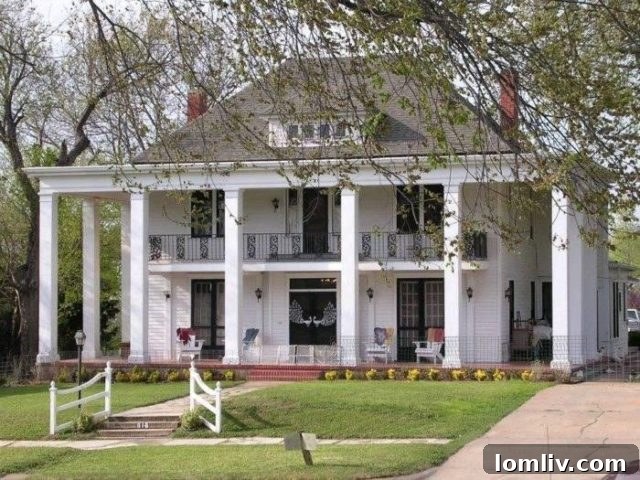
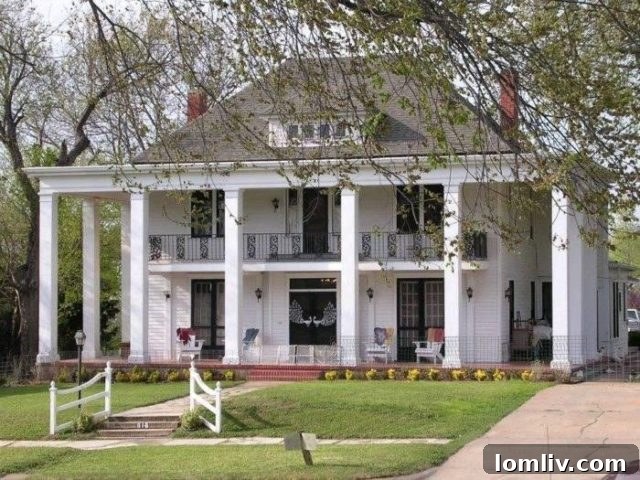
Amidst this whirlwind of history, the home that would eventually become the charming White Peacock Inn was built in 1900. This timing is significant; it places the construction of the building squarely within Guthrie’s prime period of prosperity, when the city was firmly established as the territorial capital and on the cusp of becoming the state capital. Such a grand residence would have been commissioned by a prominent citizen, perhaps a successful merchant, a politician, or a land speculator who had thrived in the post-Land Run boom. The architecture of the Inn likely reflects the prevailing styles of the era, such as Victorian or Queen Anne, characterized by intricate detailing, turrets, spacious interiors, and a sense of opulence designed to impress.
The existence of a home of this caliber in 1900 speaks volumes about the aspirations and achievements of Guthrie’s early residents. It wasn’t just about survival anymore; it was about building a lasting legacy, establishing roots, and demonstrating the wealth and sophistication that had blossomed from the prairie. The White Peacock Inn, therefore, stands as a tangible link to this fascinating period, offering a direct glimpse into the lives of those who shaped early Oklahoma. Its transformation into an inn in more recent times ensures that its historical integrity is preserved while allowing new generations to experience the elegance and charm of a bygone era. Guests today can walk through rooms that once hosted the city’s elite, connect with the stories of the past, and appreciate the craftsmanship of a time when Guthrie was truly at the center of the world for many.
Guthrie Today: A National Historic Landmark District
While the capital eventually moved, Guthrie’s legacy as a historical jewel only grew stronger. The city today boasts the largest contiguous urban National Historic Landmark District in Oklahoma, encompassing a stunning array of late 19th and early 20th-century architecture. Unlike many cities that modernized by tearing down their old buildings, Guthrie’s growth slowed after the capital left, preserving its unique streetscapes and grand edifices. This architectural heritage, combined with the compelling narrative of its founding, makes Guthrie a captivating destination for history buffs, architecture enthusiasts, and anyone interested in the American West.
Visiting Guthrie is like stepping back in time. The city has carefully cultivated its historical identity, offering carriage rides, antique shops, and museums that tell the story of its remarkable past. From the bustling energy of the 1889 Land Run to its brief but impactful role as the state capital, Guthrie embodies the pioneering spirit and the dynamic evolution of Oklahoma. The White Peacock Inn serves as a perfect base for exploring this vibrant history, providing a comfortable and historically rich accommodation experience. It stands as a proud sentinel, silently witnessing the ebb and flow of a city that truly emerged from nothing to become a cornerstone of American history.
For those eager to delve deeper into the captivating history of this remarkable establishment and its storied surroundings, we invite you to explore further details:
We tell you all about it over on SecondShelters.com.