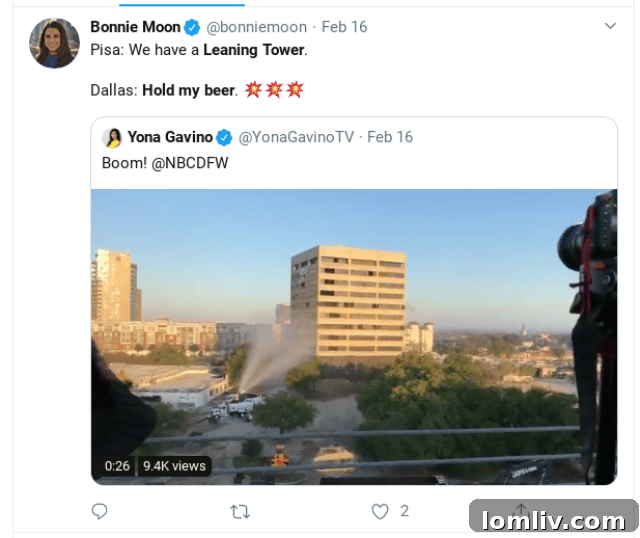
In an event that swiftly transcended a mere urban development project, 2828 N. Haskell Avenue in Dallas, Texas, transformed from an unassuming office building into a global sensation. What was intended to be a textbook implosion on a Saturday morning, paving the way for a transformative billion-dollar mixed-use development known as The Central, instead birthed an unexpected architectural marvel: The Leaning Tower of Dallas. By Sunday, the internet was abuzz, and the city found itself with an accidental, yet undeniably captivating, landmark.
The saga began when the carefully planned demolition of the former Affiliated Computer Services (ACS) building on February 16, 2020, went spectacularly awry. Demolition experts had set charges to bring down the 11-story structure, clearing space for the ambitious 27-acre “The Central” project, envisioned to integrate residential, retail, office, and green spaces into a vibrant urban hub. However, as the dust settled after the controlled blast, one crucial element of the building defied gravity: its central elevator core. Standing defiantly at a noticeable tilt, the reinforced concrete shaft refused to succumb, creating a striking and unexpected silhouette against the Dallas skyline.
The immediate aftermath was a whirlwind of confusion, amusement, and rapid-fire commentary. Local news reporter David Rancken of KRLD radio, among the first to observe the peculiar aftermath, quickly coined the name “The Leaning Tower of Dallas,” drawing an instant, witty parallel to Italy’s iconic Leaning Tower of Pisa. The nickname stuck, propelling the partially demolished structure into instant internet stardom. This wasn’t just a local news story; it was a phenomenon, a testament to the unexpected charm of urban quirks and the power of social media to amplify them.
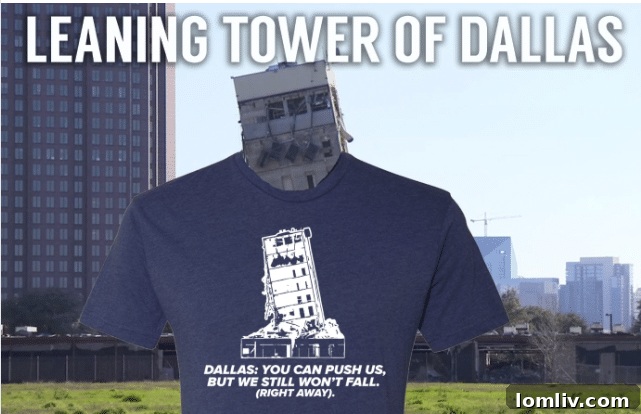
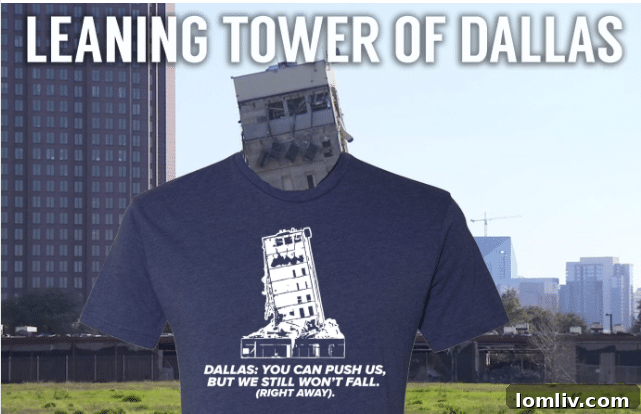
Before long, the Leaning Tower of Dallas transcended its status as a mere demolition anomaly. It became a muse for local artists, inspiring countless memes, digital illustrations, and even tangible art pieces celebrating its improbable resilience. Its fame also spread to popular review platforms, earning highly-rated and reviewed status on Yelp, where users playfully critiqued its “leaning services” and “persistent charm.” Not content with artistic and online accolades, the tower even spawned a unique line of merchandise, most notably a t-shirt, solidifying its place in Dallas’s cultural narrative.
For those eager to witness this peculiar attraction firsthand before its inevitable final collapse, understanding its location was key. From a bird’s-eye view on Google Maps, the half-demolished structure was prominently situated on the left of the image, flanked by the distinctive CityPlace tower in the middle, and the headquarters of The Richards Group visible in the distant right. This contextual framing helped curious onlookers orient themselves within the bustling urban landscape.
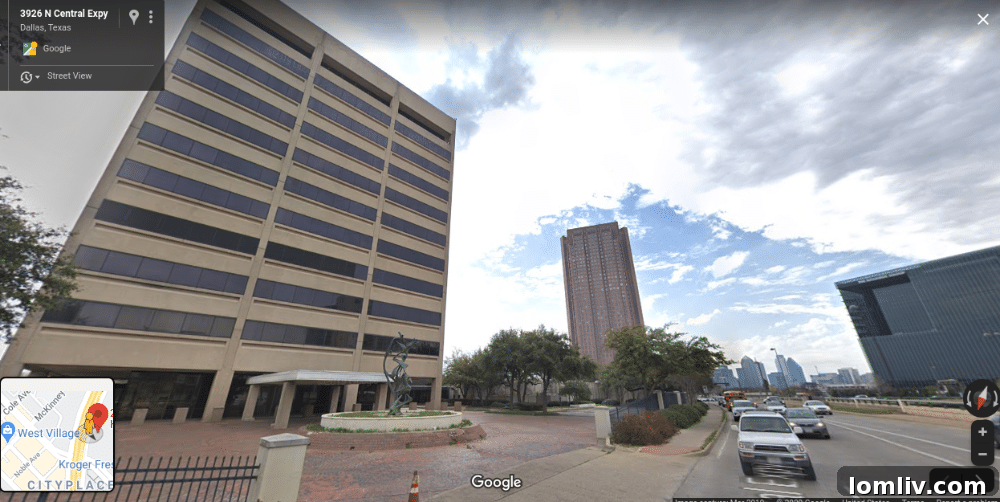
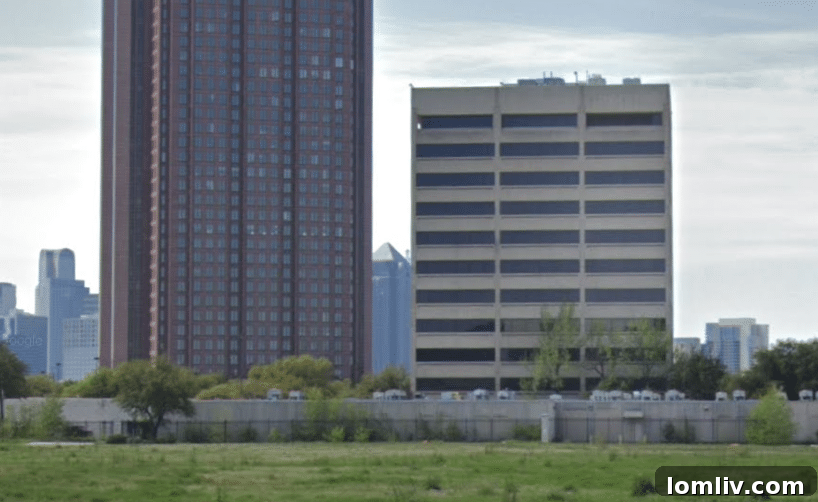
To provide an even clearer perspective and align with widely circulated media, we painstakingly navigated Google Street View, or “Google walked,” to match the precise vantage point captured in the striking photograph by Juan Figueroa for The Dallas Morning News. This image, which even made it into Wednesday’s edition of the esteemed New York Times, below, perfectly encapsulated the surreal scene, bringing national attention to Dallas’s unintended new icon.
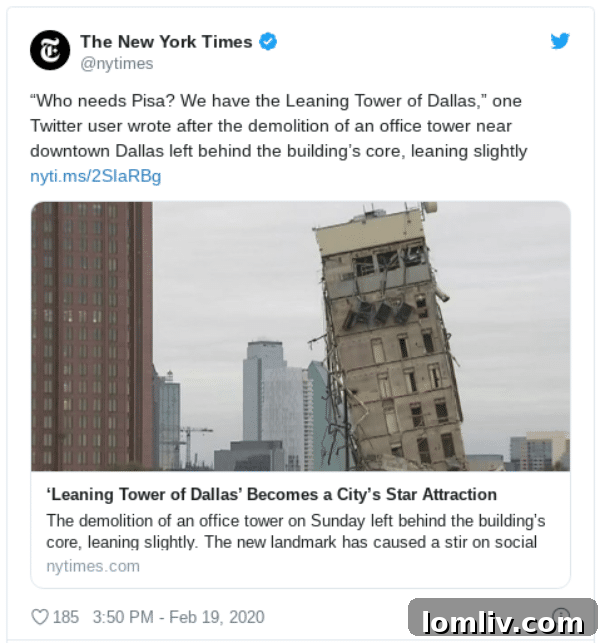

The initial local buzz quickly escalated into a national conversation, prompting a delightful wave of light-hearted ribbing directed at “America’s favorite city.” Social media platforms exploded with humorous takes, comparing the tower to everything from a stubborn child refusing to go to bed to a symbol of Dallas’s unique, often over-the-top, character. This unexpected moment of architectural defiance offered a fresh angle for commentators to engage with the city’s identity, often with a good-natured smirk.


Indeed, the situation escalated quickly in terms of public fascination. WFAA reporter Chris Sadeghi was on site bright and early that Sunday morning, capturing the initial moments of the implosion and the subsequent surprise. Like many onlookers and experts, he fully expected the entire structure to collapse shortly after the initial blast. His live reports and social media updates became integral to documenting the evolving narrative, reflecting the collective disbelief and growing amusement.
After the implosion blast, there’s still work to do! The center stack did not come down right away. So now Dallas has its own leaning tower. Which I presume could fall any second! 😬 #IAmUp pic.twitter.com/pgqdyJAN7P
— Chris Sadeghi (@chrissadeghi) February 16, 2020
Amidst the flurry of social media posts, the sharp-eyed Wylie H. Dallas spotted something particularly intriguing within the implosion video itself, drawing attention to a moment that foreshadowed the tower’s stubborn refusal to fall completely.

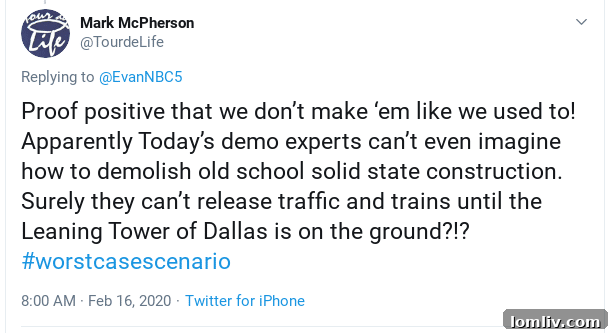
Once the dust settled, Dallas was left with an inexplicably resilient elevator shaft that simply wouldn’t yield. The central question quickly became: How does something like this happen? Theories abounded, ranging from the quality of older construction methods to the complexities of modern demolition techniques. Oak Cliff resident Mark McPherson mused about “old school construction versus fast new school,” suggesting that the older building’s inherent robustness might have played a role, a common sentiment reflecting a certain nostalgia for past building standards.
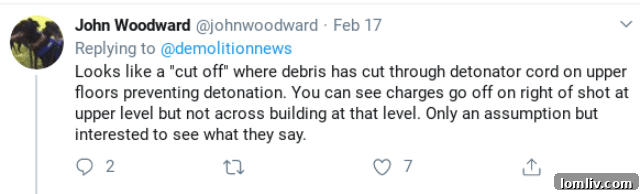
Experts and enthusiasts on platforms like Demolition News offered their insights. Many pointed to the inherently strong design of elevator shafts, which are typically constructed with heavily reinforced concrete to withstand significant vertical and lateral forces, making them one of the most structurally sound components of any high-rise building. The intricate science behind controlled demolitions also came under scrutiny, highlighting the precision required to bring down a structure completely and the numerous factors that can lead to an unexpected outcome, such as uneven charge placement or unforeseen structural resistances.

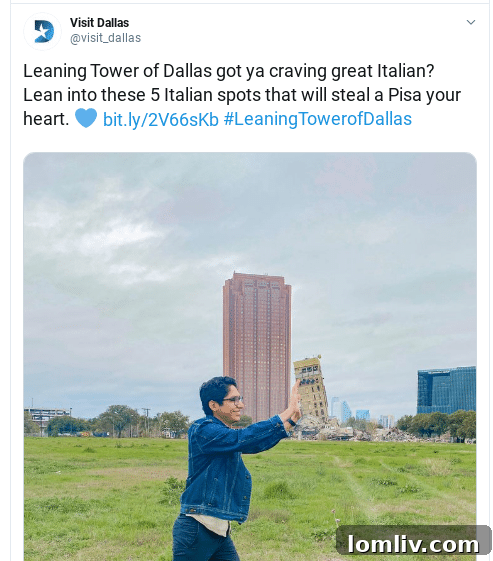
The Leaning Tower of Dallas quickly became one of the most Instagramable spots in town, drawing crowds of curious onlookers eager to snap a selfie with the improbable landmark. Savvy marketers, particularly from organizations like Visit Dallas, recognized the immense, albeit accidental, tourism value of the city’s newest attraction. They capitalized on the viral fame, showcasing Dallas’s vibrant, unexpected, and often humorous side.
Dallas-based company Bullzerk, known for its witty and irreverent local merchandise, was quick to immortalize the tower. They began selling shirts featuring the new tourist attraction, with the Leaning Tower of Dallas t-shirt becoming an instant bestseller on their site for $23. The rapid commercial response underscored the immediate cultural resonance of the event, transforming a demolition mishap into a symbol of local pride and resilience, or at least stubbornness.

Beyond the humor and commercial ventures, the leaning tower also tapped into deeper societal sentiments. A tongue-in-cheek Change.org petition quickly emerged, echoing a simmering frustration among Dallas residents regarding high-priced housing and the perceived actions of “shotty developers.” The petition, which garnered 834 signatures and continued to grow rapidly within a single day, humorously called for the preservation of the tower.
Unfortunately, the demolition will be completed soon to make way for even more hideous shops and condos for the bourgeois residents of Uptown Dallas. That’s why we need to work together now to save this landmark from destruction.
Justin Mitchell
The petition’s call to transform the leaning tower into a “UNESCO World Heritage Site” was a brilliant satirical stroke. For clarity, a World Heritage Site is a landmark or area designated by the United Nations Educational, Scientific and Cultural Organization (UNESCO) for possessing profound cultural, historical, scientific, or other forms of universal significance. Applying this prestigious label to a failed demolition site was a poignant commentary on rapid urban development, gentrification, and the search for authentic identity amidst constant change in cities like Dallas.
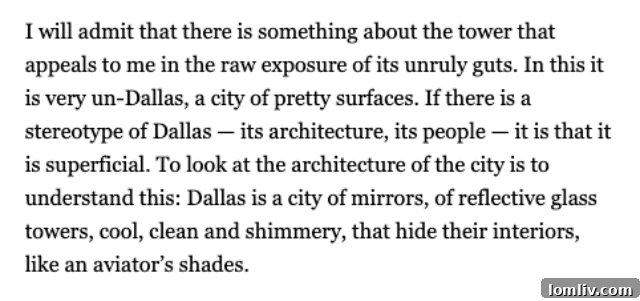
Dallas Morning News architecture critic Mark Lamster eloquently captured the essence of the moment on Twitter, declaring that what remained of the old ACS building was simply “Dallas being Dallas.” His observation resonated deeply, acknowledging the city’s penchant for the grand, the unexpected, and occasionally, the spectacularly ironic. He even crafted “sweet sweet poetry” about the leaning tower, elevating the demolition mishap to a form of modern urban folklore.
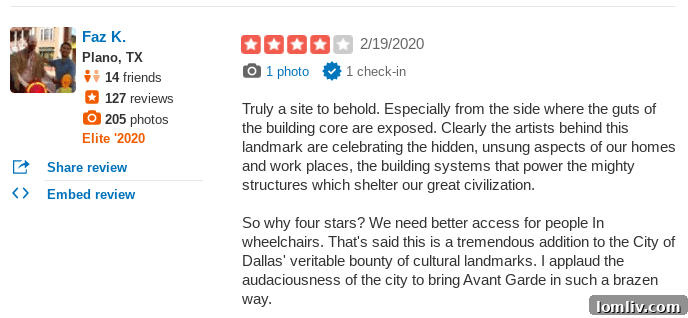
The online community continued to offer profound, and often hilarious, interpretations. We were particularly impressed with the budding art critic, Faz K., who shared his astute observations on Yelp: “Clearly the artists behind this landmark are celebrating the hidden, unsung aspects of our homes and work places, the building systems that power the mighty structures which shelter our great civilization.” This commentary transformed the leaning elevator shaft from a mere anomaly into a symbolic representation of the often-overlooked structural integrity and hidden strengths within our built environment.
There was, undoubtedly, an abundance of kitsch and quirky charm in this unusual sight. Yet, the Leaning Tower of Dallas was more than just a passing internet meme; it was a mirror reflecting various facets of urban life, from the technicalities of construction to the socio-economic dynamics of a growing city. In the end, it was a moment of collective humor, frustration, and unexpected art that unified, however briefly, a diverse online community. While its physical presence was fleeting, its legacy as a cultural touchstone for Dallas remains, with Bonnie Moon perhaps best encapsulating its impact when she declared that the tower “wins the internet.”