This comprehensive guide is part of our ongoing series, Getting Real About Renovations, where we explore the practical realities of various home improvement projects. From hardwood floor installations and open-concept layouts to luxurious master suite additions and strategic kitchen upgrades, we delve into the unfiltered truth about available options, associated costs, required effort, expert Realtor opinions, and the estimated Return on Investment (ROI) for each endeavor. If you missed our previous discussion on the benefits of adding new insulation, we encourage you to catch up. In this installment, we turn our focus to the heart of every home: the kitchen.
Unlocking Home Value: The Ultimate Guide to Strategic Kitchen Renovations and ROI
The kitchen holds a unique position in the modern home, frequently showcased as the star of popular home improvement shows. These programs often glamorize the dramatic transformation of tearing down outdated spaces and meticulously rebuilding them into culinary masterpieces. This widespread media attention is well-deserved, as the kitchen undeniably serves as the heart of the home—a central hub for cooking, dining, entertaining, and daily family life. An updated kitchen can profoundly alter a house’s overall aesthetic, functionality, and emotional appeal, making it a pivotal area for any renovation project.
However, the allure of a new kitchen often comes with a significant question: Is the substantial investment of time, money, and potential disruption truly worthwhile? For many homeowners, the thought of extensive remodeling can be daunting. According to the influential 2015 Remodeling Impact Report, jointly published by the National Association of Realtors (NAR) and the National Association of the Remodeling Industry (NARI), a surprising 35 percent of U.S. homeowners would rather move to a new property than undertake a renovation of their current residence. This statistic highlights the common apprehension surrounding major home improvement projects.
The decision to renovate a kitchen isn’t always straightforward, and its impact can vary widely depending on individual circumstances and market conditions. Harrison Polsky, a seasoned Realtor with Briggs Freeman Sotheby’s International Realty, offers a nuanced perspective: “Doing renovations can either do nothing for the seller, benefit the seller, or even hurt the seller—there honestly isn’t a right or wrong answer—think about how many spec homes are still on the market.” Polsky emphasizes the inherent risks when homeowners attempt to predict buyer preferences, noting, “When you start to speculate what buyers want, your risk increases.” Yet, he acknowledges the flip side: “However, some buyers can’t see past an outdated kitchen and can’t get a construction loan to do the work.” This underscores the importance of a strategic approach tailored to your specific goals, whether it’s enhancing personal enjoyment or maximizing resale value.
Understanding Kitchen Renovation ROI: What to Expect
Despite the complexities, kitchen renovations consistently rank among the top home improvement projects for their potential return on investment (ROI). While the exact percentage can fluctuate based on location, quality of materials, and local market trends, the 2015 Remodeling Impact Report indicated that the ROI for kitchen renovations typically yields more than two-thirds of the initial investment. This means that for every dollar spent, homeowners could potentially recover 67 cents or more when they sell their home, making it a financially sound decision for many.
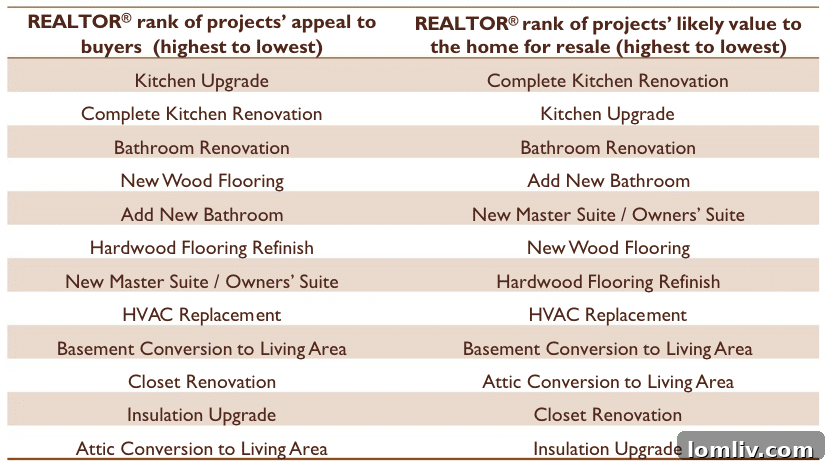
Realtor Joe Newton of Ceda Realty highlights the enduring appeal of kitchen and master bathroom remodels. “I definitely think your largest return on investment are in your kitchen and master bathroom,” he asserts. Newton points out that market conditions play a crucial role. “In this market, it appears remodeling is key because the market is hot and people will pay for those upgrades.” Conversely, he advises caution in a softer market: “If the market was a little softer, you may think twice about doing a lot of renovations.” However, for a dated kitchen in a seller’s market, his recommendation is clear: “If the kitchen is dated and the clients have the time/money to spend before putting the home on the market, then I would recommend some renovations.” This expert advice underscores the importance of timing and market awareness in maximizing your renovation’s financial benefits.
Types of Kitchen Renovations: From Facelift to Full Transformation
Kitchen renovation projects can generally be categorized into two main types: minor upgrades (often referred to as a “facelift”) and complete overhauls. Each category comes with distinct cost implications, scopes of work, and varying levels of homeowner satisfaction and market appeal.
Minor Kitchen Upgrades: Smart Choices for Maximum Impact
Minor kitchen upgrades, the less expensive of the two options, involve refreshing key elements without altering the kitchen’s footprint or structural components. According to the 2015 Remodeling Impact Report, these projects typically averaged between $20,000 and $30,000 and, quite notably, yielded a healthy ROI of 67 percent. This makes them an attractive option for homeowners looking to boost appeal without breaking the bank.
Even modest enhancements can dramatically improve a home’s livability and homeowner satisfaction. The study revealed significant “joy scores” for minor kitchen renovations: 82 percent of homeowners reported a greater desire to be home after completing the project, 75 percent experienced an increased sense of enjoyment within their home, and 79 percent felt a major sense of accomplishment reflecting on their improved space. This collective positive sentiment contributed to an impressive 9.4 “joy score” out of 10.
Realtors frequently recommend smaller upgrades to sellers. The report indicated that 57 percent of Realtors had suggested a minor kitchen upgrade before listing a home, recognizing its power to attract buyers. Furthermore, 25 percent of these professionals stated that a minor kitchen project had recently played a crucial role in closing a deal, leading to a successful sale. Kevin Caskey, an agent with Dallas City Center Realtors, echoes this sentiment: “I do not typically recommend a total kitchen renovation when a client sells but sometimes a little upgrading helps.” He highlights key elements that resonate with buyers: “Buyers seem to prefer a bright, open kitchen, so opening walls, white cabinetry, nicer appliances seem to be selling homes.” These targeted improvements can create a significant visual impact, making a kitchen feel modern, clean, and inviting.
Major Kitchen Overhauls: A Comprehensive Transformation
A complete kitchen overhaul represents a more ambitious undertaking, involving significant changes to the kitchen’s layout, infrastructure, and all its components. These projects carry a heftier price tag, typically ranging between $40,000 and $60,000. Interestingly, the 2015 Remodeling Impact Report found that complete overhauls yielded the same 67 percent ROI as minor renovations. This often surprises homeowners, suggesting that while major renovations certainly add value, the incremental increase in resale value may not always proportionally match the increased expenditure beyond a certain point. It implies that there can be diminishing returns, and simply spending more doesn’t always mean a higher percentage return.
Despite the similar ROI percentage, a complete overhaul provides an even greater sense of satisfaction for homeowners who plan to live in their remodeled space. A remarkable 90 percent of people reported a greater desire to be home since completing such a project, 86 percent experienced an increased sense of enjoyment at home, and an overwhelming 93 percent felt a major sense of accomplishment. These profound emotional benefits resulted in an even higher “joy score” of 9.8 out of 10, underscoring the deep personal reward of a fully transformed kitchen.
From a selling perspective, Realtors are more cautious when recommending full kitchen remodels. The study revealed that only 17 percent of Realtors had suggested sellers complete a complete kitchen remodel before attempting to sell, and only 12 percent said the project most recently helped cinch a deal for them. This conservative approach from real estate professionals is often due to the higher cost and the risk of over-improving for a specific neighborhood or buyer demographic. Joe Newton advises, “You have to be careful with something like changing the kitchen layout or a full gut job. This can easily become a money pit, that you don’t end up having any real return on investment.” He stresses the importance of aligning renovations with local market expectations: “You want to do renovations depending on the neighborhood your home is in. If yours is the only home with a wine cellar, marble counters, and travertine floors, then you might not get that money back. If most of the homes have granite countertops, stainless steel appliances, and nice backsplashes, then you can be pretty confident that will be money that has a return.” The key is to enhance, not alienate, potential buyers by sticking to what’s expected and appreciated in your area.
Key Elements That Elevate Kitchen Value
Understanding which specific features and upgrades resonate most with buyers and provide tangible value is crucial for any kitchen renovation. Pam Smith, an agent with Ebby Halliday Realtors, provides valuable insights into current trends and enduring preferences that can significantly boost a kitchen’s appeal and, by extension, a home’s market value.
- Countertops: “Granite is still a great upgrade,” Smith notes, indicating its continued popularity for its durability and aesthetic appeal. Beyond granite, quartz countertops have also surged in popularity, offering a non-porous surface, wide array of colors, and low maintenance. Opting for high-quality, appealing countertops can instantly modernize a kitchen.
- Backsplashes: The backsplash is an opportunity to add personality and a touch of contemporary design. Smith points out, “Subway tiles and glass tiles are very popular now for the backsplash.” These choices offer versatility, from classic to modern, and can be relatively inexpensive ways to update a kitchen’s look.
- Open Floor Plans: For older homes, particularly those with compartmentalized layouts, “opening up the space to create an open floorplan is a great selling point,” according to Smith. Modern buyers overwhelmingly prefer kitchens that seamlessly connect with living and dining areas, fostering a sense of spaciousness and facilitating social interaction.
- Appliances: Upgrading to sleek, energy-efficient appliances, particularly stainless steel models, is almost a given in today’s market. These not only look good but also signal a well-maintained and modern home.
- Cabinetry and Storage: Custom cabinetry with smart storage solutions can transform a kitchen’s functionality. Smith recommends “custom cabinetry with pull-outs, built-in spice racks, etc.” for maximizing space and convenience. White and light-colored cabinets remain perennially popular for their ability to make a kitchen feel brighter and more spacious.
- Fixtures and Lighting: Small details can make a big difference. “A wine fridge, farm sink, pot filler, under-cabinet lighting,” are all excellent additions Smith suggests. Under-cabinet lighting not only enhances ambiance but also improves functionality for meal preparation, while farm sinks and pot fillers add a touch of luxury and practicality.
Strategic Renovation: For Selling or For Living?
The decision to renovate should always align with your primary objective. If you’re looking to sell your home in the near future, the goal should be to maximize appeal to the broadest possible buyer base without overspending. If you plan to enjoy your home for many years to come, you have more freedom to personalize your choices.
Pam Smith articulates this distinction clearly: “In my opinion, if a homeowner is looking to do the minimum they can do to prepare the house for sale, the kitchen facelift is the way to go.” She explains that “by increasing the appeal of the kitchen, they will make it more attractive to buyers, and give seller an advantage over their competition.” This strategic approach focuses on high-impact, cost-effective updates that deliver significant visual returns and broad market appeal.
Conversely, for homeowners envisioning a complete transformation that reflects their personal style and desires, Smith advises: “Larger kitchen renovations should be undertaken only if the homeowner is going to have the benefit of enjoying the finished project for a while before selling.” This perspective emphasizes that the true value of a major, personalized renovation often lies in the quality of life it provides to the homeowner, rather than solely its immediate financial return upon sale. Always consult with a local Realtor before embarking on any significant renovation to ensure your investment aligns with market expectations and your personal goals.
Conclusion: Your Kitchen, Your Choice
Kitchen renovations, whether minor or major, represent one of the most impactful home improvement projects you can undertake. They not only significantly enhance the daily living experience within your home but also offer a compelling return on investment, particularly in a robust real estate market. The “joy score” associated with both minor upgrades and complete overhauls highlights the profound emotional satisfaction homeowners derive from a refreshed and functional kitchen space.
As we’ve explored, the key to a successful kitchen renovation lies in understanding your objectives. Are you aiming for a quick sale with broad appeal, or are you creating your dream culinary space for years of personal enjoyment? By considering factors such as your budget, the current market conditions, your neighborhood’s standards, and the expert advice of real estate professionals, you can make informed decisions that maximize both your financial return and your personal satisfaction. No matter the scale, a thoughtful kitchen renovation is an investment that pays dividends, both in the tangible value of your home and the intangible comfort of a space truly designed for living.