Texas Housing Market Soars: Unpacking Record-Breaking Q3 2015 Trends
The Texas real estate landscape in the third quarter of 2015, while perhaps not exhibiting the same initial frenetic pace seen earlier in the year, continued to deliver exceptionally strong performance. Data reveals a robust market on track to shatter previous records for both home sales and prices across the Lone Star State. This remarkable growth was primarily fueled by critically low housing inventory levels in highly desirable areas, coupled with a booming job market that consistently attracted new residents and, consequently, more eager homebuyers.
Understanding the dynamics of the Texas housing market in 2015 is crucial for anyone involved in real estate, from prospective buyers and sellers to investors and industry professionals. The confluence of economic strength, population growth, and limited supply created a unique environment where properties moved quickly and appreciated significantly, setting a benchmark for future market analyses and solidifying Texas’s position as a national leader in real estate.
A Historic Year for Texas Real Estate: Insights from Industry Leaders
Scott Kesner, then chairman of the Texas Association of Realtors, captured the prevailing sentiment perfectly, stating, “At this current pace, 2015 could very well surpass 2007 as a record year for Texas home sales.” This prediction highlighted the extraordinary momentum building within the market, indicating that the third quarter’s performance was not an anomaly but a continuation of powerful trends poised to reshape historical benchmarks. The consistent upward trajectory observed throughout the year underscored Texas’s burgeoning appeal as a prime destination for both living and investment.
The Lone Star State’s economic engine, diversified across sectors like energy, technology, aerospace, and finance, created an abundance of job opportunities. This robust employment growth, combined with a business-friendly environment and a relatively lower cost of living compared to other major U.S. states, continued to draw a steady stream of new residents. This population influx directly translated into an ever-increasing demand for housing, placing significant pressure on the existing supply.
Statewide Snapshot: Key Performance Indicators for Q3 2015
The Texas Association of Realtors’ Quarterly Housing Report for the third quarter of 2015 provided compelling evidence of the market’s strength, showcasing impressive year-over-year gains across several key metrics. These indicators are vital for understanding the underlying health and competitiveness of the statewide housing market:
- Surge in Single-Family Home Sales: A staggering 91,704 single-family homes were successfully sold across Texas during Q3 2015. This figure represented a significant 7.8% increase compared to the same period in the previous year, demonstrating robust buyer activity and sustained demand. This growth wasn’t isolated but spread across various metropolitan areas, reflecting widespread economic health and consumer confidence across the state. The sheer volume of transactions highlighted a vibrant market where properties were changing hands at an accelerated pace.
- Average Home Price Appreciation: The average price of a home in Texas climbed to $199,900, marking a substantial 7.7% increase year-over-year. This steady appreciation reflected the competitive nature of the market, where limited supply pushed values upward. For homeowners, this signaled a strong return on investment, enhancing equity and overall wealth. For prospective buyers, it underscored the importance of timely decisions in a rising market.
- Tightening Housing Inventory: Statewide housing inventory saw an increase to 4.0 months’ supply. While any increase in inventory is generally seen as positive, this figure still signals a significant seller’s market when compared to the 6.5 months’ supply typically considered balanced between buyers and sellers. The persistent lack of available homes contributed directly to the upward pressure on prices and fostered a competitive environment for buyers, often leading to multiple offers and quicker sales.
These numbers paint a clear picture of a dynamic market characterized by high demand, appreciating values, and an underlying challenge of insufficient housing supply to meet the needs of a rapidly growing population. The economic factors supporting this growth appear deeply entrenched, suggesting continued strength.
Dallas-Fort Worth-Arlington MSA: A Leading Force in Texas Real Estate
Among Texas’s vibrant metropolitan areas, the Dallas-Fort Worth-Arlington (DFW) Metropolitan Statistical Area stood out as a particularly strong performer in Q3 2015, often outpacing statewide averages in several critical areas. DFW’s economic prowess, fueled by significant corporate relocations, a thriving technology sector, and a robust job market, created intense and sustained demand for housing. The region’s diverse economy and expanding infrastructure made it an incredibly attractive destination for businesses and individuals alike.
The DFW market’s specific performance metrics offered even deeper insights into the regional real estate boom:
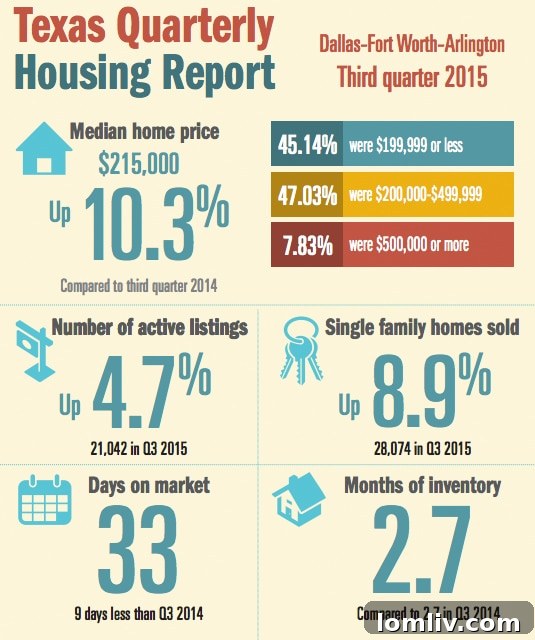
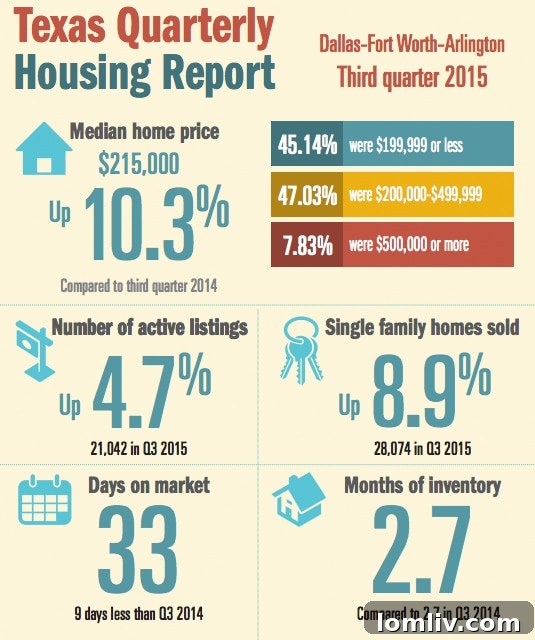
- Median Home Price Soars: The median home price in the DFW MSA reached $215,000. This represented an impressive 10.3% increase compared to the third quarter of 2014, significantly exceeding the statewide average appreciation rate. The rapid rise in median prices underscored the desirability of the DFW area and the intense competition among buyers, highlighting the region’s economic magnetism and limited housing options.
- Growth in Active Listings: Active listings in DFW experienced a 4.7% increase. While any increase in listings is positive for market balance, this modest rise was still insufficient to fully alleviate the intense buyer demand, suggesting that new inventory was quickly absorbed into the market. This indicates that despite more homes coming onto the market, the pace of sales was such that supply remained tight.
- Strong Single-Family Home Sales: Single-family home sales in the DFW area saw an 8.9% increase. This robust growth in sales volume indicated a healthy, active market where transactions were consistently being completed. This sustained growth was driven by a steady influx of new residents seeking employment and lifestyle opportunities, coupled with favorable economic conditions that made homeownership accessible to a broader demographic.
The DFW market, with its blend of economic opportunity and attractive lifestyle, served as a microcosm of the larger Texas real estate story—a testament to sustained growth and increasing property values that made it a critical hub for statewide real estate activity.
Navigating a Seller’s Market: Implications for Buyers and Sellers
The conditions observed in Q3 2015, particularly the low inventory and strong price appreciation, had distinct implications for both buyers and sellers in the Texas housing market. Understanding these dynamics was crucial for anyone looking to enter or exit the market successfully.
For Buyers: Navigating Competition and Limited Choices
Prospective homebuyers faced a challenging environment defined by urgency and fierce competition. Low inventory meant fewer options and increased competition for desirable properties, often leading to:
- Bidding Wars: Homes, especially in sought-after neighborhoods with strong school districts or amenities, frequently received multiple offers, driving prices above the initial asking price. This required buyers to be financially prepared and make quick, decisive offers.
- Quick Decision-Making: Buyers needed to be pre-approved for mortgages and prepared to act swiftly once a suitable property became available. Delays could mean losing out on a desired home.
- Compromise: In such a competitive market, some buyers might have needed to adjust their expectations regarding location, size, amenities, or even the condition of a home to find a property within their budget.
Engaging with an experienced local real estate agent became more critical than ever for buyers to successfully navigate the fast-paced market, gain insights into off-market opportunities, and craft competitive offers that stood out.
For Sellers: Maximizing Opportunities in a Favorable Market
Conversely, sellers enjoyed a highly advantageous market position. High demand and limited supply created optimal conditions for achieving excellent returns and favorable terms:
- Strong Sales Prices: Sellers were often able to command higher prices, with many homes selling at or even above their asking price. This created an ideal environment for maximizing their investment.
- Faster Sales Cycles: Properties tended to spend less time on the market, sometimes mere days, reducing the carrying costs and uncertainty for sellers. This rapid turnover was a clear indicator of intense buyer interest.
- Multiple Offers: The likelihood of receiving multiple offers provided sellers with significant leverage, allowing them to choose the most favorable terms, whether it was the highest price, shortest closing period, or most flexible conditions.
Even in a strong seller’s market, strategic pricing, professional staging, and effective marketing remained vital to attracting the widest pool of qualified buyers and securing the best possible outcome. A well-presented home always stood out, even amidst high demand.
The Critical Role of Housing Inventory: Understanding Market Balance
One of the most defining characteristics of the Texas housing market in Q3 2015 was the persistent imbalance in housing inventory. The report indicated a statewide supply of 4.0 months. To put this in perspective, a market is generally considered balanced—where neither buyers nor sellers have a distinct advantage—when there is approximately a 6.5 months’ supply of homes on the market. This balance ensures a healthy churn of properties and price stability.
The significant gap between the actual inventory (4.0 months) and a balanced market level (6.5 months) explained much of the upward pressure on prices. When inventory is low, the basic economic principle of supply and demand dictates that prices will rise as buyers compete fiercely for limited available homes. This creates a challenging environment for those looking to purchase but offers substantial benefits for existing homeowners and those looking to sell.
Low inventory can be attributed to several interconnected factors prevalent in Texas at the time:
- Population Growth: Texas’s continuous influx of new residents, drawn by economic opportunity, consistently outpaced the rate of new home construction. The sheer volume of people moving to the state meant demand constantly outstripped new supply.
- Builder Constraints: Challenges such as labor shortages, rising material costs, regulatory hurdles, and limited availability of developable land sometimes limit how quickly builders can bring new homes to market. This backlog contributed to the overall scarcity.
- Low Interest Rates: Historically low interest rates at the time encouraged homeownership, further stimulating demand without a proportional increase in supply. Affordable financing options made buying more accessible, intensifying competition.
Monitoring inventory levels is a crucial indicator for gauging the health and direction of any real estate market. The 2015 numbers clearly indicated a robust seller’s market with strong underlying demand, setting the stage for continued growth in the foreseeable future.
Looking Ahead: The Sustained Appeal of Texas Real Estate (from a 2015 perspective)
As 2015 progressed, the question on many minds was the sustainability of such rapid growth. While concerns about affordability might arise, especially in major metropolitan areas, the fundamental drivers of the Texas housing market remained exceptionally strong, pointing towards continued dynamism.
- Economic Resilience: Texas’s diversified economy, far less reliant on a single industry than in previous decades, provided a strong, stable foundation for growth. This resilience helped buffer against economic shocks.
- Job Growth: Continued corporate expansions, relocations, and new business formations across the state ensured a steady stream of high-quality job opportunities, continuously drawing more people to Texas.
- Population Magnet: Texas consistently ranked among the top states for population growth in the U.S., guaranteeing an enduring demand for housing as new residents sought homes.
However, challenges such as the pace of new construction to meet demand, potential shifts in interest rates, and the evolving dynamics of urban development would undoubtedly influence future trends. The market’s ability to adapt to these factors would determine the long-term sustainability of the impressive growth seen throughout 2015. Careful monitoring and strategic planning would be essential for all market participants.
The remarkable performance of the Texas housing market in the third quarter of 2015 underscored a period of exceptional growth and dynamism. With record-breaking sales and appreciating home values, the state solidified its position as a national leader in real estate. The Dallas-Fort Worth area, in particular, exemplified this robust trend, driven by a powerful combination of economic prosperity and sustained demand that continues to define its property landscape.
For detailed statewide data, including these compelling highlights and more, please refer to the comprehensive infographic provided by the Texas Association of Realtors:
Click here to see an infographic with statewide data
What trends and shifts are you observing in your corner of North Texas today, and how do they compare to these historical insights?