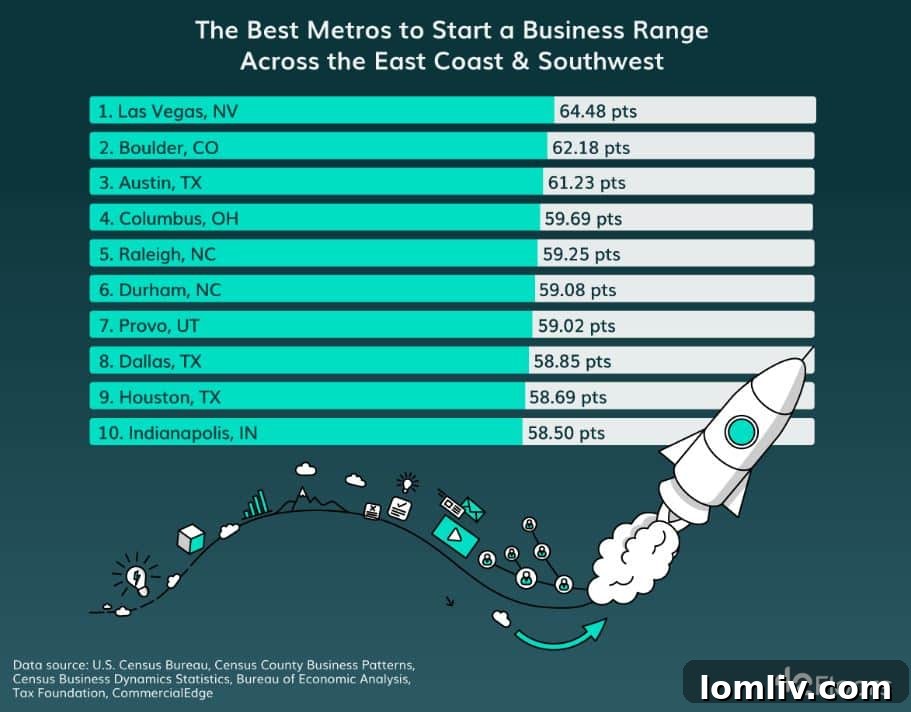
Texas has firmly established itself as a premier destination for entrepreneurial ambition, with its major metropolitan areas consistently ranking among the best places to launch and grow a business in the United States. A recent comprehensive study conducted by 42 Floors underscored this dominance, revealing that the Lone Star State proudly claimed three of the top 10 spots for best metros to start a business nationally. This impressive performance highlights the robust and dynamic economic environment that Texas offers to aspiring entrepreneurs and established companies alike.
Leading the charge for Texas was Austin, a city renowned for its vibrant tech ecosystem and innovative spirit, securing an impressive No. 3 ranking on the list. Following closely behind, Dallas, a sprawling economic powerhouse, earned the No. 8 spot, showcasing its diverse commercial landscape. Houston, a global hub for energy and an increasingly diversified economy, rounded out Texas’s top 10 presence at No. 9. Furthermore, San Antonio, a city rich in history and experiencing significant growth, also made a strong showing, landing at No. 19, affirming the widespread opportunities across the state.
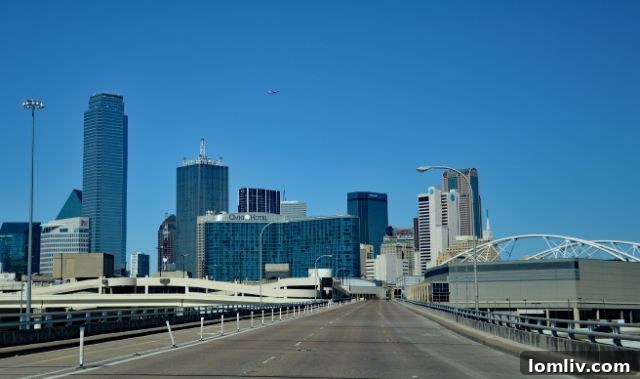
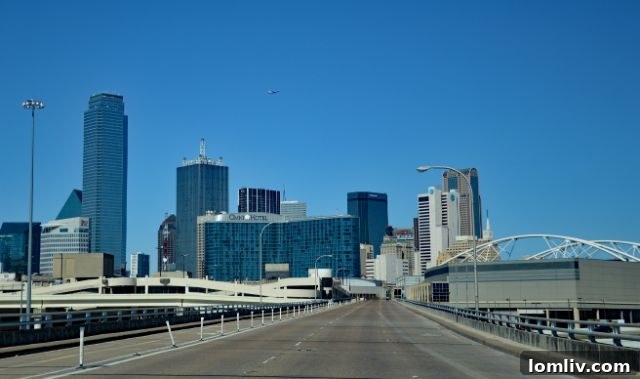
The study delved into various metrics to assess the business friendliness of these metros, and Dallas, in particular, demonstrated remarkable strength in fostering new ventures. The city boasted the fifth-largest share of startups nationwide, with a significant 40.5 percent of companies established within the last five years. This statistic alone paints a clear picture of a fertile ground for innovation and new enterprise. Beyond the sheer volume of new businesses, Dallas also presents an attractive proposition in terms of operational costs, notably offering office space that is approximately $1,300 cheaper annually than equivalent space in Houston, coming in at an average of $28,400 per year. This cost efficiency, combined with a thriving startup scene, makes Dallas an exceptionally appealing location for businesses looking to optimize their expenditures while maximizing growth potential.
While Texas cities shone brightly, the top spot in the 42 Floors report ultimately went to Las Vegas. The study specifically commended Las Vegas for its exceptional business ecosystem and unparalleled networking opportunities, factors that are crucial for startup success. However, the consistent high rankings of Texas cities suggest they offer equally compelling, if not superior, environments for business, driven by unique advantages that foster sustainable growth and attract a diverse pool of talent and investment.
Dallas: A Magnet for Startups and Sustained Economic Growth
Dallas’s reputation as an outstanding locale for startups is not merely a recent phenomenon but a testament to its enduring economic strengths and forward-thinking policies. John Briggs, a distinguished commercial real estate director with RHA Commercial, frequently emphasizes the myriad advantages that Dallas, and Texas as a whole, offer to businesses. Among the most compelling are Texas’s status as a right-to-work state and the absence of a state income tax. These policies significantly reduce the operational burden on businesses and increase the disposable income of employees, creating a highly attractive financial environment for both employers and job seekers.
Briggs further underscores the availability of affordable land, a critical factor for businesses looking to establish or expand their physical footprint, particularly in logistics and manufacturing sectors. This abundance of reasonably priced real estate stands in stark contrast to many other major economic hubs across the nation, providing a competitive edge for Texas-based companies. Moreover, the state’s legislative framework is purposefully designed to support business development and foster robust economic growth, ensuring a stable and predictable regulatory landscape that encourages investment and innovation.

A strong, educated workforce is the backbone of any thriving economy, and Dallas, along with other major Texas cities, benefits immensely from a continuous influx of talent. Briggs highlights that Texas cities attract a plethora of graduates from the prestigious Big 12 schools, who often seek career opportunities in dynamic urban centers like Houston, Dallas, and Austin. This steady supply of skilled, young professionals provides new businesses with a robust and diverse workforce, ready to contribute to innovation and growth. The synergy between top-tier educational institutions and a burgeoning job market creates a virtuous cycle, fueling sustained economic expansion.
“It’s just going to keep on growing and people are going to keep on coming,” Briggs confidently stated, reflecting the undeniable momentum of Texas’s economy. This optimism is rooted in tangible trends, including the strategic advantage Texas holds over regions experiencing economic stagnation. Briggs specifically points to cities in the Rust Belt, such as Detroit and Cleveland, which have faced economic challenges, noting that Dallas is effectively capitalizing on this shift. This is particularly evident in the warehouse and distribution industries, where Dallas-Fort Worth has emerged as a national leader.
Texas’s central geographic location and its proximity to major domestic and international markets are invaluable assets for logistics and distribution. This sector witnessed an unprecedented boom during the COVID-19 pandemic, driven by a dramatic spike in online ordering and shipping demands. Dallas, with its extensive transportation infrastructure—including major interstate highways and international airports—was perfectly positioned to become a logistical powerhouse, further cementing its economic resilience and growth prospects.
With three decades of experience in the commercial real estate sector, Briggs holds a long-term perspective on Dallas’s economic trajectory. He boldly forecasts continued growth for the city, going so far as to describe Dallas as “recession-proof.” This remarkable resilience is attributed to its highly diversified economy and the significant migration of businesses and employees from high-cost states like California and New York. Companies are relocating to Texas in search of lower operating costs, a more favorable tax environment, and a superior quality of life for their employees. This sustained inbound migration fuels a dynamic job market and a continually expanding consumer base, insulating Dallas from economic downturns that might affect less diversified regions.
“There’s nothing that’s going to stop us,” Briggs asserted, encapsulating the pervasive sentiment of optimism and confidence in Texas’s future. “People want to move to Texas.” This enduring appeal, driven by a confluence of economic opportunity, a supportive business climate, and an attractive lifestyle, ensures that Texas cities like Dallas will continue to be at the forefront of national economic growth, offering unparalleled potential for entrepreneurs and businesses looking to thrive in a rapidly evolving global landscape.
Beyond Dallas: Austin and Houston Pave the Way for Texas Innovation
While Dallas shines as a versatile business hub, Austin and Houston contribute distinct yet equally powerful dynamics to Texas’s entrepreneurial success story. Austin, ranking at No. 3 nationally, has solidified its reputation as a vibrant tech mecca, often dubbed “Silicon Hills.” The city’s allure stems from its dense concentration of tech companies, a highly educated workforce cultivated by institutions like the University of Texas at Austin, and a culture that fosters innovation and creativity. Entrepreneurs are drawn to Austin’s supportive ecosystem, which includes numerous incubators, accelerators, and venture capital firms, making it an ideal environment for tech startups in fields ranging from software development and artificial intelligence to biotechnology and clean energy. The city’s quality of life, vibrant music scene, and outdoor recreation opportunities further enhance its ability to attract top talent from across the globe, creating a truly unique environment for new ventures.
Houston, securing the No. 9 spot, demonstrates a different yet equally compelling growth trajectory. Historically known as the energy capital of the world, Houston has successfully diversified its economy, positioning itself as a leader in healthcare, aerospace, and advanced manufacturing. The Texas Medical Center, the largest medical complex in the world, is a powerful engine for biomedical innovation and startup creation. Furthermore, NASA’s Johnson Space Center continues to drive advancements in aerospace technology, creating opportunities for ancillary businesses. Houston’s port, one of the busiest in the nation, underscores its importance in global trade and logistics, providing a fertile ground for businesses involved in international commerce. This blend of established industries and emerging sectors offers a broad spectrum of opportunities for entrepreneurs, supported by a robust infrastructure and a diverse talent pool.
San Antonio: An Emerging Frontier for Business
Even at No. 19, San Antonio represents a significant and growing force in Texas’s business landscape. The city’s unique blend of cultural heritage and modern economic development makes it an attractive, often overlooked, destination for startups. San Antonio benefits from a strong military presence, which drives innovation in cybersecurity and defense contracting, offering specialized opportunities for tech companies. Its bioscience and healthcare sectors are also rapidly expanding, fueled by institutions like the UT Health San Antonio. Moreover, San Antonio’s thriving tourism industry, coupled with a burgeoning culinary scene, creates a wealth of opportunities for hospitality, food tech, and related service industries. The city’s affordability compared to Austin and Dallas, combined with a strong sense of community and a growing talent pool, makes it an increasingly appealing option for entrepreneurs seeking a supportive environment with ample room for growth.
The Unstoppable Momentum of the Texas Economy
The collective success of Austin, Dallas, Houston, and San Antonio paints a vivid picture of a state deeply committed to fostering a business-friendly environment. Texas’s unwavering appeal is rooted in its fundamental economic principles: minimal regulatory hurdles, a favorable tax structure, and a dedication to supporting private enterprise. These core tenets, combined with a strategic geographic location and a continuously expanding talent pipeline, create an ecosystem where businesses not only start but also thrive and scale. The state’s diverse economy, spanning technology, energy, healthcare, logistics, and manufacturing, provides a buffer against industry-specific downturns, contributing to its “recession-proof” reputation. As businesses and individuals continue to seek out environments that offer both opportunity and quality of life, Texas stands poised to maintain its trajectory as a leading economic powerhouse in the nation. The insights from industry veterans like John Briggs only further confirm what the numbers consistently show: Texas is, and will remain, an unparalleled destination for entrepreneurial dreams and enduring commercial success.