Navigating the Density Debate: Unpacking PD-15 and the Future of Preston Place
The ongoing discussions surrounding the PD-15 development in Dallas, particularly regarding the future of Preston Place, frequently highlight concerns over increased traffic and population density. These are undeniably critical factors in urban planning, but for a truly productive dialogue, we require precise, data-driven measurements to ground the conversation in reality. The eagerly anticipated traffic study promises to provide this much-needed clarity, offering an objective assessment of potential impacts. However, beyond the numbers, it’s crucial to understand the underlying anxieties and historical contexts that shape this complex debate.
Reflecting on a recent PD-15 meeting with the City Plan Commission, a particular exchange lingered in my thoughts. As previously reported, a prominent voice of opposition was Carla Percival-Young, an architect affiliated with Alabama-based GMC and a resident of Athena. When questioned whether a forthcoming traffic study indicating negligible neighborhood impact would prompt a re-evaluation of the opposition’s stance, her response was unequivocal: no. The reasoning was a fundamental disagreement with virtually every aspect of the proposed updated PD-15 draft. Further pressing revealed her preferred density, after some hesitation, to be 60 units per acre, significantly less than the draft’s recommendation of 90 units per acre – a 30-unit per acre difference that forms the crux of much contention.
Historical Context and Economic Realities: The Preston Place Legacy
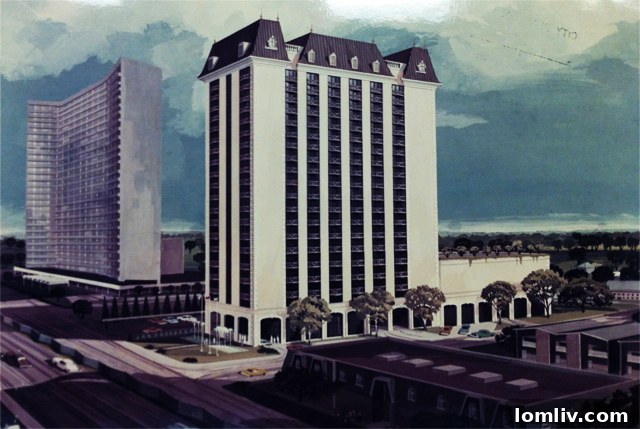
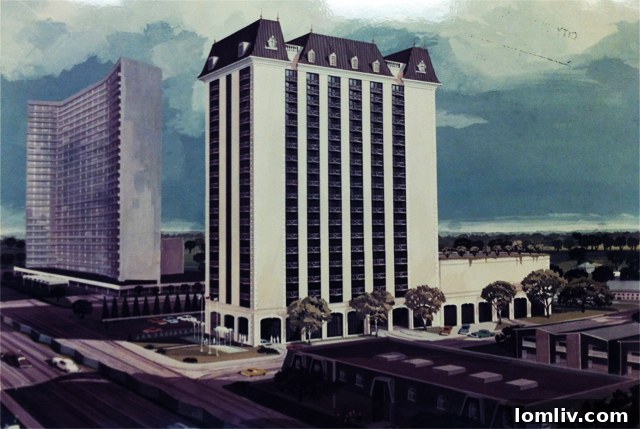
A deeper dive into the history of Preston Place reveals nuances often overlooked in current discussions. In the 1960s, following a failed attempt to construct a second Preston Tower, the original Preston Place development of the 1970s was initially conceived as a high-rise boasting an ambitious 125 units. This vision was later scaled back significantly to the 60 units that were ultimately built and, tragically, consumed by fire. The original proposal for a 20-story structure housing 125 units suggests remarkably spacious residences, likely exceeding the average 1,721-square-foot units found in Athena today, and certainly dwarfing those in the iconic Preston Tower.
Ms. Young’s suggestion of 60 units per acre for the two-acre Preston Place site would, in essence, simply reinstate the unit count of the original, pre-fire development, effectively utilizing the “surplus” units that were never built in the 1970s. This prompts a strategic question: Is the opposition’s true objective simply to restore Preston Place to its former density, while largely sidelining broader development considerations for the surrounding area?
However, it’s imperative to acknowledge that the economic landscape and market forces of four decades ago are vastly different from those of today. In the 1970s, the minimum wage was a mere $2.10 per hour, and the median home price in Texas stood at approximately $12,000. Fast forward to the present, and that median home price in Dallas has skyrocketed to $217,000, with construction materials and labor costs having escalated similarly. This dramatic shift in economic realities means that development viability today often necessitates higher densities to offset exorbitant land acquisition and construction expenses, making direct comparisons to 1970s planning somewhat anachronistic.
Envisioning the grand, oversized units depicted in the 1970s renderings of the unbuilt Preston Place high-rise, one can’t help but wish it had come to fruition. Regardless of its initial purpose as apartments, by now, it would almost certainly have transitioned into high-value condominiums. Crucially, such a modern structure would have incorporated essential safety features like sprinklers, preventing the devastating fire that ultimately claimed the building. Furthermore, it’s highly improbable that its existence would have deterred anyone in the surrounding neighborhood from purchasing their homes. The economic benefits of such a development, offering a diverse housing stock and contributing to the tax base, would have significantly bolstered the neighborhood in ways the smaller, older Preston Place could not. Hindsight is indeed 20/20, but thoughtful foresight is paramount for sustainable urban growth.
Deconstructing Traffic and Density Concerns: A Quantitative Perspective
The core of the density disagreement lies in the 30-unit difference per acre between the city’s proposed 90 units and the opposition’s 60 units. Across approximately four acres, this translates to an additional 120 residential units. The central question then becomes: Will these 120 units truly unleash “Carmageddon” on the surrounding infrastructure?
Consider the broader context: the bustling intersection of Preston Road and Northwest Highway already experiences between 40,000 and 50,000 vehicle trips daily. Historical data even suggests a declining trend in traffic volume at this junction over the past two decades. In this immense flow of vehicles, an additional 120 units would conservatively generate approximately 240 new trips per day, assuming two cars per unit and two trips per day. This increment represents a miniscule increase of roughly 0.0054 percent in daily traffic volume – an impact akin to adding a few grains of sand to an already vast beach. Is this truly the magnitude of congestion the opposition is mobilizing against?
While the impact on major thoroughfares might be statistically minor, it’s understandable that concerns shift to internal neighborhood roads. However, a pragmatic solution for this exists: the strategic opening of Tulane Blvd to Northwest Highway. Encouragingly, preliminary indications suggest that the upcoming traffic study will specifically analyze and demonstrate the significant potential of opening Tulane Blvd. to effectively minimize and redistribute internal neighborhood traffic, thereby alleviating pressure on residential streets.
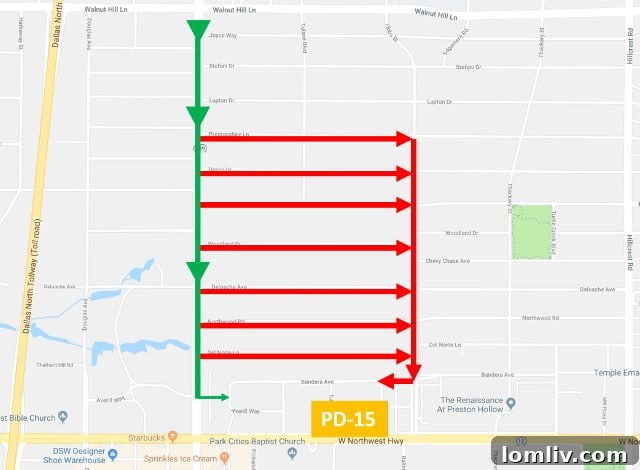
Assertions from some Preston Hollow single-family homeowners about new “Pink Wall” development leading to rampant cut-through traffic on their streets are, upon closer examination, largely unfounded. Logic dictates that a driver heading south on Preston Road would have no rational incentive to cut across to Edgemere via a random residential street. Such a maneuver would essentially bypass their destination or add unnecessary complexity, only to save the same amount of time they would spend turning left from Preston Road onto Averill Way, potentially even introducing more inconveniences with additional stop signs on Edgemere. Traffic crossing between Preston Road and Hillcrest is almost certainly not originating from the Pink Wall development but rather represents broader regional traffic patterns.
For the relatively few residents within the Pink Wall traveling eastward, sensible routes would involve heading up to Park Lane and over to North Park, or taking Bandera over to Hillcrest. These are the most logical and efficient paths. Similarly, north-south traffic might involve some Edgemere to Walnut Hill trips, but given the numerous stop signs and traffic calming measures on these internal streets, Preston Road or Hillcrest would undeniably be faster and smoother options. Furthermore, it’s worth noting that a significant portion of Pink Wall residents are retired, meaning they are less likely to contribute to peak commuter traffic, often deliberately avoiding rush hour periods.
If Preston Hollow single-family homeowners are observing an increase in local traffic, a more likely culprit might be the pervasive influence of modern navigation applications. Unlike previous decades where drivers largely adhered to main roads with occasional, well-known shortcuts, contemporary GPS-based apps are meticulously engineered to shave every possible second off a journey. This intelligent routing often diverts traffic onto seemingly obscure residential streets. This phenomenon is particularly relevant for Park Lane residents, as Park Lane notably crosses the Tollway without traffic signals or direct exit ramps. Indeed, for those seeking to bypass tollway congestion, Park Lane offers a surprisingly direct and efficient alternative from Webb Chapel to Abrams Road, even featuring a less-congested crossing of Central Expressway.
My own experiences using GPS for navigating to a new Silicon Valley office illustrate this point perfectly; in half a dozen trips, the route has rarely been identical, constantly optimizing for real-time conditions. This dynamic routing significantly impacts local traffic patterns far more than a minor increase in residential units.
The Original Vision Versus Present-Day Opportunity
It’s crucial to recall that while today’s PD-15 proposals for the towers envision around 500 residential units, the original developer, Hal Anderson, had a far grander vision. His plans included a second Preston Tower and a monumental 40-story, double-sized Athena. Had these ambitious plans materialized, the area would have already reached or even exceeded the unit count currently proposed in the city’s draft, and without the tragic catalyst of a devastating fire. This historical perspective underscores that higher density was not only contemplated but actively pursued by pioneering developers in the area.
The addition of 120 total units, which represents the difference between the city’s proposal and the opposition’s 60 units per acre, is truly a pittance in the grand scheme of urban development for a major metropolitan area like Dallas. Yet, the opposition often appears fixated on these minutiae, seemingly blinded to the broader opportunities for quality design and thoughtful integration that should be the primary focus. This short-sightedness risks repeating past mistakes, echoing the “how short” and “how few” arguments that ultimately led to “how ugly” outcomes in other developments, such as The Laurel. Instead of stifling progress based on negligible traffic concerns, the conversation should pivot towards ensuring that any new development in PD-15 contributes positively to the aesthetic, economic, and social fabric of the Preston Hollow community.

About the Author: My focus lies in high-rise developments, HOA dynamics, and urban renovation. I am deeply passionate about the interplay between modern and historical architecture, always considering these against the backdrop of the YIMBY (Yes In My Backyard) movement, advocating for responsible growth. My work has been recognized by the National Association of Real Estate Editors, earning three Bronze awards in 2016, 2017, and 2018, alongside two Silver awards in 2016 and 2017. For insights, stories, or inquiries, please reach out via email at [email protected]. You’re welcome to search for me on Facebook and Twitter, though you may find me elusive.