Shaping Our Urban Future: Lessons from Master Planners and Alexander Garvin’s Vision
Making pivotal decisions, especially those with far-reaching societal impact, often necessitates gathering a wide array of informed opinions. These decisions, when concerning the very fabric of our cities – projects like Dallas’s proposed Trinity Parkway – demand careful consideration from experts who understand the intricate balance of development, infrastructure, and community well-being. It’s in this spirit that we explore the insights of acclaimed urban planner, educator, and author, Alexander Garvin, whose work offers invaluable lessons for modern city planning dilemmas.
Alexander Garvin: A Champion of Thoughtful Urban Development
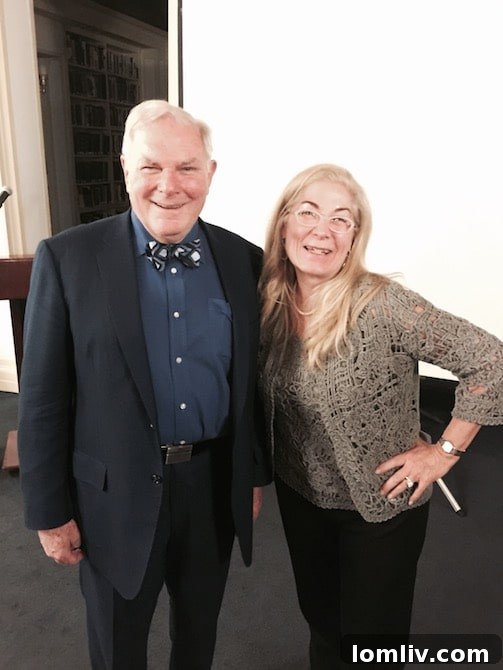
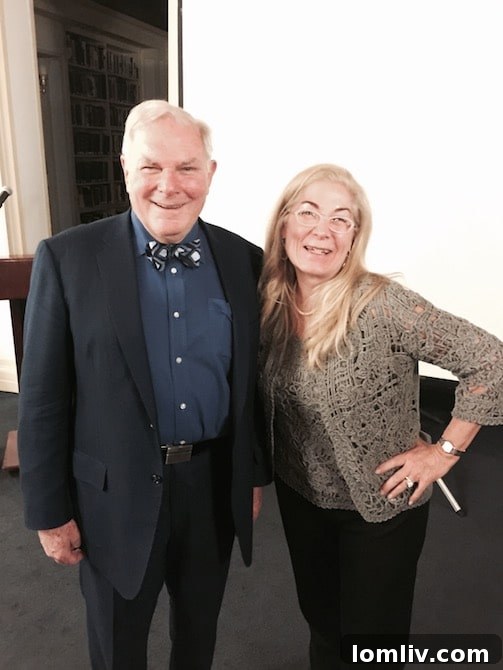
During a recent Inman Connect NYC conference, a lecture by Alexander Garvin illuminated the profound impact of thoughtful urban planning. Garvin, an adjunct professor at the Yale School of Architecture and head of Alexander Garvin & Associates in New York City, is renowned for his significant contributions to urban landscapes across the United States. His expertise is not merely theoretical; it’s rooted in practical, transformative projects that have demonstrably improved city living.
One of Garvin’s most celebrated achievements is his instrumental role in creating Atlanta’s groundbreaking greenbelt system. This visionary project involved converting an old railroad track that effectively encircled the city into a connected network of green spaces and trails. The success of the Atlanta BeltLine is a testament to Garvin’s foresight, showcasing how underutilized industrial corridors can be reimagined into vibrant public amenities. For example, during a tour of Atlanta, the transformation of the historic Ponce City Market – once a massive Sears Roebuck warehouse – into a bustling multi-use complex with a focus on food, retail, and residences, was particularly striking. The market’s seamless integration with the BeltLine, attracting joggers and inspiring a wave of private real estate development along its path, truly charmed Garvin when shared with him.
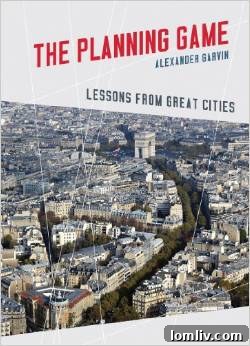
Garvin’s appreciation for such urban transformations extends to Dallas, where he admires our very own Katy Trail. He proudly noted that his insightful book, The Planning Game: Lessons From Great Cities, features an image of the Katy Trail, recognizing its role in stimulating further urban development. This connection between accessible green spaces and economic vitality is a recurring theme in Garvin’s work, emphasizing how investments in the public realm can catalyze private sector growth and enhance overall quality of life.
Garvin’s Broader Impact: From NYC to Global Initiatives
Beyond his academic and consulting roles, Garvin has held significant public service positions, further cementing his influence on urban policy. He was a driving force behind New York City’s 2012 Olympic Games bid, demonstrating his capacity to envision and plan for large-scale urban events. Furthermore, he bravely oversaw the politically charged and complex redevelopment efforts for lower Manhattan in the aftermath of the devastating 9/11 attacks on the World Trade Center towers. His experience as a commissioner on the New York City Planning Commission and as New York City’s Deputy Commissioner of Housing and Director of Comprehensive Planning from 1970 to 1980 underscores his deep understanding of municipal governance and urban policy implementation.
Timeless Lessons from Urban Planning Giants
In his lecture, Garvin delved into the biographies of four monumental figures who, through their groundbreaking work, fundamentally reshaped the course of urban planning. These pioneers offer critical insights into the challenges and triumphs of transforming cities for the better:
Baron Georges-Eugène Haussmann: Architect of Modern Paris
Garvin began with Baron Georges-Eugène Haussmann, the visionary prefect who, under Napoleon III, essentially rebuilt Paris between 1853 and 1870. Before Haussmann, Paris was a labyrinth of narrow, unsanitary streets. His monumental undertaking transformed it into the iconic city we know today, characterized by wide boulevards, grand public squares, and meticulously designed buildings. Haussmann introduced an organized street system and an advanced sewer system, fundamentally improving sanitation and public health. Garvin highlighted that the limited height of Parisian buildings—typically six or seven stories—was due to a lack of elevators in the 1860s and the practical limitations of water pressure and women’s willingness to carry strollers up flights of stairs. Haussmann created over 90 miles of new streets, converting what were once “cesspools” into vibrant public spaces. As Garvin eloquently put it, “Without streets in Paris, there would be no cafes; with no cafes, there would be no Paris,” emphasizing how infrastructure shapes culture and community life.
Daniel Burnham: Envisioning Chicago’s Grandeur
Next, Garvin introduced Daniel Burnham, the Director of Works for the 1893 World’s Columbian Exposition in Chicago. Burnham, a prolific architect and urban designer, is credited with designing many of Chicago’s early skyscrapers and, more significantly, with crafting the “Plan of Chicago.” This comprehensive plan, published in 1909, reimagined the city’s future, focusing on a grand civic center, systematic parkways, and, most famously, the preservation and enhancement of Chicago’s Lake Michigan shoreline. Burnham’s philosophy, encapsulated in his famous quote, “Make no little plans; they have no magic to stir men’s blood,” continues to inspire large-scale urban development projects, emphasizing the importance of bold, integrated visions for city growth.
Robert Moses: New York’s Controversial Master Builder
Perhaps the most fascinating and contested figure discussed was Robert Moses, a Yale alumnus who exerted an unparalleled influence on New York City’s development during the mid-20th century. Often called the “master builder,” Moses was a polarizing figure, largely known for his extensive highway projects and, in the popular narrative, prioritizing automobiles over public transit, leading to the creation of modern Long Island suburbs. However, Garvin presented a nuanced and often refutational perspective on Moses, particularly challenging the biting portrayal by Pulitzer Prize-winning biographer Robert A. Caro.
Garvin argued that Moses built on an unprecedented scale, creating hundreds of miles of landscaped parkways, not just utilitarian highways. He cited Moses’s immense contributions to public amenities, including 15 public swimming pools, playgrounds, and the development of Jones Beach State Park. Far from neglecting the poor, Garvin emphasized that Moses, as head of the Department of New York Housing Authority, was responsible for constructing 400,000 units of housing. He also spearheaded the transformation of dilapidated housing in Lincoln Square into the world-renowned Lincoln Center, demonstrating a commitment to cultural infrastructure. Garvin humanized Moses, describing him as a “Jewish townie at Yale in 1908 on the swim team,” who swam daily well into his 80s, and quoting him, “the average highway engineer’s notion of landscaping would make the angels weep,” highlighting Moses’s aesthetic sensibilities.
While Moses undeniably believed in the permanence and dominance of the automobile, leading to his clashes with community activists like Jane Jacobs—whom he famously dismissed as “commies” or “disgruntled housewives” and “ersatz bagel makers”—Garvin’s perspective prompts a reevaluation of his multifaceted legacy. Moses’s belief in urban renewal, tower-in-the-park development, and suburban growth, though challenged by the changing needs and voices of New Yorkers in the 1960s, shaped the metropolitan area for generations. His work, despite its controversies, was a monumental effort to modernize and expand New York City on a scale unmatched by any other single individual in urban planning history.
Edmund Bacon: Philadelphia’s Architectural Innovator
Finally, Garvin highlighted Edmund Bacon, an influential urban planner who transformed Philadelphia’s architecture and urban fabric. Bacon, who proudly called himself an urban planner, was known for his comprehensive approach to city design, integrating historical preservation with modern development. His work in Philadelphia, particularly projects like the redevelopment of Society Hill and the creation of Penn Center, showcased his belief in creating vibrant public spaces and a cohesive urban environment. Bacon’s legacy lies in his ability to mobilize public and private resources to execute large-scale, impactful urban renewal projects, fostering a sense of civic pride and architectural excellence.
The Essence of Successful Urban Planning: Garvin’s Litmus Test
Garvin’s lecture underscored the profound idea that these historical figures, despite their varied approaches and the specific contexts of their times, all succeeded in improving major cities by thoughtfully shaping the “public realm.” This public realm encompasses parks, streets, squares, essential infrastructure, and public buildings—all owned by the people and managed by government officials. Garvin powerfully argues that investing in “our common property” is not just about aesthetics; it makes doing business easier and more affordable while significantly enhancing the quality of life for all residents.
To guide contemporary urban decision-making, Professor Garvin offers a clear and practical set of criteria for what constitutes truly successful urban planning. These principles serve as an excellent litmus test for any proposed urban project:
- Satisfies the needs of the present: A plan must address the immediate requirements of the community, such as efficient transportation, adequate housing, and accessible public services. It must solve existing problems and improve current living conditions.
- Stimulates a private market reaction: Successful planning doesn’t just dictate; it creates an environment where private investment flourishes in a desirable way. This means designing spaces and infrastructure that attract businesses, generate jobs, and encourage sustainable development without relying solely on public funds for continued growth.
- Creates a framework for further development: Plans should be flexible and adaptable, providing a robust foundation upon which future growth can organically build. They should not be rigid blueprints but rather dynamic frameworks that guide evolution while allowing for innovation and unforeseen needs.
- Accommodates the needs of a future generation: Crucially, a successful urban plan must be forward-thinking. It involves considering long-term environmental sustainability, future population growth, technological advancements, and the evolving social dynamics of the community. This ensures that today’s decisions do not create burdens for tomorrow.
Applying Garvin’s Principles to the Trinity Parkway Debate
Bringing these invaluable lessons back to projects like the Trinity Parkway in Dallas, Garvin’s criteria provide a vital framework for evaluation. When considering such a significant urban intervention, we must ask:
- Will the Trinity Parkway truly satisfy the diverse needs of Dallas’s present population, addressing traffic concerns without creating new urban divides or sacrificing vital green spaces?
- How will it stimulate private market reactions? Will it foster sustainable, community-oriented development, or primarily encourage further suburban sprawl and car dependency?
- Does the current proposal create a flexible framework for Dallas’s future, or does it lock the city into a rigid infrastructure that may hinder adaptation to future transportation needs or environmental goals?
- Most importantly, how will the Trinity Parkway accommodate the needs of future generations in Dallas? Will it enhance their quality of life, provide access to green spaces, and support a vibrant, connected city for decades to come?
The wisdom of figures like Haussmann, Burnham, Moses, and Bacon, filtered through the insightful lens of Alexander Garvin, reminds us that urban planning is a profound act of shaping destiny. It requires not just engineering prowess, but a deep understanding of human needs, economic forces, and historical context. As Dallas contemplates its next major urban undertaking, embracing a multiplicity of educated opinions and rigorously applying Garvin’s criteria for successful planning will be paramount to ensuring a thriving and sustainable future for all its residents.