
 The landscape of the real estate and mortgage industry underwent a significant transformation starting January 10th with the implementation of the new Qualified Mortgage (QM) and Ability-to-Repay (ATR) rules. These aren’t just minor adjustments; they represent fundamental shifts in federal monetary policies designed to reshape how consumers borrow and how lenders assess risk. While ostensibly aimed at protecting consumers and preventing a recurrence of the 2008 financial crisis, many industry experts, particularly mortgage brokers, voiced strong concerns right from the outset. They predicted that these stringent regulations would not be well-received by the public and would inevitably “put a crimp in real estate sales,” potentially slowing down market activity and making homeownership more challenging for a substantial segment of the population. Understanding the nuances of these rules is crucial for anyone involved in or considering entering the housing market.
Understanding the New Qualified Mortgage (QM) and Ability-to-Repay (ATR) Rules
The Qualified Mortgage (QM) and Ability-to-Repay (ATR) rules are part of a broader regulatory framework introduced by the Consumer Financial Protection Bureau (CFPB) following the 2008 housing crisis. The core objective was to prevent a repeat of irresponsible lending practices that allowed borrowers to take on mortgages they couldn’t afford. The ATR rule mandates that lenders must make a “reasonable and good faith determination” that a borrower has the ability to repay their loan. This involves verifying income, assets, employment, and assessing debt-to-income ratios, among other factors. The QM rule, on the other hand, defines a category of loans that are presumed to meet the ATR requirements, offering lenders a “safe harbor” from liability if a borrower defaults. To qualify as a QM loan, a mortgage must meet specific criteria, including caps on points and fees, prohibition of certain loan features like interest-only payments, and a maximum debt-to-income ratio of 43%.
Industry Concerns and Outdated Frameworks
Despite the noble intentions behind these regulations, the mortgage industry immediately raised alarms regarding their practical application. Scott Drescher with Supreme Lending, a respected voice in the field, critically observed that “The rules were cut and pasted from the HUD handbook that was written in the 1940’s, haven’t been updated since the 1990’s and were designed for low income borrowers in mind.” This statement highlights a fundamental flaw: attempting to apply decades-old, narrowly focused guidelines, originally intended for specific demographic segments, to the entirety of the modern mortgage market. The complexity of today’s financial products, diverse income structures, and the global nature of finance mean that regulations from the mid-20th century are inherently ill-suited to current realities.
The core issue, as Drescher articulates, is that these rules were not updated in any meaningful way to reflect current market conditions or the nuances of diverse borrower profiles. “Worse, they do not reflect mortgage reality outside of FHA underwriting guidelines. Therefore, they’re not good for anybody as iron-clad rules.” This means that while they might align with the conservative lending practices of Federal Housing Administration (FHA) loans, which typically cater to first-time homebuyers or those with lower down payments, they struggle to accommodate conventional loans or borrowers with unique financial situations. Strict, inflexible rules can stifle innovation and prevent qualified individuals from accessing credit, regardless of their actual ability to repay.
Widespread Negative Economic Impact
The implementation of these new regulations casts a wide net of negative impacts across numerous sectors of the economy, extending far beyond just the direct players in a mortgage transaction. According to Scott Drescher, a comprehensive list of affected business segments includes:
- Buyers and Borrowers: Face stricter qualification standards, longer approval processes, increased costs, and greater uncertainty in obtaining a mortgage.
- Sellers: May find fewer qualified buyers in the market, leading to longer listing times, potential price reductions, and a slowdown in sales velocity.
- Realtors: Experience reduced transaction volumes, directly impacting their commission income and overall business viability.
- Builders and Contractors: See a decrease in demand for new home construction, leading to fewer projects, potential job losses, and a slowdown in development.
- Appraisers, Surveyors, and Title Companies: Rely heavily on real estate transactions, meaning fewer sales translate directly into reduced business volume for these essential services.
- Home Remodelers: Often depend on new home sales or refinances to fuel renovation projects, and a slowdown in these areas directly impacts their client base.
- Construction Materials Companies and Retailers: A drop in new construction and remodeling activity reduces demand for everything from lumber and concrete to appliances and fixtures.
- Cities and Local Governments: Suffer from decreased income generated through new construction fees, property taxes, and other revenue streams tied to housing market activity.
- Mortgage Companies: Face increased compliance costs, elevated operational risks, reduced loan volumes, and potentially lower profit margins.
- Trickle-down Industries: The ripple effect extends to furniture stores, landscaping services, moving companies, and countless other businesses indirectly supported by a robust housing market.
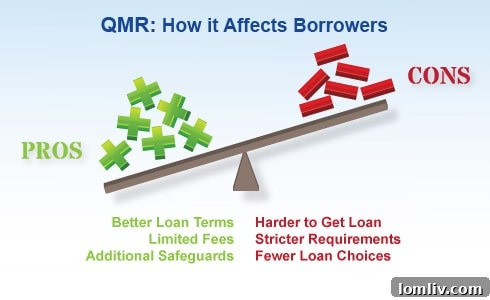 While the list of negatively impacted sectors is extensive, there are a few segments that stand to benefit from this new regulatory environment. Scott Drescher notes that attorneys and compliance companies are likely to experience a surge in demand. The complexity of the new rules necessitates legal expertise to navigate and interpret, and the increased burden of compliance creates a robust market for firms specializing in regulatory adherence. He suggests that these are arguably the only beneficiaries.
The Challenge for Borrowers: Qualification and Uncertainty
The new rules introduce a significant hurdle for many prospective homebuyers. Even individuals who are not inherently high-risk borrowers – those with excellent credit histories, stable employment, and substantial income – may find themselves excluded. The prescriptive nature of the guidelines means that two sets of criteria can easily disqualify individuals who would otherwise have paid their mortgages in full and on time. This isn’t just about credit scores; it’s about fitting into a very specific, often inflexible, mold defined by the QM standards.
For lenders, processing loans under these new guidelines becomes a more time-consuming and costly endeavor. This increased operational burden inevitably translates into higher costs for borrowers. Those lucky enough to qualify will likely pay more in fees or higher interest rates to cover the lender’s elevated risks and compliance expenses. Perhaps one of the most disheartening aspects for borrowers is the potential for disqualification at advanced stages of the loan process. It’s now possible for individuals to be pre-approved, have appraisals completed, and even receive initial underwriting approval, only for the final analysis to categorize their loan in a way that the lender cannot approve under the new QM rules. This scenario leaves borrowers in a precarious position, potentially losing earnest money, facing delayed closings, or having to restart their home search entirely.
The common assumption that “great credit and decent income” automatically qualifies one for a loan is no longer a certainty. The government, through these new regulations, has introduced a layer of skepticism, requiring a more rigid demonstration of “ability to repay” that often overlooks the broader financial health and responsibility of a borrower.
The Non-QM Loan Paradox: High Risk, Low Reward for Lenders
The Consumer Financial Protection Bureau (CFPB) has publicly stated that lenders are allowed, and even encouraged, to originate non-QM loans – mortgages that do not meet the Qualified Mortgage criteria. However, the reality on the ground presents a stark paradox. While the CFPB encourages this flexibility, lenders, in most cases, simply cannot afford to take on the immense risk associated with these loans. The primary reason is the disproportionately high cost of failure compared to the modest income generated from a successful loan.
Consider this compelling example: the net profit from a successfully closed starter home loan of $200,000 might realistically be around $500. This slim margin stands in stark contrast to the potential costs incurred if a single non-QM loan of the same value fails. The expenses associated with a failed loan can easily top $300,000, even in the absence of intentional misdeeds or fraud. These costs can include extensive legal fees for foreclosure proceedings, loss of principal and interest, property maintenance during foreclosure, administrative costs, and potential regulatory penalties for non-compliance, even if the lender acted in good faith. The math is undeniably clear: +$500 in profit versus a potential -$300,000 in losses creates an untenable risk-reward ratio for lenders. This imbalance effectively discourages the origination of non-QM loans, thereby limiting options for many borrowers who don’t fit the QM mold.
Market Implications and Future Outlook
The immediate and long-term implications of these regulatory shifts are profound. The housing market, a critical engine for economic growth, faces a potential slowdown as access to credit tightens. First-time homebuyers, self-employed individuals, and those with complex but stable financial situations are particularly vulnerable to being sidelined. This regulatory framework, while intended to safeguard the financial system, risks inadvertently creating a credit crunch that could stifle homeownership aspirations and broader economic activity. The industry is already seeing anecdotal evidence of “fun” with loans falling through on the eve of closing, leading to immense stress and financial inconvenience for all parties involved. As these policies take deeper root, the question remains: what further impact will they have on market liquidity, housing affordability, and the overall stability of the real estate sector? The initial assessment from industry experts like Scott Drescher suggests a challenging road ahead, painting a somewhat “Debbie Downer” picture for the future of real estate and mortgage lending.