Uproar in Uptown East: The Sam’s Club Proposal That Shook Dallas
The news hit with the force of an unexpected tremor: a Sam’s Club, a quintessential big-box warehouse store, was reportedly slated for a prime location in Uptown East, adjacent to Dallas’s crucial Cityplace DART station. For many, including urban planners, residents, and development observers, this announcement felt less like a smart strategic move and more like a significant misstep in the carefully unfolding narrative of one of Dallas’s most promising urban frontiers. It was a proposal that prompted widespread disbelief and sparked an urgent debate about the future direction of urban development in the heart of the city.
Uptown East: A Vision for a Vibrant Urban Core
For years, the area east of Central Expressway, specifically around the Cityplace development, has been a focal point for visionary urban planning. Developers and city leaders have actively worked to extend the vibrant, walkable ethos of Uptown into this nascent district, affectionately dubbed “Uptown East.” The goal has been clear: to foster a dynamic, multi-family residential and mixed-use environment that capitalizes on its unparalleled proximity to the urban core and, critically, to public transit infrastructure. This area, with its burgeoning residential projects and strategic location, was envisioned as a seamlessly integrated extension of Dallas’s thriving urban fabric, promoting pedestrian life, local businesses, and a high quality of urban living.
Therefore, the report from industry insiders, initially surfacing at a Las Vegas conference, detailing Trammell Crow Company’s plans for a large Sam’s Club on a newly acquired 17-acre tract, sent shockwaves through the community. This wasn’t merely a development; it felt like a direct contradiction to the very principles guiding the evolution of Uptown East. The site, strategically located on North Central Expressway at Haskell Avenue, was acquired from Affiliated Computer Services (ACS) with the promise of transforming it into a vibrant, urban mixed-use project, a development concept that had initially garnered widespread enthusiasm and support under the proposed name “East Village.”
The Unfolding of a Controversial Plan
The details, as they emerged, only deepened the concern. The initial understanding was that Trammell Crow, a developer with a significant local legacy, intended to replace the existing office buildings on the old ACS site with an urban-friendly, mixed-use development. This vision perfectly aligned with the area’s potential, especially given its immediate adjacency to the Cityplace DART station – Texas’s only subway station, an invaluable asset for promoting transit-oriented development and reducing reliance on automobiles. The term “walkable” was not just a buzzword; it was a cornerstone of the planned evolution for this prime piece of real estate.
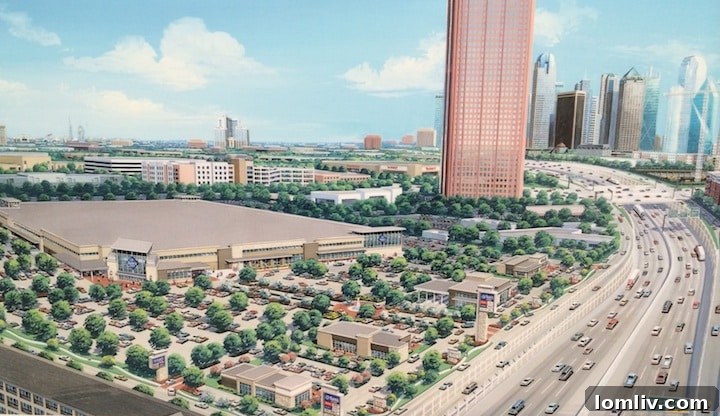
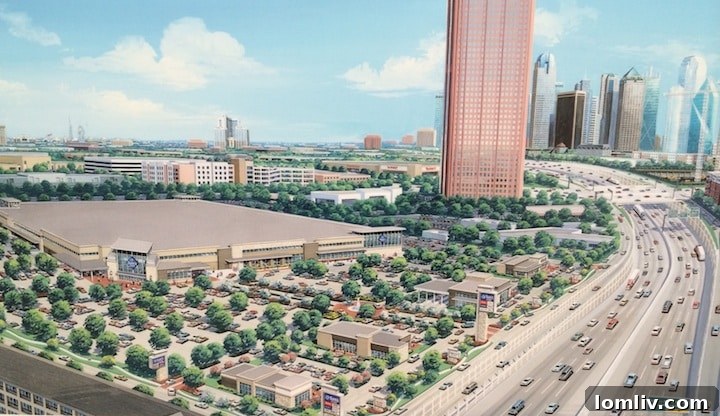
However, what was revealed at the International Council of Shopping Centers (ICSC) conference painted a starkly different picture. Instead of an innovative mixed-use urban village, plans displayed by Crow indicated a massive Sam’s Club store, flanked by several smaller retail buildings, all oriented along the North Central frontage road. While Sam’s Club and its parent company, Walmart, are indeed prominent tenants in other Crow-developed centers like Timber Creek Crossing in northeast Dallas, the context of Uptown East presented a fundamental disconnect. The sheer scale and operational model of a warehouse club, with its vast parking lots and reliance on vehicular access for bulk purchases, seemed diametrically opposed to the urban, pedestrian-focused environment that developers and residents had been striving to cultivate for Uptown East.
It’s no surprise that Sam’s Club would want a location in central Dallas, aiming to tap into a dense urban market where competitor Costco has also been actively scouting potential sites, including the former Steakley Chevrolet property on Northwest Highway. This business rationale, however, often clashes with the nuanced demands of urban planning in dense city centers.
Developer’s Responsibility: Profit vs. Community Vision
This situation immediately brought to the forefront the complex interplay between developer ambition and community responsibility. Trammell Crow Company, a highly respected and successful development firm with deep roots in Dallas, is undeniably entitled to pursue profitable ventures. However, the question many began to ask was whether maximizing short-term profits should come at the expense of the long-term urban vision and the very fabric of the city that helped foster their success. The initial promise of an “urban mixed-use development” for such a prominent, transit-adjacent parcel felt like a commitment to a particular kind of urban future, a commitment that the Sam’s Club proposal appeared to undermine.
The hypothetical scenario of such a development model extending to other prime urban locations in Dallas—such as the block housing Marshalls in Preston Center, recently acquired by Trammell Crow—underscored the gravity of the precedent this project could set. It challenged the notion of responsible development, urging firms to consider not just their bottom line but also their enduring impact on the character, livability, and future trajectory of their home city. The community’s sentiment was clear: prioritizing “Walmart dollars” over the established urban planning principles for a crucial area like Uptown East was seen as a betrayal of civic trust.
City Planning and Public Outcry: A Battle for the Urban Soul
Compounding the frustration was the revelation that the City of Dallas’s planning staff had reportedly given their blessing to the development plan. This came as a significant blow to residents who had expected the city to uphold the vision of a walkable, transit-oriented Uptown East. While the property’s zoning as a “conceptual planned development district” (CPD) granted Trammell Crow considerable flexibility, requiring only City Plan Commission approval for specific phases, it also opened the door for intense public scrutiny and opposition. The community quickly mobilized, recognizing that while the zoning might offer a wide range of possibilities, the specific development plan for a big-box store in this location was unacceptable.
The public outcry was swift and passionate. Residents, urban planning advocates, and local leaders began inundating city officials with their concerns. Petitions were launched on platforms like Change.org, directly appealing to Council Member Adam Medrano and Mayor Mike Rawlings to intervene and halt the Sam’s Club project before the arrival of the first delivery trucks. Community meetings, like the one hastily organized at a local Starbucks, saw packed attendance, with attendees expressing everything from exasperation over potential traffic nightmares to profound disappointment over the perceived squandering of invaluable urban real estate. One city commissioner, reflecting the intense public sentiment, suggested that the development plan, far from being a “done deal,” would face “nothing short of hell” in forthcoming discussions, a sentiment echoed by Robert Wilonsky’s reporting.
The Arguments Against a Big-Box Store in Uptown East
The opposition to the Sam’s Club proposal wasn’t merely a “Not In My Backyard” (NIMBY) reaction; it was rooted in fundamental urban planning principles and a clear vision for Dallas’s future. Several key arguments were consistently voiced:
Aggravated Traffic Congestion
While increased traffic is an undeniable reality across growing urban centers like Dallas, introducing a large-scale warehouse club in this location is predicted to exacerbate the issue significantly. A Sam’s Club draws thousands of cars daily, necessitating vast parking areas and generating substantial vehicle movements, particularly for loading and unloading. This influx of traffic on Central Expressway frontage roads and surrounding arterial streets would undermine efforts to create a pedestrian-friendly environment and could overwhelm existing infrastructure, making daily commutes and local navigation even more challenging for residents of Uptown East, Lakewood, and other adjacent neighborhoods. Critics argue that while traffic is a city-wide challenge, adding a high-volume car-centric retail destination directly next to a major transit hub is counterproductive to intelligent traffic management and urban flow.
Contradiction to Walkability and Urbanism
One of the most compelling arguments against the Sam’s Club is its inherent incompatibility with the concept of a walkable urban district. The entire premise of a bulk discount store is to facilitate large-scale purchases, often requiring vehicles for transport. The idea of residents walking from the DART station or nearby apartments, laden with an 18-pack of paper towels, a case of soda, or laundry detergent, is impractical, if not absurd. This clashes directly with the city’s aspirations for Uptown East to be an area where residents can comfortably walk to amenities, fostering a vibrant street life and reducing dependence on cars. A massive, car-centric retail development undermines the very fabric of urban living being meticulously built in the surrounding areas, transforming what should be a dynamic pedestrian corridor into another sprawling car park.
Squandered Opportunity and Loss of Potential
This 17-acre parcel, directly adjacent to a major transit hub, represents an almost unparalleled opportunity for truly transformative urban development. Instead of a big-box store, the site could host a dynamic mixed-use complex akin to the highly successful West Village model – a harmonious blend of residential units, diverse retail, bustling restaurants, and accessible commercial spaces. Such a development would not only attract more residents and businesses but also contribute significantly to the tax base, enhance the aesthetic appeal of the area, and genuinely foster a sense of community. Sacrificing this potential for a warehouse club is viewed as a profound misallocation of precious urban real estate, an opportunity lost for generations to come, preventing the creation of a truly integrated and sustainable urban quarter.
Impact on Safety and Community Activation
Concerns about crime in the Cityplace area have been a recurring issue in recent years. A proven strategy for enhancing urban safety involves increasing population density, promoting pedestrian activity, and ensuring well-lit public spaces. A vibrant mixed-use development, with its constant flow of people, diverse storefronts, and active streetscapes, naturally contributes to a safer environment by putting “more eyes on the street” and extending active hours into the evening. In contrast, a big-box store typically features expansive parking lots that often become desolate after business hours, potentially creating inactive and less secure areas, thereby counteracting efforts to make the neighborhood feel safer and more integrated. The argument is that active, diverse urban spaces are the best deterrent to crime, not isolated commercial zones.
Redundancy and Market Saturation
Critics also pointed out the apparent redundancy of placing a Sam’s Club in this location, particularly when a relatively new Sam’s Club and Walmart Supercenter already exist just six miles north in the Timber Creek Crossing shopping center at Skillman and Northwest Highway. As Steve Brown’s report initially highlighted, Trammell Crow itself developed the Timber Creek Crossing, demonstrating their existing relationship with these retailers. This raises questions about the true necessity and strategic placement of yet another big-box store within such a close radius, especially when the alternative use of the land could fulfill a greater, more unique need for the urban core, creating something truly distinctive rather than duplicative.
The Path Forward: A Call for Thoughtful Urban Planning
The debate surrounding the Sam’s Club at Cityplace is more than just about a single retail development; it’s a critical discussion about the very soul and future of urban development in Dallas. It highlights the ongoing tension between traditional commercial models and the burgeoning demand for walkable, transit-oriented, and community-focused environments. As residents continue to voice their concerns and engage with city officials, the outcome of this particular proposal will undoubtedly set a significant precedent for how Dallas prioritizes its growth and whether it will truly embrace the principles of progressive urbanism in its most valuable and central districts.
The community’s active participation, exemplified by meetings like the recent gathering at the Starbucks inside the Capitol Avenue Kroger tonight from 8:30 to 10 p.m. with Councilman Adam Medrano in attendance, underscores the vital role of civic engagement in shaping urban landscapes. This ongoing dialogue serves as a powerful reminder that the future of Dallas’s urban core rests not just with developers and city planners, but also with the collective voice and vision of its residents, who demand a future that aligns with modern, sustainable urban ideals.