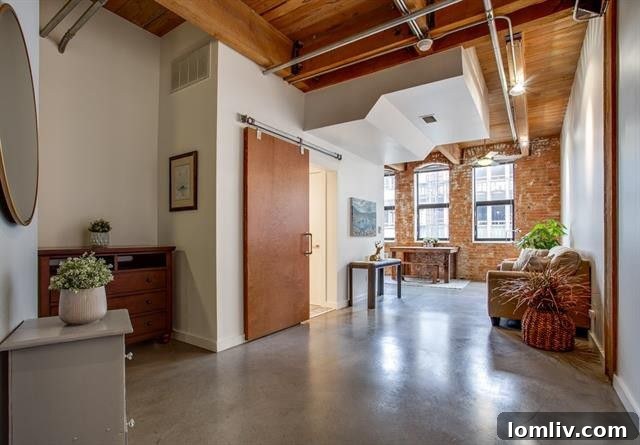
Unveiling the Layers of History: A Unique Loft Experience at 509 Elm Street in Downtown Dallas
In the vibrant heart of Downtown Dallas, where historic architecture meets modern urban living, lies a captivating loft that tells a story spanning over a century. Sometimes, in the quest to feature exceptional homes, we stumble upon properties with such rich histories that they draw us into an unexpected journey through time. Our recent exploration of a charming loft at 509 Elm Street proved to be one such delightful digression, revealing not just a beautiful living space but also a fascinating narrative deeply woven into the fabric of Dallas’s past.
The moment we discovered this particular unit in the iconic 509 Elm Street building, we were immediately captivated. It embodies everything one loves about a quintessential loft condo: the raw authenticity of exposed brick walls, the robust character of original timber beams, the sleek, urban appeal of polished concrete floors, and an abundance of natural light streaming through expansive windows. These architectural elements are not merely decorative; they are tangible links to the building’s industrial heritage, offering a daily reminder of its storied past.
However, the visible charm was only the beginning. When a building exudes such a strong sense of history, an irresistible curiosity compels one to delve deeper. What stories do these walls hold? What has transpired within these very spaces? We embarked on a historical investigation, determined to uncover the secrets of 509 Elm Street.
A Conflicting Chronology: Pinpointing the Building’s True Origin
Our initial research quickly presented a intriguing puzzle. While the property listing stated a build date of 1930, other historical sources offered conflicting information, suggesting 1901, 1906, and even 1925. This discrepancy only fueled our determination to unearth the definitive timeline of this remarkable structure. Such variations are not uncommon in historical records, often arising from renovations, significant ownership changes, or simply incomplete early documentation.
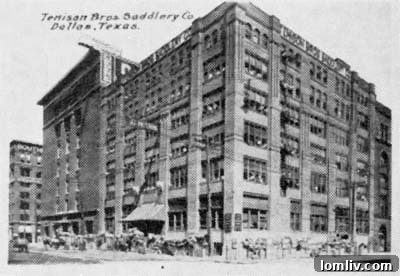
Source: Dallas, April 1925. (Courtesy Dallas Public Library archives)
Our quest for accuracy led us to various historical communities and archives. The dedicated members of the Facebook group “Pioneers of Dallas County,” a treasure trove of local history enthusiasts, consistently pointed to 1901 as the building’s true construction date. This early date immediately positioned the building as a venerable landmark, predating much of the modern development that would later define Downtown Dallas.
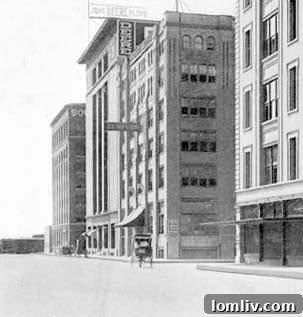
Source:
Texas and the Southwest: Book of Facts, Dallas Chamber of Commerce, ca. 1914. (photo courtesy Dallas Public Library archives)
The Legacy of Tenison Brothers Saddle Company: A Titan of Industry
The most definitive confirmation came from the extensive records housed within the Dallas Public Library archives. According to their detailed entries, the building at 509 Elm Street was indeed constructed in 1901. Its original purpose was to serve as the headquarters and primary manufacturing facility for the Tenison Brothers Saddle Company. This revelation brought a tangible sense of significance to the building’s early life.
The Tenison Brothers Saddle Company, established way back in 1867, had by the turn of the century become a formidable presence in the region’s burgeoning economy. Dallas, then a rapidly expanding hub of trade and agriculture, provided the perfect environment for a business catering to the needs of ranchers, cowboys, and equestrians across Texas and beyond. By 1901, their operations had grown to such an impressive scale that they required a substantial, purpose-built structure to accommodate their flourishing enterprise.
The new building was a testament to their success and vision: a six-story edifice constructed of distinctive pink-pressed brick. The cost of its construction was a significant sum for the era, $30,000, which, when adjusted for inflation, would equate to approximately $900,000 in today’s money. This substantial investment underscored the company’s confidence and dominance in the market. Indeed, as proudly noted in the library archive entry, “Tenison claimed it was the largest factory devoted to saddle and harness making in the country.” This was no small boast, reflecting a period when horse and buggy transportation, along with ranching, were central to American life. The sheer scale of their operation, producing saddles, bridles, and harnesses, must have been truly impressive, cementing their status as an industrial leader.
Evolution Through the Decades: From Saddles to Fashion
As the 20th century progressed, so did the industrial landscape of Dallas, and with it, the tenants of 509 Elm Street evolved. By 1937, the building transitioned from equestrian outfitter to an electrical equipment manufacturer, becoming home to the Folsom Company. This shift mirrors the broader economic changes occurring in the United States, as manufacturing moved towards newer technologies and industries.
Just a few years later, around 1943, another significant change took place. Sidran of Dallas, a prominent women’s clothing company, established its operations within the historic building. This marked a fascinating pivot towards the burgeoning fashion and retail sector that would later become a hallmark of Dallas’s economy. Sidran’s stay, however, was relatively brief as their success soon necessitated a move to larger quarters, indicative of their rapid growth and the dynamic nature of the fashion industry.
The Nardis Connection: A Pop Culture and Historical Twist
The story of Sidran of Dallas and its subsequent transformation introduced yet another captivating “wormhole” in our historical dive, one that took an utterly unexpected turn. As Sidran expanded, it acquired new partners and eventually new ownership. With this change came a clever rebranding: the company name was inverted to “Nardis of Dallas,” a distinctive and memorable moniker.
This is where the story truly becomes intertwined with pop culture. Ben Gold, the owner of Nardis of Dallas, and his wife, cultivated a friendship with the legendary actress Rose Marie during her visit to Dallas for a production of “Bye, Bye Birdie.” This connection, improbable as it might seem, reportedly led to Nardis of Dallas becoming the official costumer for the iconic “Dick Van Dyke Show.” This fascinating detail, meticulously uncovered by Paula Bosse in her excellent article for Flashback Dallas, adds a glamorous layer to the building’s history, linking a Dallas factory to one of America’s most beloved television series. Imagine the garments worn by Rob and Laura Petrie being crafted right within these very walls!
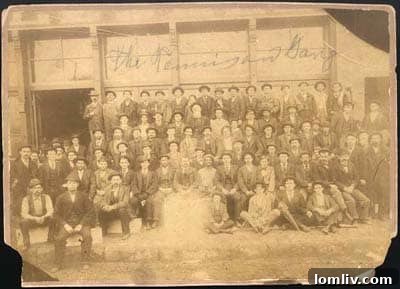
Source: PA97-7/873, Jim Doster photograph collection (courtesy Dallas Public Library archives)
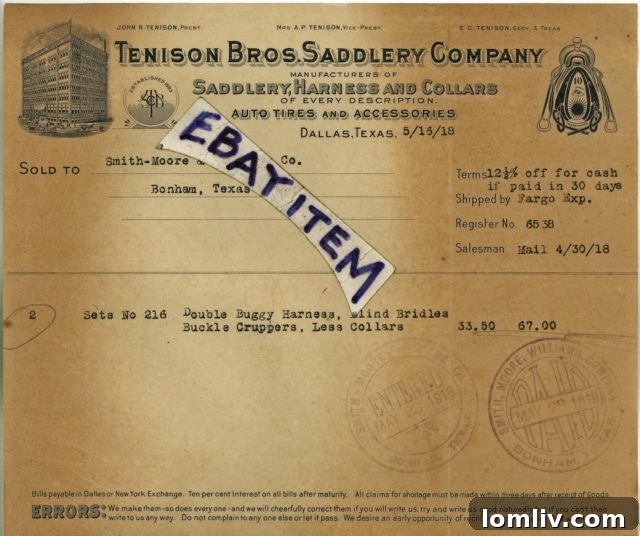
Found on eBay.
The Unsettling Zapruder Coincidence
But the historical twists don’t end there. As Paula Bosse further elaborates in her article, Nardis of Dallas has an even more astonishing and, frankly, unsettling connection to a pivotal moment in American history:
“Nardis of Dallas DOES have an interesting connection to that. In 1941 Abraham Zapruder, who had worked in the garment industry in New York, moved to Dallas and began working for Ben Gold as a Nardis pattern-cutter. His name even appears in a couple of classified ads in The Dallas Morning News.
While at Nardis — before he left to start his own clothing company — Zapruder worked with a woman named Jeanne LeGon (later Jeanne De Mohrenschildt) who, with her husband George (suspected by some of being a CIA operative), was friends with Lee Harvey Oswald in the early ’60s. Yep. That’s an interesting, head-spinning coincidence.”
This revelation places a figure of immense historical significance, Abraham Zapruder—the man who filmed the assassination of President John F. Kennedy—directly within the walls of 509 Elm Street during his early years in Dallas. To think that Zapruder, before creating his fateful film, walked these very floors as a pattern-cutter, and even interacted with individuals who would later become tangential to the Oswald narrative, adds an almost surreal layer to the building’s past. It’s a powerful reminder of how seemingly ordinary places can touch extraordinary events and individuals, creating unexpected threads in the tapestry of history. This particular “coincidence” underscores the deep and often surprising historical currents that run through the city of Dallas.
Modern Loft Living: Unit 505 Today
Today, the magnificent 509 Elm Street building has been thoughtfully transformed, giving new life to its historic structure. It is now home to approximately 66 contemporary loft condominiums, each offering a unique blend of historical charm and modern convenience. Among these coveted residences is Unit 505, the “Tuesday Two Hundred” feature that initially drew us into this remarkable building’s history.
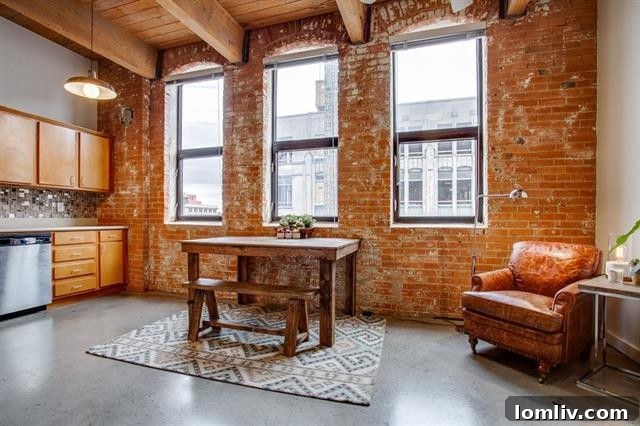
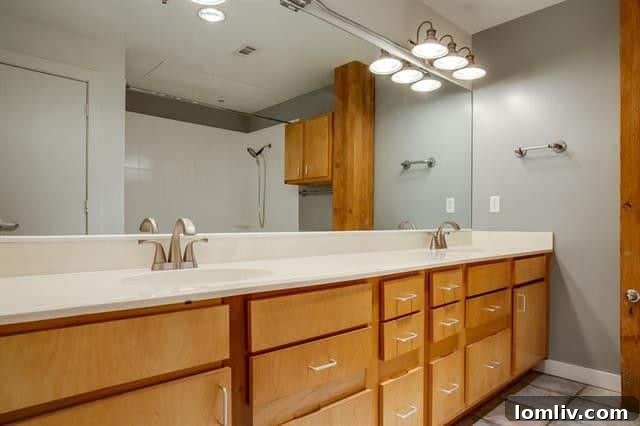
Unit 505 itself is a shining example of prime loft living. It is exceptionally bright and airy, thanks to its generous windows and high ceilings, creating an inviting and expansive atmosphere. The industrial touches that characterize historic loft conversions—such as the aforementioned exposed brick and concrete floors—are perfectly integrated, lending an authentic, sophisticated aesthetic. This one-bedroom, one-bathroom property is designed for comfort and efficiency, boasting ample storage solutions, convenient in-unit laundry connections, and a generously sized bathroom that offers a retreat-like feel. It’s a space where historical grandeur meets contemporary functionality, ideal for those seeking a vibrant urban lifestyle without sacrificing character.
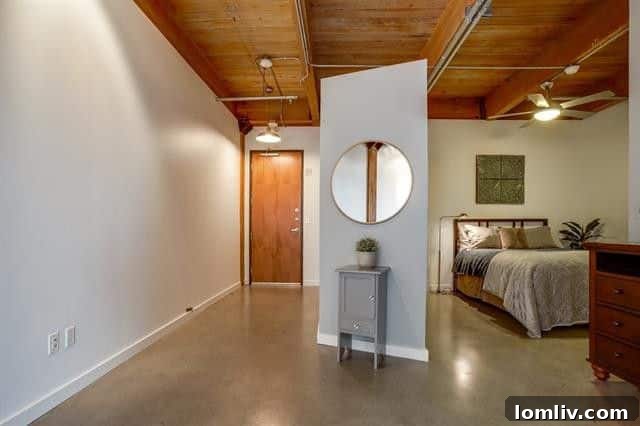
Immerse Yourself in Downtown Dallas Living
Beyond the walls of this historic loft, residents of 509 Elm Street are afforded an unparalleled urban living experience in Downtown Dallas. The location is truly exceptional, placing you within mere blocks of some of the city’s most celebrated cultural institutions and green spaces. Imagine living just a short stroll from the world-renowned Nasher Sculpture Center, an exquisite outdoor gallery, or the Dallas Museum of Art, home to a vast and diverse collection spanning centuries and continents.
For outdoor enthusiasts and those seeking a respite from city life, several beautifully maintained parks are virtually on your doorstep. Klyde Warren Park, a groundbreaking urban deck park built over a freeway, offers a dynamic array of free activities, food trucks, and a vibrant community atmosphere. Main Street Garden Park provides a tranquil oasis with lush landscaping and public art, while Belo Gardens offers serene fountains and shaded areas for relaxation. These green spaces enhance the quality of urban life, providing venues for recreation, events, and quiet contemplation.
Furthermore, the culinary scene surrounding 509 Elm Street is incredibly diverse and exciting, offering an abundance of dining choices to suit every palate and occasion, from casual cafes to upscale restaurants. Residents also benefit from exceptional proximity to public transit options. Living here means you could easily embrace a car-free lifestyle for most, if not all, of the time. With DART (Dallas Area Rapid Transit) rail stops conveniently nearby, commuting downtown or across the city is effortless. Combine this with readily available grocery delivery services, and the convenience of urban living reaches new heights.
An Irresistible Opportunity to Own a Piece of Dallas History
This meticulously preserved and thoughtfully updated loft at 509 Elm Street offers more than just a home; it offers a rare opportunity to own a tangible piece of Dallas history, enriched with fascinating tales from a saddle company to a fashion house with surprising pop culture and historical connections. Blending industrial-chic aesthetics with modern comforts, all set within a vibrant, amenity-rich downtown location, this property presents an exceptional value.
Priced at an attractive $200,000, Unit 505 is a remarkable offering for anyone seeking a unique urban dwelling. It is currently listed by Alicia Schroeder with Dave Perry-Miller InTown, a name synonymous with excellence in Dallas real estate. This historic loft is an invitation to not just live in Downtown Dallas, but to become a part of its ongoing story.
Want to see more of this incredible loft and imagine your life steeped in history and modern convenience?
Click here to view the full listing and embark on your own discovery of 509 Elm Street.