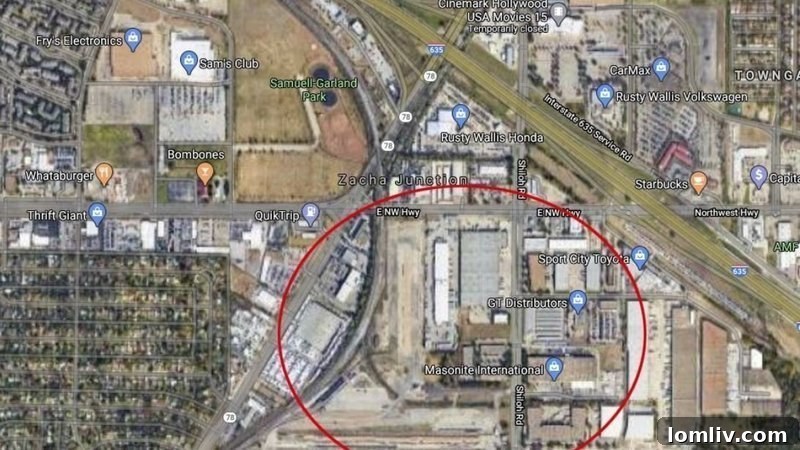
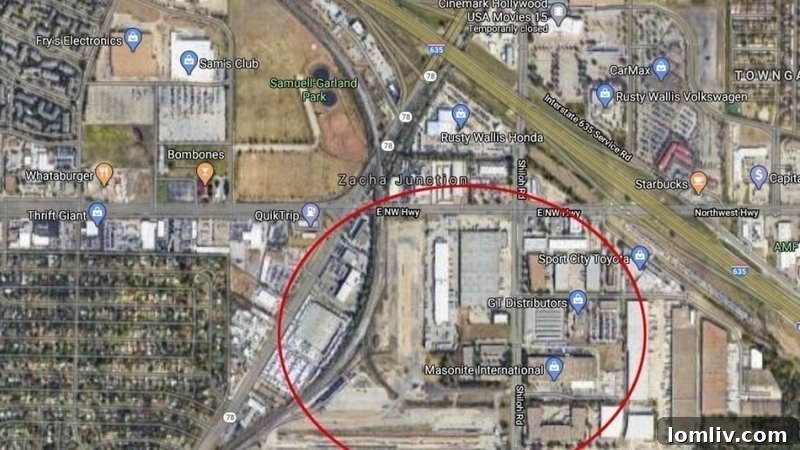
In a resounding display of community power and civic engagement, the residents of East Dallas have successfully thwarted plans for a controversial dual cement and asphalt batch plant. The proposed industrial facility, earmarked for a substantial site at the intersection of Northwest Highway and Garland Road, faced overwhelming opposition from local citizens, ultimately leading to a unanimous rejection by the Dallas City Council. This pivotal decision marks a significant victory for the community against corporate giants Martin Marietta and Austin Bridge, who had sought a zoning variance for the project.
The unanimous vote against the firms’ request for a zoning variance at the Zacha Junction rail site was delivered with prejudice, a critical detail that imposes a two-year moratorium on any similar requests from either organization for this location. This means the immediate future of this East Dallas site is safeguarded from industrial encroachment, allowing residents and city planners to reconsider its appropriate development path without the looming threat of heavy industry.
Outdated Zoning and the Vision for Modern Dallas
A significant highlight of the council meeting was the powerful statement from District 9 Councilmember Paula Blackmon. Her comments underscored a fundamental issue facing many rapidly developing urban areas: outdated zoning regulations that no longer reflect the current reality or future aspirations of a community. Blackmon articulated a crucial shift in perspective, declaring, “We’re not in the country anymore.”

Councilmember Blackmon further emphasized that the area around Zacha Junction, once considered a distant suburb, has transformed into a vibrant and densely populated residential hub. She has committed to asking city staff to undertake a rigorous review of the site’s current zoning and allowable uses. This proactive approach aims to align the area’s land use policies with its present character and future potential, recognizing it as an “opportunity zone” – a designation that suggests a focus on beneficial community development, economic growth, and enhanced quality of life, rather than heavy industrial activity. This commitment reflects a growing understanding within city leadership that urban planning must evolve with its citizens, prioritizing their health, safety, and well-being over outdated industrial classifications.
The very fact that such a controversial item, facilitated by the firm Masterplan, managed to progress through various city staff reviews and even the City Plan Commission raises pertinent questions about the internal processes and checks within Dallas’s urban planning system. How could a proposal so vehemently opposed by residents and ultimately rejected unanimously by the City Council make it so far? This isn’t an isolated incident in Dallas’s history; the city has a track record of grappling with industrial batch plant proposals, many of which attempt to establish themselves within city limits, often in densely populated neighborhoods that are home to multi-generational and diverse communities.
This pattern of industrial proposals targeting residential areas has long been a point of contention, highlighting a systemic challenge in balancing industrial needs with community preservation. The proposed Zacha Junction batch plant, if approved, would have added to the existing environmental and health burdens faced by numerous Dallas communities, pushing residents to the brink of their tolerance for industrial pollution.
Environmental Justice and Community Impact
The concerns voiced by District 6 Councilmember Omar Narvaez, representing West Dallas, resonated deeply with the experiences of many across the city. His remarks brought to light the critical issue of environmental justice, emphasizing how industrial facilities, particularly cement and asphalt batch plants, have historically been disproportionately sited in communities of color. “Of the members of the council, I’m probably the most familiar with cement batch plants,” Narvaez stated, speaking from extensive firsthand experience. He powerfully asserted, “Because of systemic racism, batch plants have been built in neighborhoods with high numbers of people of color.”
Councilmember Narvaez meticulously detailed the severe consequences of such industrial proximity: significant health issues, excessive strain on public infrastructure, and myriad environmental problems. These include, but are not limited to, respiratory illnesses exacerbated by particulate matter, increased truck traffic leading to road degradation and noise pollution, and potential contamination of air and water resources. He stressed the reality of these impacts, stating, “I know first hand, and so do the residents of West Dallas.” His testimony served as a stark reminder that this debate was not merely about zoning, but about fundamental human rights and equitable living conditions. The Zacha Junction proposal threatened to replicate these injustices in East Dallas, galvanizing residents from diverse backgrounds to stand united against it.
A Scarcity of Information, An Abundance of Opposition
The marathon Wednesday council meeting, which saw 25 speakers vociferously oppose the batch plant, stands as a testament to the community’s mobilization and the sheer weight of their arguments. In stark contrast, only one individual, Masterplan CEO Dallas Cothrum, spoke in favor of the project. Cothrum attempted to mitigate concerns by arguing that the proximity of the rail junction would reduce the number of fossil fuel-burning transport vehicles, thereby minimizing emissions. However, his assertions were largely overshadowed by the compelling and often personal testimonies of the residents.
Among the powerful voices against the proposal were Dallas ISD trustee Dan Micchiche, human rights lawyer Bill Holston, and even elementary-aged Rheeden Fuentes, whose innocent yet potent plea for clean air and a healthy environment for her future deeply moved the council. Their collective points were too compelling for the council to ignore. A significant concern raised by residents was the alarming scarcity of public information regarding the proposed plant. There was little to no accessible discussion about the project’s long-term implications, nor was there comprehensive data available on its potential impact on critical local resources. These included the delicate ecosystem of White Rock Creek, the nearby youth soccer fields frequented by countless children, and the overall air quality, particularly regarding dust emissions – a point vociferously echoed by numerous East Dallas residents.
This lack of transparency and proactive engagement from the developers and initial city review processes fueled community outrage and solidified their opposition. It became evident that without the vigilant efforts of the community, crucial environmental and health considerations might have been overlooked entirely. The residents effectively highlighted that the burden of proof and the responsibility to protect public welfare should not fall solely on the shoulders of concerned citizens but be integral to the city’s planning framework.
The initial proposal was slated to come before the Dallas City Council in May, but Councilmember Blackmon strategically deferred the item. This crucial deferral provided the much-needed window for public comment and allowed the highly organized citizens of East Dallas to consolidate their efforts. Leveraging platforms like Facebook, residents rallied, exchanged information, and coordinated their opposition, resulting in an unprecedented volume of thoughtful and impassioned comments. This collective action was instrumental in educating both the public and city officials about the true scope of the project’s potential negative impacts.
Councilmember Blackmon acknowledged the overwhelming public input, stating, “We’ve heard you, it’s been loud and clear.” She further personalized her understanding of the community’s health concerns by revealing, “One of my sons has asthma, and we hear your concerns. Because of you, we make better decisions.” Her remarks underscored the council’s attentiveness to their constituents and the direct impact of citizen engagement on policymaking. The impassioned arguments and organized opposition from East Dallas residents created an undeniable momentum that the City Council could not ignore.
This outcome sends an unambiguous message: the Dallas City Council has drawn a definitive hard line concerning what industrial activities are permissible within or adjacent to residential areas. For developers like Martin Marietta, Austin Bridge, and Masterplan, their proposal at Zacha Junction starkly crossed that line. It serves as a precedent-setting decision, signaling a shift towards prioritizing community well-being and environmental health over industrial expansion in already established neighborhoods. The words of District 1 Dallas City Councilmember Chad West encapsulated the prevailing sentiment perfectly: “I don’t care what area you’re in, if it’s near a neighborhood, a cement batch plant doesn’t belong there.” This victory for East Dallas is a testament to the power of a united community and a beacon of hope for responsible urban planning across the city.