Texas Wildfires: Understanding the Threat and Protecting Your Home Amidst Unprecedented Drought
As Texas endures an unrelenting drought, the age-old warning—”Only you can prevent wildfires”—resounds with critical urgency. The reality of a single spark igniting a devastating inferno has become all too apparent across the Lone Star State, threatening homes, livelihoods, and the natural landscape.
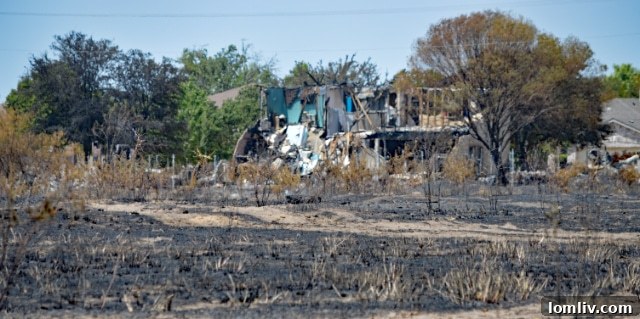
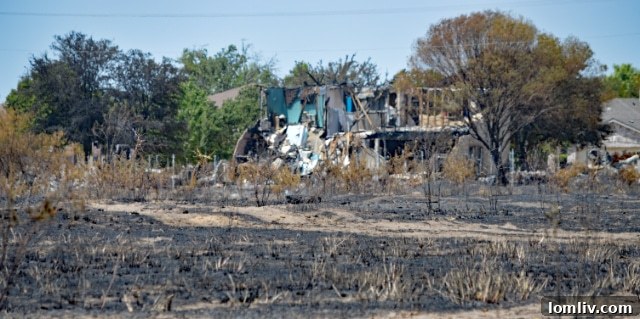
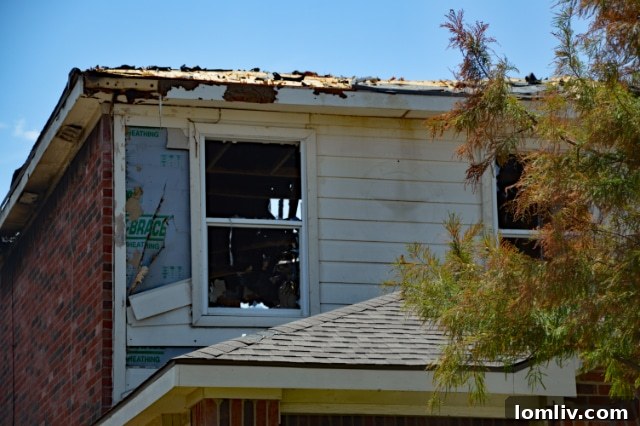
The severity of this threat was starkly illustrated on July 25th in Balch Springs, a community approximately 15 miles east of downtown Dallas. What started as a small spark rapidly escalated into a raging “inferno,” damaging twenty-six homes and utterly destroying nine. Miraculously, no injuries were reported, but the incident served as a potent reminder of the destructive power of wildfires. Just days later, news of a grass fire near Legacy Drive in Frisco—thankfully contained without injury or structural damage—further cemented the need for heightened awareness and preventative action.
The Balch Springs blaze was reportedly ignited by a “brush hogger” cutting through neglected land where grass stood as tall as 6 feet, bone-dry and ripe for combustion. This property, spanning 67 undeveloped acres adjacent to a residential area, was under an active code violation. City officials confirmed that the property owner had hired a contractor to mow the lot. This tragic incident underscores the critical importance of adhering to local ordinances, as Balch Springs code explicitly mandates that grass and weeds be kept under 10 inches in height.
Neglected vegetation, particularly tall grass and weeds, is not just an aesthetic concern; it’s a significant fire hazard. In Dallas, this represents the No. 1 code violation, with property owners required to maintain vegetation at 12 inches or lower. Ignoring these regulations can lead to court citations or substantial bills for city-provided mowing services, a small price to pay compared to the catastrophic losses inflicted by wildfire.
Balch Springs Fire Marshal Sean Davis, with two decades of experience, expressed his shock at the scale of the July 25th incident, remarking that he had never witnessed anything similar in the small community. He noted, “There was debris, junk, concrete, and metal buried in the grass.” The contractor, using a brush hog, was simply knocking down the immense volume of dry vegetation, creating a hazardous environment. “Brush hogging is just knocking it down; it’s not a clean kind of mowing,” Davis explained, highlighting how this method, especially over overgrown and debris-laden land, can easily generate sparks.
Balch Springs, a city of approximately 20,000 residents, relies on a fire department staffed by roughly 30 dedicated volunteers. The rapid progression of the July 25th fire necessitated a mutual aid agreement, bringing in firefighters from neighboring communities, including a swift response from the Dallas Fire Department, as Davis’s first call demonstrated. This collaborative effort is crucial when facing blazes of such intensity.
Texas: A Tinderbox Under Siege by Drought
The drought gripping Texas has transformed the state into a vast tinderbox. Presently, a staggering number of counties—224 out of 254—are under a burn ban, the most extensive such restriction since the devastating fires of 2011, which scorched 4 million acres. These bans prohibit residents from burning trash and other materials, but the danger extends beyond intentional fires.
Unintentional sparks from various sources can be equally hazardous. A catalytic converter on a vehicle, chains dragging on asphalt, or even routine welding can all generate the critical spark needed to ignite dry vegetation. The Texas A&M Forest Service reports a sobering statistic: a staggering 90 percent of wildfires are human-caused, rather than naturally occurring events like lightning strikes. This year alone, over 210,000 acres of Texan land have been consumed by fire, a testament to the persistent threat.
Wes Moorehead, Fire Chief of the Texas A&M Forest Service, emphasized the proactive measures being taken: “As conditions continue to deteriorate for much of the state, we remain proactive in ensuring the state has the necessary resources to respond to any wildfire.” He added, “Wildfire activity is occurring across the state, from border to border, and requires a lot of support. Texas A&M Forest Service continues to mobilize additional firefighters, equipment, and aircraft, positioning them across the state for a quick response.” The coordinated efforts of these emergency services are vital in mitigating the rapid spread and devastating impact of these blazes.
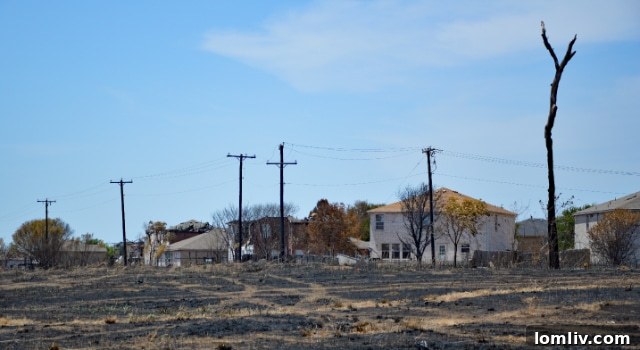
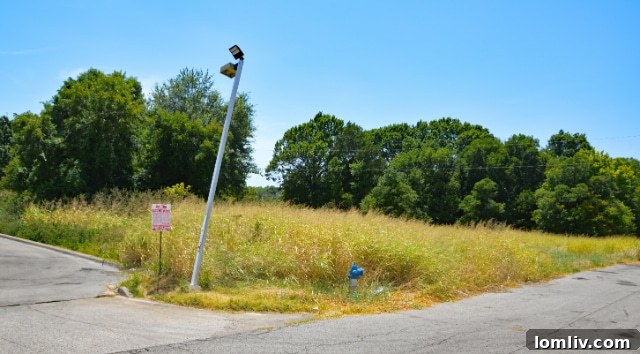
Fire Marshal Davis further elaborated on the critical combination of environmental factors: low humidity, high winds, and exceptionally dry grass create a perfect “tinderbox” scenario. This volatile mix provides abundant “fuel,” making any spark a potential disaster. The speed at which the Balch Springs fire devoured the neighborhood—approximately 40 minutes—underscores the explosive nature of fires in these conditions. Davis noted, “That grass was fire fuel. It was something for the fire to burn and consume. If it’s not there, it can’t be burned that rapidly.”
Beyond the immediate vegetation, Davis highlighted another critical factor in property damage: “I hesitate to say this, but every home in that area that had some kind of covered back patio, deck, or pergola, burned. I’m afraid it was the wood in those structures that caught fire and introduced the fire to the homes.” This observation emphasizes the importance of managing all combustible materials around a residence.
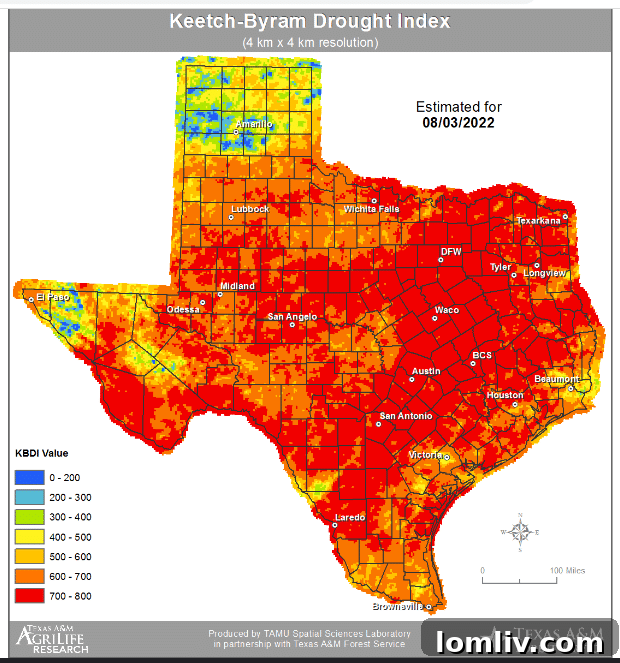
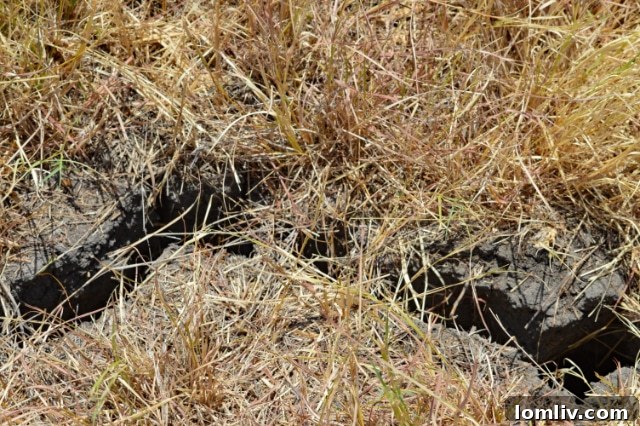
A light rain shower, while offering temporary relief, will do little to alleviate the widespread drought. “The vegetation is dead; it’s not going to absorb anything,” Davis cautioned, indicating that the deeply parched landscape requires sustained, significant rainfall to recover. This dire situation is corroborated by the Keetch-Byram Drought Index (KBDI), which shows most of the state as “absolutely dry.”
Texas A&M Forest Service experts explained the science behind the crisis: “Persistent temperatures above 100 degrees will continue to draw moisture from live vegetation.” This constant heat stress has pushed mid-July live fuel samples in critical regions like the Cross Timbers, Rolling Plains, and Hill Country to alarming levels. This means that under elevated fire weather conditions, “tree torching”—the dangerous transition of fire from the ground into the tree canopies—becomes highly probable, increasing the destructive potential and difficulty of containment for any wildfire.
Water Shortages and Sustainable Lawn Management
The prolonged triple-digit temperatures present a dual challenge for Texans. Residents battle exorbitant electric bills to keep their homes cool, while concurrently facing severe water conservation mandates. Watering lawns, traditionally a routine summer chore, has become a significant dilemma, particularly in smaller Texas communities grappling with dwindling water supplies.
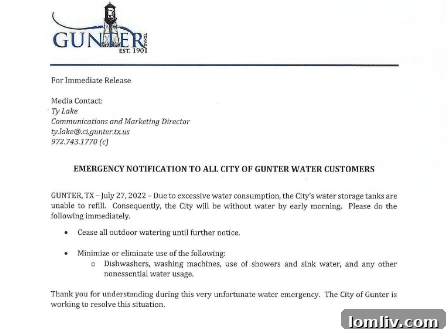
Gunter, a small Grayson County community nestled near Sherman and Celina, recently implored its residents to “severely restrict non-essential water usage.” This drastic measure included limiting outdoor watering, the use of washing machines, and dishwashers, and even requested residents to curb shower and sink usage. City officials attributed this critical shortage, announced on July 27th, to “excessive use of water.” A message on the city’s website noted phone outages at City Hall, with no current updates available on the water situation for its over 2,000 residents, highlighting the urgency and potential chaos of such shortages.
The combination of parched grass and the inability to water it significantly elevates the wildfire risk for rural and suburban communities. However, James McAfee of the Texas A&M AgriLife Extension Service points out a common pitfall: many homeowners are not equipped with the knowledge to properly water their lawns, even when water is available.
McAfee advises homeowners to develop a strategic watering plan that takes into account several key factors: soil type, grass variety, specific management practices, and current environmental conditions. “Environmental conditions affect the water requirements of a lawn,” he explained. “With low humidity, high temperatures, and high winds, water is quickly lost from the soil by transpiration and evaporation, and grass will need watering more often. When the weather is cool, humid, and less windy, grass will need less water.” Understanding these variables can help homeowners conserve water effectively while still maintaining a healthier, less flammable yard.
Identifying and Mitigating Wildfire Risk for Homeowners
Fire Marshal Davis offered an important distinction regarding wildfire risk. He reassured residents in established suburban areas with smaller lots and well-maintained, regularly mowed yards that their risk of catastrophic wildfire is relatively low. “If you’re in a residential neighborhood and someone’s barbecue grill falls over and your grass is 1 or 2 inches in height, it might cause some fence damage, but it’s nothing that can’t be put out with a fire hose,” Davis explained.
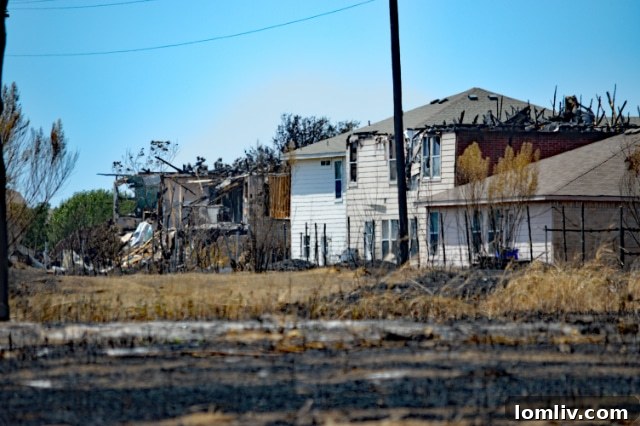
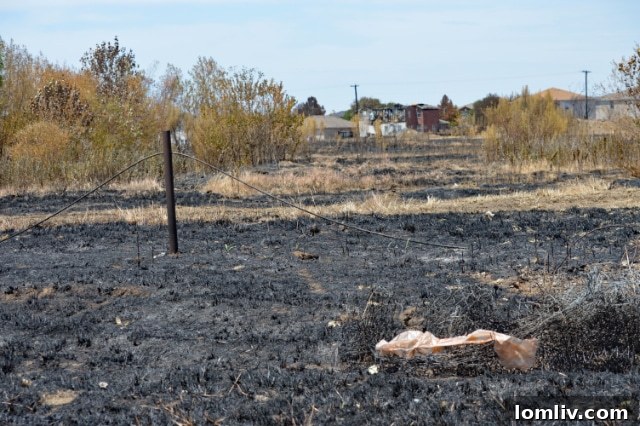
The Balch Springs tragedy, however, highlights a specific and growing vulnerability. The fire originated in an expansive area of dry, dense, and thick grass, further complicated by neglected debris that was not on the homeowners’ properties. Davis emphasized, “It wasn’t their fault — or their responsibility — and yet they’re now living in hotels and awaiting assistance from the American Red Cross and local charities.” This scenario underscores the risk posed to homeowners whose properties border large, undeveloped, and unmaintained tracts of land.
As the Dallas-Fort Worth metroplex continues its rapid expansion, new neighborhoods frequently emerge adjacent to vacant lots or undeveloped acreage awaiting commercial or retail development. Davis advises homeowners in such precarious positions: “When you’re bordering large acreage, if [the property owner is] not mowing it, I would go back behind my house and mow.” Taking personal responsibility for a defensible space around your property, even extending to neighboring land if accessible and permissible, can be a crucial preventative measure.
As the Balch Springs community embarks on the long and arduous journey of rebuilding, Davis has offered practical advice for creating a fire-resilient home environment. He strongly encourages residents to systematically clear their yards of any combustible debris, relocate firewood stacks away from the house, and remove any “old boat you’ve been planning to fix up.” These seemingly minor actions significantly reduce potential fuel sources for wildfires.
Above all, the paramount message from Fire Marshal Davis is simple, yet profoundly impactful: cut the grass. Regular and diligent mowing, especially during periods of extreme drought, remains one of the most effective and accessible ways for homeowners and property owners alike to protect their communities from the escalating threat of wildfires.