Navigating the Lone Star State’s Dynamic Housing Market: Trends, Demographics, and the Road Ahead
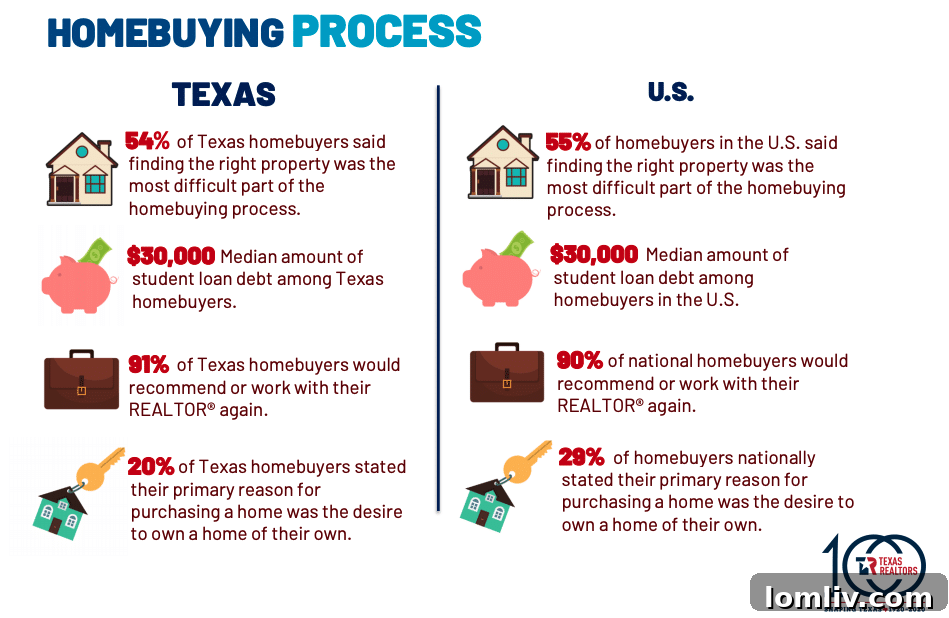
The Texas housing market has proven to be a vibrant and often challenging landscape, demonstrating remarkable resilience even amidst fluctuating economic conditions. While the numbers clearly indicate robust purchasing activity, the journey for many aspiring homeowners to find the perfect property remains an uphill battle. This struggle is intricately linked to an enduring issue: exceptionally low housing inventory, a critical factor shaping today’s real estate environment across the Lone Star State.
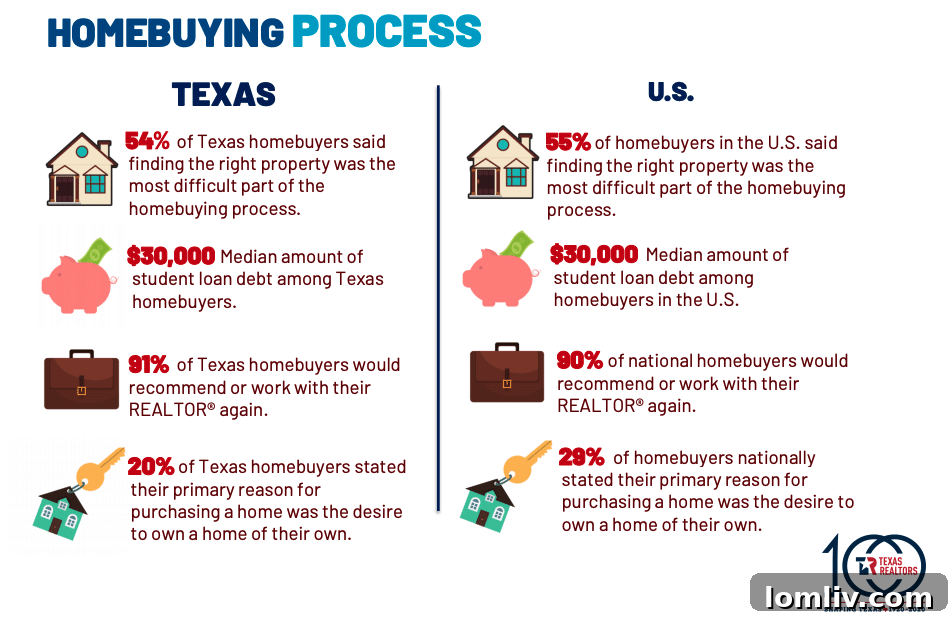
Insights from the 2020 Texas Homebuyers and Sellers Report, recently unveiled by Texas Realtors, consistently highlighted the difficulty homebuyers encountered in securing the ideal property. This report serves as a crucial barometer, offering invaluable data into the evolving preferences and experiences of both buyers and sellers.
Cindi Bulla, the 2020 chairman of Texas Realtors, underscored the report’s significance, stating, “This report provides critical insight for Texas Realtors in assessing the ever-changing needs and expectations of the consumers we serve. For example, despite access to a myriad of technology resources to search for homes, buyers continue to place a high value on local Realtor market knowledge when it comes to selecting the right home, negotiating the right price and guidance through the buying process.” Her comments emphasize that even in an increasingly digital age, the expertise and personalized service offered by local real estate professionals remain indispensable for navigating complex transactions.
Who’s Buying Homes in Texas? Demographics and Diversity Insights
Delving into the demographics of Texas homebuyers, the report paints a comprehensive picture of the market’s participants. A significant 67 percent of all Texas homebuyers were married couples, underscoring the enduring trend of joint homeownership. Single females constituted a notable 17 percent of the market, while single males accounted for 10 percent. Unmarried couples represented a smaller but still active segment, making up just 5 percent of the homebuying landscape. A revealing statistic highlighted in the report was the median age of Texas homebuyers, which stood at 52 years old – a five-year increase from the previous year. This shift could suggest a market with more established buyers, potentially driven by factors such as accumulated savings, equity from prior sales, or a delayed entry into homeownership among certain age groups.
When examining ethnic diversity among homebuyers, Texas Realtors’ data indicated that 78 percent of all buyers identified as white/Caucasian. Hispanic/Latino individuals comprised 14 percent, Black individuals 5 percent, and Asian/Pacific Islanders 4 percent. While these figures provide a snapshot of the market, they also spark important conversations about inclusivity and access to homeownership.
Cindi Bulla candidly addressed the need for greater diversity, noting, “While Texas was slightly better than the national average of homebuyer diversity, we still have work to do. Across the state, we are still seeing white buyers make up the largest share of homebuyers, while those identifying as Hispanic or Black make up 14 percent and 5 percent, respectively. We as Texas Realtors must be laser-focused on strategies to ensure that homeownership is attainable and affordable for our entire population.” Her statement reiterates a commitment within the real estate community to champion initiatives that support a more equitable and diverse homeowner base across all communities in Texas.
Understanding Texas Home Sellers: Motivations and Market Gains
The report also offered valuable insights into the motivations and experiences of Texans who decided to sell their homes. The primary reason cited for listing a property on the market was the desire to move closer to friends or family, highlighting the enduring importance of social and familial connections. This was closely followed by job relocations and the need for greater proximity to work, reflecting the dynamic employment landscape of the state. On average, sellers had resided in their homes for a median of 12 years, suggesting a degree of stability before making a move. Financially, sellers often reaped significant benefits; the median sales price realized was an impressive $64,050 more than what they initially paid for their homes. Furthermore, the efficiency of the market was evident in the time properties spent on the market, with a median duration of just four weeks – a clear indicator of strong demand and limited inventory.
For those interested in a deeper dive into these and other compelling statistics, the full report is readily available here.

Texas’s Record-Breaking Summer: July Home Sales Hit 35K
The summer housing market in the Lone Star State has been nothing short of explosive, a dramatic rebound that stands in stark contrast to the quiet periods of April and May. The initial lockdowns and widespread shutdowns prompted by the COVID-19 pandemic had undeniably put a significant damper on real estate activity. However, the market has since roared back to life, demonstrating remarkable vitality and pent-up demand.
Dr. James Gaines, chief economist for the Real Estate Center at Texas A&M University, provided expert commentary on this resurgence: “Pent-up demand from the spring fueled housing activity across the state. After a strong June, existing homes sold through Texas Multiple Listing Services in July broke record highs with nearly 35,000 closed listings.” This surge underscores a powerful underlying demand that had been temporarily suppressed but not extinguished.
While the economic repercussions were palpable during the first and second quarters of 2020, a comparison to the previous year reveals substantial growth. Existing-home sales were up by a robust 13.5 percent compared to July of last year. This trend mirrors national figures, with data from the National Association of Realtors (NAR) indicating a remarkable 24.7 percent month-over-month increase in the country’s existing-home sales, signaling a broader market recovery.
The factors contributing to this recovery are multifaceted. Dr. Luis Torres, a Center Research Economist, elaborated on the critical interventions: “The federal government’s initial bolstering of unemployment insurance and the foreclosure moratorium kept the economy afloat during one of the greatest shocks in our lifetime. Moreover, the Federal Reserve’s monetary policy actions have pushed down interest and mortgage rates. The situation, however, is still developing from both a public health and economic perspective, and many challenges still lie ahead.” These policy responses played a pivotal role in stabilizing the economy and maintaining consumer confidence, directly influencing the housing market’s ability to bounce back.
The Inventory Squeeze and Rising Prices
At the heart of the current market dynamic is the persistent issue of inventory. Texas is currently operating with a mere 2.5 months of housing inventory – a stark contrast to what is considered a balanced market, typically around six months. This represents a full month less than the inventory levels seen last year, intensifying competition among buyers and contributing to upward price pressure. Simply put, there aren’t enough affordable homes available to meet the surging demand.
Consequently, the median price for an existing home in Texas has reached a record high of $260,000, representing a significant 11 percent increase year-over-year. This notable appreciation, however, comes with a caveat. Dr. Torres clarified this trend: “Most of this price appreciation is attributed to the relative strength in the upper price cohorts. The Texas Repeat Sales Index accounts for this bias and revealed more moderate growth at 4 percent.” This suggests that while overall median prices are rising sharply, a significant portion of this increase is being driven by the robust activity and higher prices within the luxury property segment, rather than uniform growth across all price points. This distinction is crucial for understanding accessibility challenges for first-time buyers or those seeking more moderately priced homes.
Millennials Make Moves to The ‘Burbs, According to Study
A recent survey conducted by OpenDoor sheds light on evolving consumer behaviors and preferences, particularly regarding relocation and homeownership. The findings indicate a clear trend of people moving and actively purchasing homes, positioning OpenDoor as a relevant player in facilitating these transactions. After a temporary hiatus in its cash-offer program due to the initial uncertainty of COVID-19, the company has not only resumed operations but is actively expanding, now covering 21 markets across America, reflecting renewed confidence in the housing sector.
The OpenDoor report revealed a profound impact of the pandemic on moving decisions. A significant 28 percent of survey participants indicated that the COVID-19 crisis directly influenced their decision to leave their urban residences. An additional 25 percent stated that the pandemic merely accelerated their pre-existing plans to relocate. Looking ahead, a considerable 17 percent of respondents expressed intentions to move within the coming year, suggesting that these shifts in living preferences are far from over.
Despite the heightened activity in buying, selling, and moving, safety considerations have remained a top concern throughout the homebuying process. The survey highlighted varying levels of comfort among respondents regarding property viewings. Forty-three percent felt comfortable touring unoccupied homes, suggesting a preference for physical inspections without direct contact. Meanwhile, 21 percent strongly favored virtual options, reflecting a growing acceptance of digital tools for initial property assessments and a desire for reduced in-person interactions.
Market Resilience and Optimism
The current landscape is undeniably a seller’s market, and many homeowners are keen to capitalize on rising property values or upgrade their living situations. The remarkable resilience of the housing market has been a pleasant surprise to many industry observers. Over 60 percent of both buyers and sellers expressed the belief that the market has already returned to a state of normalcy, signaling a strong sense of stability and confidence. This optimism is further underscored by the general agreement among buyers and sellers that property prices are continuing their upward trajectory.
It’s genuinely encouraging to witness the housing market demonstrate greater resilience than initially anticipated by some real estate analysts. A substantial majority of buyers (62%) and sellers (63%) are either convinced that their local housing market has already stabilized or anticipate its return to normalcy within the next six months. This collective sentiment speaks volumes about the underlying strength and recovery momentum of the sector.
Furthermore, sellers maintain a strong sense of optimism regarding future home prices, with 42% of respondents expecting further increases. Buyers, perhaps even more bullish, align with this sentiment, as 50% anticipate prices to continue their upward climb. This shared expectation of appreciation contributes to the overall active and competitive environment.
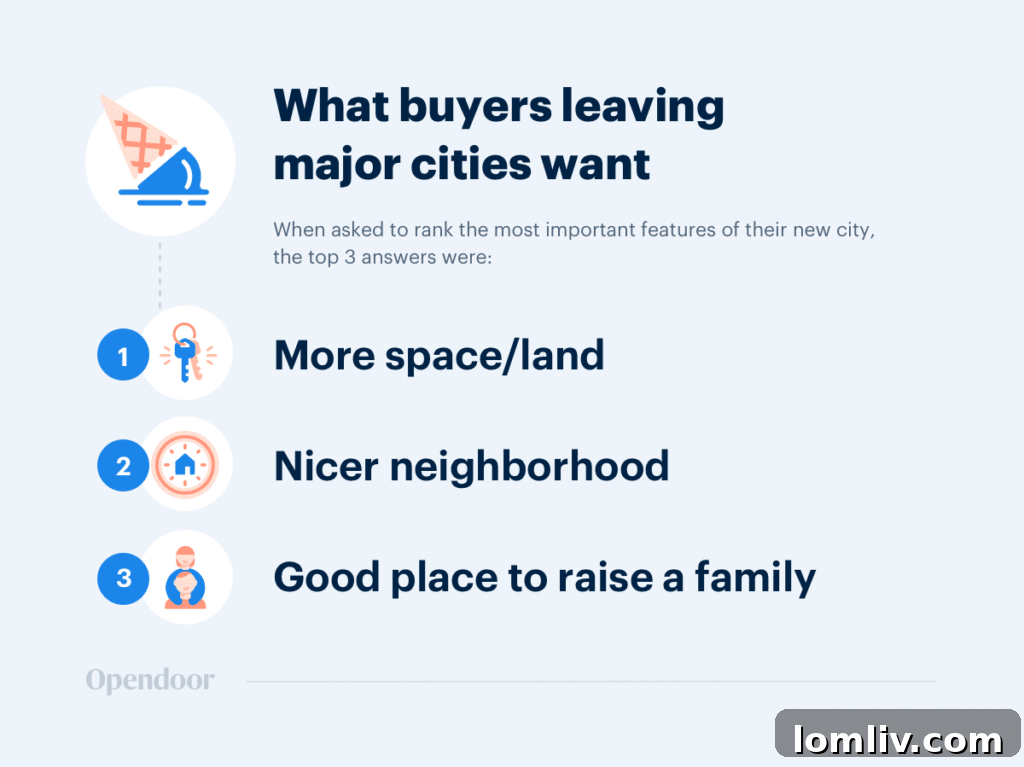
Now, to the core finding: Millennials are indeed shifting their residences away from bustling city centers. However, this migration isn’t typically characterized by a complete exodus to remote, rural areas. Instead, the data suggests a nuanced move towards the suburbs. Approximately 21 percent of this demographic group aims for locations that are “close, but not too close” to urban hubs, seeking a balance between accessibility to city amenities and the benefits of suburban living, such as more space, better schools, and a quieter environment. Only a small fraction, just 5.5 percent, are opting for far-off, tiny towns, indicating a preference for retaining some level of connection to metropolitan areas while embracing a more suburban lifestyle.
Conclusion: A Dynamic Future for Texas Real Estate
The Texas housing market is a complex tapestry woven with threads of strong demand, limited inventory, shifting demographics, and resilient optimism. From the detailed insights of the Texas Homebuyers and Sellers Report to the record-breaking sales figures and the notable suburban migration of Millennials, it’s clear that the state’s real estate landscape is continuously evolving. While challenges like affordability and inventory persist, the market’s ability to bounce back from external shocks and maintain strong buyer and seller confidence points to a dynamic and robust future. The role of informed real estate professionals, strategic market understanding, and adaptable approaches will remain paramount in navigating this ever-changing environment, ensuring homeownership remains an achievable dream for all Texans.