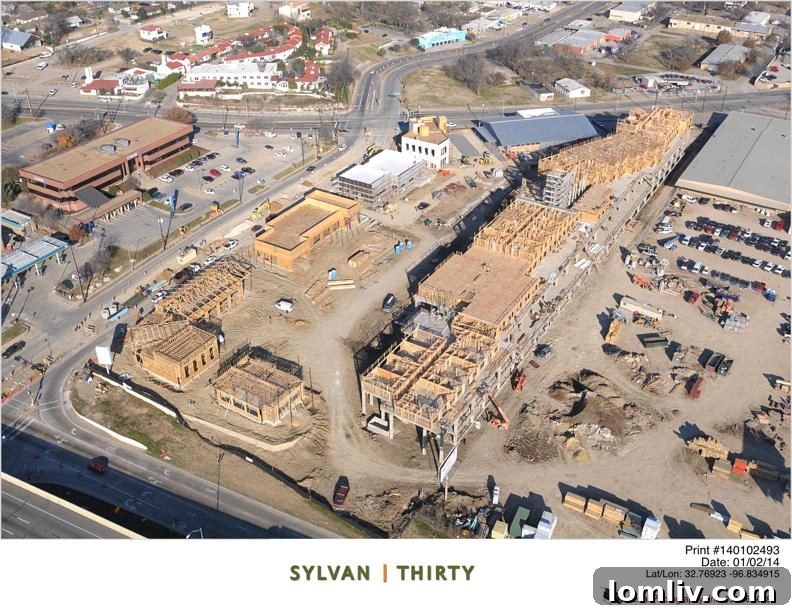
Dallas has always been a city synonymous with bold ambition and relentless progress. From the iconic glow of the Reunion Tower to the sophisticated expansion of the Uptown and Arts Districts, its dynamic skyline serves as a vibrant testament to continuous growth, groundbreaking innovation, and unwavering resilience. Today, as a multitude of cranes punctuates the horizon and ambitious new projects emerge across the sprawling Dallas-Fort Worth metroplex, the driving force behind this unprecedented boom isn’t merely burgeoning demand or substantial investment. It is, critically, the strategic discipline of smart project management that meticulously transforms these grand visions into enduring realities, shaping a future as bright as the city itself.
The Dallas-Fort Worth Metroplex: A Magnet for Growth and Its Inherent Challenges
The Dallas-Fort Worth (DFW) metroplex stands as one of the fastest-growing regions in the entire United States, consistently attracting a diverse influx of businesses, residents, and global investors at an unprecedented pace. This phenomenal growth is fueled by a potent combination of factors: significant corporate relocations, an exceptionally favorable business and tax environment, and robust population inflows driven by a thriving job market and high quality of life. As a result, North Texas has solidified its position as a premier hub for every facet of real estate activity, encompassing high-rise commercial developments, expansive industrial parks, vibrant mixed-use communities, and sprawling residential masterplans.
However, this rapid, large-scale development brings with it a unique set of complex challenges. Escalating construction costs, persistent labor shortages across skilled trades, and an ever-evolving landscape of regulatory standards can quickly derail even the most promising and well-intentioned development. Furthermore, integrating new infrastructure while maintaining existing urban fabric, addressing environmental considerations, and ensuring sustainable growth add layers of complexity. In such a high-stakes, dynamic environment, the ability to plan with foresight, allocate precious resources judiciously, and manage every stage of a project with meticulous precision becomes the ultimate deciding factor between a resounding success and a costly missed opportunity. Effective project management is no longer a luxury but an absolute necessity for navigating the intricacies of Dallas’s development boom.
Navigating Complexity: The Imperative of Modern Project Management in Dallas Real Estate
In bygone eras, developers could often rely on an abundance of affordable land and relatively lower building expenses to absorb minor inefficiencies or unexpected setbacks. These comfortable margins of error have, for the most part, vanished in today’s fiercely competitive and cost-intensive market. Material prices have surged dramatically due to global supply chain disruptions, financing structures have become increasingly intricate, and the competition for highly skilled labor is more intense than ever before. Modern real estate projects are also inherently more complex, incorporating advanced technologies, sustainable design principles, and intricate stakeholder networks.
Smart project management serves as the essential bridge across this gap, bringing much-needed structure and clarity to the often-chaotic landscape of modern development. It meticulously orchestrates every phase, from initial conceptualization and detailed design to procurement, construction, and final delivery, ensuring that each stage adheres rigorously to established timelines and remains strictly within budget. More than just scheduling, it encompasses comprehensive scope management, rigorous quality control, proactive risk identification and mitigation, and efficient resource allocation. In a city like Dallas, where growth is not only fast but also exceptionally competitive, projects that lack this foundational discipline and strategic oversight are at a significant risk of falling behind schedule, exceeding budget, or failing to meet critical quality benchmarks, ultimately undermining their potential for long-term success and investor confidence.
The Digital Edge: How Technology Transforms Project Management in Dallas
The integration of cutting-edge technology has fundamentally revolutionized how complex development projects are conceptualized, executed, and managed across the Dallas-Fort Worth region. Today’s project teams leverage sophisticated digital platforms that empower them to track costs in real-time, facilitating immediate adjustments and ensuring financial transparency. These platforms also enable seamless coordination among a multitude of stakeholders, ranging from architects and engineers to contractors and suppliers, fostering a truly collaborative environment regardless of geographical location. Crucially, advanced analytical tools allow project managers to anticipate potential risks—such as material delays, budget overruns, or design clashes—before they escalate into critical issues, enabling proactive problem-solving.
Developers in Dallas are increasingly turning to specialized partners who possess the expertise and technological capabilities to provide these invaluable insights. For example, firms such as NYC Estimating Company have emerged as vital allies for builders. They employ sophisticated software and deep industry knowledge to establish clear, accurate, and comprehensive financial frameworks and detailed cost estimates long before ground is ever broken. This unparalleled level of upfront preparation and granular financial insight minimizes unforeseen surprises, mitigates financial risks, and cultivates the robust stability and predictability that institutional investors expect from large-scale, high-value projects in a dynamic market like Dallas. It transforms raw data into actionable intelligence, driving informed decision-making throughout the project lifecycle.
Building Trust: Project Management as a Cornerstone of Investor Confidence
The Dallas real estate market has transcended its origins, no longer being driven solely by local developers and regional players. Its expansion now captivates a global audience, attracting significant capital from institutional investors, prominent private equity groups, national builders, pension funds, and even sovereign wealth funds. These sophisticated players demand an uncompromising level of accountability and transparency in return for their substantial investments. They expect meticulously transparent reporting, rigorously disciplined timelines, and undeniable proof that a project will not only deliver on its promises but also adhere to projected returns and long-term value creation.
In this high-stakes environment, robust financial clarity, comprehensive risk assessment, and strong, consistent oversight become not just beneficial, but absolutely indispensable. Firms like Pro Estimating play a pivotal role by providing builders and developers with the detailed planning resources, precise cost estimations, and strategic financial roadmaps necessary to reassure a diverse array of stakeholders. Their expertise in meticulously crafting budgets, forecasting expenses, and managing financial resources provides a critical layer of confidence, helping to attract and secure the long-term investment vital for Dallas’s continued growth. This elevated level of professionalism and financial rigor often serves as the crucial differentiator, determining which ambitious projects move forward from conception to reality in the highly competitive Dallas market.
Beyond Blueprints: The Indispensable Human Element in Dallas Project Success
While the judicious application of technology, sophisticated data analytics, and rigorous financial discipline are undeniably essential, smart project management ultimately hinges on exceptional leadership and strong interpersonal skills. Dallas builders and developers understand implicitly that coordinating a vast ecosystem of architects, engineers, general contractors, specialized subcontractors, city officials, legal teams, and a diverse group of investors is as much about cultivating robust relationships and fostering effective communication as it is about meticulously managing spreadsheets and schedules. The human factor, embodying clear communication, agile problem-solving capabilities, and an inherent adaptability, often makes or breaks a development’s trajectory.
With an astonishing number of complex projects unfolding simultaneously across the expansive metroplex—ranging from towering mixed-use high-rises reshaping urban cores to vast master-planned residential communities stretching into the suburbs—strong, empathetic project managers act as the vital connective tissue. They are the proactive communicators, skilled negotiators, and crisis managers who keep diverse teams aligned, motivated, and working cohesively towards shared objectives. Their ability to navigate conflicts, build consensus, and inspire confidence among all stakeholders ensures that intricate plans translate into tangible progress, steering the entire development process smoothly and efficiently towards successful completion.
Shaping Tomorrow: Innovation and Sustainability in Dallas’s Evolving Skyline
The evolving skyline of Dallas is far more than an aggregation of steel and glass; it is a profound reflection of meticulous strategy, visionary foresight, and a commitment to future-proofing. Each crane visible against the Texas sky represents not merely a building under construction, but a carefully managed vision of the city’s next chapter, embracing innovation and sustainability. If the past decade was largely defined by sheer scale and rapid expansion, the next era will be characterized by a sharp focus on enhanced efficiency, groundbreaking innovation, environmental resilience, and social equity.
Future projects in Dallas will increasingly integrate advanced green building certifications like LEED, prioritize energy-efficient designs, minimize waste through circular economy principles, and incorporate smart building technologies for optimal resource management. Furthermore, urban planning will emphasize climate resilience, designing infrastructure and buildings to withstand evolving environmental challenges. Developers who proactively embrace truly smart project management—seamlessly blending state-of-the-art technology, unwavering financial discipline, and unparalleled human expertise—will not only lead the way but will also be instrumental in shaping a more sustainable, vibrant, and prosperous Dallas for generations to come. This includes exploring modular construction, fostering mixed-use developments that enhance livability, and integrating projects into a broader ‘smart city’ framework.
Conclusion
Dallas stands on the cusp of yet another transformative era, poised for an array of monumental projects that will undeniably redefine its iconic skyline and further reinforce its global reputation as a dynamic hub for opportunity, innovation, and economic prosperity. However, ambition alone, no matter how grand, will not be sufficient to deliver these monumental results. The city’s ambitious future hinges critically on the widespread adoption and expert execution of smart project management principles. This involves a delicate yet powerful balance of meticulous planning, unwavering accountability, continuous innovation, and adaptable leadership that collectively transforms bold architectural ideas into enduring landmarks, driving sustainable growth and ensuring that Dallas remains a beacon of progress in the 21st century.