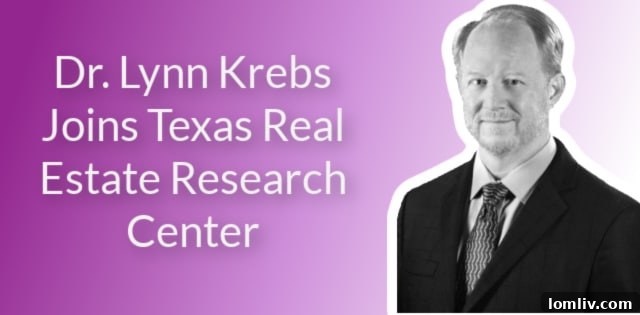
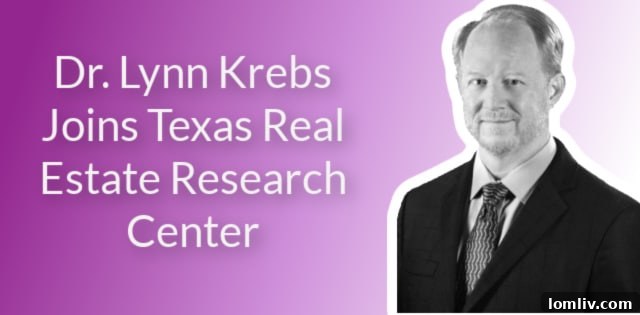
Dr. Lynn Krebs Returns to TRERC: Spearheading Research in Texas Rural Land and Property Taxes
The Texas Real Estate Research Center (TRERC) proudly announces the return of Dr. Lynn Krebs to its esteemed staff, bringing a wealth of expertise and a deep understanding of crucial real estate sectors. Dr. Krebs will specialize in the rapidly evolving fields of rural land markets and property taxation, two areas of immense importance to the Lone Star State. This strategic addition reinforces TRERC’s commitment to providing cutting-edge research and insights to real estate professionals, policymakers, and the public across Texas.
Dr. Krebs’s appointment marks a significant homecoming, as his journey with TRERC began decades ago. He first joined the center as a dedicated graduate assistant in 1992, during his time at Texas A&M University – the very institution that houses the TRERC. This foundational experience provided him with an early immersion into the dynamics of Texas real estate, shaping a career dedicated to understanding and analyzing property markets and tax policies. His return now, after a distinguished career, brings a full circle to his professional path, enriching the center with his seasoned perspective.
A Distinguished Career Paving the Way for Critical Research
Following his initial tenure at Texas A&M, Dr. Krebs pursued advanced studies, earning his Ph.D. from Georgia State University, further solidifying his academic and analytical foundation. His career trajectory then led him to a pivotal role as the director of education and certification programs for the Institute of Professionals in Taxation, a position he held from 1994 to 2003. This experience equipped him with a profound understanding of tax principles, regulations, and the educational needs of professionals in the field, making him an invaluable asset to TRERC’s mission.
Dr. Krebs’s academic roots run deep within Texas A&M, where he completed both his undergraduate and master’s studies. Reflecting on his return, he noted that “a lot has changed” since his early days at the center. However, he emphasized that his pride in the quality of work and the invaluable resources consistently produced by the group has remained unwavering. This long-standing admiration for TRERC’s output underscores his dedication to contributing to its legacy of excellence.
Gary Maler, Executive Director of the Texas Real Estate Research Center, expressed immense enthusiasm for Dr. Krebs’s return. In a recent news release, Maler highlighted the significant benefits of this new appointment, stating, “Lynn brings extensive experience in commercial real estate. He has led a large real estate tax consulting firm, and he has a deep understanding of the fundamentals of real estate markets as well as the valuation of real estate.” This endorsement emphasizes Dr. Krebs’s comprehensive background, which spans both the theoretical and practical aspects of the real estate industry.
Indeed, a substantial portion of Dr. Krebs’s career was dedicated to property tax consulting, a field in which he operated from 2007 to 2022. During this period, he honed his expertise in advising clients on complex property tax matters, navigating intricate legal frameworks, and optimizing tax strategies. Most recently, he served as CEO of Tax Advisors Group, a testament to his leadership capabilities and deep knowledge in the sector. His experience at the helm of a major consulting firm means he brings not only academic rigor but also real-world, executive-level insight into property valuation and taxation challenges.
Shaping the Future: Dr. Krebs’s Role and Research Focus
In his dynamic new role at the Texas Real Estate Research Center, Dr. Krebs will be actively engaged in conducting rigorous research, authoring insightful articles, and delivering impactful public presentations to stakeholders across the real estate industry. His work will provide critical data, analysis, and forecasts, empowering professionals to make informed decisions in an ever-evolving market. His primary focus will be on the nuanced landscape of rural land markets, meticulously tracking pricing trends, identifying emerging opportunities, and forecasting future developments. This specialization is particularly vital as Texas continues to experience significant population growth and shifting land use patterns.
Dr. Krebs observes that “we’re living in interesting times,” a sentiment that resonates deeply with many market observers. He notes that the global economy has entered an unprecedented era, experiencing dynamics unlike anything seen prior to or immediately after the COVID-19 pandemic. The lingering effects of supply chain disruptions, shifts in consumer behavior, and evolving monetary policies have collectively created a unique economic environment that demands careful analysis and foresight. Understanding these macro trends is crucial for interpreting real estate market movements, especially in specialized sectors like rural land.
Rural Land: A Timeless Hedge Against Economic Uncertainty
While acknowledging the inherent impossibility of predicting the future with absolute certainty, Dr. Krebs points to historical patterns that offer valuable lessons. If history serves as any guide, it consistently demonstrates that rural land has functioned as a robust hedge against inflation. During periods of economic volatility and rising prices, tangible assets such as land often retain or even increase in value, providing a sanctuary for capital that might otherwise be eroded by inflationary pressures. This inherent stability makes rural land an attractive investment, particularly for those looking to diversify their portfolios and protect their wealth against economic downturns.
Moreover, the TRERC’s extensive research, as cited by Dr. Krebs, reveals a unique characteristic of rural land in Texas: it often acts much like an investment vehicle, distinct from its role in agriculture production prevalent in many other states. While agricultural output is certainly a component, Texas rural land is increasingly sought after for its long-term appreciation potential, recreational uses, and as a strategic holding for future development. Factors such as rapid population expansion, the demand for recreational properties, and the scarcity of developable land near growing metropolitan areas contribute to its status as a prime investment asset, far beyond mere farming. This makes understanding its market dynamics paramount for investors and developers alike.
Navigating Texas Property Taxes: Impact of Legislative Reforms
In relation to the complex arena of property taxes, Dr. Krebs sheds light on a fundamental truth: on average, the revenue generated from property taxes consistently grows in tandem with the state’s burgeoning population. As more people move to Texas, demanding more public services and infrastructure, the property tax base naturally expands to help fund these necessities. However, this growth has also led to concerns about affordability for homeowners and businesses.
In response to these concerns, the Texas Legislature enacted significant reforms. Specifically, legislation passed in 2019 is now having a tangible impact on reining in the aggressive growth of property taxes, offering a much-needed reprieve for homeowners. This landmark legislative effort aimed to strike a balance between funding essential public services and alleviating the tax burden on property owners.
The cornerstone of these reforms was the passage of Senate Bill 2 (SB 2) in 2019. This pivotal legislation was designed to slow the exponential growth of future property tax bills by significantly lowering the rollback rate. For cities and counties with a population exceeding 30,000, the rollback rate was reduced from 8 percent to a more constrained 3.5 percent. The rollback rate is a crucial mechanism; it dictates the maximum percentage by which taxing units (like cities and counties) can increase their property tax revenues from existing properties without triggering a voter approval election. By lowering this rate, SB 2 effectively forces taxing entities to seek voter approval for smaller increases, enhancing transparency and accountability.
Dr. Krebs predicts that homeowners across Texas will be “pleasantly surprised” come October, when the new tax rates are officially calculated and announced. This surprise will stem from the fact that, despite higher property valuations – a common trend in a robust market – the actual tax rates will be cut. The mechanism is simple yet powerful: with property values increasing, taxing entities can generate the same or even more revenue with a lower tax rate. Combined with the stricter rollback rate imposed by SB 2, this means that even with rising property assessments, the rate at which those assessments are taxed will be adjusted downwards to comply with the legislative caps, leading to a more manageable tax bill for many homeowners. This adjustment reflects a system working as intended, ensuring that while public services are funded, taxpayers are also protected from unchecked property tax increases.
“That’s really how the system is supposed to work,” Dr. Krebs affirmed, underscoring the legislative intent behind SB 2. The law aims to create a more balanced and transparent property tax system where revenue growth is moderated, and citizens have a greater voice in how their tax dollars are levied and spent. His deep understanding of these intricate legislative changes and their practical implications will be invaluable in demystifying property tax policies for Texans.
TRERC’s Continuing Commitment to Real Estate Excellence
Dr. Lynn Krebs’s rejoining the Texas Real Estate Research Center staff represents a significant enhancement to its research capabilities, particularly in the critical areas of rural land and property taxation. His unique blend of academic background, extensive commercial real estate experience, and leadership in property tax consulting positions him perfectly to guide TRERC’s analysis in these complex fields. As Texas continues its rapid growth, the insights and data provided by Dr. Krebs and the TRERC will be more vital than ever, helping to shape informed decisions that impact homeowners, investors, and policymakers alike. His work promises to shed light on market trends and policy effects, ensuring that the real estate industry in Texas remains dynamic, transparent, and responsive to the needs of its diverse population. The center looks forward to the profound contributions Dr. Krebs will undoubtedly make in the years to come, strengthening its position as a leading authority in Texas real estate research.