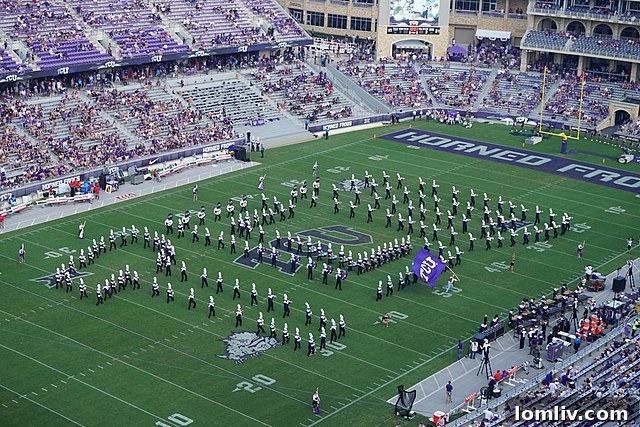
The exhilarating journey of the TCU Horned Frogs football team captured the hearts of fans far and wide this past season, etching an indelible mark on the landscape of college football. Despite the outcome of the championship game, the spirit, determination, and sheer talent displayed by the Frogs, under the astute leadership of first-year head coach Sonny Dykes, made it an undeniably magical and profoundly impressive season. For those of us here at Tarrant County Tuesday, the Horned Frogs remain champions in every sense of the word, embodying the relentless pursuit of excellence and the underdog spirit that resonates deeply within our community.
Even from the perspective of a dedicated, burnt-orange-bleeding, bow tie-wearing Realtor like myself, it has been nothing short of remarkable to witness this relatively small, private institution, nestled in the charming city of Fort Worth, Texas, ascend to the national stage. To see TCU mentioned in the same breath as the traditional “bluebloods” of college football is a testament to their incredible season and a source of immense pride for the entire North Texas region. This unexpected rise not only elevated the university’s profile but also shone a bright spotlight on Fort Worth itself, positioning it as a vibrant hub of academic and athletic prowess.
Understanding the Enduring “Flutie Effect” in College Sports
The phenomenon known as the “Flutie Effect” perfectly illustrates how a single, dramatic athletic achievement can profoundly impact a university’s visibility and prestige, extending far beyond the sports arena. This captivating concept originated in 1984, during a legendary college football game that pitted the underdog Boston College, another smallish private university, against the formidable, pending powerhouse of the University of Miami. The game culminated in one of the most improbable victories in sports history: Boston College’s 5-foot-9 quarterback, Doug Flutie, launched a breathtaking Hail Mary pass from 64 yards out in the final seconds, securing a victory that sent shockwaves across the nation. The sheer audacity and miraculous execution of that play continue to inspire awe; if this doesn’t send chills down your spine, you might need to check your pulse.
That iconic moment was more than just a clip of David beating Goliath; it was a watershed event that garnered unprecedented national attention for Boston College. As reported by Forbes Magazine, the enrollment applications for the Eagles “increased 30 percent in the next two years” following Flutie’s miracle pass. This dramatic surge in interest wasn’t a fluke but a clear demonstration of how high-profile athletic success can translate directly into academic dividends.
Indeed, according to numerous articles and academic studies, the “Flutie Effect” is a verified phenomenon. It posits that colleges and universities, especially those that may not possess the sprawling resources of large state institutions or the deepest pockets for extensive marketing campaigns, can experience an immediate and significant boost in public interest, visibility, and prospective student applications following a major athletic achievement. A significant win, a deep playoff run, or even a widely shared video showcasing campus life during a successful season can automatically garner newfound attention from a diverse audience of potential students, donors, and alumni. This heightened profile creates a virtuous cycle, attracting higher-quality applicants, increasing alumni engagement, and ultimately strengthening the institution’s overall brand and financial health. For TCU, their remarkable season on the national championship stage provides the perfect catalyst for this very effect.

The impact isn’t limited to student applications. Boosters and loyal alumni often feel invigorated by athletic success, leading to increased donations for academic programs, new building funds, and scholarship initiatives. More broadly, incoming students from other states, who might never have heard of a particular school, suddenly find that university at the top of their consideration list, purely due to the attention garnered from playing in a championship game. This expands the university’s geographic reach and enhances its national reputation, drawing talent from a wider pool and enriching the campus community.
TCU and Fort Worth: A Championship Combination for Growth
The recent championship appearance by the TCU Horned Frogs is poised to generate unprecedented attention, not only for the university itself but also for the thriving City of Fort Worth. The symbiotic relationship between a prominent university and its host city means that when one shines, the other often basks in the reflected glory. According to those intimately familiar with the student body at TCU, a significant portion of students are drawn from far-flung states such as Colorado and California. This demographic trend isn’t accidental; it’s a testament to the sustained success and appealing lifestyle that TCU and Fort Worth have cultivated over the years.
There are numerous compelling reasons why so many students from these states choose to attend TCU. A substantial part of this attraction can be attributed to the remarkable overall success achieved by former coach Gary Patterson and his teams over the past two decades, including the memorable 2011 Rose Bowl championship played in California. Such high-profile victories not only cement a university’s athletic legacy but also act as powerful recruitment tools, showcasing the institution’s commitment to excellence and its vibrant campus culture. Beyond the football field, the allure of TCU is undeniable: the distinctive bright purple uniforms, the undeniable grit and class the team consistently displayed during their games, and the picturesque scenes of the campus itself. These elements, combined with the undeniable charm and burgeoning appeal of Fort Worth, must have piqued their interest in the past. The critical question now is: will this latest, even grander national spotlight amplify that interest exponentially?

Fort Worth offers a unique blend of modern amenities and traditional Texan charm, a “Cowtown” with a sophisticated edge. Its vibrant cultural district, bustling downtown, and friendly community spirit provide an ideal backdrop for students seeking an engaging college experience. The city’s growing economy, diverse job market, and lower cost of living compared to major coastal cities also make it an attractive destination for families considering their children’s future post-graduation. The championship run wasn’t just about football; it was a national advertisement for the entire Fort Worth experience, subtly showcasing the city’s quality of life, its welcoming atmosphere, and its dynamic growth.
The Amplified ‘Flutie Effect’ on Fort Worth Real Estate and Investment
Beyond student applications and city visibility, what we in the real estate industry are most enthusiastically hopeful for is that the increased attention on TCU will translate into a significant boost for the Fort Worth real estate market. Soon-to-be students, captivated by the Horned Frogs’ success and the appeal of the campus, will likely bring their deep-pocketed parents along for the ride. Let’s be frank: have you seen the tuition at TCU? There’s little doubt that these parents possess substantial financial capacity. Our aspiration is that these discerning families will not only appreciate TCU’s academic and athletic excellence but will also come to love, and ultimately invest in, Fort Worth real estate.

Fort Worth presents a compelling value proposition for out-of-state investors, particularly those from higher-cost-of-living areas like California and Colorado. As many are already aware, home prices in Texas, while steadily appreciating, are vastly lower than in numerous other states. This affordability factor is coupled with the significant benefit of no state income tax, making Fort Worth an even more financially attractive location. Beyond the fiscal advantages, the lifestyle here is unparalleled: residents can enjoy golf approximately 350 days a year, engage in pickleball 365 days a year, and take advantage of a robust and continually strengthening job and real estate market. The city boasts a thriving cultural scene, diverse dining options, beautiful parks, and a warm, community-oriented atmosphere, all contributing to an exceptional quality of life.
This confluence of factors creates a grand opportunity for TCU parents to make shrewd investments with their hard-earned money. Imagine purchasing a rental home for their students, not only providing comfortable and convenient accommodation throughout their college years but also building equity and generating potential rental income. Such an investment can mitigate housing costs, offer a tangible asset in a growing market, and provide a secure base for their children during their academic journey. The potential for appreciation in Fort Worth’s dynamic real estate market means this could be a highly lucrative decision for many families.

The allure doesn’t stop at student rentals. Many parents might find themselves so enamored with the Fort Worth community – its friendly residents, vibrant culture, and relaxed pace – that they consider buying a second home for family visits, weekend getaways, or even as a future retirement property. For some, the appeal could be even stronger, leading them to decide to relocate to “Cowtown” full-time, seeking a better quality of life, lower cost of living, and a strong sense of community. This influx of new residents, whether temporary or permanent, directly contributes to the vitality and growth of the local economy and housing market.
Fort Worth’s diverse real estate landscape offers a wealth of opportunities for various needs and investment strategies. There are plenty of options for rental properties, traditional homesteads, modern condos, or stylish townhomes, all within close proximity to the vibrant TCU campus. These properties cater to a range of budgets and preferences, ensuring that parents looking to invest in their student’s future, or even their own, will find something perfectly suited to their needs. The ripple effect of TCU’s athletic success could genuinely transform pockets of the Fort Worth real estate market, driving demand, fostering community development, and creating lasting economic benefits for the entire city.
So, is the “Flutie Effect” truly real and impactful? Only time will fully reveal the extent to which the TCU Horned Frogs’ unforgettable success on the football field translates into increased incoming student interest and, more specifically, a surge in parents purchasing real estate in Fort Worth. However, the signs are unequivocally positive. The national spotlight has been shone, the charm of Fort Worth has been highlighted, and the potential for a mutually beneficial relationship between a thriving university and a growing city is immense. How truly great it would be if this remarkable athletic achievement has a profound and lasting positive effect on the Fort Worth real estate community, contributing to its continued growth and prosperity. Go Frogs!