Navigating Dallas’s Urban Landscape: Key Insights from the PD-15 Community Planning Meeting
The third installment of the critical PD-15 community planning meetings brought forth a vibrant discussion on Dallas’s urban future, even if it lacked the dramatic flair of past gatherings. These sessions are pivotal for shaping the zoning landscape of the Preston Center area, a region undergoing significant transformation. This meeting built upon previous discussions, notably revisiting community feedback on various multi-family building designs, an exercise detailed in the second meeting summary. A highlight of this session was the presence of David Cossum, the City of Dallas’s esteemed Director of Sustainable Development and Construction, whose expertise provided invaluable context to complex planning issues. Before delving into the core agenda, several crucial questions were raised, signaling the community’s deep engagement and underlying concerns regarding the PD-15 zoning amendment process.
Addressing Community Concerns: Transparency and Oversight in Development
Developer Engagement and Transparency
A persistent point of contention within the community, particularly from a smaller group advocating for a different process, revolves around the transparency and influence residents have over new developments. Kevin Griffeth, representing Gas Light Manor, voiced a common sentiment by requesting to see concrete developer examples and plans. This aligns with the argument that only a direct zoning case, rather than an authorized hearing, truly empowers the neighborhood with input. However, the City unequivocally addressed this concern by confirming that the committee would indeed have the opportunity to review and question developers directly. This commitment to transparency is a vital step in fostering trust and ensuring that community voices are heard during the crucial stages of planning and design within the PD-15 framework.
The Authority of the Plan Commission
Another critical query explored the Plan Commission’s power to potentially override neighborhood agreements on development proposals. The candid answer was a resounding “yes” – the Commission holds the authority to make different recommendations to the Dallas City Council. This revelation, while initially unsettling, was tempered by the steadfast commitment of Dallas City Council member Jennifer Gates. She has repeatedly affirmed her unwavering support for only those plans that garner the neighborhood’s approval. This creates a significant dynamic: while the Plan Commission possesses advisory power, Council Member Gates’s firm stance effectively creates a safeguard, ensuring that the committee’s decisions, reflective of community consensus, will likely dictate the final outcome. This strong political backing provides a crucial layer of assurance for residents investing their time and effort in the PD-15 process.
Integrating Economic Realities into Planning
Ken Newberry of Royal Orleans brought up the pertinent question of whether the committee could factor economic data into its recommendations for development plans. The response was somewhat nuanced: while economic data can certainly inform the committee’s deliberations, it doesn’t officially fall within the city’s direct decision-making purview for zoning. Newberry’s pithy summation, “a development plan without economics is just a hallucination,” perfectly encapsulates the challenge. Urban planning in a dynamic city like Dallas must consider financial viability and market demand to ensure projects are not only desirable but also feasible and sustainable. Ignoring economic realities can lead to stalled projects, underutilized spaces, or plans that fail to attract the necessary investment to become reality, ultimately hindering the vitality of the Preston Center area.
The Complexities of Lot Combinations
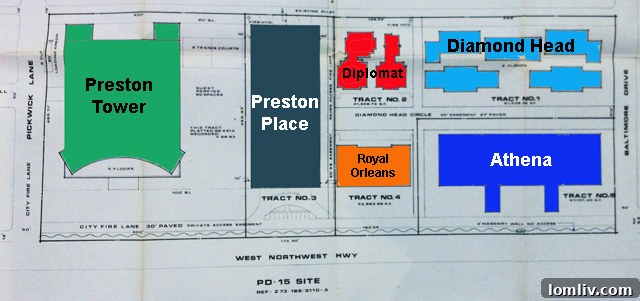
The discussion then shifted to the practicalities of physically combining existing lots into larger parcels, a common strategy in modern urban development to create space for more comprehensive projects. The initial response from the city was less than definitive, prompting further inquiry with Director Cossum after the meeting. He clarified that since many roads separating PD-15 parcels are privately owned by their respective condo buildings, agreements could theoretically be reached to close these streets, thus enabling lot combinations. However, this immediately raised concerns about critical public services, specifically fire lanes and public rights-of-way. The city would need to thoroughly evaluate any proposed street closure to ensure it doesn’t impede emergency access or essential infrastructure. The author’s frustration was palpable: if such combinations are inherently problematic for public safety or logistical reasons, transparent guidance from the outset would save the committee valuable time and effort in exploring unviable options. The city’s willingness to evaluate, rather than provide a clear ‘yes’ or ‘no,’ leaves this as an ongoing point of consideration and potential hurdle in future Preston Center development.
Diving Deeper into Zoning Parameters: Beyond the Basics
Following these initial queries, city staff guided the committee through a detailed examination of zoning parameters, moving beyond the previously covered topics of lot coverage, setbacks, density, and height. This session focused on the often-overlooked but equally critical nuances of parking, loading areas, and landscaping, elements that profoundly impact daily life and the aesthetic appeal of a neighborhood.
The Evolving Landscape of Parking Requirements
The extensive discussion surrounding parking proved surprisingly encouraging, indicating a genuine desire to find optimal solutions rather than simply adhering to outdated regulations. In the current PD-15 framework, a minimum of 1.22 parking spaces per unit is mandated, irrespective of unit size. A representative from Preston Tower highlighted their building’s challenge with under-parking, a common issue in older developments, often linked to designs that predated modern car ownership trends or incorporated valet services. Valet parking, along with unassigned parking, generally requires fewer physical spaces compared to assigned parking, where a resident might have two assigned spots for only one car, leaving one space perpetually vacant. The committee grappled with defining “the right amount” of parking for today and, crucially, for tomorrow. Questions arose about the long-term impact of ride-sharing services like Uber and Lyft, and the eventual widespread adoption of self-driving cars, which could fundamentally alter personal car ownership and parking demand. The city committed to providing case examples and research to help the group understand these emerging trends, underscoring a forward-thinking approach to urban planning that anticipates future transportation shifts in Dallas.
Optimizing Loading and Freight Zones
Complementing the parking discussion, the committee delved into the requirements for loading and freight zones, essential for the smooth operation of any multi-family development. These zones accommodate a wide array of services, from UPS deliveries and moving vans to garbage collection and contractor vehicles. The Oak Lawn Committee proposed an important consideration: integrating loading zones within the building’s footprint to minimize roadway obstruction. This approach not only improves traffic flow and safety on neighborhood streets but also helps mitigate noise and visual disturbances for nearby residents. Thoughtful placement of these zones is key to ensuring operational efficiency while preserving the tranquility and aesthetic quality of the surrounding Preston Center community.
Addressing Critical Infrastructure: The Pink Wall and Beyond
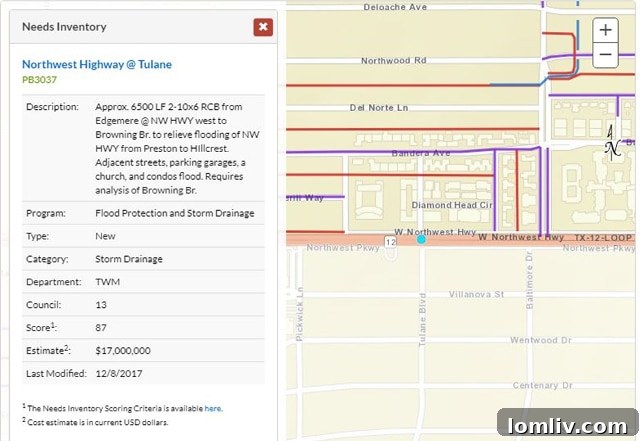
A particularly sobering part of the meeting involved plumbing and stormwater infrastructure. The graphic depicting the “Pink Wall flooding” is unfortunately a familiar sight to area residents. This crucial section of Dallas regularly experiences significant flooding during what are termed “100-year floods”—events that, anecdotally, seem to occur with alarming frequency. Despite its assessed seriousness, rated at a concerning 87 out of 100, the latest bond package unfortunately allocates no funds for its remediation. This highlights a critical gap in infrastructure investment, leaving existing and future developments vulnerable.
Jim Panipinto raised a vital question to Director Cossum: would the city approve new projects that demonstrably overburden existing stormwater sewers, tap water supplies, or sanitary sewage lines? Cossum’s emphatic “no” provided significant reassurance to the neighborhood. He clarified that if a project’s demands were to exceed current infrastructure capacity, the developer would be solely responsible for funding and implementing necessary upgrades, such as new piping. Crucially, without such capacity increases, regardless of any PD-15 recommendations, the project would not proceed. This firm stance from the city offers excellent news for the neighborhood, ensuring that growth in the Preston Center area does not come at the expense of overwhelming already strained public utilities or exacerbating existing issues like the Pink Wall flooding.
The Persistent Opposition: Unpacking the “Naysayers”
Throughout these community discussions, a persistent, vocal minority has consistently challenged the process and its potential outcomes. Their tactics and claims warrant closer examination, as they often diverge significantly from a collaborative approach to urban planning. In May, former Dallas Mayor Laura Miller initiated a wave of opposition by sending a letter to Council Member Gates, asserting that a “significant majority” of residents opposed increased density and other aspects of the proposed changes. This sentiment was amplified in July, with John Pritchett, president of the Preston Hollow South Neighborhood Association, and Carla Young, president of the Athena HOA, distributing a petition aimed at halting the authorized hearing process altogether. Their central argument was that this process would “open the neighborhood to unrestricted development” and therefore must be “stopped.”
Further escalating the critique, Steve Dawson, a University Park resident and part-owner of a Pink Wall apartment building, submitted a four-page letter in July. His core accusation was that Council Member Gates had “stacked the deck” by selecting committee members who were not inclined to terminate the planning process. While Dawson denied his statements were driven by “sour grapes” or a “bruised ego,” the author found his denial unconvincing, especially considering Dawson’s lament about the lack of gratitude for the first PD-15 group’s efforts. The pinnacle of this opposition arrived with another communication from John Pritchett in late July. This letter, three pages long, effectively dismissed all facts and reporting related to the PD-15 process as false. Pritchett went further, patronizing committee members by stating they were “not the A-Team in terms of zoning matters,” though he condescendingly concluded by granting that they were “all well-intentioned.”
The identity and motivations of these persistent critics are central to understanding the dynamics of the PD-15 debate. With the notable exception of Laura Miller, who was a chief architect of the original Preston Center Plan, these individuals were all members of the initial, ultimately unsuccessful, PD-15 task force. This past involvement suggests a proprietary attachment to the prior, failed planning efforts. Their “bible” appears to be the financially flawed Preston Center Plan, leading them to perceive an elaborate conspiracy by the City of Dallas where, in reality, the truth is far simpler and more pragmatic. The devastating fire at Preston Place, and its residents’ ongoing struggle to rebuild their lives, starkly exposed significant, fundamental flaws within the Preston Center Plan, rendering it practically unworkable. These deficiencies have been extensively documented in various reports (here, here, and here). The notion that Dallas, a major metropolitan area, would contrive a complex scheme to appropriate a few acres for a “personal trophy,” or that only this small group possesses the unique insight to craft a successful future for the neighborhood, smacks of hubris and self-serving ego. A truly effective urban plan for the Preston Center area must emerge from collaborative effort, informed by current realities, and built on a foundation of feasibility, not outdated or financially unsound proposals.

About the Author: Insights on Dallas Real Estate and Urbanism
My passion and professional focus lie at the intersection of high-rises, homeowners associations (HOAs), and property renovations within Dallas’s dynamic real estate market. However, my interests extend broadly to the intricate balance between preserving modern and historical architecture and embracing the principles of the YIMBY (Yes In My Backyard) movement, which advocates for thoughtful and inclusive urban development. My commitment to insightful reporting on these complex topics has been consistently recognized. From 2016 to 2018, the National Association of Real Estate Editors honored my writing with three Bronze awards (2016, 2017, 2018) and two Silver awards (2016, 2017), underscoring a dedication to quality journalism in real estate. Should you have a story to share, a perspective to offer, or even a unique proposal, feel free to reach out via email at [email protected]. While I encourage you to look for me on Facebook and Twitter for more content and updates, please be advised that my online presence is intentionally minimal, prioritizing the depth of my reporting over pervasive social media engagement.