Welcome to “Upon Closer Inspection,” a dedicated series where the meticulous experts at Green Scene Home Inspections illuminate vital home maintenance insights for Daltxrealestate.com readers. Our mission is to empower homeowners with the knowledge to maintain safer, more efficient living spaces.
The Hidden Danger in Your Home: Why Clogged Dryer Vents Demand Your Immediate Attention
In the bustling rhythm of daily life, some essential home maintenance tasks inevitably slip through the cracks. Homeowners might be unaware of their necessity, or the demands of modern living simply push them to the back burner. Yet, overlooking these seemingly minor duties can lead to significant problems, ranging from increased utility bills to serious safety hazards. This week, our “Upon Closer Inspection” series turns its spotlight on one of the most alarmingly common, yet frequently neglected, deficiencies we encounter in countless homes: the peril of a clogged dryer vent.
You might be thinking, “A dryer vent? How exciting can that be?” But we urge you to read on. By the time you finish this article, we’re confident you’ll be motivated to inspect your own dryer vent. The truth is, there’s a high probability that yours, like so many others, is critically clogged.
Beyond the Lint Trap: Understanding the Real Risk
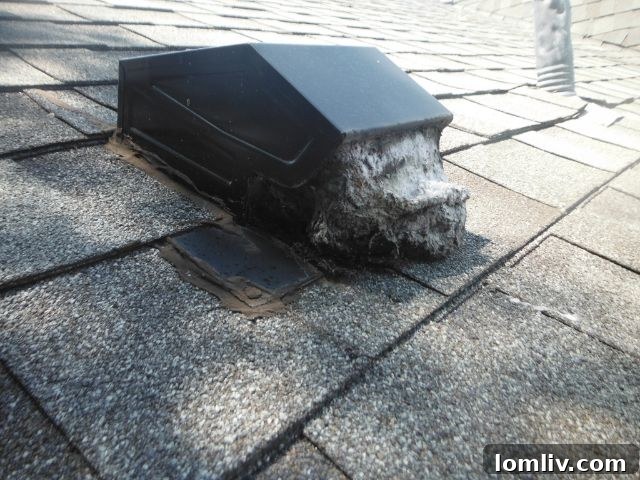
Most conscientious homeowners understand the importance of clearing the lint screen inside their dryer after every load. It’s a simple, quick habit that helps maintain appliance efficiency. (Whether this habit is consistently practiced is often a lively debate amongst family members and roommates!) However, a far greater number of people remain completely unaware of the much larger, more critical component that requires regular attention: the dryer’s exhaust vent system. This crucial pathway extends from the back of your machine all the way to the exterior of your house, expelling hot, moist air and residual lint.
When this exhaust vent becomes obstructed with lint, dust, and other debris, it transforms from a simple air conduit into a silent threat. Reduced airflow forces your dryer to work harder, consume more energy, and increases the risk of overheating. Annually, thousands of house fires are attributed to clogged dryer vents, making them a leading cause of residential fires. This isn’t just about appliance longevity or energy costs; it’s fundamentally about the safety and well-being of your household.
Spotting the Warning Signs: Is Your Dryer Vent Clogged?
Identifying a clogged dryer vent early can prevent serious issues. Pay close attention to these common symptoms, which serve as critical indicators that your vent system is compromised:
1. Significantly Longer Drying Times
This is perhaps the most noticeable sign. If your clothes are still damp after a normal drying cycle, or if you find yourself running the dryer for multiple cycles to get laundry dry, it’s a strong indicator of reduced airflow. A clogged vent traps moisture, preventing clothes from drying efficiently.
2. A Distinct Burning Smell During Operation
Lint is highly flammable. When the dryer overheats due to restricted airflow, the accumulated lint within the vent can begin to scorch, producing a noticeable burning odor. This is an urgent warning sign of a potential fire hazard that should never be ignored.
3. The Dryer Machine or Clothes Are Hot to the Touch
If the exterior of your dryer feels excessively hot, or if your clothes come out feeling much hotter than usual, it means the hot air isn’t escaping properly. This trapped heat can damage your appliance and poses a significant fire risk.
4. Excessive Lint Buildup in Unexpected Places
While some lint in the trap is normal, an abnormally large amount of lint accumulating in the lint screen, on your clothes, or even around the dryer’s exhaust opening can signal that the vent system isn’t expelling lint effectively.
5. The Exterior Vent Flap Doesn’t Open (or barely moves)
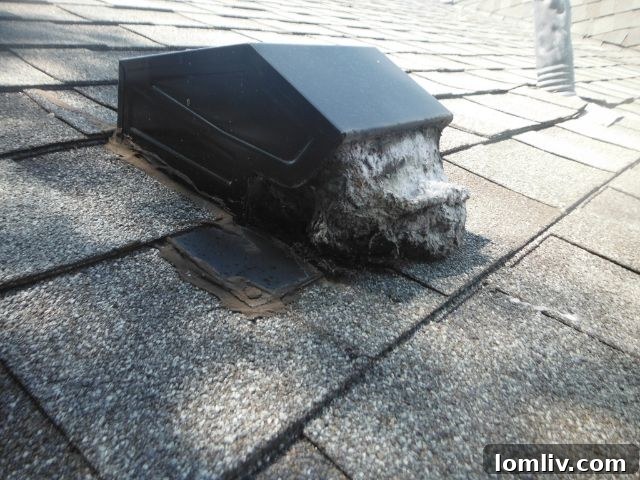
Inspect the exterior termination point of your dryer vent while the dryer is running. The flap should open and a strong current of warm air should be exiting. If there’s minimal airflow or the flap remains closed, it’s a clear sign of an obstruction.
Eventually, if left unaddressed, the dryer’s safety mechanisms may kick in, or the appliance itself could sustain permanent damage, leading to a complete malfunction and necessitating costly repairs or even a full replacement.
The Anatomy of Your Dryer Vent System
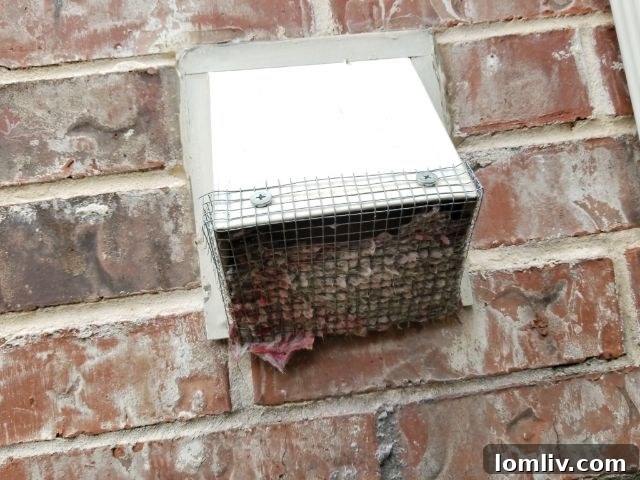
Dryer vents are not one-size-fits-all. They come in various shapes, sizes, and configurations, and their exit points from the home differ significantly based on the dryer’s location and the house’s construction. Some vents run a short, direct path through an exterior wall, while others may travel extensively through basements, crawl spaces, attics, or even up through the roof.
Regardless of its specific route, every dryer vent system consists of two primary areas that demand regular inspection and cleaning:
- The Connection Point to the Dryer: This is where the flexible duct connects to the back of your dryer. Lint often accumulates heavily here due to the often restrictive nature of flexible ducting and tight turns.
- The Exhaust Vent Entrance into the Wall/Floor: The point where the duct disappears into your home’s structure is another common area for buildup. Lint can gather around the edges or where the duct transitions into a more rigid pipe.
- The Entire Run of the Ducting: The most significant buildup typically occurs within the long sections of the duct that traverse walls, floors, attics, or crawl spaces.
- The Exterior Termination Point: The final exit point, whether on a wall or roof, can become completely blocked by lint, animal nests, or debris.
A Deeper Look: The Dangers of Disconnected Ducting
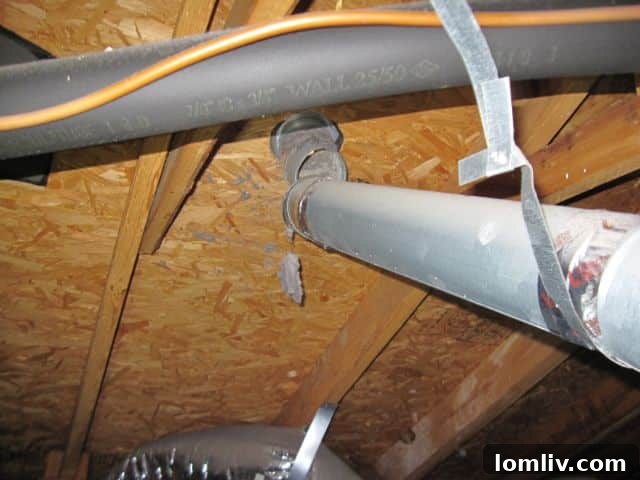
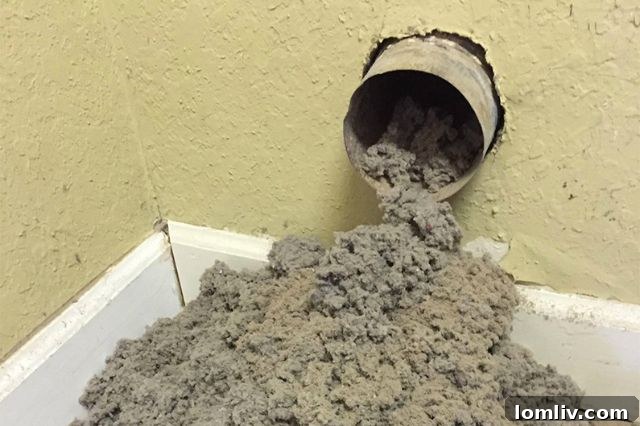
Beyond simple clogs, another serious issue our inspectors frequently uncover is disconnected dryer ducting. The image above dramatically illustrates this problem: this particular dryer duct travels from the machine, through the attic, and ultimately out the roof. However, as clearly visible in the photo, the duct has become completely disconnected.
This situation is profoundly dangerous. Instead of hot, moist, lint-filled air being safely expelled to the exterior, it’s blowing directly into the attic space. This creates multiple hazards:
- Fire Hazard: Loose lint accumulating in a hot attic, especially near electrical wiring or insulation, is an extreme fire risk.
- Moisture Damage: Introducing humid air into the attic promotes mold and mildew growth, damages insulation, and can compromise the structural integrity of your home over time.
- Pest Infestation: The warm, moist environment can attract pests, which might then nest in the attic space.
- Increased Energy Costs: Your dryer has to work harder, and the humid air in the attic can make your HVAC system less efficient.
Taking Action: DIY Cleaning vs. Professional Service
So, what should you do if you suspect or confirm a clogged dryer vent? The first step is to locate your dryer and follow the duct to wherever it exits your house. Visually inspect the exterior vent cover for lint buildup or obstructions. If it’s clogged, you need to clean it.
DIY Dryer Vent Cleaning:
For relatively short, straight vent runs that exit through a wall at ground level, a DIY cleaning might be feasible. You’ll typically need a dryer vent cleaning brush kit, a vacuum cleaner, and a screwdriver to disconnect the duct. Here’s a basic approach:
- Unplug and Disconnect: Always unplug your dryer for safety. Disconnect the flexible duct from the back of the dryer and from the wall.
- Clean Behind the Dryer: Use your vacuum to remove lint from the immediate area behind the dryer and inside the disconnected duct ends.
- Brush the Vent: Insert the dryer vent brush into the duct from both ends (if accessible) and push it through, rotating to dislodge lint. Connect extension rods as needed.
- Clean Exterior Vent: Remove the exterior vent cover (if possible) and thoroughly clean out any lint or debris.
- Reconnect and Test: Reattach all ducts securely using metal clamps, plug in the dryer, and run it on an air-only cycle to check airflow.
For a visual guide and more detailed instructions on cleaning various types of dryer vents, Green Scene Home Inspections highly recommends this helpful how-to video.
When to Call a Professional Dryer Vent Cleaning Service:
While DIY cleaning can address minor issues, many scenarios warrant professional intervention. If your dryer vent:
- Exits on the roof, making it a tricky and potentially dangerous task to access.
- Has a long, winding path through attics, crawl spaces, or multiple walls.
- Is made of flexible foil or plastic (which are not recommended due to increased fire risk and propensity to sag and trap lint).
- Has been neglected for several years, suggesting significant, compacted buildup.
- Appears disconnected or damaged, as seen in our example above.
- Causes persistent symptoms even after a DIY attempt.
Professional duct cleaning services possess specialized tools, such as powerful vacuums and long, rotating brushes, to thoroughly clear even the most stubborn clogs. They can also inspect the entire vent system for damage, disconnections, or improper materials. The cost of hiring a reputable duct cleaner is a small investment when weighed against the expense of a new dryer, significantly higher utility bills, or, most critically, the devastating costs and dangers of a house fire.
Preventative Measures and a Maintenance Schedule
Regular maintenance is key to keeping your dryer vent clear and your home safe. Implement these simple practices:
- Clean the Lint Trap Every Load: This is the first line of defense against lint accumulation.
- Check the Exterior Vent Annually: Ensure the flap operates freely and remove any visible lint or debris.
- Inspect and Clean the Entire Vent System Annually: For most homes, an annual professional cleaning or a thorough DIY cleaning is sufficient. Homes with heavy dryer usage, pets, or long vent runs might benefit from bi-annual cleaning.
- Use Rigid Metal Ducting: If replacing your dryer vent system, opt for rigid metal ducts, which offer better airflow and are less prone to trapping lint than flexible options.
- Avoid Overloading the Dryer: This can reduce efficiency and increase lint production.
Conclusion: A Small Task, A Big Impact
A clogged dryer vent is a silent, often unseen hazard that affects both your home’s safety and your appliance’s efficiency. While it might seem like a minor maintenance item, its potential consequences—from higher energy bills and premature appliance failure to the terrifying risk of a house fire—are anything but trivial. By understanding the symptoms, knowing when to take action, and committing to regular cleaning, you can protect your home and loved ones. Take a moment today to inspect your dryer vent; it’s a small task that yields an immense peace of mind. As always, the team at Green Scene Home Inspections is here to help you gain a clearer picture of your home’s health, one inspection at a time.