Standard Shoreline: Dallas Plan Commission Unanimously Approves Transformative Apartment Complex
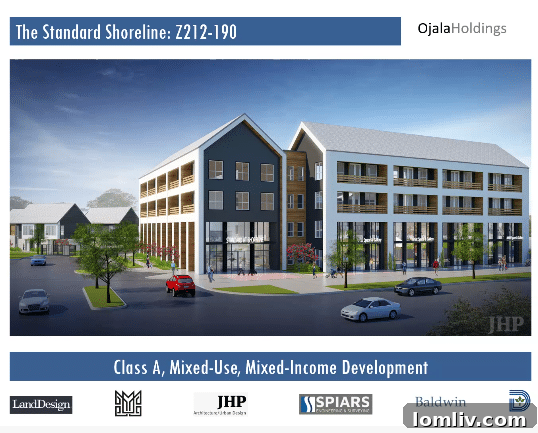
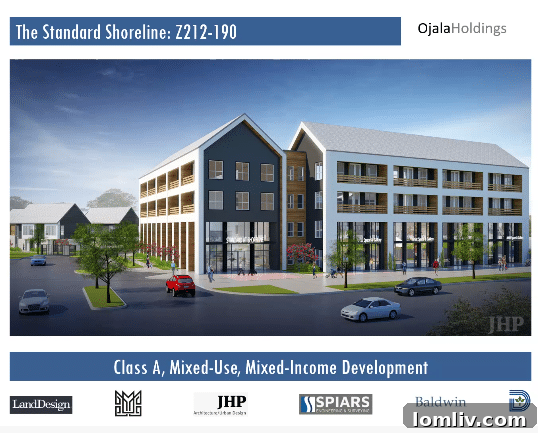
In a pivotal decision poised to reshape a segment of the Garland Road corridor, the Dallas Plan Commission delivered a unanimous vote on Thursday, granting approval for the rezoning of the former Shoreline City Church property. This significant stride paves the way for the Standard Shoreline project, a sophisticated four-story apartment complex thoughtfully designed to integrate adjacent to the established Lochwood neighborhood. This crucial development now advances to the Dallas City Council for a final review, anticipated to occur in late October, marking a key moment for urban development in East Dallas.
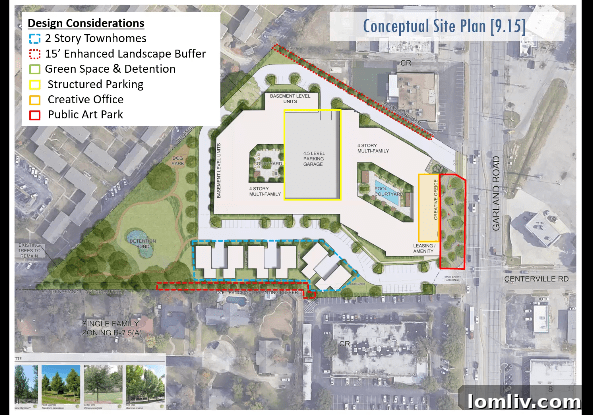
The journey to this approval has been one of extensive discussion, adaptation, and community engagement. Plans for the Standard Shoreline, spearheaded by Ojala Holdings, have undergone substantial revisions since initial conversations commenced in January. This iterative process, characterized by a commitment to incorporating diverse feedback, has resulted in a more refined and robust proposal. The approved package includes a meticulously revised development plan submitted just prior to the vote, a comprehensive tree protection strategy emphasizing environmental stewardship, and a series of critical conditions and amendments. Among these is an extended 15-foot landscape buffer, a measure championed by Plan Commissioner Michael Jung, who represents District 9 and played an instrumental role in mediating between developer interests and community concerns.
“This is the end of a long road, but a road that ultimately led to a better destination,” Commissioner Jung remarked, reflecting on the project’s evolution. “The original vision for this development has been radically transformed, largely due to the invaluable comments, desires, and constructive suggestions from the public, dedicated city staff, the proactive Garland Road Vision Task Force, and several insightful members of this commission. There is no doubt that the project before us today is significantly improved because of that collective participation and unwavering commitment to dialogue.” His statement underscores the profound impact of collaborative planning in shaping urban landscapes to better serve their communities.
Visualizing Progress: Standard Shoreline’s Evolving Design
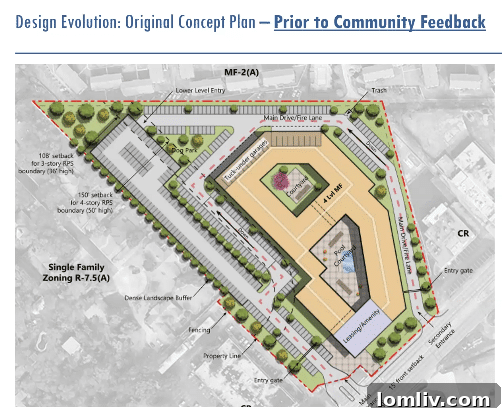
Shoreline City Church Redevelopment: A Catalyst for Garland Road’s Future
The proposed 300-unit development, a combination of apartment units and townhomes, is poised to address a pressing need for quality housing within Dallas, a city experiencing rapid growth and an increasing demand for diverse residential options. Beyond its housing component, the Standard Shoreline project is envisioned as a powerful catalyst for revitalization along an important stretch of Garland Road. This area, identified as ripe for investment and renewal, stands to benefit significantly from the infusion of modern infrastructure and thoughtful urban planning.
Commissioner Jung elaborated on the broader benefits, emphasizing the project’s potential to enhance the urban fabric. “This development will make a small but undeniably important move toward fostering a greater pedestrian orientation in this vital corridor,” he stated. “This includes the thoughtful incorporation of a public art park, designed to become a community focal point, and the creation of creative office space, specifically envisioned as a cooperative artists’ studio. These elements will not only attract new residents and businesses but also foster a more vibrant, walkable, and culturally rich environment for current and future inhabitants of the area.”
While the Dallas City Council’s final decision is pending, it is a well-established practice that the Plan Commission’s unanimous votes carry substantial weight. Jung himself has previously noted the rarity of a City Plan Commission (CPC) vote being overturned by the City Council, suggesting a strong likelihood that the project will move forward as approved. This continuity reflects confidence in the rigorous review process undertaken by the commission.
The public hearing preceding the vote underscored the diverse perspectives within the community. Seventeen residents, including those aligned with the pro-housing advocacy group More Neighbors Dallas, formally registered their strong support for the development. They often cited the need for housing and the economic benefits it would bring. Conversely, sixteen individuals, many of whom are active members of the Lochwood Neighborhood Association, voiced their opposition, articulating concerns primarily centered on potential impacts on neighborhood character, infrastructure, and quality of life. This spirited debate highlights the complex challenges inherent in balancing growth with preservation in rapidly developing urban areas.
Standard Shoreline: Comprehensive Features and Attainable Living
Representatives from Ojala Holdings have meticulously detailed the comprehensive features planned for the Standard Shoreline development, which promise a dynamic living and working environment. The residential component will feature a mix of 282 contemporary apartment units complemented by 18 lower-density townhomes, offering a range of housing options for diverse needs. Residents will benefit from an enclosed parking garage, ensuring convenience and security. Beyond housing, the project incorporates 3,000 square feet of dedicated creative office space, fostering entrepreneurship and community engagement, alongside an inviting art park designed for public enjoyment and cultural expression. A substantial 25,000 square feet of open space is also planned, providing residents and neighbors ample room for recreation and relaxation, enhancing the green infrastructure of the area.
Daniel Smith, managing director of Ojala Holdings, emphasized the developer’s commitment to responsible community integration and housing accessibility. He confirmed that developers will implement a strict ban on short-term rentals within the complex, addressing a common concern regarding neighborhood stability and character. Furthermore, a significant portion—51 percent—of the units are planned as “attainable housing.” This commitment aims to provide housing options that are affordable to a broader spectrum of income levels within the Dallas community, contributing to the city’s efforts to address housing affordability challenges and ensure a diverse residential base.
Despite these extensive plans and commitments, residents of the adjacent Lochwood neighborhood articulated several key concerns during the planning process. These included questions regarding the project’s financing mechanisms, the efficacy of proposed stormwater retention solutions, potential impacts on local traffic patterns, and perhaps most significantly, the proposed 60-foot height of the main structures. Commissioner Jung, in his role, clarified the purview of the Plan Commission, noting that while resident concerns are valid, the commission does not typically delve into project financing details.
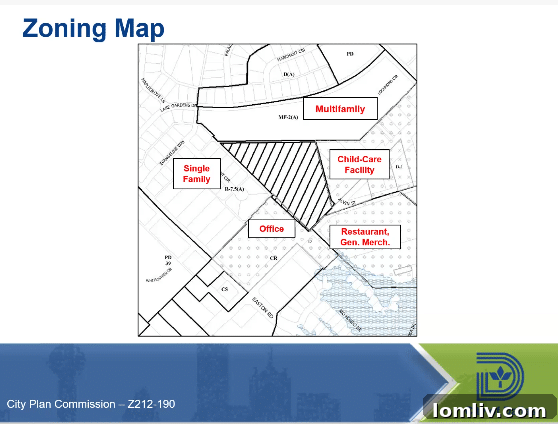
Addressing the broader appropriateness of the development, Jung articulated a compelling argument for the project’s strategic location. “The site is situated squarely on a commercial corridor, bordering a six-lane state highway that functions as a major arterial thoroughfare,” he explained. “Its long and narrow configuration makes multi-family use not only reasonable but an entirely appropriate application for this property, aligning with established urban planning principles for such an area.” He commended the Lochwood neighborhood for their numerous creative suggestions for alternative uses, acknowledging their desire for different outcomes. However, he cautioned against allowing the pursuit of an ideal scenario to impede a beneficial one. “What we have before us is a carefully considered, proposed use,” Jung elaborated, “and to deny that proposed use purely on the basis of what might, potentially someday, otherwise occupy the site, I believe invokes the principle that the perfect is often the enemy of the good. Our role is to evaluate what is presented, not to endlessly speculate on theoretical alternatives.” This perspective highlights the pragmatic considerations often at play in land-use decisions.
Regarding traffic, a significant concern for residents, Jung confirmed that an independent traffic study submitted by Ojala Holdings concluded that the Standard Shoreline project would not result in a degradation of existing roadways or key intersections within the area. This finding aims to alleviate fears of increased congestion and impaired traffic flow, demonstrating that the development has been designed with traffic impact mitigation in mind.
A Tall Order: Navigating Height Concerns and Protection Measures
A central point of contention throughout the planning process, and one that Commissioner Jung openly acknowledged, was the proposed 60-foot height of the primary building, which presented a significant concern for many of the adjacent single-family neighbors. The visual impact and potential for privacy intrusion were key issues raised by the Lochwood community, particularly residents on Yorkmont Circle.
“Early in the process, understanding these concerns, I specifically asked the applicant to consider a three-story project instead,” Jung recalled. “Their response was clear: the project, as conceived, would simply not be economically viable at a reduced height of three stories. Subsequently, I requested that the applicant approach the property owner about renegotiating the land sales price, a move that could potentially render a three-story project financially feasible. While the applicant diligently pursued this option, they were ultimately unsuccessful.” This candid explanation highlighted the economic realities developers face and the delicate balance between community desires and financial viability. Jung then articulated the stark choice before the commission: “The fundamental question, therefore, was not a hypothetical choice between three versus four stories. The real question we faced was four stories versus outright denial of the entire project.”
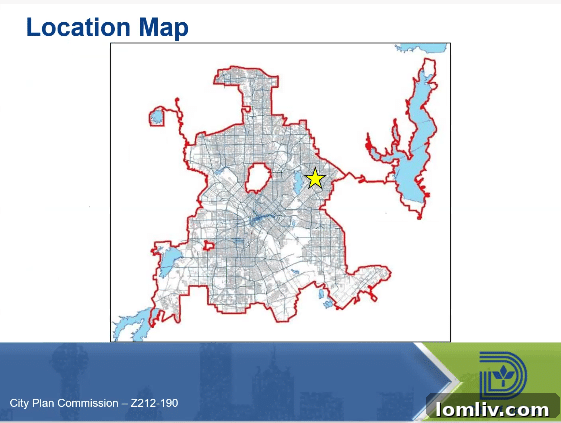
Acknowledging the legitimate concern regarding height intrusion on the single-family neighborhood on Yorkmont Circle, Commissioner Jung confirmed that the applicant agreed to implement a 3-to-1 residential proximity slope (RPS). The RPS is a crucial zoning tool designed to protect the privacy and sunlight access of adjacent lower-density residential properties by dictating how building height must recede from property lines. “I made it unequivocally clear to them that to do otherwise would have been a dealbreaker for this project,” Jung stated, emphasizing the non-negotiable nature of this protection. He further elaborated on the philosophical underpinning: “I have stated on numerous occasions that while the RPS serves as a critical minimum requirement, it does not inherently solve every single issue related to height intrusion. Our starting proposition in this process has consistently been that this neighborhood, like all others in our city, deserves and will receive the same basic height protection afforded to every community in Dallas.”
To further mitigate potential impacts and enhance neighborhood compatibility, an array of additional buffers and protective measures have been integrated into the Standard Shoreline design. These include the strategic placement of six two-story townhomes, positioned between the main apartment building and the existing single-family neighborhood. These townhomes will act as an effective physical and visual buffer, significantly preventing direct views from the fourth floor of the main building into the backyards of Lochwood homes, except for very narrow gaps. Furthermore, a robust tree protection plan is in place to safeguard existing mature trees on the site. Complementing this, new trees that are projected to reach impressive heights of 40 to 80 feet at maturity will be planted, creating a natural, living screen that will grow to further soften the visual impact of the development over time.
“The cumulative result of all these meticulously planned measures is an extraordinary package of height intrusion protections,” Jung concluded, underscoring the comprehensive nature of the safeguards. “These protections far surpass what we typically observe in a standard development case and are, in my considered view, entirely sufficient to adequately shield Yorkmont Circle from what would otherwise be the more pronounced height intrusion of a project of this scale.” While recognizing the depth of community sentiment, he acknowledged the reality of differing opinions. “I realize there are many residents who profoundly disagree with this assessment, and I want to express my utmost respect for that disagreement. I actively invite those individuals to continue expressing their views and engaging in this democratic process as the case progresses to the City Council,” he affirmed. “Ultimately, this motion and its approval represent my best judgment as a Plan Commissioner, after countless hours of review and discussion, regarding what is truly best for this specific site, for the wider District 9, and for the overall future of the great city of Dallas.”
The Road Ahead: Dallas City Council’s Final Review
With the Plan Commission’s unanimous recommendation, the Standard Shoreline project now stands poised for its final legislative hurdle: a review by the Dallas City Council. This stage represents the culmination of months of detailed planning, extensive community dialogue, and careful deliberation. The City Council’s decision, anticipated in late October, will not only determine the fate of this significant development but also set precedents for future urban growth and community engagement across Dallas. The robust discussions and thoughtful compromises that have shaped the Standard Shoreline project exemplify the complex yet vital process of urban planning in a thriving metropolitan area, aiming to balance the imperative for growth with the preservation of neighborhood character and quality of life.