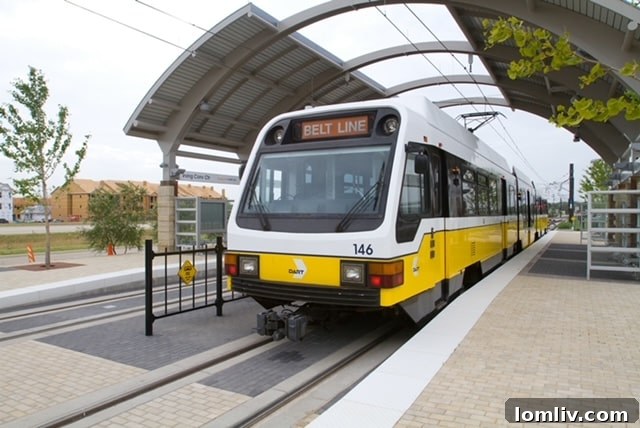
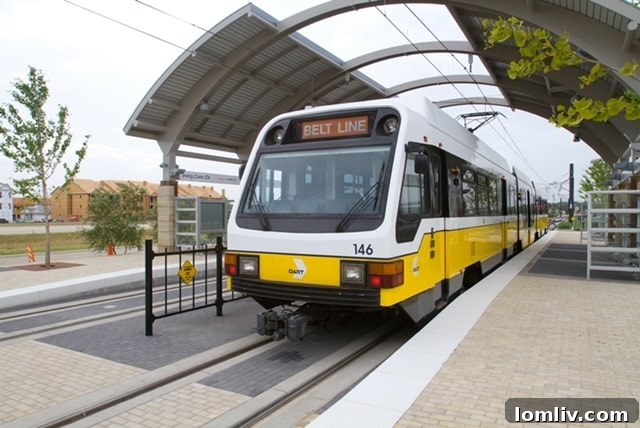
The City of Dallas is set to receive a significant injection of $90 million in excess sales tax revenue from Dallas Area Rapid Transit (DART), marking a pivotal moment for the city’s infrastructure and public services. This figure, while less than the initial $111 million anticipated, represents a hard-won compromise following months of intense debate and negotiation between the city and the regional transit agency. A detailed plan outlining the strategic allocation of these funds was presented to city council members, signaling a forward path for critical urban development projects.
The saga surrounding these excess sales tax revenues has been a focal point of discussion within Dallas municipal circles for quite some time. The contention arose from DART’s commitment to distribute surplus funds back to its 13 member cities, a practice intended to support local development and infrastructure needs. However, the path to fulfillment for Dallas proved to be anything but straightforward, leading to a complex negotiation that drew attention to the intricate financial relationship between DART and its largest member city.
Central to the dispute were claims by DART that it had already allocated a portion of these funds towards “betterment” projects situated within Dallas city limits. These projects, DART contended, were undertaken to enhance the transit experience and infrastructure directly benefiting Dallas residents. Adding to the friction, DART CEO Nadine Lee publicly voiced accusations that Dallas city staff had failed to adhere to an agreement regarding feedback on the design of the critical Silver Line project and had intentionally caused permit delays. These allegations painted a picture of strained collaboration, further complicating the financial discussions.
Navigating the Silver Line Controversy and Reaching a Compromise
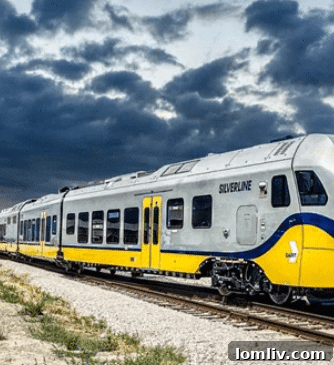
The Silver Line Project, a major DART initiative, became a significant point of contention in the financial discussions. This ambitious 26-mile regional rail line is designed to connect multiple cities, enhance cross-town mobility, and foster economic development across North Texas. Its scope and regional importance meant that any delays or cost overruns would naturally have far-reaching implications, and Dallas’s alleged permit delays were cited by DART as contributing to these challenges.
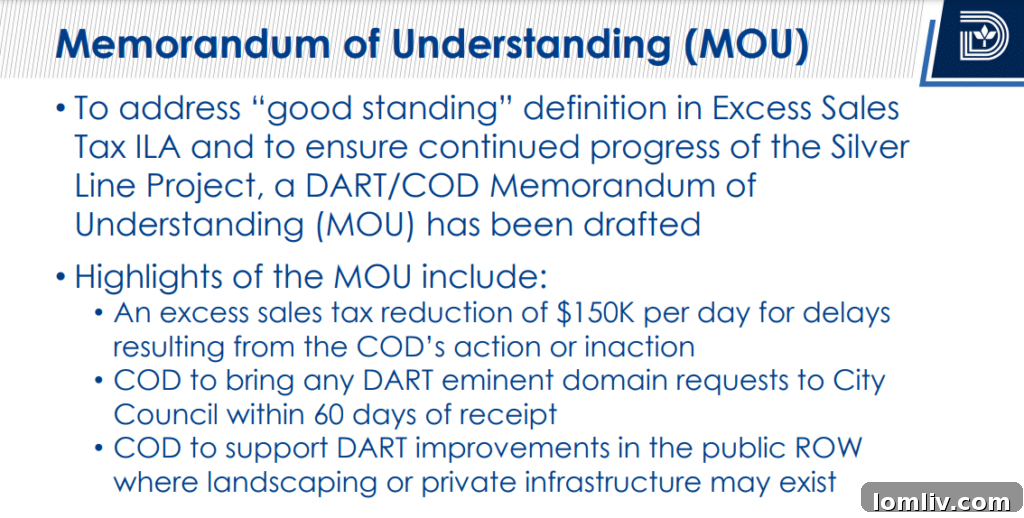
Recognizing the impasse, a dedicated task force was established with a clear mandate: to negotiate a fair compromise between the City of Dallas and DART. This collaborative effort was crucial for resolving the dispute and ensuring that vital funds could be released for the city’s pressing needs. Assistant City Manager Robert Perez played a key role in these negotiations, culminating in a comprehensive 13-page memo issued to council members last week. This memo meticulously detailed the agreed-upon terms, laying bare the concessions and commitments from both sides.
The resolution revealed a significant adjustment to the initial expectations. Instead of the anticipated $111 million, Dallas will now receive $90 million. Furthermore, the city is set to assume approximately $5.2 million in costs associated with the aforementioned “betterment” projects. The agreement also stipulates a performance-based release of funds: a portion will be made available immediately, but a substantial $30 million will be held in escrow, contingent upon Dallas meeting specific performance measures related to future cooperation and project approvals. This escrow condition reflects DART’s concerns about past delays and aims to incentivize a smoother collaborative process going forward.
In his memo, Perez elaborated on the complex financial reconciliation. “Aside from the assignment of Silver Line betterment costs, DART, the [North Central Texas Council of Governments – NCTCOG], and the [City of Dallas] discussed mitigation of the $43.5 million in delay costs associated with Silver Line permit review and approvals,” he stated. “Through the mitigation discussions, DART and City staff recommend that the COD assumes $15.9 million of the delay costs. Reducing the assigned betterments and assumed delay costs from the $111.1 million, the COD would be allocated $90 million in DART excess sales tax revenues.” This transparent breakdown underscored the intricate financial engineering required to bridge the gap between the initial expectations and the final negotiated settlement, highlighting Dallas’s assumption of a portion of the delay costs to secure the larger funding package.
Strategic Investment: Recommended Uses for the $90 Million Revenue
With the $90 million allocation secured, the focus immediately shifted to how these vital funds would be deployed to best serve the Dallas community. Assistant City Manager Robert Perez’s recommendations presented a comprehensive and strategic approach, prioritizing projects that address critical infrastructure needs, enhance accessibility, promote sustainability, and support vulnerable populations. These planned investments are poised to deliver tangible improvements across the city, directly impacting residents’ quality of life and contributing to Dallas’s long-term growth and resilience.
- North Central Texas Council of Governments (NCTCOG) Funding Partnership ($10 million): This significant investment of $10 million is earmarked as a revolving fund within the NCTCOG partnership. Its primary purpose is to leverage an additional $15.4 million in funding from the NCTCOG, specifically for the transformative Five-Mile Creek Greenbelt Hike and Bike Trail Project. This project is not merely about creating recreational paths; it aims to enhance urban green spaces, promote active transportation, improve connectivity within neighborhoods, and contribute to the city’s environmental sustainability goals, making Dallas a greener and more walkable city.
- Reconstruction of 22 Traffic Signals on Major DART Bus Route Corridors ($11.55 million): A critical upgrade for the city’s transportation network, this allocation will facilitate the reconstruction of 22 traffic signals located at key intersections along major DART bus routes. These improvements will be strategically concentrated in identified Equity Priority Areas, ensuring that underserved communities benefit directly from enhanced infrastructure. The upgrades will incorporate advanced technology, including bus queue jumps – dedicated signal phases that give buses priority – and fiber optic installations, which will not only improve traffic flow and reduce commute times for bus riders but also lay the groundwork for future smart city initiatives and more efficient urban mobility management.
- Sidewalk Master Plan ($10 million): Pedestrian infrastructure is fundamental to a vibrant, accessible city. This $10 million investment is crucial for advancing the Sidewalk Master Plan, specifically targeting the completion of the initial $30 million worth of priority projects. These projects focus on repairing, constructing, and expanding sidewalks in areas identified as most in need, thereby improving pedestrian safety, enhancing walkability, and ensuring better connectivity for residents across Dallas, particularly in areas lacking adequate pedestrian pathways.
- ADA Ramp Installation ($50 million): Perhaps one of the most impactful allocations, a substantial $50 million will be dedicated to addressing the significant backlog of missing ADA (Americans with Disabilities Act) ramps across the city. With an estimated $54 million backlog, this funding provides a monumental step towards achieving full accessibility for all Dallas residents. Installing these ramps is not just about compliance; it’s about fostering inclusivity, enabling greater independence for individuals with mobility challenges, and ensuring that public spaces are truly accessible to everyone.
- Traffic Markings Program ($2 million): Clear and well-maintained traffic markings are essential for road safety and efficient traffic flow. This $2 million investment will bolster the FY 2024 Traffic Markings Program, increasing its annual budget from $1.2 million to $3.2 million. This significant boost will allow for more frequent maintenance and renewal of road markings, reducing confusion for drivers and pedestrians, preventing accidents, and contributing to the overall orderliness of Dallas’s streets.
- Bike Lane Upgrades ($2.2 million): Recognizing the growing popularity and importance of cycling as a sustainable mode of transportation, $2.2 million will be allocated to enhance the city’s bike lane infrastructure. This includes a $2 million pilot program to test new, safer bike lane materials and begin retrofitting existing lanes with these innovative solutions. Additionally, $200,000 will be used to explore options for improved bike lane cleaning and maintenance, ensuring that Dallas’s cycling network remains safe, clean, and appealing for cyclists.
- Parking Operations Study and Pilot Projects ($750,000): As Dallas continues to grow, optimizing urban parking becomes increasingly vital. This $750,000 investment will fund a comprehensive parking study designed to evaluate redevelopment options for City of Dallas parking lots. The study will identify strategic locations for future parking garages, develop recommendations for optimizing existing parking operations through smart technologies, and fund pilot projects for innovative parking solutions. The goal is to create a more efficient, user-friendly, and revenue-generating parking system that supports urban development.
- Student/Homeless Transit Programs ($500,000): Demonstrating a commitment to social equity, $500,000 will be dedicated to vital transit programs. This includes creating a $250,000 pilot program aimed at supporting DART’s free transit services for youth (K-12), ensuring that students have reliable access to school and work opportunities. The remaining $250,000 will continue to fund essential transit services for the homeless population, providing critical access to resources and helping individuals move towards stability.
- COD Streetcar ($3,000): While a smaller allocation in comparison, $3,000 is designated for the ongoing maintenance and professional services related to studies aimed at optimizing the operations of the City of Dallas streetcar. This ensures the continued reliability and efficiency of this unique urban transit option, which plays a role in connecting various parts of downtown Dallas.
Council’s Deliberations: Addressing Concerns and Looking Forward
The presentation of this agreement and the proposed spending plan to the City Council during a Wednesday briefing was met with considerable discussion, though it was cut short due to the loss of a quorum. Nonetheless, key concerns and perspectives emerged from the council members present.
District 8 Councilmember Tennell Atkins raised a significant point of contention regarding the $30 million allocated for sidewalks and repairs being tied up in escrow. He highlighted that other DART member cities were not subjected to such a hindrance, suggesting an unequal treatment that could potentially delay critical projects for Dallas. This reservation underscored the council’s vigilance in ensuring fair terms for their city and a desire for immediate access to all allocated funds to address pressing infrastructure needs.
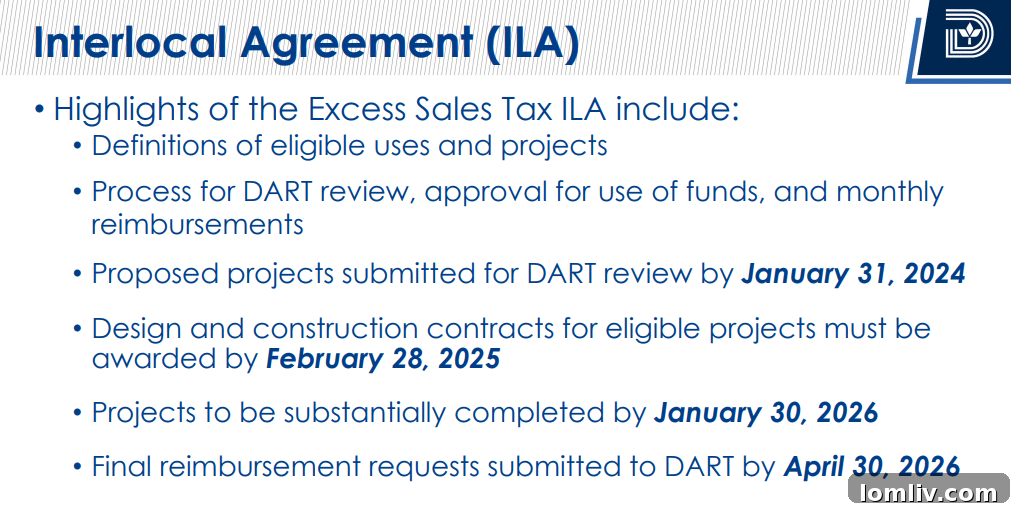
Despite these reservations, City Manager T.C. Broadnax expressed a more pragmatic and forward-looking perspective. He conveyed his comfort with the terms of the agreement, stating he had “no reservations or concerns about receiving those dollars moving forward.” Broadnax articulated the strategic choice made during negotiations: “It came down to either trying to figure out how we got to a more reasonable number or ending up at a stalemate and not getting any money.” His stance emphasized the importance of securing substantial funding for the city, even if it involved compromises and conditions. He concluded by recommending that the city “move forward and hold staff accountable as well as DART when it comes to where we are with the timing and the release of those dollars,” signaling a commitment to vigilant oversight and ensuring the timely implementation of the agreement.
Implications for Dallas’s Future and Regional Cooperation
The resolution of the DART sales tax revenue dispute marks a critical juncture for Dallas. While the final figure of $90 million is less than initially hoped, it represents a substantial investment that will directly benefit residents through improved infrastructure, enhanced accessibility, and vital social programs. The detailed spending plan reflects a strategic vision for urban development, addressing long-standing needs and preparing the city for future growth.
Moreover, this outcome underscores the complexities of inter-agency financial relationships and the necessity of robust negotiation. The compromise reached, including Dallas assuming certain costs and agreeing to performance measures for future fund releases, sets a precedent for how the city and DART will collaborate on future projects, particularly those of regional significance like the Silver Line. It highlights the delicate balance between advocating for city interests and fostering productive partnerships for regional progress.
Ultimately, the $90 million allocation will serve as a catalyst for tangible improvements across Dallas. From safer streets and accessible sidewalks to smarter traffic systems and support for vulnerable communities, these funds are poised to leave a lasting positive impact. The City of Dallas, now equipped with a clear plan and substantial resources, is ready to embark on these crucial projects, reinforcing its commitment to a better, more connected, and more equitable future for all its residents.