Dallas’s Controversial Plan: Pop-Up Homeless Shelters in Recreation Centers Spark Community Debate
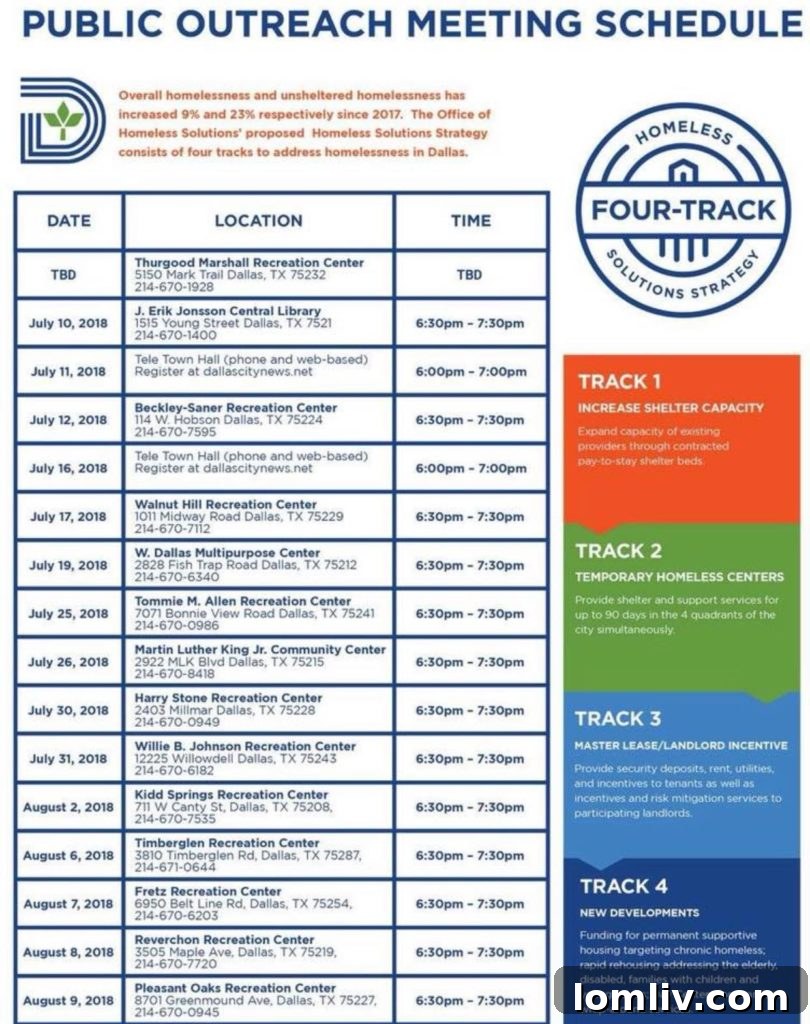
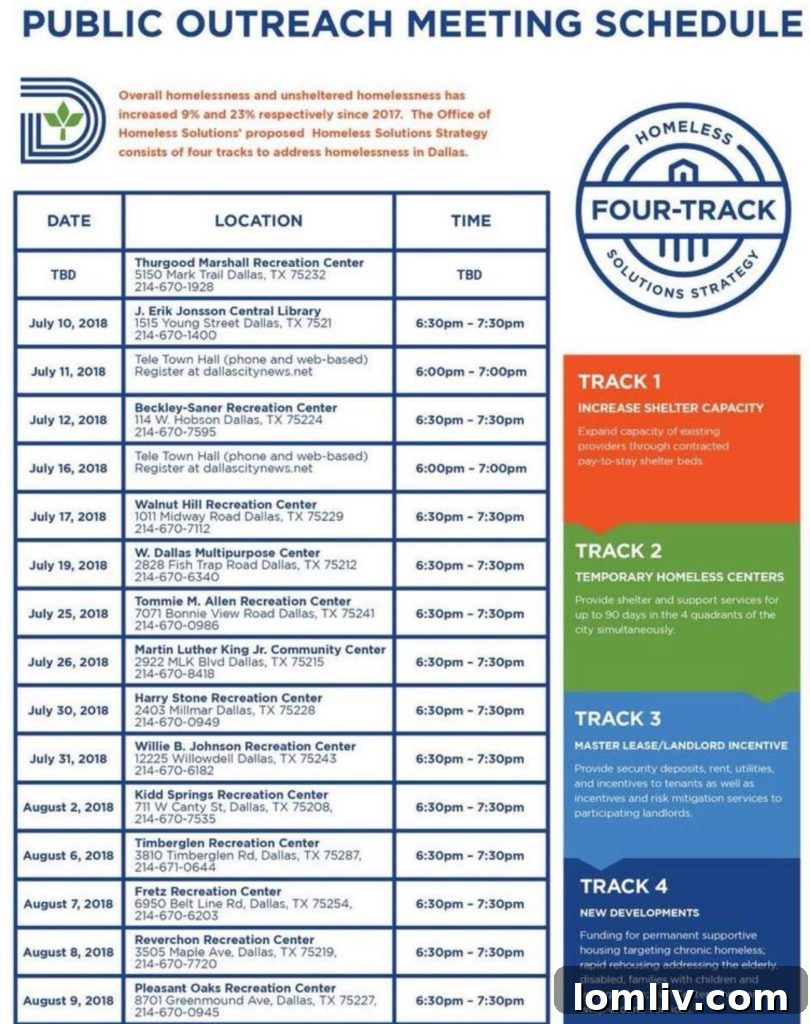
A contentious proposal from Dallas’s newly established Office for Homeless Solutions (OHS) is sparking significant debate across the city. The plan, if approved by the Dallas City Council, would transform several local recreation centers into temporary “pop-up” homeless shelters. This initiative targets various community hubs, including those in North Dallas and the fringes of Preston Hollow, specifically naming Fretz Park, Campbell Green, Timberglen, Walnut Hill Recreation Center, and Churchill Recreation Center as potential sites. While the city grapples with a growing homeless population, this particular approach is drawing intense scrutiny from residents, community leaders, and advocacy groups, who question its feasibility, financial prudence, and overall effectiveness.
The Genesis of the Proposal: Spreading the Burden?
The impetus behind the OHS proposal reportedly stems from pressure exerted by downtown Dallas residents. Facing ongoing challenges associated with the area’s increasing homeless population, these residents have actively encouraged the OHS to “spread them around Dallas.” This directive appears to have catalyzed the rapid development of the current plan, leading to concerns that it may have been rushed through without adequate planning or foresight. While the intent to alleviate pressure on one specific area is understandable, the method of simply relocating the problem without a comprehensive strategy raises serious questions about the city’s approach to homelessness.
This reactive measure, rather than a proactive, integrated housing solution, is a major point of contention. Critics argue that moving individuals from one part of the city to another does not solve the root causes of homelessness. Instead, it merely shifts the burden and creates new challenges for different communities. The speed at which this proposal is advancing has led many to believe that the OHS might be prioritizing a quick-fix solution over a sustainable, compassionate, and well-researched strategy.
Unpacking the “Pop-Up” Shelter Model: A Rotating System with Significant Flaws
At the core of the OHS strategy is a rotating “pop-up” shelter model. The proposal outlines a system where individuals experiencing homelessness would be housed for at least 90 days at each location. The city envisions four primary pop-up locations—one in the north, one in the east, one in the west, and one in the south. Under this rotation plan, homeless individuals would spend 90 days at one center within a quadrant before being moved to another pop-up site in the same quadrant. This means only four centers would function as make-shift shelters at any given time under normal circumstances.
However, the plan includes a provision for extreme weather conditions, during which the city may open up to 10 pop-up centers simultaneously to meet increased demand. This flexibility, while seemingly practical, introduces another layer of complexity to an already intricate system. Moreover, experts warn that implementing such a plan may necessitate significant changes to existing city code. This could potentially allow any city-owned property to be designated as a pop-up homeless shelter at any time, without special zoning. The implications extend further, suggesting that even retail spaces or churches could be repurposed as shelters, bypassing standard zoning regulations. Such a broad-reaching change raises profound concerns about community input, property values, and the general character of affected neighborhoods.
The proposed 90-day rotation, while offering temporary respite, fails to provide the stability crucial for individuals attempting to rebuild their lives. Constantly moving from one location to another can disrupt access to services, employment opportunities, and critical support networks, making it harder for individuals to transition out of homelessness permanently. This nomadic approach, rather than fostering a sense of community and security, risks perpetuating a cycle of instability, hindering meaningful progress towards long-term housing solutions.
A Logistical Labyrinth: The Transportation Conundrum
One of the most glaring deficiencies in the OHS plan is the transportation strategy, which appears to be a logistical nightmare. The proposed system would require individuals to be transported first to a central intake center, then to their assigned recreation center or other temporary shelter. This is just the beginning of the daily transit challenges. For those wishing to access day shelters or services during the day, additional transportation would be required, shuttling them away from the pop-up site in the morning and back in the evening.
Furthermore, the plan’s lack of provision for individuals who might need to leave a shelter in the middle of the night for various reasons highlights another significant gap. The city would seemingly be obligated to provide transportation for these spontaneous departures, adding another layer of complexity and cost. The question of “who would be doing all this driving?” has been partially answered with the suggestion of utilizing ride-sharing services like Uber. While convenient, this option is far from cost-effective, particularly when scaled to meet the daily needs of potentially hundreds of individuals across multiple locations.
The financial implications of such an extensive transportation network are substantial, raising questions about funding sources. The proposal indicates that “new dollars in the city budget” would cover some of these costs. However, without transparent details on the budget allocation, taxpayers are left wondering about the true economic burden and the opportunity cost of dedicating significant funds to an arguably inefficient transportation model rather than direct housing or support services. The entire transportation scheme underscores the plan’s reactive and uncoordinated nature, lacking a cohesive strategy for mobility and accessibility.
Community Outcry and Leadership Concerns: A Plan Lacking Detail and Responsibility
The OHS proposal has faced fierce opposition from prominent community figures, most notably Cara Mendelsohn. As the Executive Director of Rebuilding Together North Texas and Vice-Chair of the Citizen’s Homelessness Commission, Mendelsohn has voiced serious misgivings about the plan’s capacity to genuinely serve people experiencing homelessness, alongside its potential for egregious waste of city and bond money. Her critique emphasizes a profound lack of transparency and detailed planning.
Mendelsohn points out that “so many important aspects of Track 2, 3 and 4 have not been defined or clarified,” making it “irresponsible to approve without more detailed information.” She reveals that the Commission has been posing questions for months, yet “still don’t have answers to basic questions on how these tracks would operate.” This systemic lack of detail, she argues, signifies a rush to judgment rather than a thoughtful, evidence-based approach to a critical social issue. Even the Dallas Area Partnership on Homelessness, another key stakeholder, has not explicitly endorsed the plan, indicating widespread unease.
The homeless plan is structured into a “4-track” system. While Mendelsohn acknowledges Track 1—which advocates for fully utilizing existing shelter capacity on a pay-to-stay basis—as a “good idea” that could immediately help up to 150 people, her support ends there. Her concerns escalate dramatically with Track 2, the controversial proposal to house individuals in recreation centers. She labels this track “unworkable and unnecessarily expensive,” primarily due to the OHS’s apparent lack of plans to screen participants for weapons, drugs, convictions of violent offenses, or infectious diseases such as hepatitis A. Such omissions pose significant public safety and health risks to both the individuals being housed and the surrounding communities, particularly given the family-oriented nature of recreation centers.
Track 3 remains almost entirely undefined, further highlighting the plan’s incompleteness. Perhaps most alarming is Track 4, which commits a substantial $20 million. Mendelsohn states starkly, “Track 4… barely has bullet points to describe the plan. In fact, there is no plan!” This reveals a profound gap in accountability and strategic thinking, where significant public funds are earmarked for an initiative without clear objectives, methods, or projected outcomes. The cumulative effect of these deficiencies paints a picture of a haphazard proposal rather than a comprehensive solution, underscoring the urgent need for delay, modification, and genuine planning.
Beyond the Budget: Public Safety and Quality of Life Implications
Beyond the financial and logistical quagmires, the OHS proposal carries significant implications for public safety and the overall quality of life in affected neighborhoods. The suggestion of transforming community recreation centers – often hubs for children’s activities, sports leagues, and family gatherings – into homeless shelters has ignited widespread concern. Residents express anxieties about potential increases in crime rates, loitering, and public health issues in the vicinity of these facilities. The absence of adequate screening for individuals entering Track 2, specifically regarding violent offenses, drug use, or infectious diseases, only exacerbates these fears.
Parents and community members worry about the impact on their children’s safety and access to recreational spaces. The presence of temporary shelters, even with good intentions, can fundamentally alter the perceived safety and utility of these cherished community assets. Furthermore, property values in areas adjacent to these designated pop-up shelters could face downward pressure, impacting homeowners and local businesses. The city’s responsibility extends beyond simply housing individuals; it must also ensure the safety, well-being, and sustained quality of life for all its residents, including those in the neighborhoods targeted by this proposal.
The Call for Transparency, Planning, and Accountability
Given the litany of unanswered questions and significant flaws, community leaders like Cara Mendelsohn are unequivocally demanding a delay in the approval of the OHS plan. Their call is for a moratorium until comprehensive answers are provided, major modifications are implemented, or an actual, fully fleshed-out plan is finally developed. Mendelsohn poignantly asks, “Shouldn’t taxpayers expect at least as many details on a $23 million comprehensive homeless plan as one would see on a United Way grant application?” This comparison highlights the stark discrepancy between the level of scrutiny typically applied to charitable funding and the seemingly lax standards applied to a multi-million-dollar city initiative.
The underlying sentiment is a demand for greater transparency, robust public engagement, and stringent fiscal accountability from the Office for Homeless Solutions and the Dallas City Council. Effective solutions to homelessness require more than just relocating individuals; they necessitate a human-centered approach that addresses the complex root causes of homelessness, including mental health support, job training, and access to permanent supportive housing. A plan that lacks these fundamental elements, while also failing to ensure the safety and well-being of both those served and the communities hosting them, is not just inefficient but potentially detrimental.
Your Voice Matters: How to Engage with City Leaders
In light of these pressing concerns, community leaders are urging Dallas residents to make their voices heard. “Contact your councilperson,” advises Cara Mendelsohn, emphasizing that “If your city council member doesn’t hear from you, they won’t know there is a problem.” Engaging with elected officials is crucial to influencing the outcome of this critical proposal.
For residents in specific districts, direct contact information is provided:
District 12: [email protected]
District 11: [email protected]
District 13: [email protected]
Conclusion: Navigating Dallas’s Path Forward for Homeless Solutions
The proposed pop-up homeless shelter plan for Dallas’s recreation centers represents a pivotal moment for the city. While the urgency to address homelessness is undeniable, the current OHS proposal is widely perceived as incomplete, financially questionable, and fraught with logistical and safety concerns. The widespread opposition from community leaders and residents underscores the critical need for a more thoughtful, comprehensive, and transparent approach.
Dallas has an opportunity to develop truly effective, compassionate, and sustainable solutions to homelessness—solutions that prioritize the long-term well-being of individuals experiencing homelessness while also safeguarding the integrity and safety of its diverse communities. This requires genuine collaboration, meticulous planning, and a steadfast commitment to accountability from all city stakeholders. The path forward demands more than just shifting the problem; it demands real solutions.