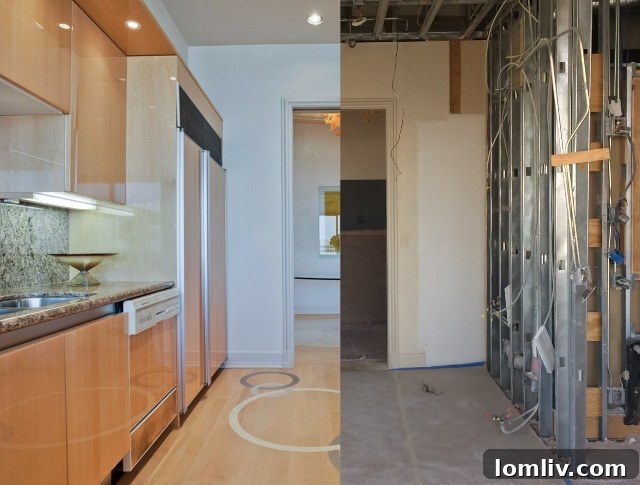
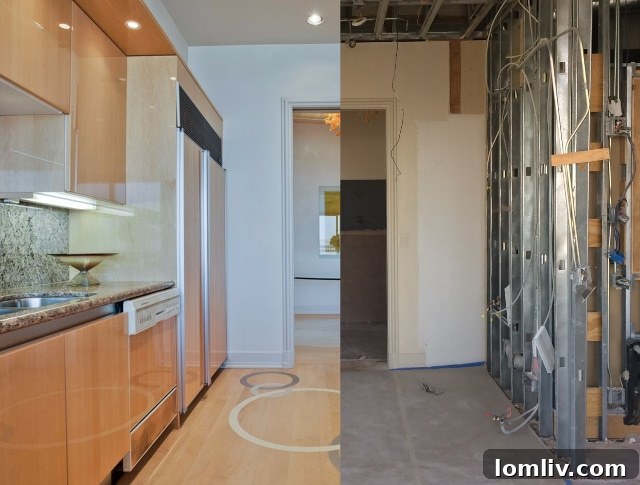
Unveiling the Secrets: Deep Dive into a Luxury Penthouse Demolition Journey
The exhilarating moment finally arrived: the building permit, after an arduous wait, was finally in hand. With official approval secured, the demolition phase of the A-unit commenced at an accelerated pace, aiming to recuperate the valuable time lost during the permitting process. Our primary objective was a comprehensive gut renovation of the kitchen and bathrooms on the A-side. For those familiar with the ongoing saga of the Penthouse Plunge, you’ll know that this ambitious project involves a sprawling 5,311-square-foot double penthouse situated in the prestigious Claridge on Turtle Creek. My strategic vision entails re-dividing these magnificent units, meticulously renovating and preparing the A-unit for sale, while I comfortably reside and enjoy the unparalleled amenities of the B-side. This phased approach allows for a streamlined renovation process, minimizing disruption to my personal space while maximizing the investment potential of the A-unit.
As previously highlighted in my recent donation to Habitat for Humanity, the A-side kitchen had already undergone its initial disassembly, with all salvageable components gratefully rehomed. However, the true essence of kitchen demolition extends far beyond the mere removal of cabinets and appliances. It’s an intricate process of peeling back layers, revealing the hidden infrastructure and, often, the unique quirks and unexpected challenges embedded within the original construction. This initial phase sets the stage for a truly transformative renovation, allowing us to build a contemporary, high-efficiency space from a clean slate. The deeper we delved, the more the walls began to tell their story, presenting a series of intriguing discoveries that would shape the future layout and design of this luxury residence.
Kitchen Quandaries: Unearthing Unexpected Architectural Secrets
The demolition journey in the kitchen was, predictably, a masterclass in uncovering architectural “surprises.” Each opened wall revealed layers of history and design choices, some ingenious, others perplexing. These discoveries underscored the critical importance of a flexible renovation plan and validated our decision to avoid ordering custom cabinetry based solely on initial architectural drawings, which often fail to capture the nuanced realities of an existing structure.
The Shifting Perimeter: A Fortuitous Extension
Our first significant discovery involved the back wall of the kitchen. We observed that it had been moved outward by a full two feet, an alteration originally made to reconfigure the adjacent laundry room. While an unexpected deviation from the standard blueprint, this revelation proved to be a stroke of luck. This additional space has necessitated a complete re-evaluation and redesign of both the kitchen and laundry areas, a process that has, serendipitously, resulted in a considerably larger and more functional kitchen. Furthermore, this expansion provides ample room to incorporate a much-needed, highly usable pantry – a true luxury in urban living. For those who previously voiced concerns about the laundry room’s access point from the office, this redesign resolves that issue entirely, improving both flow and privacy within the unit. This unforeseen boon significantly enhances the overall utility and appeal of the culinary heart of the A-unit, adding considerable value for future occupants.
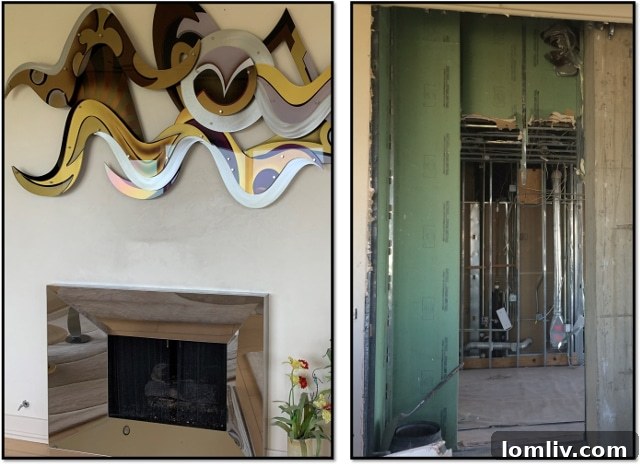
The Phantom Chimney: A Disappearing Act
The second major kitchen surprise materialized behind and adjacent to the fireplace. Where our plans indicated mere “dead air” space, we uncovered an additional 16-inch-wide fireplace vent, originating from the unit directly downstairs. Compounding the issue, this unexpected chimney chase was running directly through what was slated to become the new kitchen entry. This discovery initially presented a significant structural and design hurdle. Fortunately, swift action and excellent building management communication averted a potential crisis. The building manager confirmed with the downstairs neighbors that they had recently upgraded their fireplace system, rendering this specific chimney vent obsolete. Crisis averted! The solution was straightforward: safely remove the now-unnecessary vent and cap off the opening. This unexpected obstacle, once overcome, cleared the path for our envisioned kitchen layout without significant delay or structural rework, a testament to the benefits of thorough investigation during demolition.
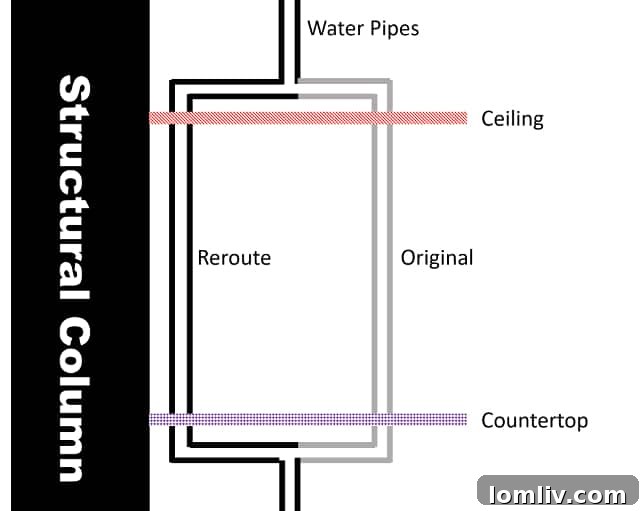
The Water Pipe Wander: A Curious Case of Plumbing
Our third perplexing discovery involved the building’s floor-to-ceiling water pipes. Instead of being neatly tucked alongside the main structural column, a logical and space-efficient placement, these pipes emerged inexplicably from the ceiling, jogged several inches away from the column, only to then veer back towards it near the floor. Their convoluted routing seemed to serve no practical purpose other than to create an unnecessarily thick wall, consuming valuable square footage. This kind of idiosyncratic plumbing layout is not uncommon in older high-rises but always requires careful planning to rectify without compromising structural integrity or creating new aesthetic issues. Addressing this required careful consideration to streamline the wall profile and reclaim precious space, allowing for a cleaner, more modern finish in the redesigned kitchen.
The Soffit Saga: A Relic of the Past
The final, though somewhat expected, “surprise” in the kitchen was the discovery that the soffits built above the original cabinets were entirely hollow and served no functional purpose whatsoever. This design choice, prevalent in the 1990s, likely reflected a trend where tall, ceiling-height cabinets were not yet in vogue. While not a structural issue, their removal significantly opens up the kitchen space, allowing for the installation of contemporary, full-height cabinetry. This not only increases storage capacity but also creates a much more expansive and luxurious feel, aligning perfectly with the high-end aesthetic we aim to achieve for the renovated A-unit. Considering all these finds, the kitchen demolition, despite its twists and turns, was ultimately a manageable process, paving the way for a truly spectacular transformation.
Bathroom Breakthroughs: From Quirks to Luxury Upgrades
The demolition process extended into the bathrooms, bringing its own set of unique discoveries and opportunities for enhancement. Each space, from the smallest powder room to the expansive master bath, presented a chance to elevate its functionality and aesthetic to luxury standards.
The Powder Room’s Pleasant Paper Puzzle
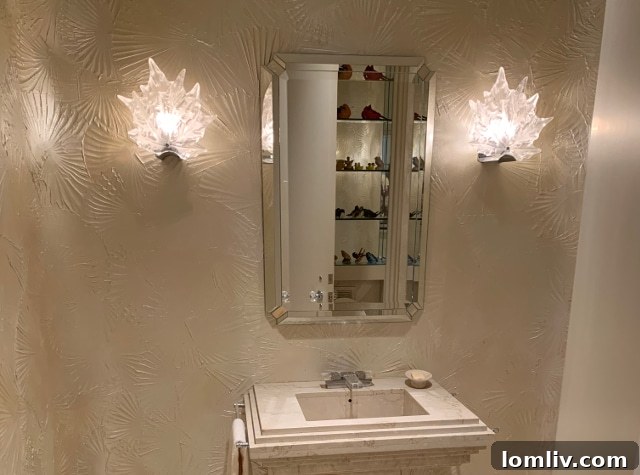
What I initially believed to be a truly ghastly, heavily textured plaster in the powder room turned out to be something far more manageable and, frankly, a huge relief: an elaborately embossed and rigid wallpaper. This distinction was a welcome revelation, as removing heavily textured plaster is a significantly more arduous and messy task than stripping wallpaper, even a particularly stubborn variety. This positive discovery saved considerable time, effort, and potential cost, allowing us to prepare the walls for a fresh, modern finish much more efficiently. It’s these small, unexpected wins that keep the renovation spirit high!
Master Bathroom Marvels: Navigating Plumbing Peculiarities
The master bathroom demolition was largely uneventful, with most elements proceeding as anticipated, save for one intriguing oddity. We discovered that the original owner had relocated the toilet. In a high-rise building with steel-reinforced concrete slabs, boring new plumbing lines through the floor is typically a major undertaking and often strictly prohibited by building codes due to structural integrity concerns. To circumvent this, the previous owners had ingeniously installed a back-draining toilet. Unlike conventional toilets that drain downwards into the floor, back-draining models discharge waste and water horizontally, directly out the back of the bowl, allowing plumbing to run within the wall rather than through the slab. While more common in European designs, this system effectively bypasses the challenges of floor penetration in concrete high-rises.
Our solution to this unique plumbing setup will ultimately provide the new owners with a premium upgrade: an extra-pricey, sophisticated wall-hung toilet. While the exact model is yet to be finalized, high-end brands like Toto and Duravit offer incredibly sleek and efficient options that combine aesthetic appeal with practical benefits such as easier floor cleaning and a visually expanded space. This luxurious addition will significantly enhance the modern appeal and functionality of the master bathroom, transforming a historical quirk into a desirable contemporary feature.
The Jacuzzi Drain Dilemma: A Fortuitous Finding
Speaking of drains, another moment of serendipitous luck occurred when the imposing, Olympic-sized Jacuzzi was removed from the master bathroom. My initial concern centered on its unusually placed drain, which had led me to wonder how any standard replacement tub could possibly fit the existing plumbing. However, upon removal, we discovered that the previous owners had, in fact, run a secondary drain line specifically for the Jacuzzi, leaving the original, well-located drain intact beneath. This was incredibly good news! The pre-existing, properly positioned main drain means we can easily install a wide variety of modern, luxurious bathtubs without the need for extensive and costly plumbing rerouting. This discovery significantly simplifies the design and installation process, ensuring a seamless transition to a new, elegant bathing fixture.
Raising the Roof: A Shower’s Lofty Ambition
The shower ceiling in the master bathroom presented another curious design choice: it was unnaturally low, measuring slightly less than eight feet in a unit boasting impressive 12-foot ceilings throughout. This disparity created a somewhat cramped and disproportionate feel within the shower enclosure. Once the existing shower tile was meticulously removed, the reason became clear: there was a substantial amount of unused “dead space” above the original ceiling. In fact, there was so much vertical clearance that one could almost imagine installing a double shower, stacked one atop the other! This revelation immediately presented an exciting opportunity. My plan is to raise the roof in the shower significantly, bringing it closer to the unit’s impressive overall ceiling height. This will create a much more expansive, open, and luxurious showering experience – truly “lofty ablutions” fitting for a penthouse of this caliber. This architectural adjustment will dramatically transform the feel of the master shower, enhancing both comfort and visual grandeur. Overall, while the demolition unearthed a few structural surprises and plumbing peculiarities, the necessary reconfigurations (such as adjusting the kitchen/office/laundry room layout and opting for a premium toilet) are well within the scope of our vision and ultimately contribute to a superior finished product. For the most part, the demolition process has unfolded largely as anticipated, setting a strong foundation for the renovation ahead.
Why Building Permits are Absolutely Crucial: A Matter of Safety and Integrity
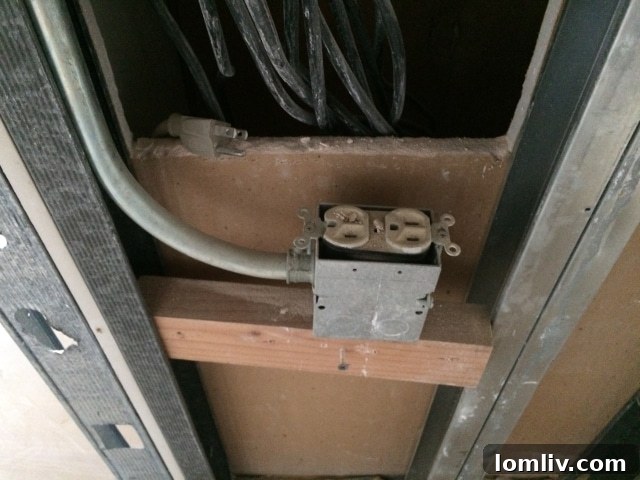
The importance of proper building permits and diligent inspections cannot be overstated, and our demolition unearthed a stark reminder of precisely why these regulations exist to protect residents. Above, you’ll see a graphic illustration of a significant safety hazard we uncovered: an electrical outlet found hidden inside a wall. This outlet was originally intended to power lighting for a built-in shelving unit. However, only one of its receptacles was plugged in, leaving the other exposed, pointed upwards. This configuration created an incredibly dangerous situation, where anything falling into the open outlet could easily cause a short circuit, potentially igniting a fire. Compounding the hazard, there wasn’t even a cover plate installed, leaving live electrical contacts fully exposed. This egregious oversight is a direct consequence of shoddy, unpermitted work and represents a severe fire and electrical shock risk.
This incident vividly underscores the critical role of city building departments. If local authorities truly aim to protect their residents from substandard and dangerous construction practices, the process of issuing building permits must be streamlined and expedited. Current timetables for permit approval are often excessively long, inadvertently creating an environment where “scofflaws” are emboldened to bypass the system, undertaking work without proper inspections or adherence to safety codes. When permits take months to acquire, some contractors and homeowners are tempted to cut corners, leading to the kind of dangerous situations we discovered. Expedited permitting would not only ensure greater compliance but also foster a safer living environment for everyone, upholding the integrity of urban residential developments.
Looking Ahead: From Demolition to Transformation
While there is still more demolition work to complete in other areas of this expansive penthouse, the progress achieved thus far has instilled a renewed sense of excitement and anticipation for the next phases. Witnessing the transformation from a dated interior to a clean, open canvas is incredibly invigorating. Each wall removed, each outdated fixture discarded, brings us closer to realizing the vision of a truly luxurious and modern living space. I can hardly wait for the new walls to begin rising, signaling the start of the reconstructive phase – the framing, electrical, plumbing rough-ins, and ultimately, the exquisite finishes that will define the A-unit. This penthouse is rapidly shedding its past, poised to emerge as a pinnacle of sophisticated urban living. Stay tuned for further updates as we continue this incredible renovation journey, transforming challenges into triumphs and creating unparalleled value in the heart of Dallas.

Remember: My passion and expertise lie at the intersection of high-rises, homeowners’ associations (HOAs), and complex renovations. Beyond these specialties, I also hold a deep appreciation for the dynamic balance between modern and historical architecture, particularly within the context of the YIMBY (Yes In My Backyard) movement, which advocates for more housing development. My commitment to insightful real estate commentary has been recognized by the National Association of Real Estate Editors, which awarded my writing three Bronze accolades in 2016, 2017, and 2018, along with two Silver awards in 2016 and 2017. If you have a compelling story to share, a challenging real estate dilemma, or even an unconventional marriage proposal, please don’t hesitate to reach out via email at [email protected]. While you’re welcome to search for me on Facebook and Twitter, be forewarned: I maintain a rather low online profile, so finding me might be a delightful challenge in itself!