Dallas Navigates Key Urban Challenges: Affordable Housing, Airport Noise, and Homelessness Solutions
Dallas is a city in constant motion, facing dynamic urban challenges that require thoughtful planning, robust funding, and dedicated community engagement. Recent city council briefings and community meetings have brought to light critical discussions surrounding the implementation of federal grants for affordable housing, the persistent issue of airport noise impacting residential areas near Love Field, and significant funding increases aimed at addressing homelessness across Dallas and Collin Counties. These initiatives underscore the city’s commitment to improving the quality of life for all its residents while fostering sustainable growth and development.
Advancing Affordable Housing in Dallas with Federal HUD Grants
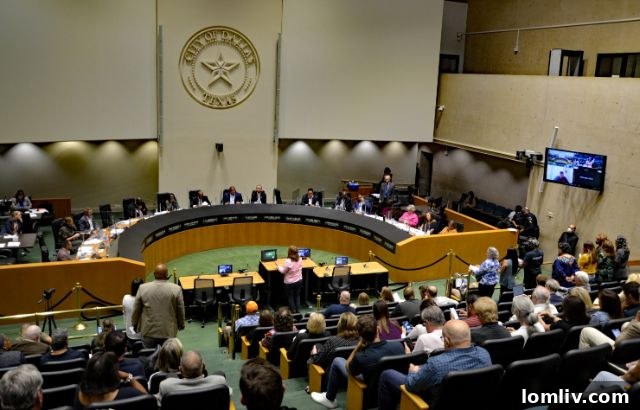
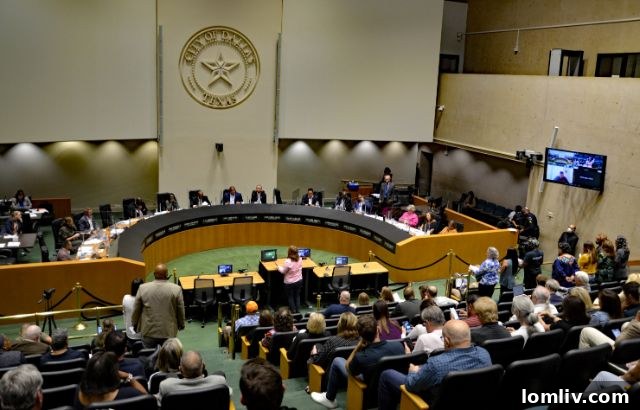
On January 31, the Dallas City Council convened to review an essential update on the four federal grants allocated from the U.S. Department of Housing and Urban Development (HUD). The discussions focused on how city staff propose to strategically implement these vital funds over the next five years to bolster affordable housing projects across the metropolitan area. This proactive approach is crucial for addressing the growing demand for accessible and affordable housing options within Dallas, a challenge amplified by rapid population growth and increasing living costs.
For the 2024 fiscal year, Dallas has been awarded a substantial total of $31 million in HUD grants. This significant investment is meticulously divided among programs designed to tackle various facets of community development and housing needs:
- Community Development Block Grant (CDBG) – $13.8 million: CDBG funds are a cornerstone of urban development, empowering local communities to address a wide range of unique community development needs. In Dallas, these funds typically support housing rehabilitation, infrastructure improvements in low-income areas, economic development, and public services that benefit low- and moderate-income residents.
- Home Investment Partnership Program (HOME) – $6.4 million: The HOME program is the largest federal block grant to state and local governments designed exclusively to create affordable housing for low-income households. Dallas leverages these funds for activities such as building, buying, and rehabilitating affordable housing for rent or homeownership, and providing direct rental assistance to families.
- Emergency Solutions Grant (ESG) – $1.2 million: ESG funds are critical for combating homelessness by providing essential services to individuals and families experiencing homelessness or at risk of homelessness. This includes funding for emergency shelters, street outreach programs, rapid re-housing initiatives, and homelessness prevention services.
- Housing Opportunities for Persons with AIDS (HOPWA) – $9.6 million: HOPWA is the only federal program dedicated to the housing needs of people living with HIV/AIDS. These grants assist in providing housing assistance and related supportive services to low-income persons with HIV/AIDS and their families, ensuring they have stable housing and access to care.
During the council meeting, a notable discussion unfolded between Councilman Paul Ridley and City Manager T.C. Broadnax regarding the transparent and equitable distribution of “public service funds.” This dialogue highlighted the city’s commitment to ensuring that resources are allocated efficiently and effectively to where they are most needed, maximizing their impact on vulnerable populations. Such rigorous oversight is vital for maintaining public trust and achieving the ambitious goals set forth in the city’s housing strategy.
The strategic deployment of these funds forms the backbone of Dallas’s five-year consolidated plan for affordable housing. This comprehensive plan outlines the city’s vision for fostering sustainable communities, expanding housing opportunities, and providing critical support services. Residents and stakeholders are actively encouraged to participate in ongoing community engagement meetings scheduled throughout the current month, offering valuable input that will shape the final strategies and priorities of this long-term plan. For those seeking deeper insights, the full briefing packet can be viewed here, and the council briefing video is available for review here, providing complete transparency into the discussions and proposals.
Love Field Neighbors Intensify Advocacy for Noise Reduction
The persistent issue of airport noise continues to be a significant concern for residents living in proximity to Dallas Love Field. The Dallas Department of Aviation held a community stakeholder meeting on February 8, serving as another platform for residents to voice their ongoing frustrations and concerns regarding the escalating noise pollution. This meeting signals the critical juncture at which the City of Dallas finds itself, as it embarks on the initial stages of updating the Terminal Area Master Plan (TAMP) for Love Field.
Steve Klein, a prominent figure in the local community and chair of the Citizens Action Committee, has been instrumental in organizing neighbors and working tirelessly to forge a compromise with city officials. His efforts aim to secure much-needed relief for the severely impacted neighborhoods, including Shorecrest, Briarwood, Bluffview, Elm Thicket, and other surrounding areas. These communities bear the brunt of noise emanating from the “preferred” Lemmon Runway, which accounts for a staggering nearly 65 percent of all flights departing from Love Field. The sustained noise disrupts daily life, affects property values, and raises concerns about long-term health impacts for residents.
Klein’s analysis, shared in an email to concerned neighbors, underscores that decisions pertaining to the new master plan will be heavily influenced by the dramatic increase in flight activity at Love Field. This surge is directly linked to the lifting of the Wright Amendment restrictions in 2015, which had previously limited long-haul flights from the airport. The impact of this legislative change has been profound, reshaping the operational landscape of Love Field:
- Significant Spike in Enplanements: Following the lifting of restrictions, enplanements at Love Field surged from approximately 4.7 million for calendar year 2014 to an impressive 8.8 million by calendar year 2023, representing nearly a doubling of passenger traffic.
- Expanded Non-stop Destinations: The number of non-stop destinations served by Dallas Love Field dramatically increased from 21 to 71, offering travelers far greater connectivity.
- Increased Average Flight Distances: Concurrently, the average flight distances extended significantly, rising from 350 miles to over 700 miles, indicating a shift towards longer routes and potentially larger aircraft.
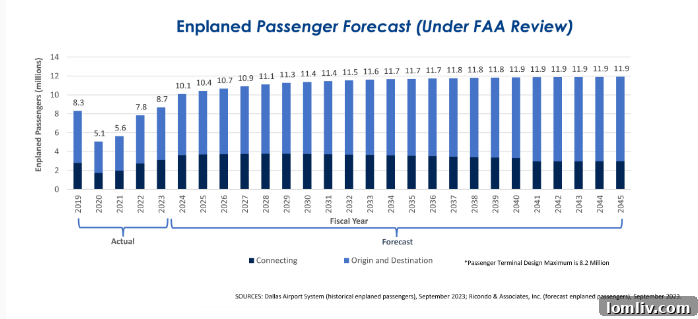
The trajectory of this growth is expected to continue. “Per the preliminary enplanement forecast from Ricondo and Associates, enplanements are forecast to continue to increase to a plateau of 11.9 million passengers in 2040,” Klein elaborated. He further explained that this projection is based on several key factors, including a projected increase in gate turns from the current average of 10.1 per gate to 11.5 by 2040 (multiplied across 20 gates), an increase in passengers per flight, and a shift in the aircraft fleet mix towards larger capacity aircraft already on order. These statistics paint a clear picture of an airport poised for continued expansion, intensifying the challenges for adjacent neighborhoods.
Klein’s message resonated with a call to action: “So as you can see, there are some weighty issues to consider and a unified community voice is more crucial than ever.” The update of the Terminal Area Master Plan presents a pivotal opportunity for residents to advocate for effective noise mitigation strategies, such as flight path adjustments, quieter aircraft incentives, and soundproofing programs, ensuring that the growth of Love Field does not come at the undue expense of its neighbors’ peace and well-being. The community’s collective effort and vocal participation will be paramount in influencing decisions that balance economic development with residential quality of life.
Federal Grant Funding Significantly Increased to Address Homelessness in Dallas, Collin Counties
In a crucial development for social welfare, the U.S. Department of Housing and Urban Development (HUD) has announced a substantial award of over $27 million to the All Neighbors Coalition. This collective, comprising over 140 organizations, including representatives from Collin County and the City of Dallas Office of Homeless Solutions, is poised to launch or expand critical initiatives aimed at effectively addressing the region’s unhoused population. This significant increase in federal support reflects a growing recognition of the complex challenges posed by homelessness and the intensified efforts required to create lasting solutions.
The newly allocated funding represents a substantial boost in resources, marking a 23 percent increase over what was awarded in 2022, and an impressive 44 percent rise compared to 2021. This upward trend highlights the impact of strategic restructuring led by Housing Forward, the backbone agency supporting the rehousing system. Since 2021, Housing Forward has spearheaded a comprehensive redesign of the approach to tackling homelessness, integrating evidence-based strategies that prioritize effective and sustainable outcomes. This shift toward data-driven interventions has demonstrably improved the region’s ability to secure increased federal investment, as noted in a recent press release issued by the City of Dallas.
Christine Crossley, director of the Dallas Office of Homeless Solutions, emphasized the pivotal role of the All Neighbors Coalition’s collaborative efforts. “Through this partnership, we are overcoming systemic barriers and developing innovative solutions that positively impact the most vulnerable in our community,” Crossley stated in the press release. She further elaborated on the collective power of this partnership, asserting, “By pooling our resources, knowledge, and unwavering dedication, we are revolutionizing the approach to homelessness in Dallas. This historic partnership serves as a testament to the power of entities uniting across sectors, with a shared vision, resulting in significant progress.” Her words underscore the holistic and integrated approach now being taken, moving beyond fragmented services to create a more cohesive and impactful system of support.
This funding is part of a broader federal initiative: HUD’s $3.16 billion homelessness assistance funding distributed to communities nationwide through its Continuum of Care (CoC) program. The CoC program is designed to promote community-wide commitment to the goal of ending homelessness. It provides funding for a variety of projects that offer housing and services to families, survivors of domestic violence, and individuals experiencing chronic homelessness. These projects often include rapid re-housing, permanent supportive housing, transitional housing, and various supportive services such as mental health care, substance abuse treatment, and job training. The increased allocation for Dallas and Collin Counties means more resources will be available for these vital programs, enabling the All Neighbors Coalition to expand its reach, implement more preventative measures, and provide stable housing solutions that lead to long-term self-sufficiency for those most in need.