From Lawns to Likes: The Fading Influence of Political Yard Signs in Modern Elections
In an increasingly digital world, the venerable political yard sign, once a ubiquitous symbol of electoral fervor, appears to be losing its grip on the hearts and minds of voters and campaigners alike. Often seen as a straightforward declaration of support, these physical markers are now widely considered an “old school” approach, overshadowed by the dynamic and expansive reach of social media and other digital campaign strategies. This shift, a true “sign of the times,” reflects a fundamental change in how political messages are disseminated and consumed, prompting a critical re-evaluation of their effectiveness.
A revealing report by WFAA-TV recently highlighted this very phenomenon, questioning the diminishing value of political yard signs. The core argument is simple: in an age where a single social media post can reach millions instantaneously, what significant impact can a yard sign on a quiet residential street possibly have, seen only by a handful of neighbors? This paradigm shift is not merely anecdotal; it’s a strategic recalculation by political consultants who recognize the unparalleled reach and precision targeting offered by online platforms.
For many real estate agents and homeowners, this obsolescence might come as a welcome relief. The complexities of selling a home are already manifold, and adding a polarizing political statement to the mix can introduce unnecessary friction. The idea that a physical manifestation of political allegiance could influence a property sale is a concern that has long lingered, and perhaps now, with fewer signs gracing front lawns, that particular anxiety can begin to subside.
The Shifting Landscape of Political Campaigning: Why Digital Dominates
The decline of the yard sign isn’t an isolated incident; it’s part of a broader evolution in political campaigning. Modern elections are increasingly fought and won in the digital realm, where engagement is measurable, messages are customizable, and reach is virtually limitless. Social media platforms, email campaigns, targeted online ads, and influencer marketing have become the preferred tools for candidates seeking to connect with voters.
The Rise of Digital Dominance
Digital channels offer several undeniable advantages over their analog predecessors. Social media, for instance, provides:
- Unprecedented Reach: A viral tweet or a widely shared Facebook post can reach millions of potential voters across geographical boundaries in a matter of hours, something a yard sign could never hope to achieve.
- Precision Targeting: Campaigns can segment audiences based on demographics, interests, and past online behavior, delivering highly personalized messages that resonate more effectively.
- Real-time Engagement: Digital platforms facilitate two-way communication, allowing candidates to engage directly with voters, answer questions, and respond to feedback in real time.
- Cost-Effectiveness: While digital advertising can be expensive, the return on investment (ROI) often surpasses that of traditional methods. Organic reach, especially through viral content, can be virtually free.
- Dynamic Messaging: Online content can be updated instantly, allowing campaigns to pivot strategies, address breaking news, and refine their messaging on the fly.
In contrast, a political yard sign remains a static, one-dimensional message. It offers no opportunity for interaction, no way to gauge its impact, and its reach is confined to those who physically pass by. Its primary function has always been to signify visible support and create a sense of momentum within a local community, but even this role is now being questioned.
More Than Just Visibility: Unpacking Voter Sentiment and Reluctance
Beyond the logistical advantages of digital over physical, the dwindling number of yard signs also speaks to deeper trends in voter sentiment and public expression. The 2016 US presidential election serves as a particularly poignant example.
“No. This is the fewest I’ve seen,” observed Harold Clarke, a political science professor at the University of Texas at Dallas, regarding the number of signs during the 2016 election.
He theorized that the pronounced unpopularity of both major presidential candidates in 2016 led to fewer individuals feeling comfortable or compelled to display signs expressing public support.
This insight is critical. When candidates are highly polarizing or widely perceived as unfavorable, voters may be less inclined to make a public declaration of their allegiance, even if they plan to cast a vote. The act of displaying a yard sign transforms a private electoral choice into a public statement, potentially inviting scrutiny, debate, or even hostility from neighbors and passersby. In deeply divided political climates, the desire to avoid such confrontations can override the impulse to display support, leading to fewer signs overall.
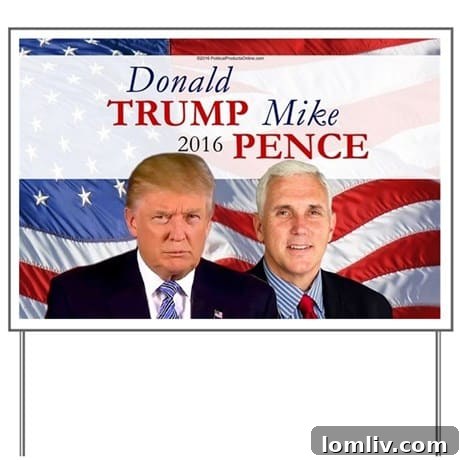
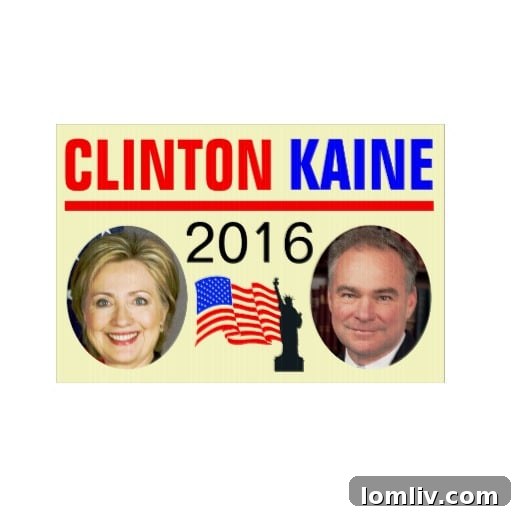
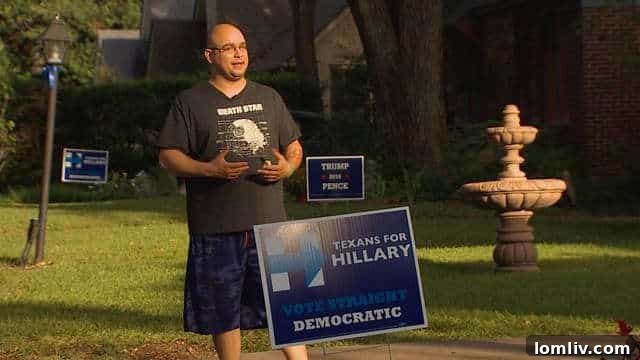
My own observations during that election in North Texas, particularly in traditionally Republican strongholds like Park Cities and Preston Hollow, corroborated this trend. I noted a significant reduction in political signs compared to previous elections. While I did observe more Hillary-Kaine signs in Preston Hollow and Highland Park than anticipated, suggesting a local lean, the overall scarcity was striking. This aligns with the understanding that public displays of political support are often a barometer of a candidate’s popular enthusiasm, and in a climate of widespread dissatisfaction or division, that enthusiasm might manifest more quietly.
The Real Estate Conundrum: Political Signs and Property Sales
The intersection of political expression and property sales introduces a unique dilemma. For homeowners looking to sell, the decision to display a political yard sign can be fraught with potential repercussions. In today’s hyper-partisan environment, a visible declaration of political support can inadvertently alienate a significant portion of potential buyers.
The Seller’s Dilemma: Navigating Divisive Waters
Imagine a prospective buyer, enthusiastic about a home’s curb appeal and interior, suddenly confronted by a yard sign supporting a candidate they strongly oppose. This immediate visual can trigger an emotional response, overshadowing the positive attributes of the property. The buyer might consciously or subconsciously project negative associations onto the home or its previous owners, creating an invisible barrier to purchase. This is precisely why real estate professionals often advise neutrality when a home is on the market.
As one political consultant aptly put it, the local reach of a yard sign is limited to neighbors. But for a home seller, those “neighbors” could be prospective buyers driving through the area, making crucial first impressions. A sign might be perceived as:
- Unwelcoming: It can signal that the home is not for “their kind” of person, immediately creating a sense of exclusion.
- Distracting: Buyers should be focusing on the home’s features, layout, and potential, not on the political views of the current occupants.
- Indicative of Potential Conflict: Some buyers might worry about the neighborhood’s political climate or potential tension with neighbors if opposing signs are displayed.
Maintaining Neutrality for Maximum Appeal
The consensus among experienced real estate agents is clear: when your home is on the market, it’s best to remove all political signs. The goal is to present a blank slate, a neutral canvas onto which any potential buyer can envision their future. This extends beyond political signs to other highly personal or polarizing items within the home. The objective is to appeal to the widest possible audience, ensuring that no buyer is put off by anything other than the intrinsic qualities of the property itself. In a horribly divisive election year, this advice becomes even more critical.
The Future of Campaigning: A Balanced Approach?
While the prominence of political yard signs has undoubtedly waned, it’s worth considering if they retain any residual utility. For hyper-local elections, school board races, or community initiatives, a yard sign might still serve as a valuable, cost-effective tool for raising awareness and fostering community spirit. In these contexts, where candidates may lack the resources for extensive digital campaigns, the humble yard sign can still play a role in local visibility and endorsement.
However, for major national or state-level elections, the trend is clear: digital strategies will continue to dominate. The future of political campaigning will likely involve an increasingly sophisticated blend of data analytics, personalized online content, virtual town halls, and influencer partnerships. The focus will be on targeted engagement and measurable impact, rather than broad, passive displays of support.
Conclusion: A New Era for Political Expression
The diminishing presence of political yard signs is more than just a passing trend; it signifies a profound transformation in how political support is expressed and how campaigns are waged. As technology continues to reshape our communication landscape, the direct, public declaration once embodied by a lawn sign is being replaced by the nuanced, far-reaching, and often private expressions found in the digital sphere. While some nostalgic appeal for these traditional markers may remain, their practical value has largely been eclipsed.
For homeowners, especially those navigating the competitive real estate market, the message is unequivocal: maintain neutrality. For political strategists, the shift underscores the imperative to adapt to a digitally-driven electorate. The era of the yard sign may not be entirely over, but its golden age has certainly passed, paving the way for a new, digitally-centric chapter in political engagement and expression. The conversation has moved from the curb to the cloud, reflecting a more complex, connected, and sometimes cautious electorate.