Unpacking the Preston Center Development Debates: A Critical Look at PD-15 and Urban Planning in Dallas
The intricate landscape of urban development often sparks fervent discussions, especially in established neighborhoods grappling with growth and change. Such was the atmosphere surrounding the recent meeting of Preston Tower and Athena owners, convened to discuss the contentious PD-15 zoning proposal. What unfolded was a vivid display of community sentiment, marked by accusations, passionate defenses, and a palpable tension between residents, city officials, and various neighborhood associations.
The meeting quickly escalated, taking on the tone of an intense public forum where long-standing grievances and perceived slights were aired. Bill Kritzer, a prominent voice from Preston Tower, repeatedly directed criticism towards Council Member Jennifer Gates, attributing to her many of the community’s real or perceived frustrations. Had each mention of her name been compensated, she might well have amassed enough funds to single-handedly finance the long-debated Preston Center parking garage – a telling sign of the community’s concentrated discontent. While blame was liberally assigned, the Preston Hollow South Neighborhood Association (PHSNA) received commendation for its purported advocacy on behalf of the community.
However, this praise for PHSNA leadership invites a closer examination, given its track record. It was, after all, under their guidance that residents received The Laurel apartments – a development that has since become universally reviled within the neighborhood. Ironically, the very process of The Laurel’s development, which involved extensive meetings between PHSNA leadership and the developer, was cited as a model for effective community engagement. Yet, the outcome was a building the neighborhood despises. This striking contradiction – praising a process that yielded an unpopular result – seemed to be lost on the large gathering at the Athena, highlighting a profound disconnect between expectations and reality in local development discussions.
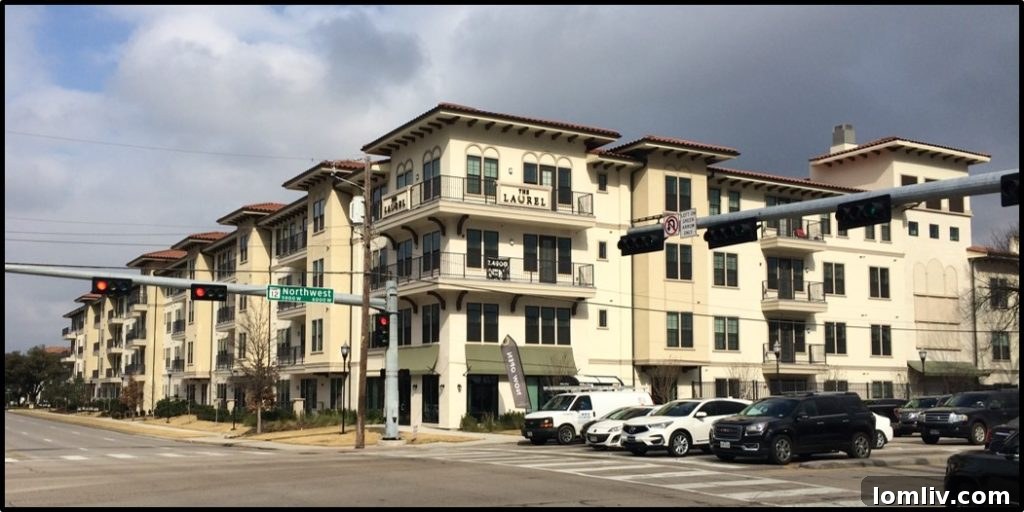
Further compounding the irony is the fact that The Laurel, a building so passionately detested by the community, stands at three and four stories – precisely the height that many residents advocate for and cheered during the meeting. This fundamental inconsistency underscores a broader issue of incoherent thinking and unrealistic expectations prevalent in these discussions. It suggests a preference for concepts that, when realized, fail to meet the community’s underlying desires. The palpable energy in the room indicated a strong emotional stance, often overshadowing pragmatic considerations and factual information regarding urban planning and its economic realities.
Critiquing the “Gold Standard”: Preston Road and Northwest Highway Area Plan
Another item held up for “praise” was the Preston Road and Northwest Highway Area Plan, often touted by some as an exemplary model for guiding future development. This perception, however, stands in stark contrast to its actual merit. A critical assessment reveals it to be far from a gold standard, exhibiting significant flaws that undermine its credibility as a robust planning document. One must question the efficacy of a plan purporting to guide complex urban development without foundational data to support the economic viability of its conclusions. A plan, for instance, whose co-author, Peter Kline, openly admitted, “To call it a plan is an overstatement,” immediately raises red flags about its practical application.
The true measure of a plan’s credibility often lies in the endorsement of the very consultants paid to provide the underlying data and analysis. In the case of the Preston Road and Northwest Highway Area Plan, such an endorsement is notably absent. A comparison of the consultants’ (often omitted) recommendations with the final version of the plan reveals a significant departure, making a professional endorsement highly improbable. For a detailed breakdown of the plan’s shortcomings and an analytical dismantling of its core tenets, refer to my comprehensive article in D Magazine, which thoroughly exposes its weaknesses.
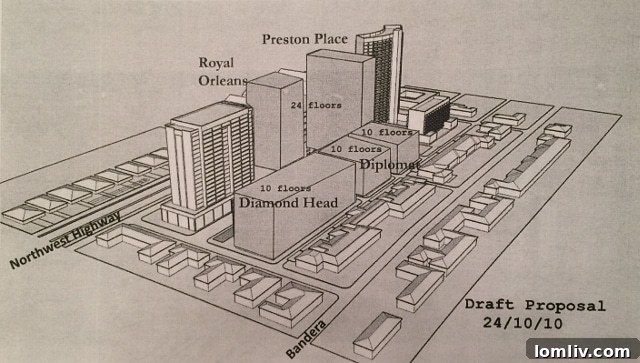
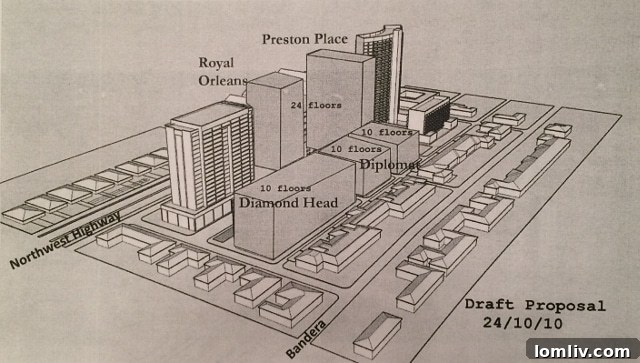
During the community meeting, graphics displayed to represent the city’s draft PD proposal were demonstrably inaccurate, as highlighted by the leading image of this article. Furthermore, the persistent accusation that the development process is “developer-led” ignores crucial facts. For example, A.G. Spanos, the developer for the Diplomat project, who has actively engaged in discussions, is actually proposing a building shorter than the city’s own draft. This is particularly significant where lower building heights are genuinely desired. The prevailing narrative of “developer greed” often overlooks practical considerations, subtly implying that only non-profit entities could genuinely serve community interests, despite the economic realities of large-scale construction.
The topic of the 100-foot setback on Northwest Highway was once again raised as a cause for alarm, simply because the city’s current draft proposal suggests a 70-foot setback. What is conveniently overlooked, or perhaps deliberately obscured by some homeowner associations (HOAs) from their constituents, is the extensive historical documentation supporting the 100-foot setback. Evidence dating back to 1945 exists in multiple locations, including a legally binding contract signed in 1966 by all Northwest Highway landowners, explicitly stating that no changes can be made without unanimous approval. Despite this clear historical and legal precedent, the narrative of fear and misinformation persists, keeping residents agitated and misinformed about a resolved issue.
The Illusions of Compromise: Deconstructing the 10-6-4 Plan
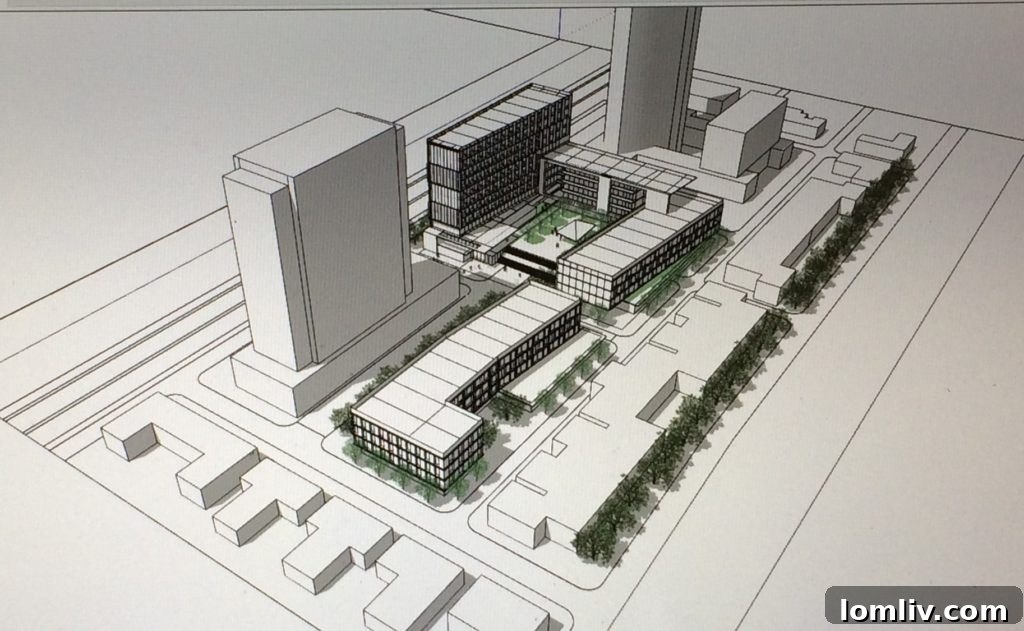
The development concept known as the “10-6-4 plan,” presented by some committee members as a “compromise” for proposed building heights, is fundamentally unworkable. As depicted above, the plan proposes four stories on the back side of the development. From an economic standpoint, buildings of this height are generally not viable to construct in this market, particularly for modern standards. Even if a developer were to agree to such a height, the resulting build quality would likely be compromised, potentially mirroring the widely criticized quality of The Laurel apartments.
Similarly, the ten stories outlined for the Northwest Highway frontage face significant economic hurdles. While hybrid construction methods can support buildings up to eight stories, anything beyond that typically necessitates a concrete and steel framework. This shift in construction methodology drives up building costs by a substantial 30 to 35 percent. No rational developer would incur such a significant additional expense for a mere two extra stories, making the 10-story proposal on Northwest Highway equally impractical and financially unsound.
A critical flaw in the 10-6-4 plan is its underlying assumption that all low-rise properties in the area are under single ownership, which is simply not the case. Urban development projects of this scale, especially those involving physically connected structures, are notoriously difficult to finance when multiple independent owners are involved. No bank would extend a loan for a project that intertwines with properties owned by others. But perhaps the most glaring folly of the entire scheme is the inclusion of a massive, single-story concrete plinth intended to span the entire development. This plinth would house parking and facilitate a ground-level tunnel for Tulane Avenue underneath. Even if the individual buildings were economically viable and financeable (which they are not), the exorbitant cost of constructing such an expansive, shared concrete slab, effectively jacking up all buildings above it, renders the entire proposal fiscally impossible. It adds an insurmountable layer of expense to an already unfeasible plan.
Despite these undeniable financial and logistical realities, this group has reportedly presented their unworkable plans to numerous developers, architects, and industry experts. The consistent feedback they’ve received mirrors precisely what has been outlined here: the plan is fundamentally unbuildable. Yet, remarkably, they persist in advocating for it, demonstrating a concerning detachment from practical considerations and market realities.
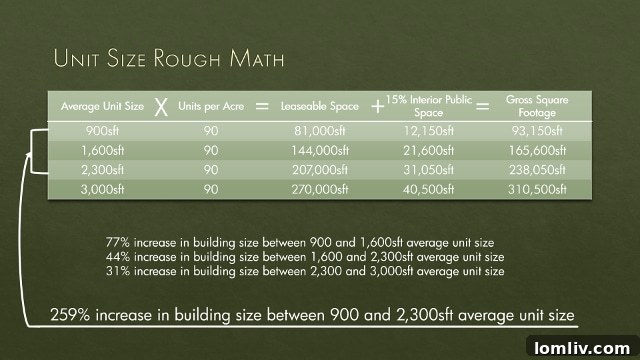
Their plan further specifies units ranging from 1,600 to 3,000 square feet – sizes considerably larger than the current neighborhood averages. What proponents of this plan often overlook is the direct correlation between unit size and building volume. Larger units, by necessity, require larger buildings to maintain a stable number of units per acre. As illustrated in the diagram above, if the number of units per acre remains constant, any increase in individual unit size directly translates to a proportional increase in overall building size. For those adamantly committed to keeping buildings short, this aspect of their plan is illogical and self-defeating. It demonstrates a lack of understanding regarding fundamental architectural and development principles.
The behind-the-scenes machinations of this plan are, regrettably, even more illustrative of its flaws. While the public presentation emphasized a purely residential vision for the development, the plan previously shared with me included a coffee shop – a personal pet project of one committee member. Furthermore, the decision to settle on ten stories for Northwest Highway was reportedly influenced by another committee member’s condo being on the eleventh floor, driven by a desire to prevent people from “looking in.” Compounding these unprofessional details, the plan itself was apparently drafted by a relative of yet another committee member’s friend – not a licensed architect, and someone with no prior experience in building construction. They couldn’t even accurately state the projected number of units the plan would contain. In essence, it is nothing more than a rudimentary sketch, hastily assembled by individuals lacking the requisite expertise and understanding of complex urban development.
To label such a proposal a “compromise” is a misnomer; a true compromise must offer a realistic pathway to implementation. This plan is akin to offering a naked person a single sock – while technically an article of clothing, it is utterly insufficient to address the core need. It is an offer that satisfies a superficial requirement without delivering any practical or viable solution.
Forecasting the Fallout: Unrealistic Expectations and Community Consequences
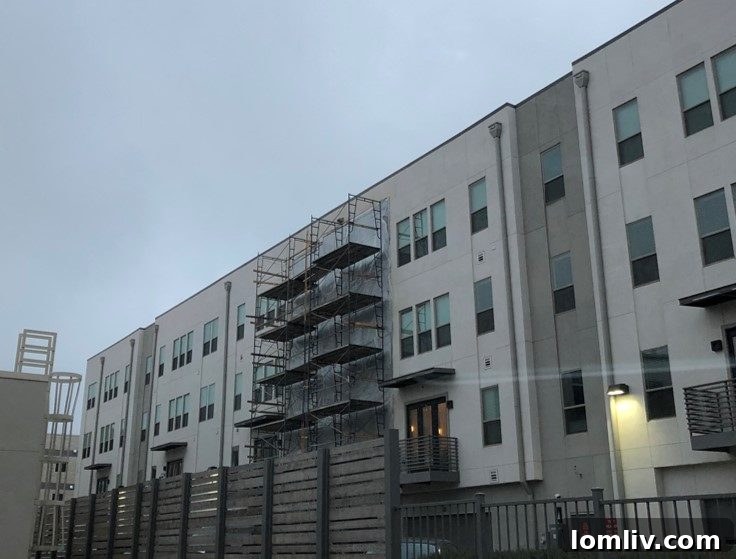
A stark prediction looms: should the unworkable 10-6-4 plan somehow be realized, residents will undoubtedly spend their days lamenting the inevitable low building quality, conveniently deflecting blame onto everyone but themselves. This sentiment is reinforced by existing examples; as I previously highlighted, the Bandera apartments, despite being only three years old, have already necessitated extensive repairs for leaks in their stucco exterior, serving as a cautionary tale of rushed or poorly conceived construction.
The meeting also notably featured former Dallas Mayor Laura Miller, marking her first appearance at an Athena meeting in over five years. As anticipated, she actively challenged Council Member Gates on several policy points, to which Gates offered a strong and effective defense, navigating the critical discourse with resilience.
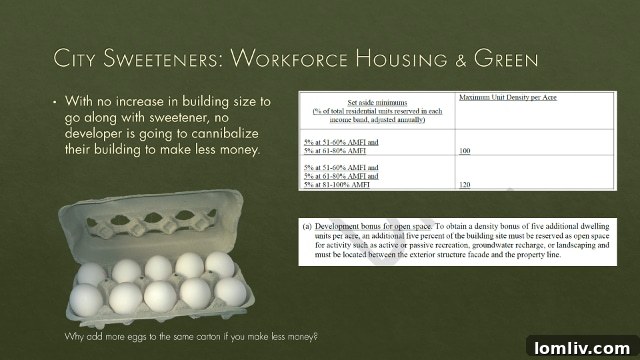
A significant concern raised during the session revolved around the city’s proposed “sweeteners” – incentives for developers who incorporate affordable housing units into their projects. Few topics ignite more apprehension among affluent residents than the prospect of less wealthy individuals living nearby. However, as I sought to clarify, these incentives, as currently structured, are unlikely to stimulate the desired affordable housing development. The city’s offer of increased density (more units per acre) in exchange for affordable units is fundamentally flawed because it provides no corresponding increase in the buildable envelope – meaning the physical height or footprint allowed for construction. As illustrated above, why would a developer opt to sell 14 eggs in a box designed for 12, especially if they are expected to sell them for the same price, or even less? It’s a disadvantageous deal that fails to align with the economic realities of construction and market demand, effectively rendering the incentive ineffective.
Following the meeting, a Preston Tower resident attempted to persuade me of the 10-6-4 plan’s feasibility. My counter-argument was straightforward: the resulting rental costs would be prohibitively high for the surrounding neighborhood to sustain. His dismissive response, “we’ll see,” suggests a belief that market forces will somehow align with their vision. However, we don’t need to wait indefinitely for an outcome. The Laurel apartments, which began leasing in May 2018, are reportedly only 22 percent occupied – a clear indication of market failure and an inability to attract tenants at current rates. This situation reveals a critical lack of foresight within the community: one way or another, those units will eventually be rented. Butts in beds will prevail, inevitably leading to rent reductions and a corresponding decline in tenant quality, perhaps even encouraging higher-density roommate rentals to fill vacancies and split costs.
Naturally, a segment of the community believes that no development should occur at all. For them, Preston Place should remain a desolate, burned-out concrete platform, and no other building should undergo any changes whatsoever. This static viewpoint disregards the dynamic nature of urban environments and the necessity for thoughtful, progressive development.
It remains baffling why these individuals believe that repeating the mistakes of The Laurel, with the same “negotiators” at the helm, will yield a different, more desirable outcome. The only plausible, printable explanation is a profound lack of accurate information and an unwillingness to step outside their entrenched viewpoints to learn. This insularity persists even as they reserve the right to vociferously complain if, by some improbable turn, their ill-conceived plans are actually implemented.

About the Author: My focus areas encompass high-rises, homeowners’ associations (HOAs), and property renovation, all viewed through the lens of modern and historical architecture balanced against the principles of the YIMBY (Yes In My Backyard) movement. My commitment to insightful real estate journalism has been recognized by the National Association of Real Estate Editors, earning me three Bronze awards in 2016, 2017, and 2018 (2016, 2017, 2018) and two Silver awards in 2016 and 2017 (2016, 2017). Should you have a story to share or a proposal to make, feel free to reach out via email at [email protected]. While I encourage you to look for me on Facebook and Twitter, you won’t find me there, but your effort is certainly appreciated.